

Kyoto Gardens: The Japanese Rooftop Oasis Few Know About
High above the chaos of downtown Los Angeles lies a hidden oasis that feels worlds away from the streets below. This is Kyoto Gardens — a rooftop sanctuary inspired by traditional Japanese garden culture.
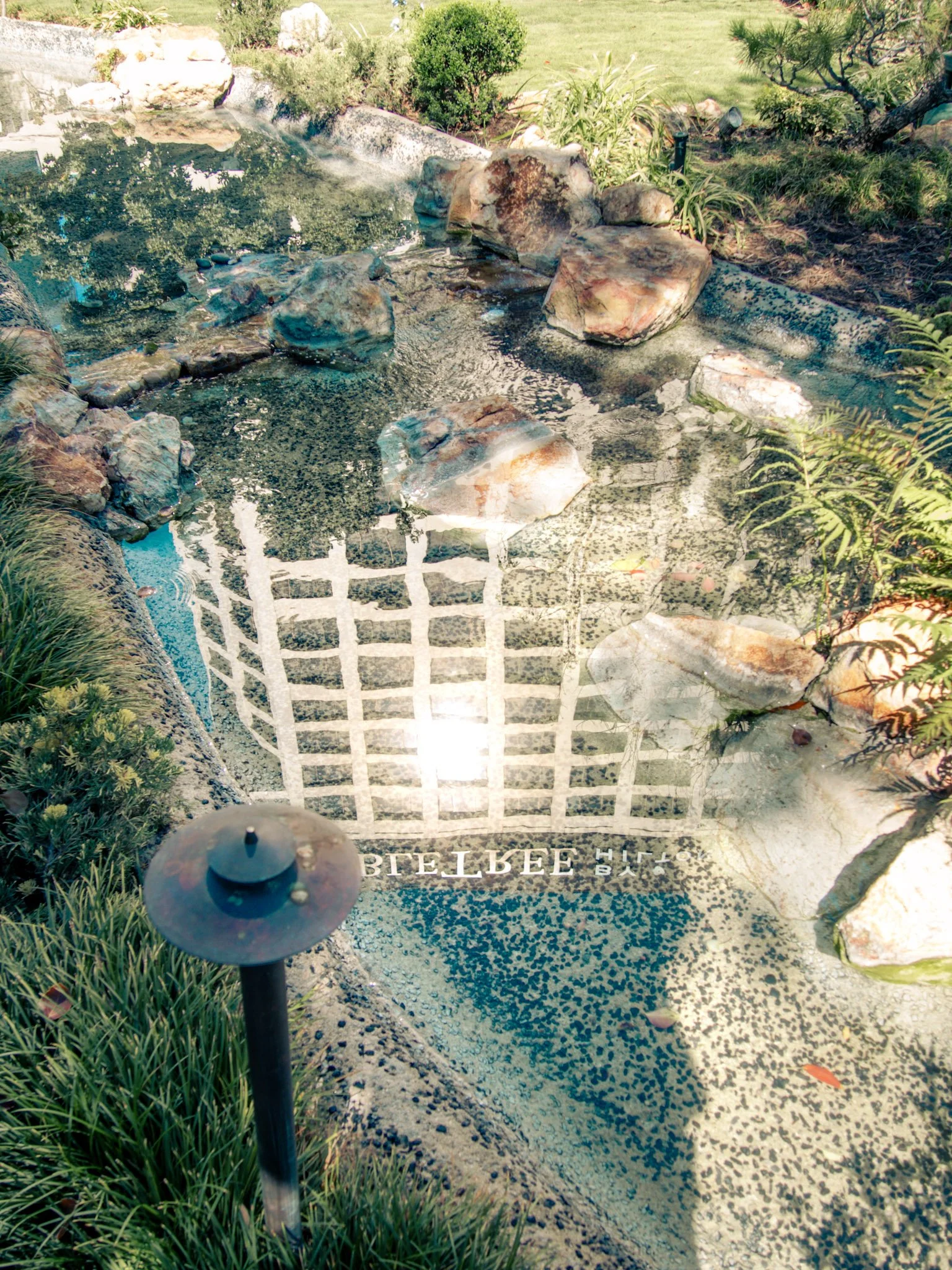
High above the chaos of downtown Los Angeles lies a hidden oasis that feels worlds away from the streets below. This is Kyoto Gardens — a rooftop sanctuary inspired by traditional Japanese garden culture. Perched atop the DoubleTree Hotel, the garden blends Zen minimalism with the urban skyline, creating an almost shocking harmony of nature and city life. It’s the kind of balance you’d expect to find in Tokyo — not LA.
Built in 1977 by Tokyo-based Kojima Corporation, the garden was originally part of the New Otani Hotel (later the Kyoto Grand, and now the DoubleTree by Hilton). It occupies about half an acre of rooftop space above the hotel’s main entrance, filled with classic elements of a Japanese garden — ponds, stone lanterns, waterfalls, and winding paths surrounded by meticulous landscaping. Despite its small size, Kyoto Gardens uses its features to great effect, producing a variety of spaces to explore.
A Photographer’s Hidden Gem
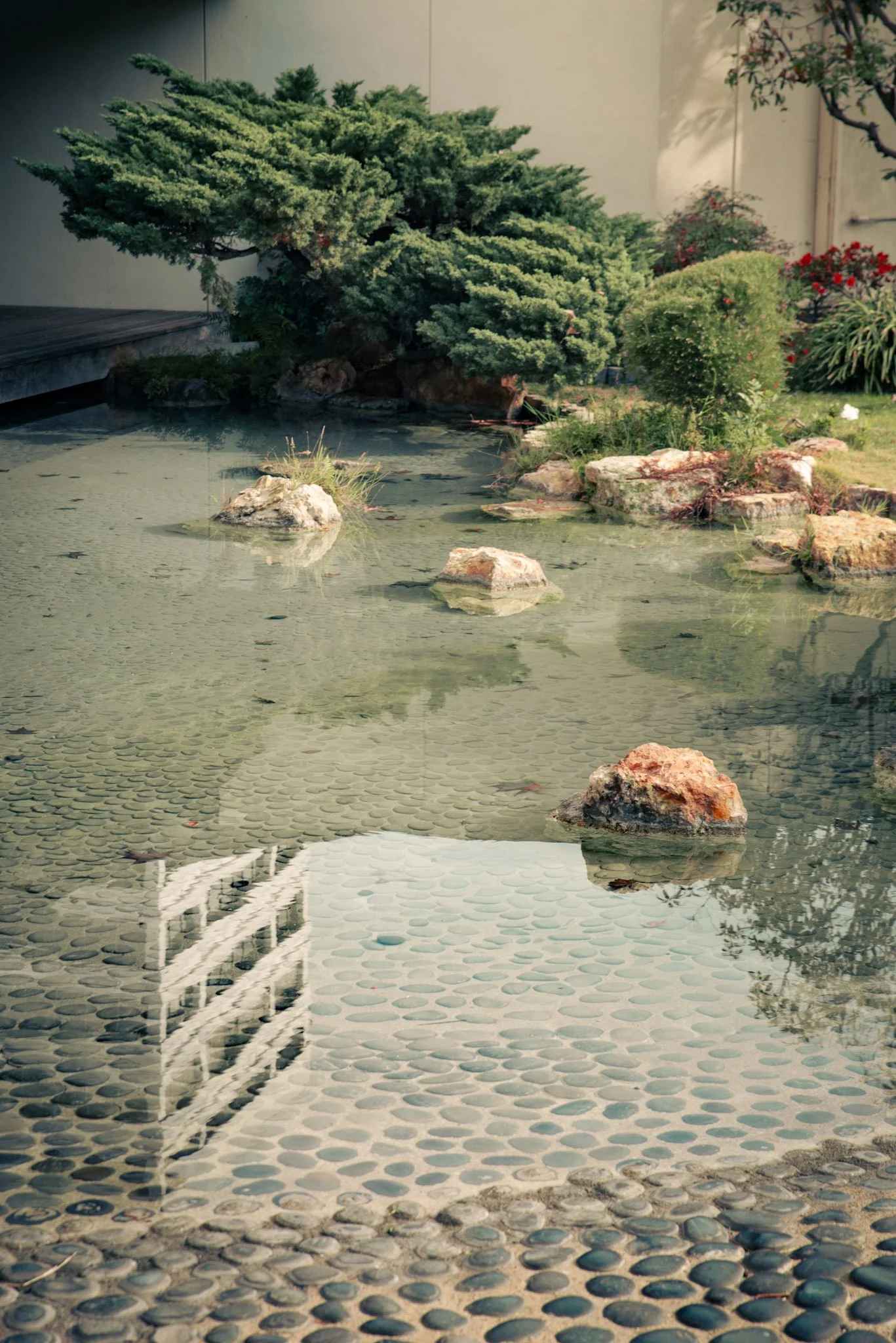
Even though the garden is compact, it’s one of my favorite places to photograph in Los Angeles. It’s surprisingly quiet and often empty, making it easy to take your time and explore. Every few steps offer something new: shifting light, reflections in the water, and shadows across the stonework, buildings, and other structures. Because the space is so dense, you can find multiple compositions without moving more than a few feet.
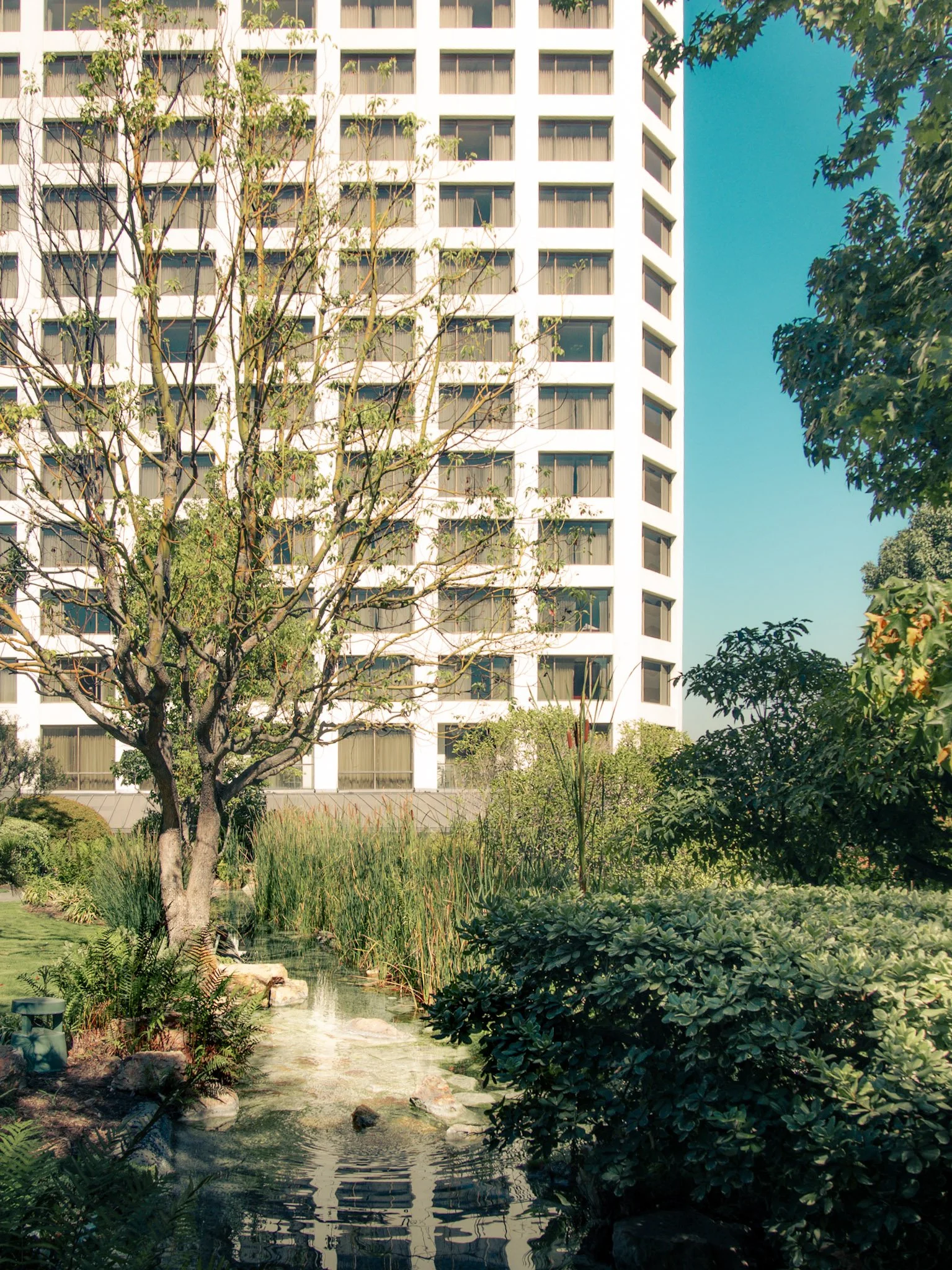
And then there’s the view. Being above ground gives you clean sightlines to the nearby buildings, creating an urban backdrop that contrasts perfectly against the garden’s natural textures. It’s that same wonderful duality you feel walking through Tokyo — calm but vibrant nature, among sterile man-made surroundings.



How to Visit and Shoot
As mentioned earlier, the garden sits atop the main entrance to the DoubleTree Hotel in Little Tokyo, on the corner of 2nd Street and Los Angeles Street. There’s a small parking garage under Weller Court, next to the hotel, but honestly, any of the parking areas and garages in the area will do. The hotel is also about two blocks from the Little Tokyo / Arts District Metro Station.
Access is simple enough. You can get to Kyoto Gardens through the DoubleTree Hotel lobby via the elevator in the back. Technically, the garden is only meant for hotel guests, but I’ve never had an issue just walking in and heading up. Just be respectful and low-key — it’s a peaceful space, and I think the hotel staff know that people go and are generously leaving it accessible. Additionally, it occasionally gets rented out for events, so I wouldn’t plan a trip just to visit the garden, as there’s always a chance that it will be off limits.
As for when to photograph, you can probably shoot here at any time of day, and in any lighting conditions. Sure, golden hour is probably a safe bet, as the warm tones will compliment the greens and the water reflections and the setting sun produces softer light. However, I’ve only shot there at midday, and the garden still photographed well — there’s plenty of shaded areas and the abundant stone and water often fills dark shadows with lots of reflected light.
A Living Connection to Little Tokyo & Big Tokyo
The garden’s history feels almost symbolic of Little Tokyo itself. The hotel has changed names and ownership several times, yet the garden has endured — a quiet constant that continues to welcome visitors. In that way, it mirrors the community that surrounds it: ever changing, yet enduring, anchored by cultural roots that define its identity.
Ironically, though it’s named after Kyoto, the garden feels much more like the gardens in Tokyo (as I alluded to as the start of this article)— compact, layered, and contrasted with modern architecture. Despite the fact that it resembles a sea of buildings, Tokyo is pockmarked with countless little green spaces that pull you out into a surreal and tranquil respite that feels like you’re somewhere else entirely. Kyoto Gardens captures that exact same feeling- it’s one of the few places in Downtown LA that manages to do that.
So next time you’re in Little Tokyo, make Kyoto Gardens part of your itinerary. Bring your camera, take your time, and enjoy this hidden piece of Japan tucked above the city. And if you do capture something special, tag me on Instagram — I’d love to see what you find up there.
Dekocar at Nisei Week 2025
I finally made it back out to a Dekocar event at Nisei Week in Little Tokyo. It’s been quite a few years since I last attended—2019, if memory serves—so it felt good to return.
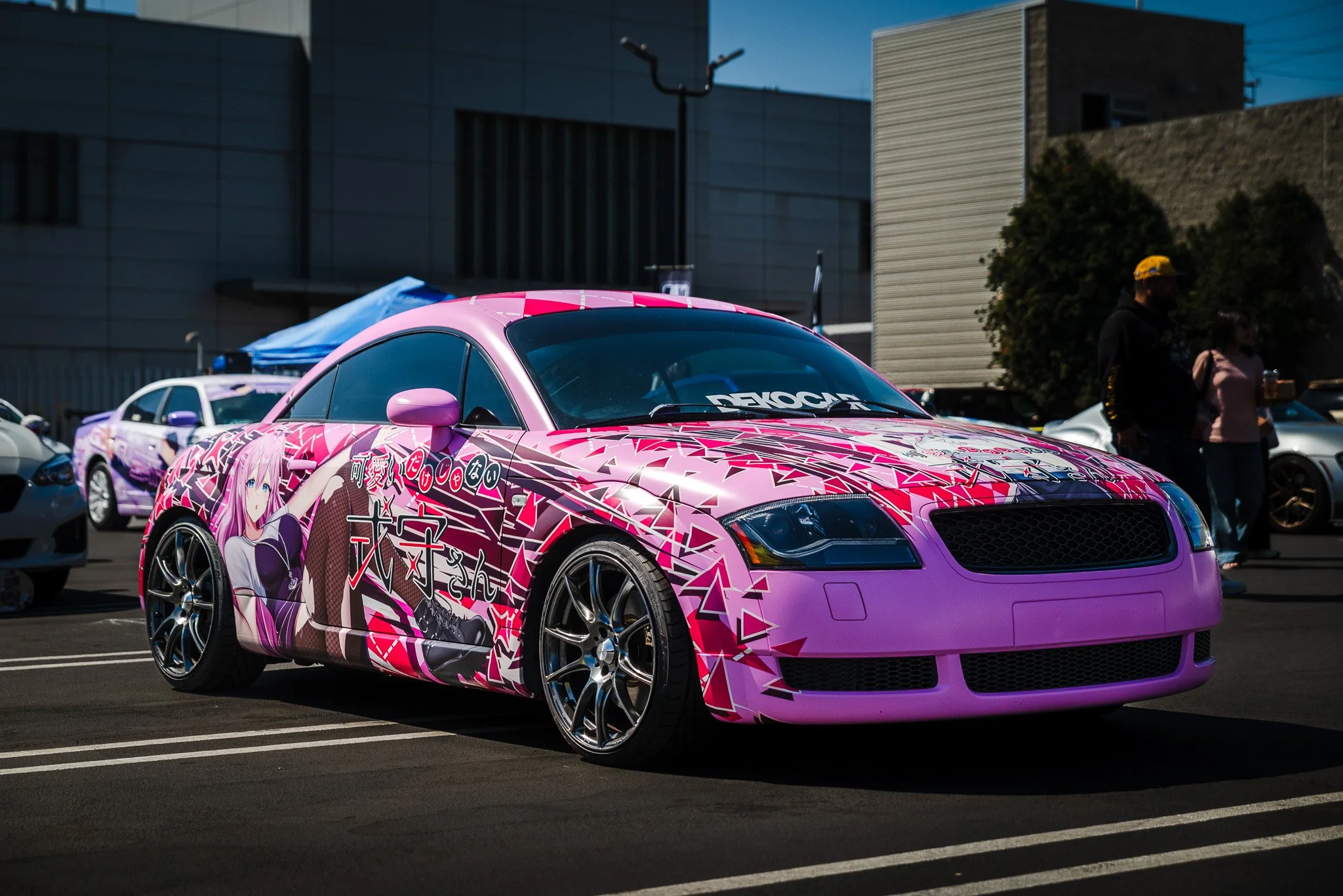
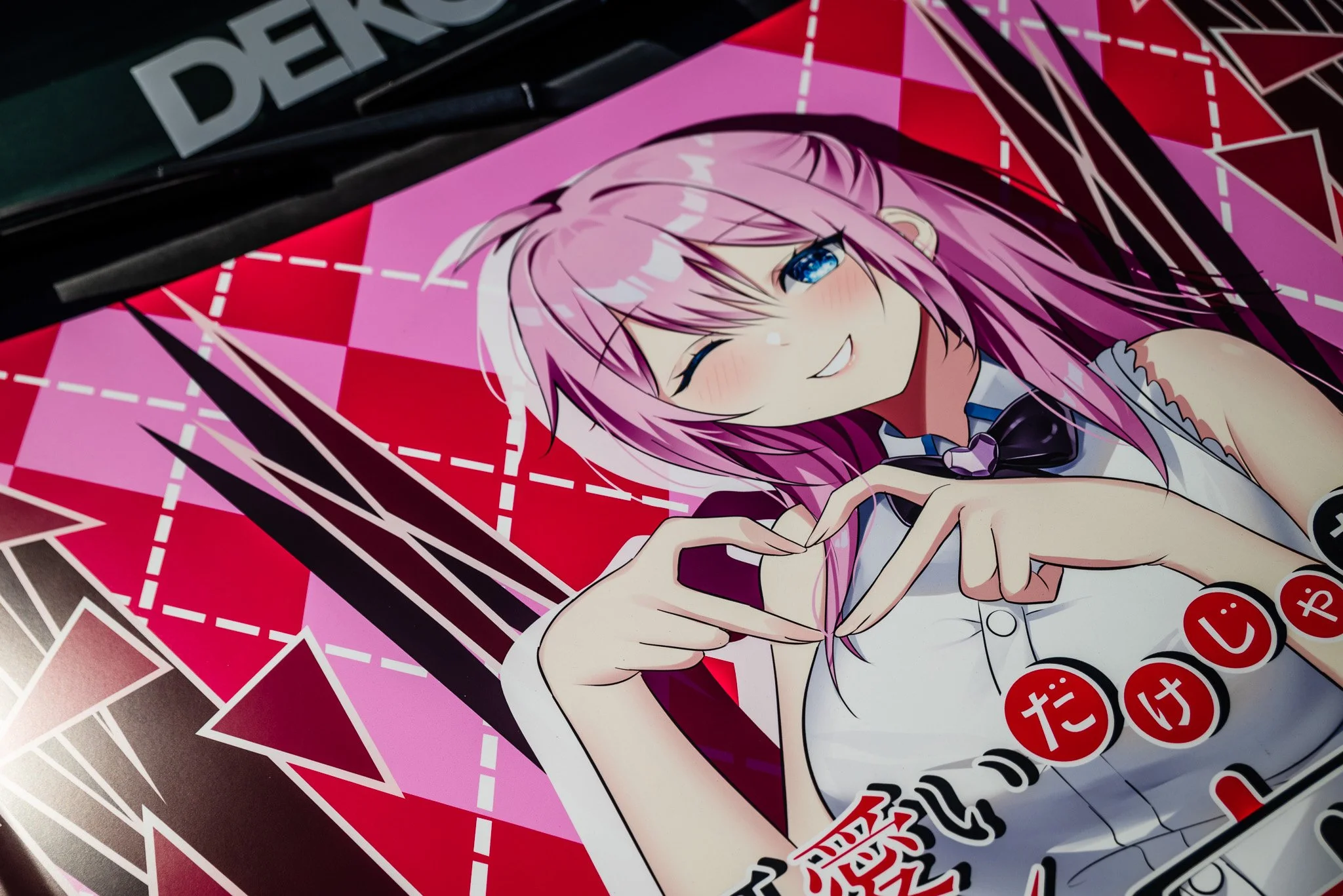
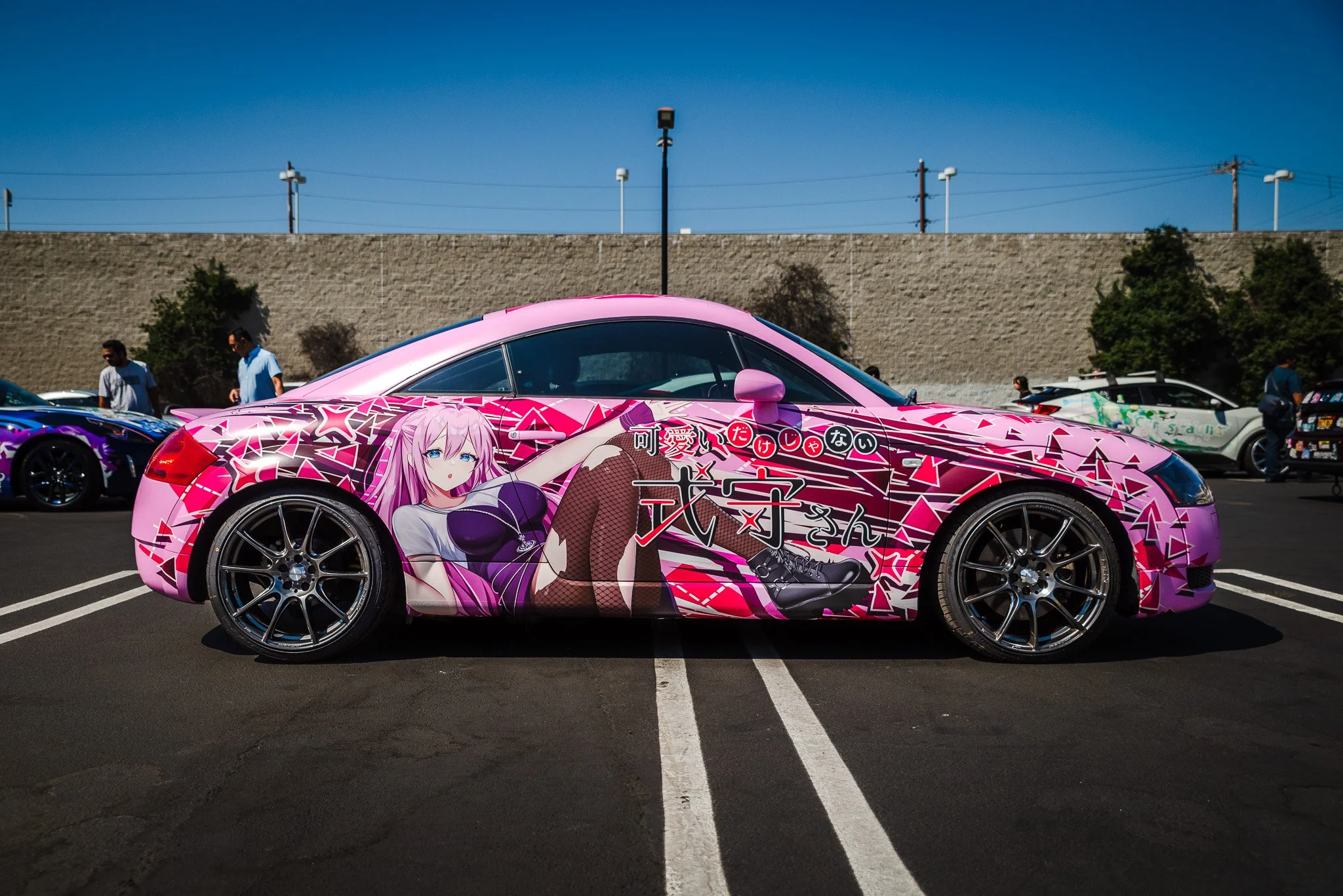
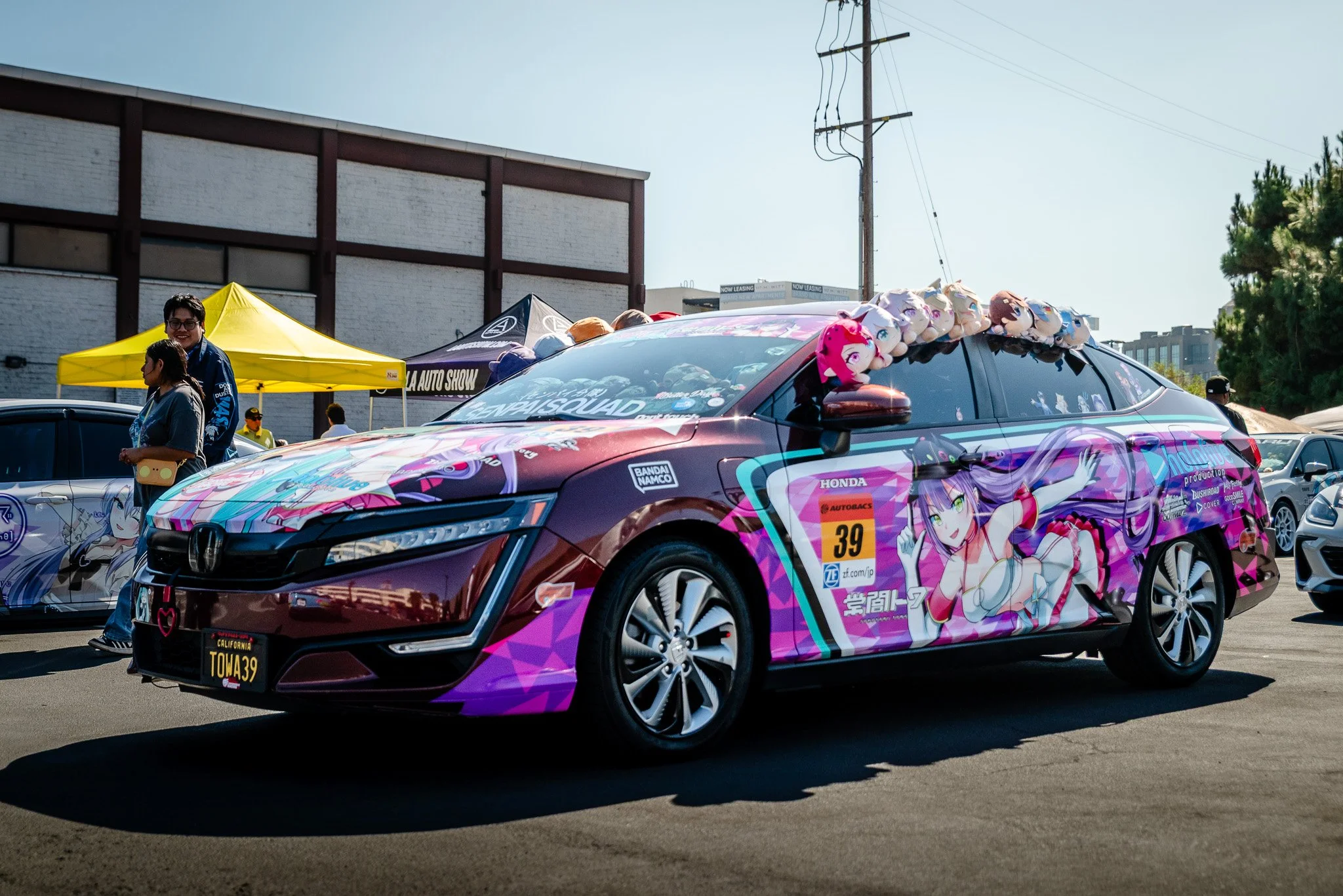
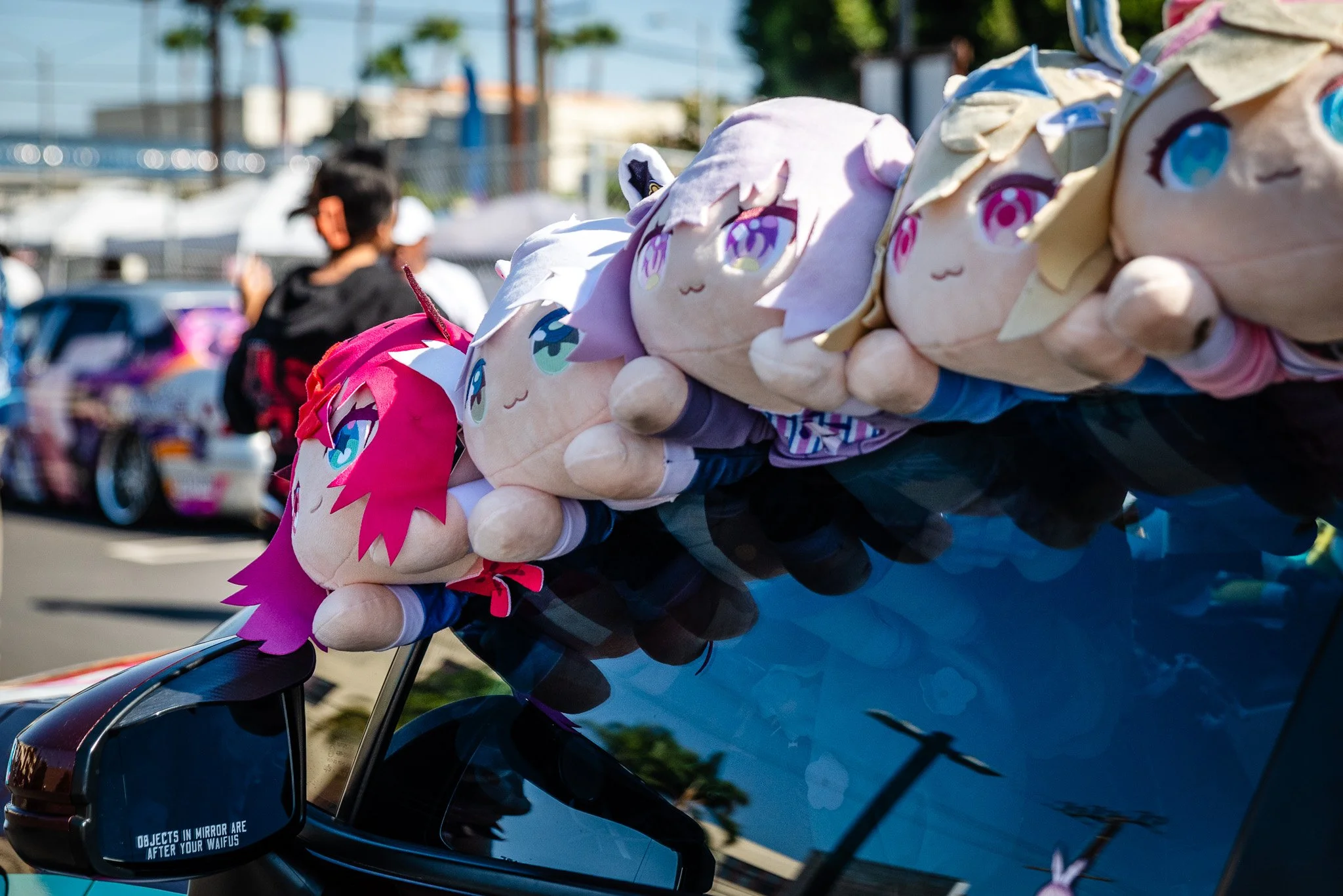
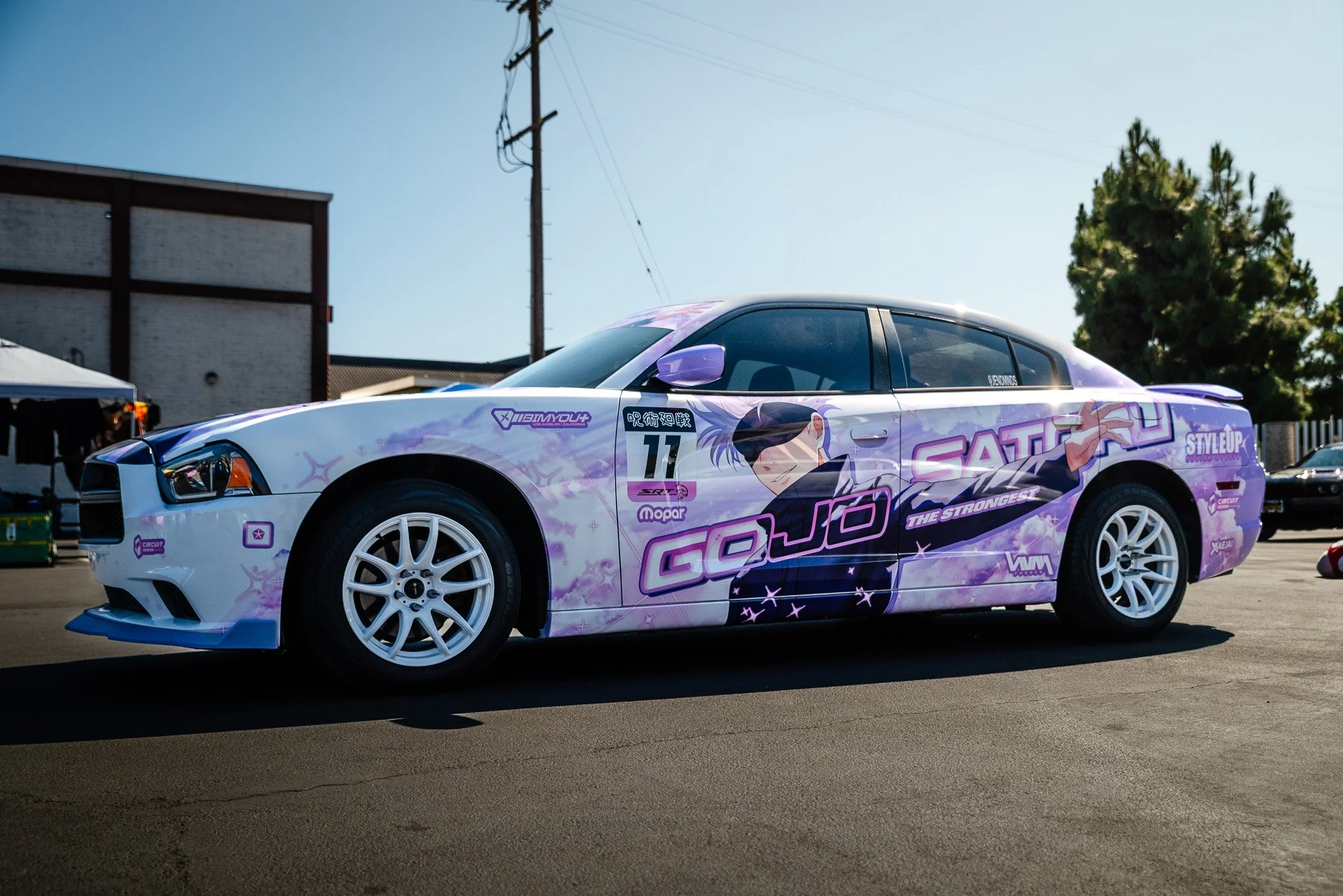
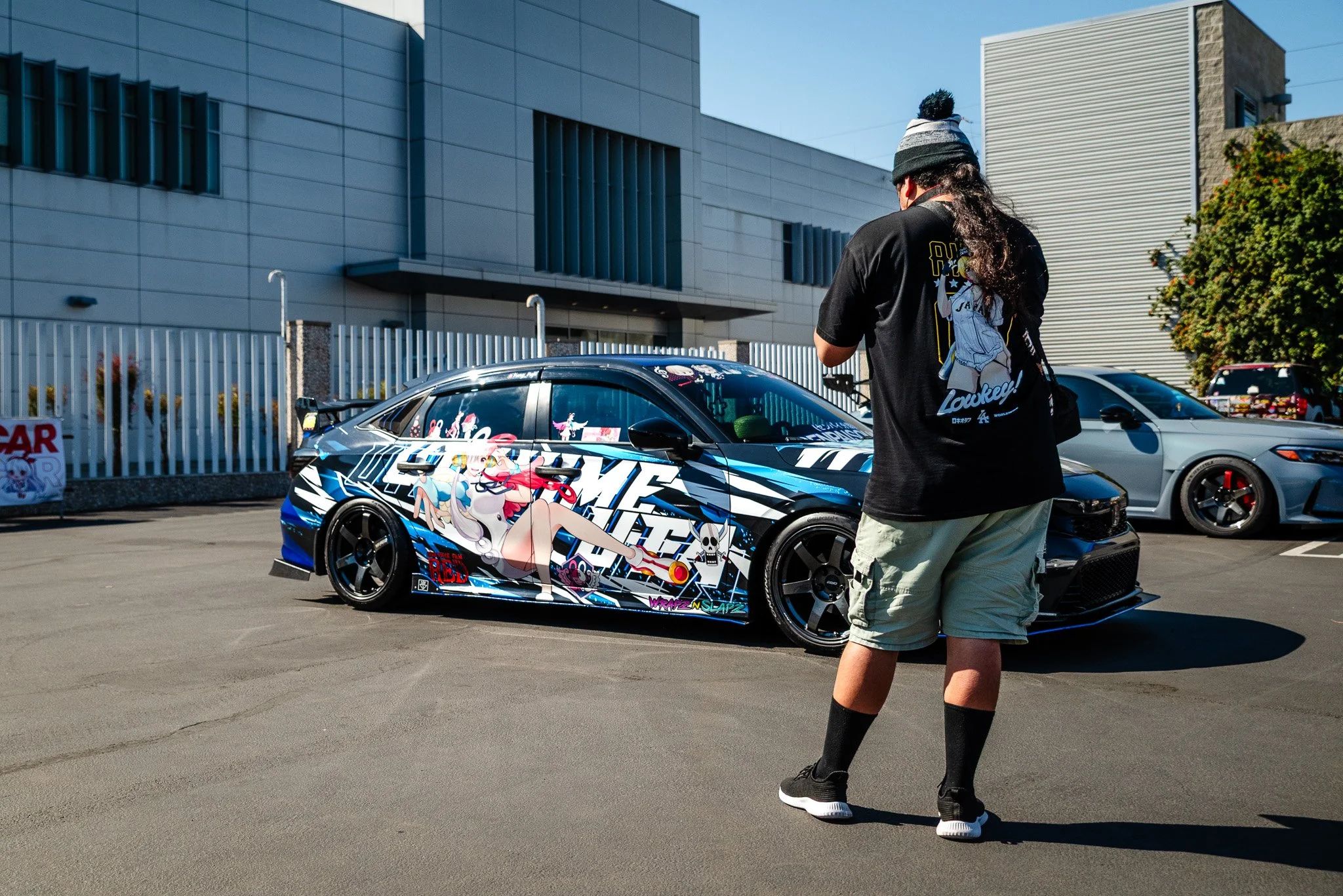
I finally made it back out to a Dekocar event at Nisei Week in Little Tokyo. It’s been quite a few years since I last attended—2019, if memory serves—so it felt good to return. These days it can be tough to carve out time to do anything consistently, but I’m glad I went. It was a chance to see how the scene has evolved, catch up with some familiar styles, and of course, take plenty of photos to share.
Like last time, the event took place at the Nishi Hongwanji Buddhist Temple in Little Tokyo. The venue is a bit removed from the hustle and bustle of Japanese Village Plaza and Weller Court, but after the hard time I had finding parking for Nisei Week, I can appreciate the separation. The show felt a little smaller in terms of cars compared to 2019, but also bigger in other ways. Inside the temple’s auditorium, there was an artist alley, vendors, and even a small stage for performances, adding more variety to the experience.
Highlights from the Car Displays
Returning Motifs
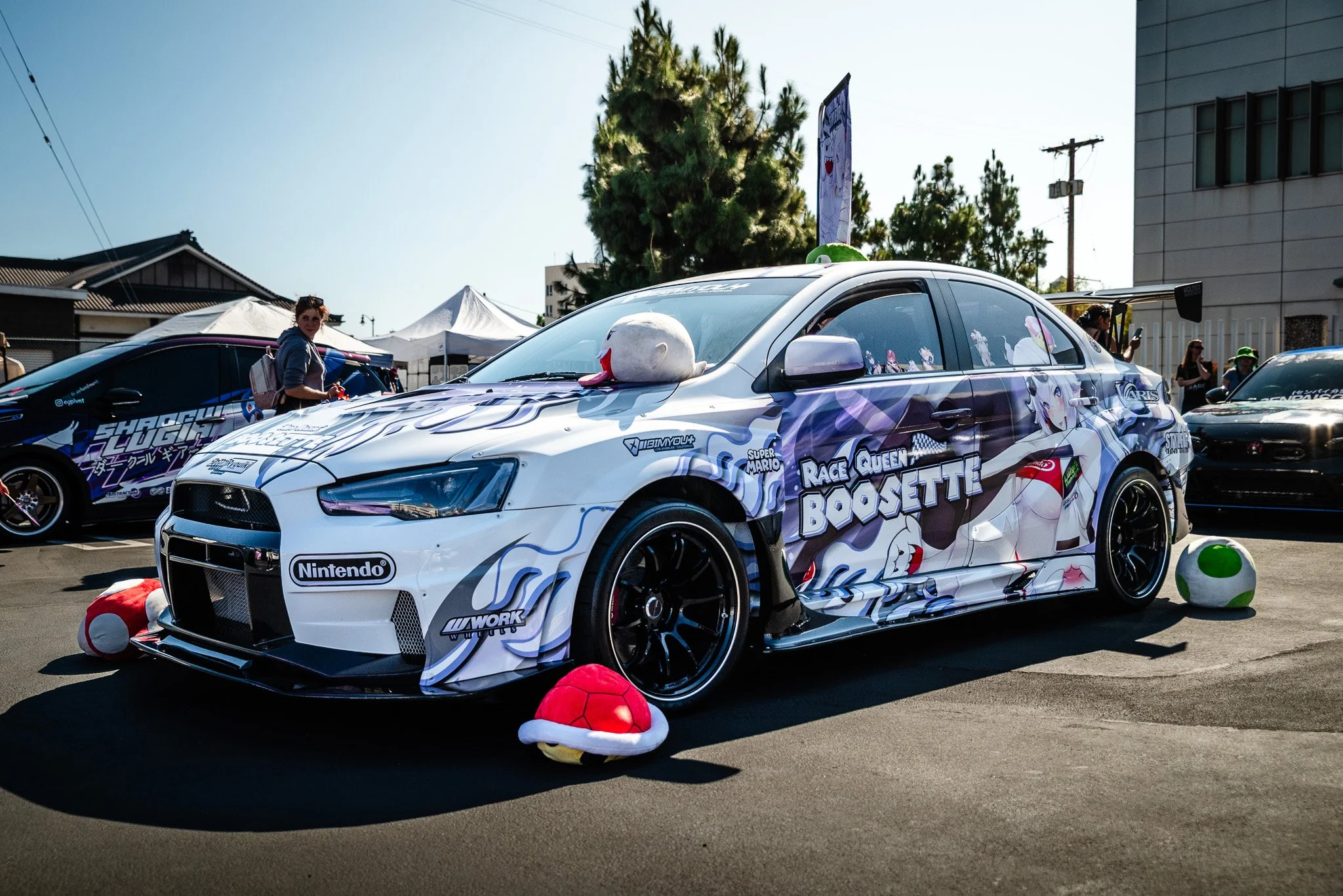
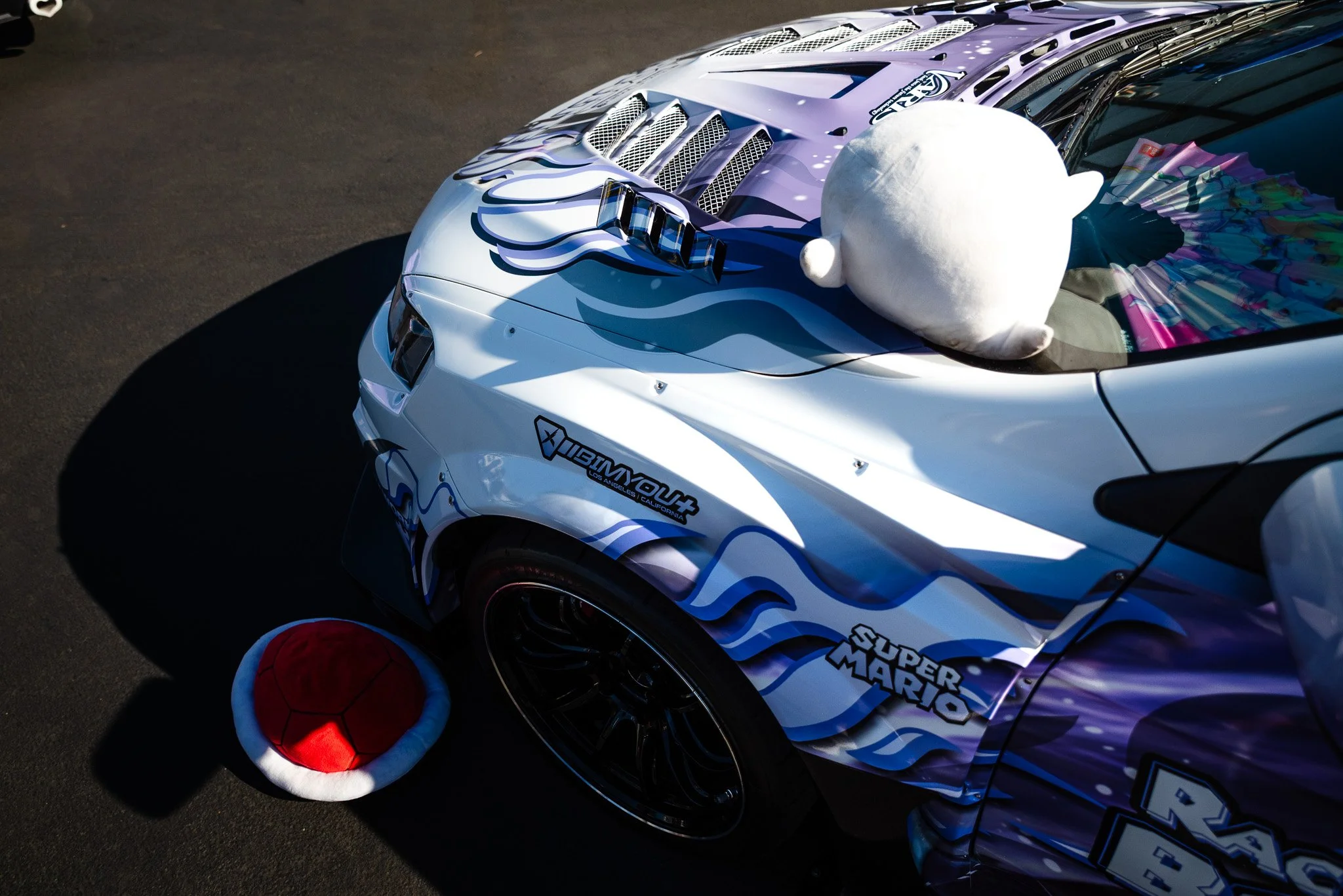
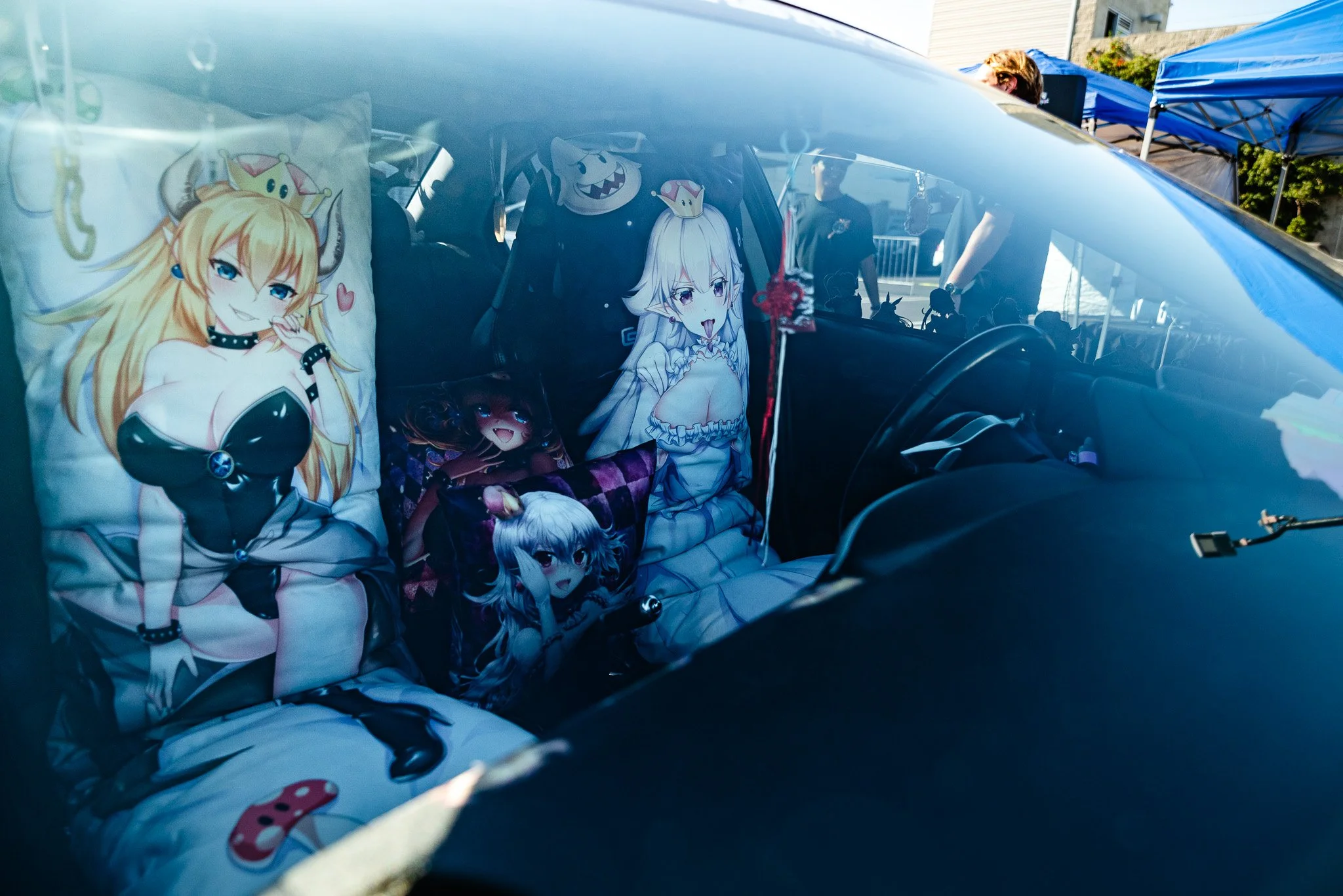
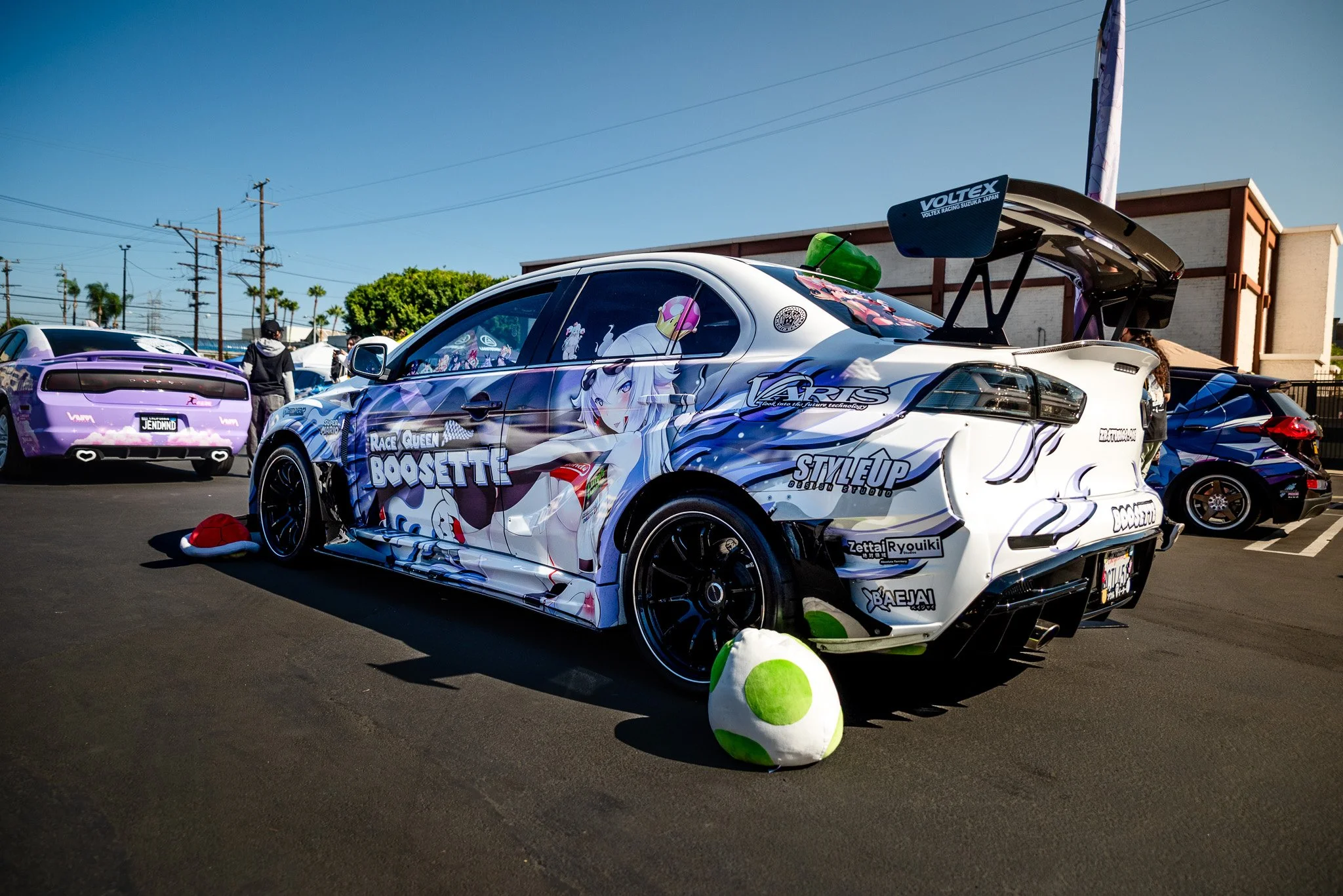
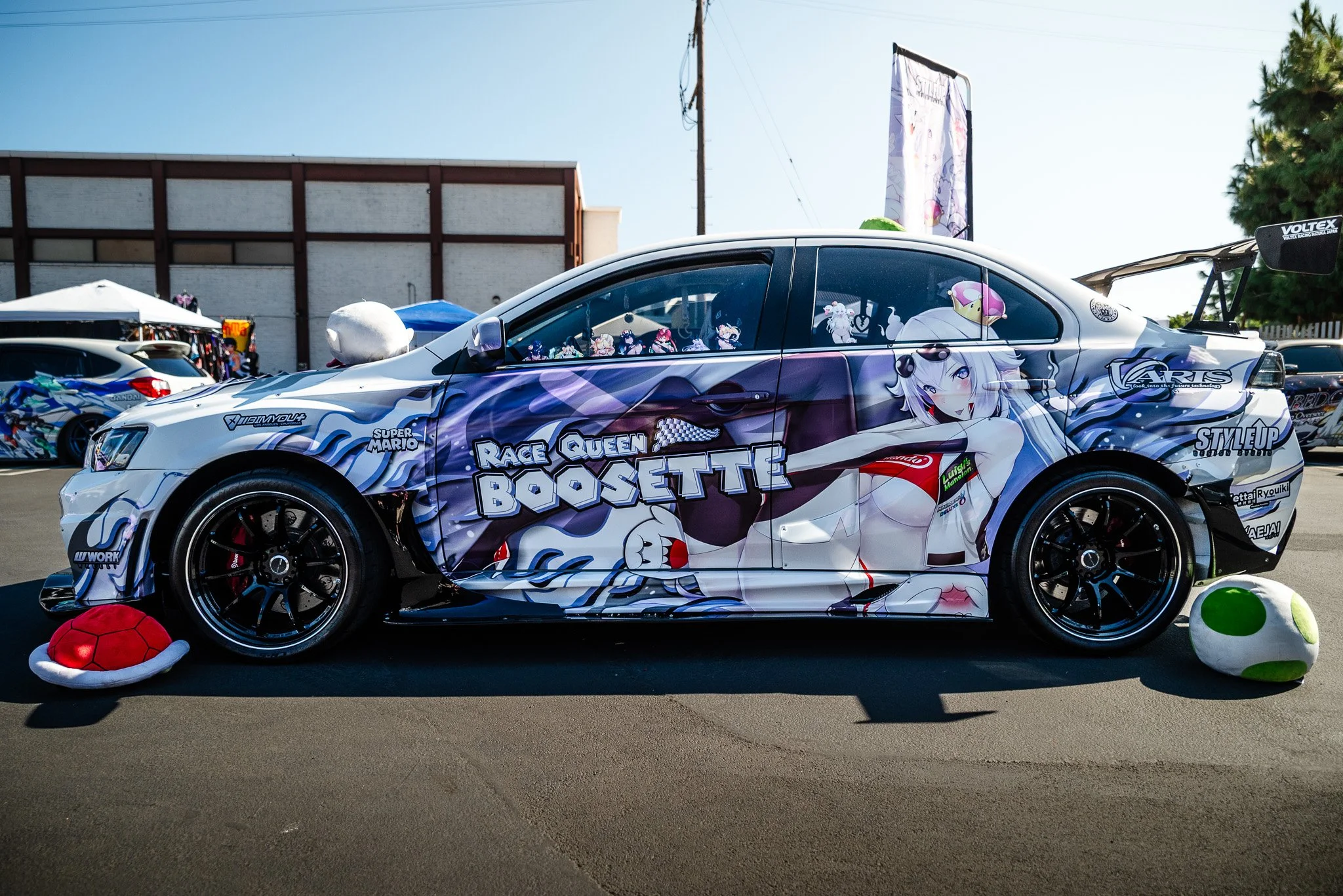
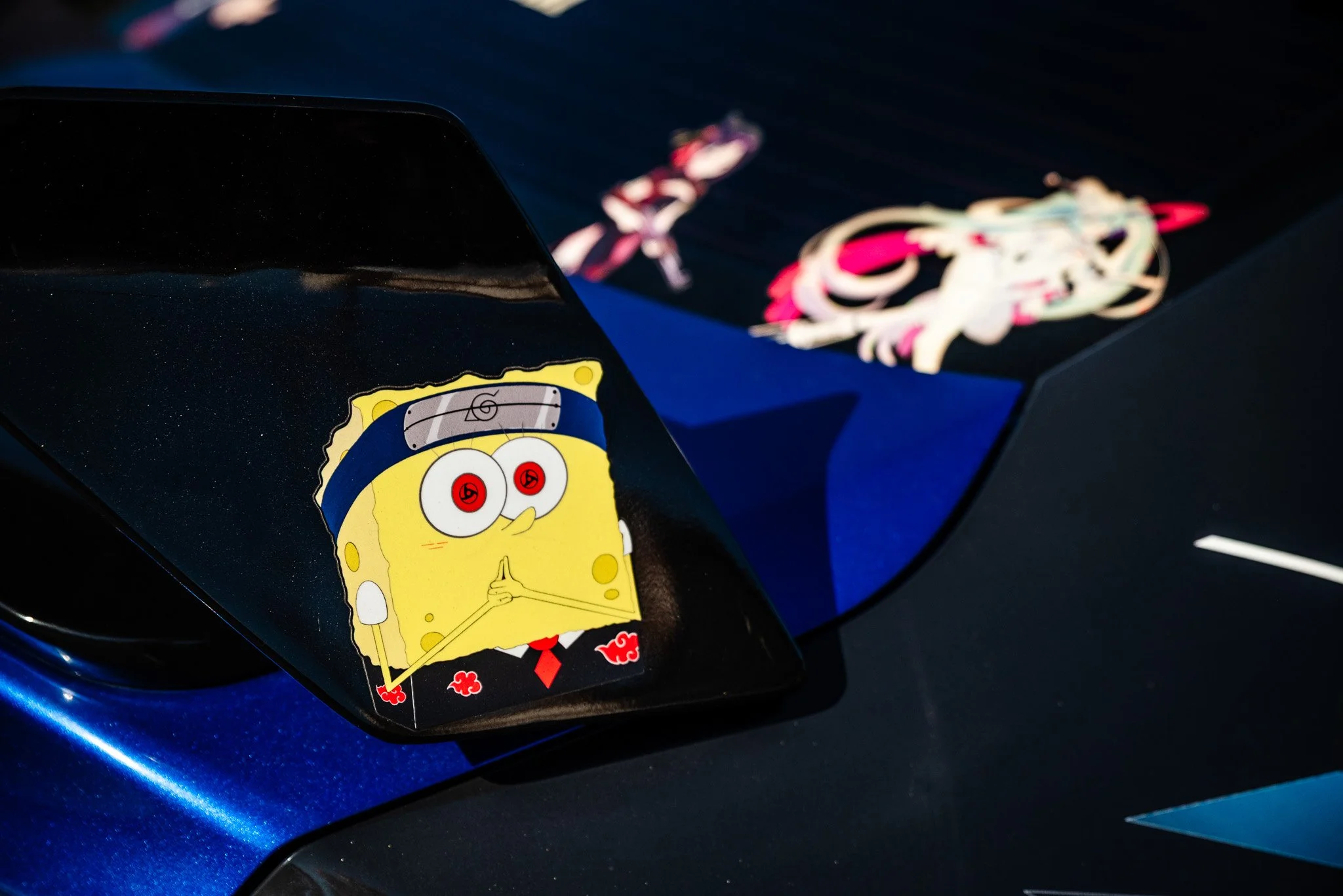
One car that really caught my eye was a white Mitsubishi Evo with a Boosette-themed design. Back in 2019, I photographed a similar car, and I found myself wondering if this was the same one. As it turns out, it is! The styling has definitely changed—this version features new wrap designs and is heavily modified with a body kit, spoiler, and custom hood. The look is different enough that I didn’t even recognize it at the Taste of Japan Dekocar event in May. It's only here (where I first encountered it) that my memory was finally jogged. Regardless, it was cool to see an “old face” make a comeback. In a way, it made it feel like maybe I hadn’t been gone that long from the scene. (Owner @king_boo_rider on Instagram)

Other Standout Designs
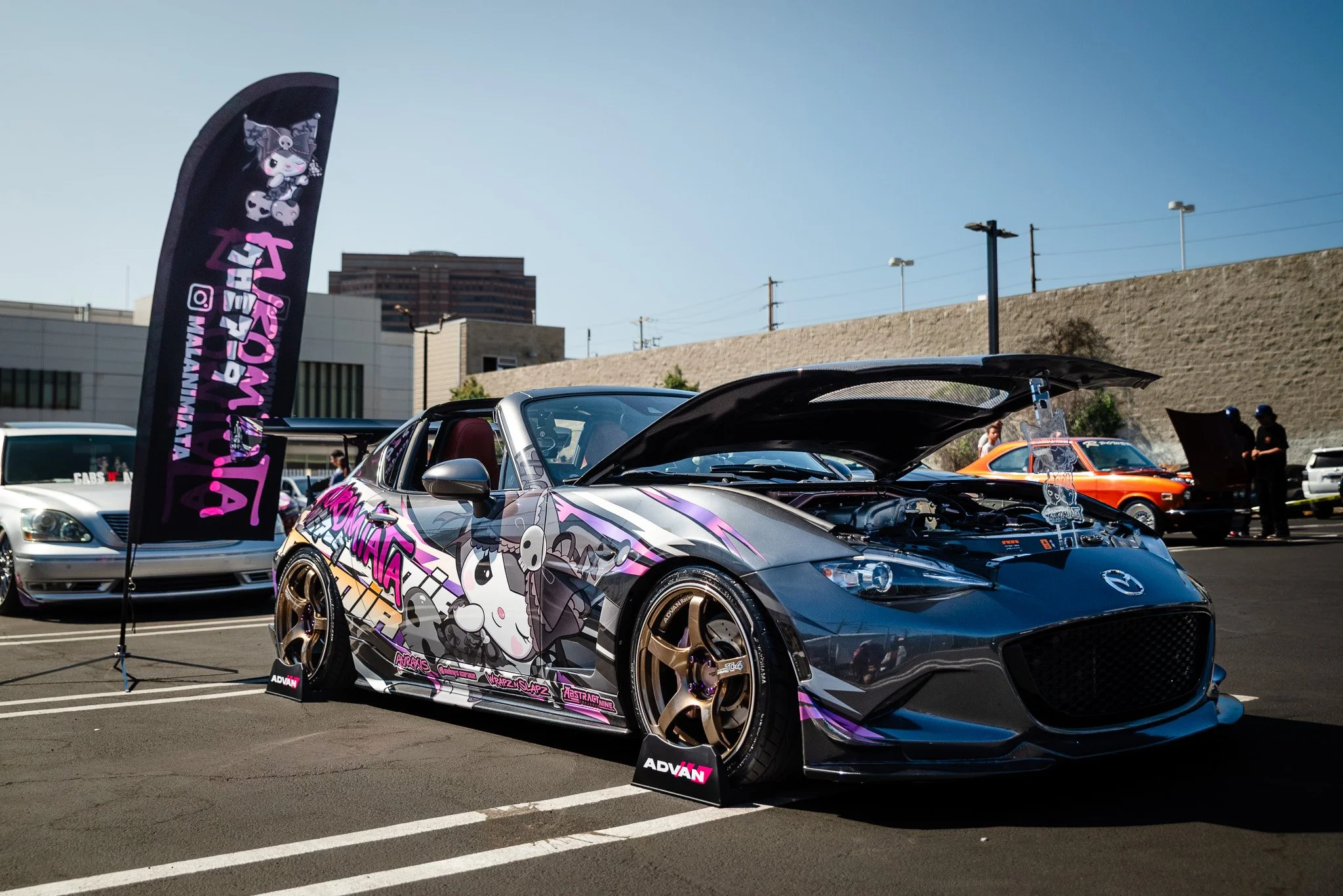
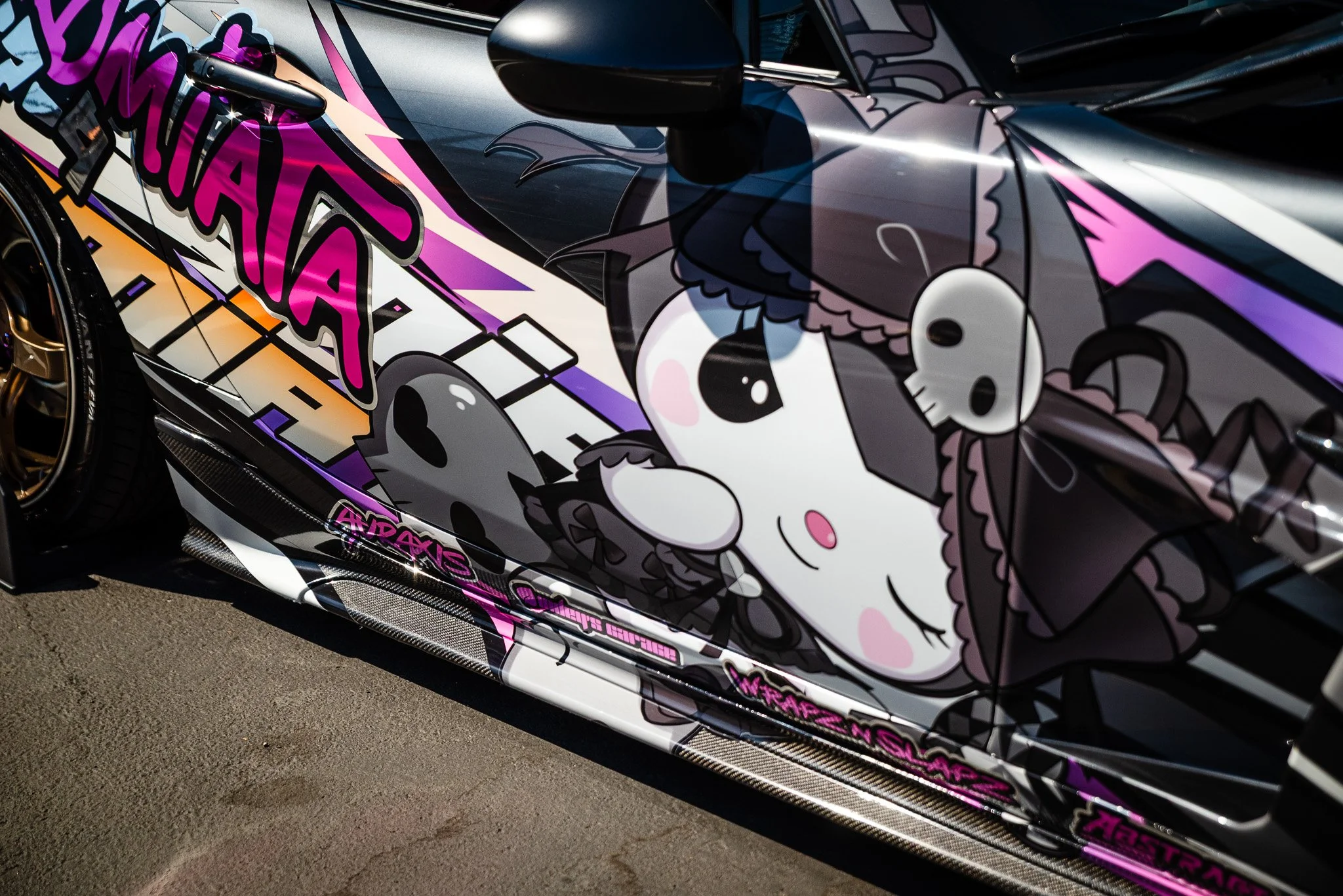
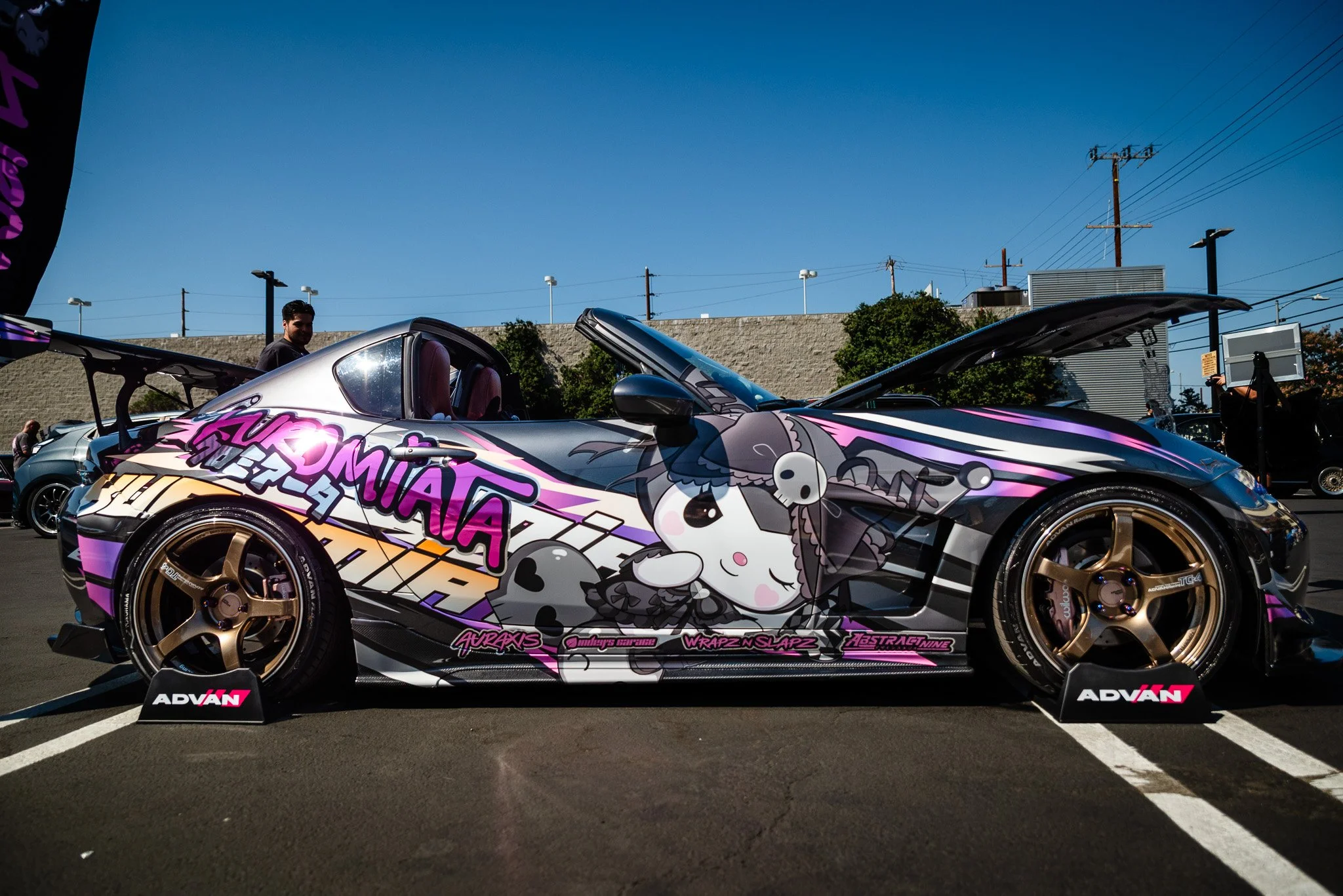
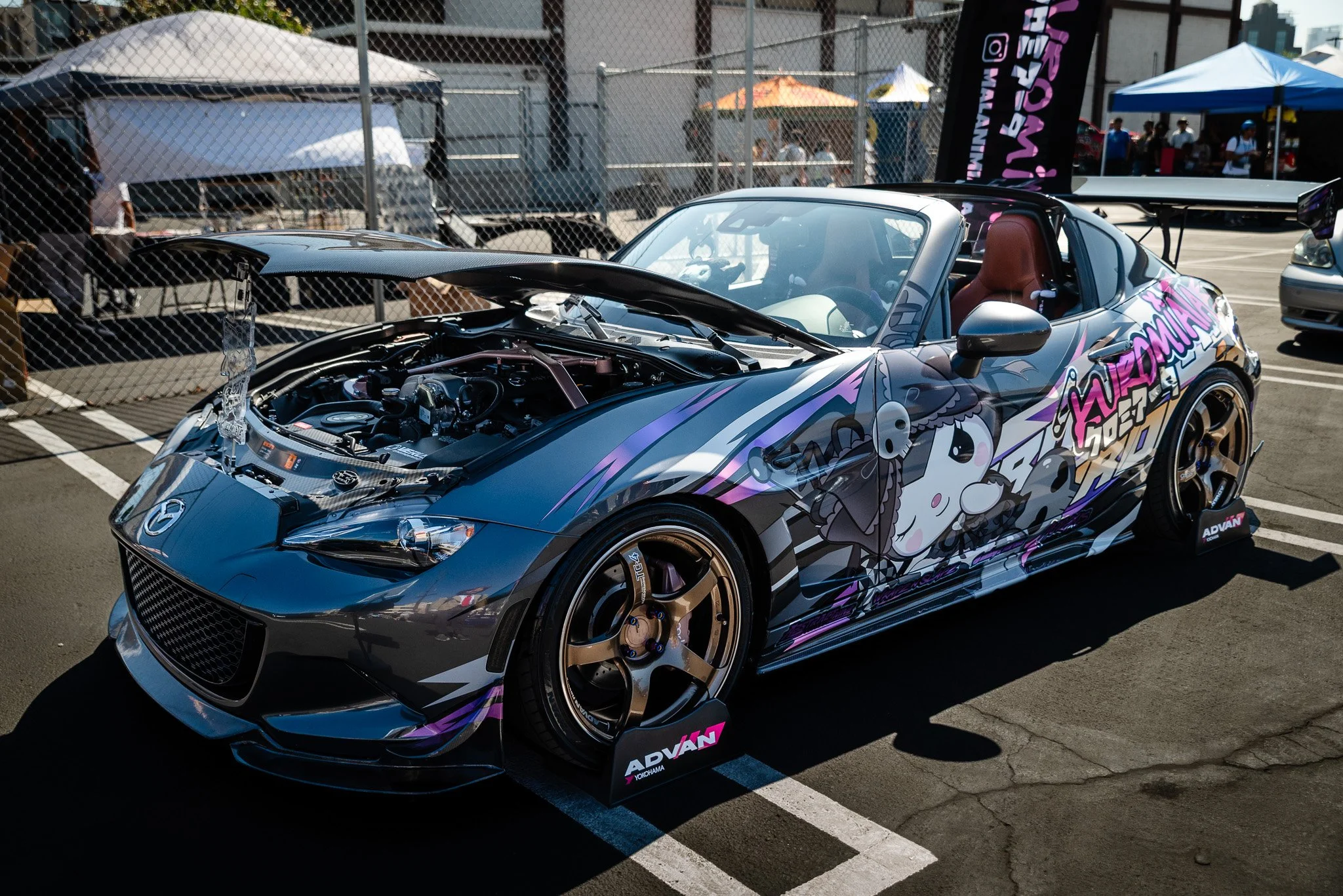
Kuromi Mazda Miata
A clean black Miata featuring the Sanrio character Kuromi. The vehicle had a striking design and it definitely stood out. (Owner @MelaniMiata on Instagram).

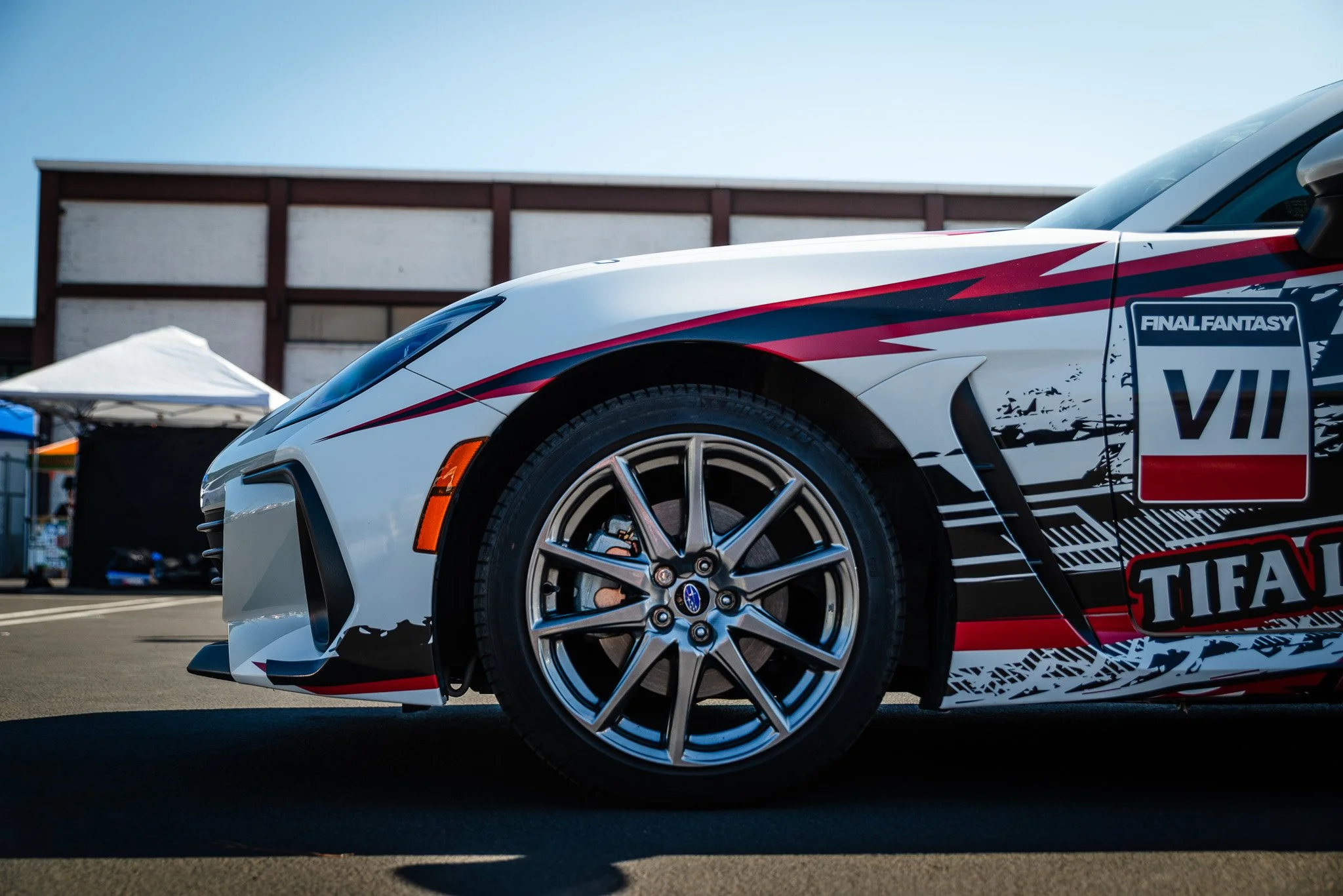
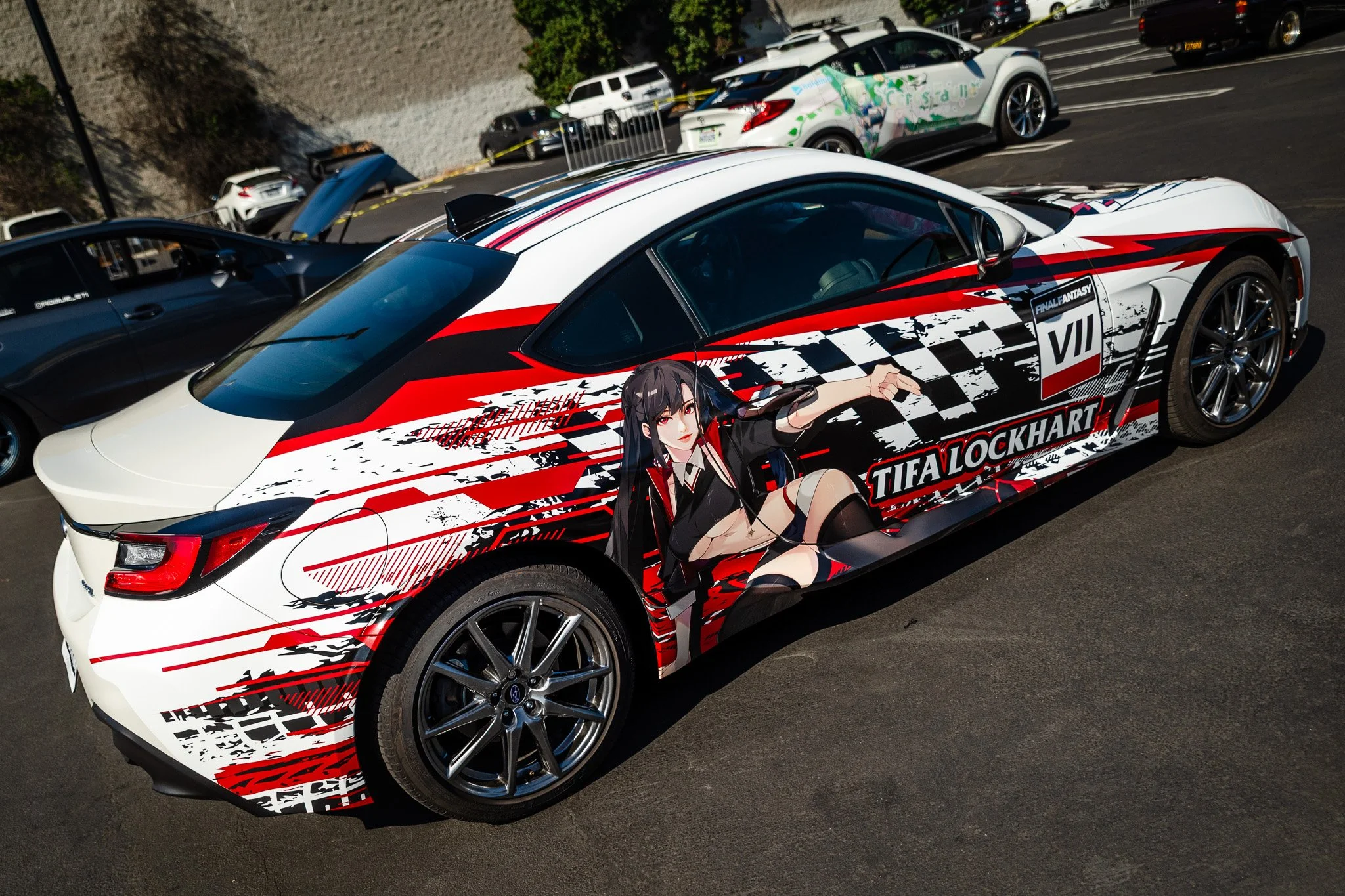
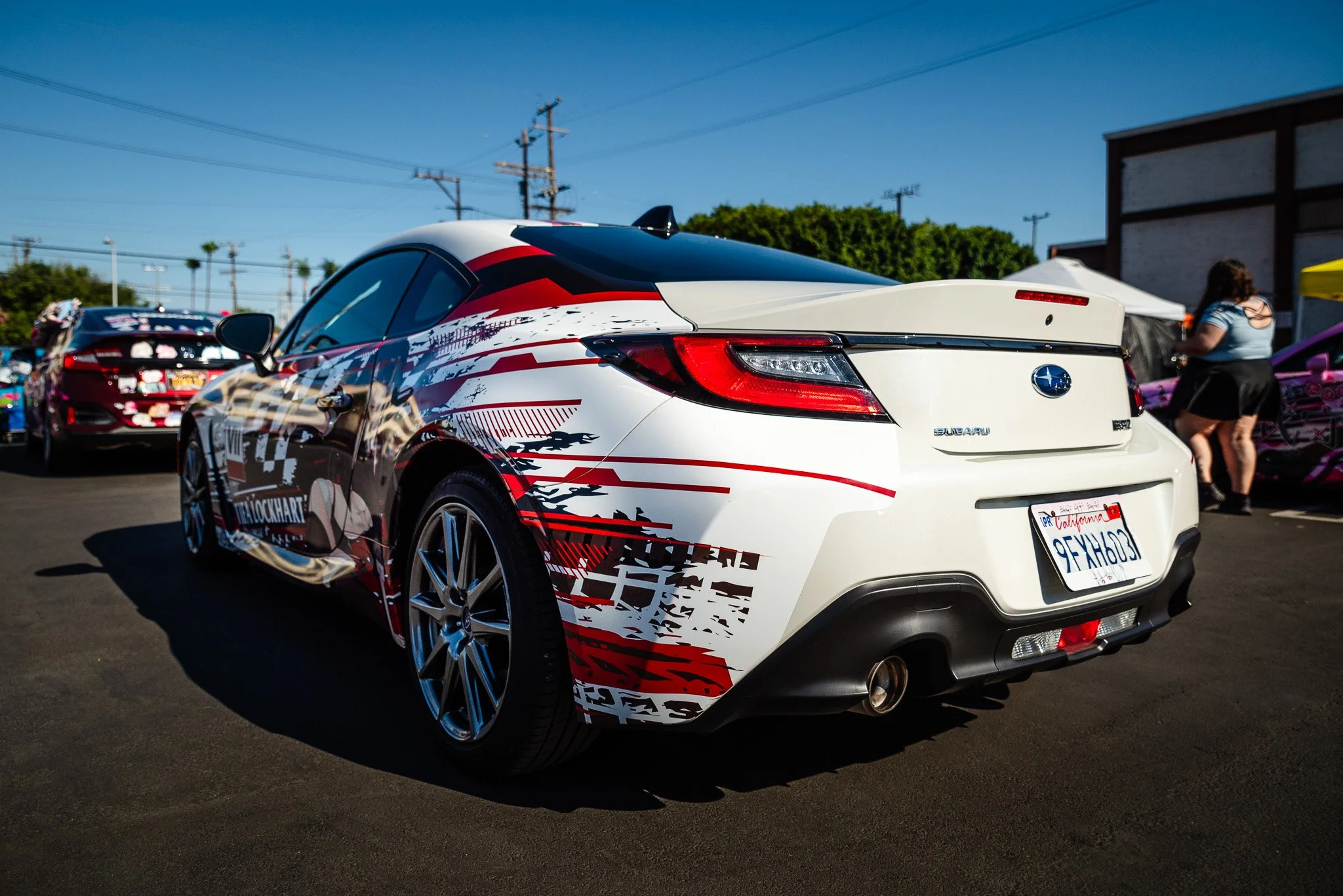
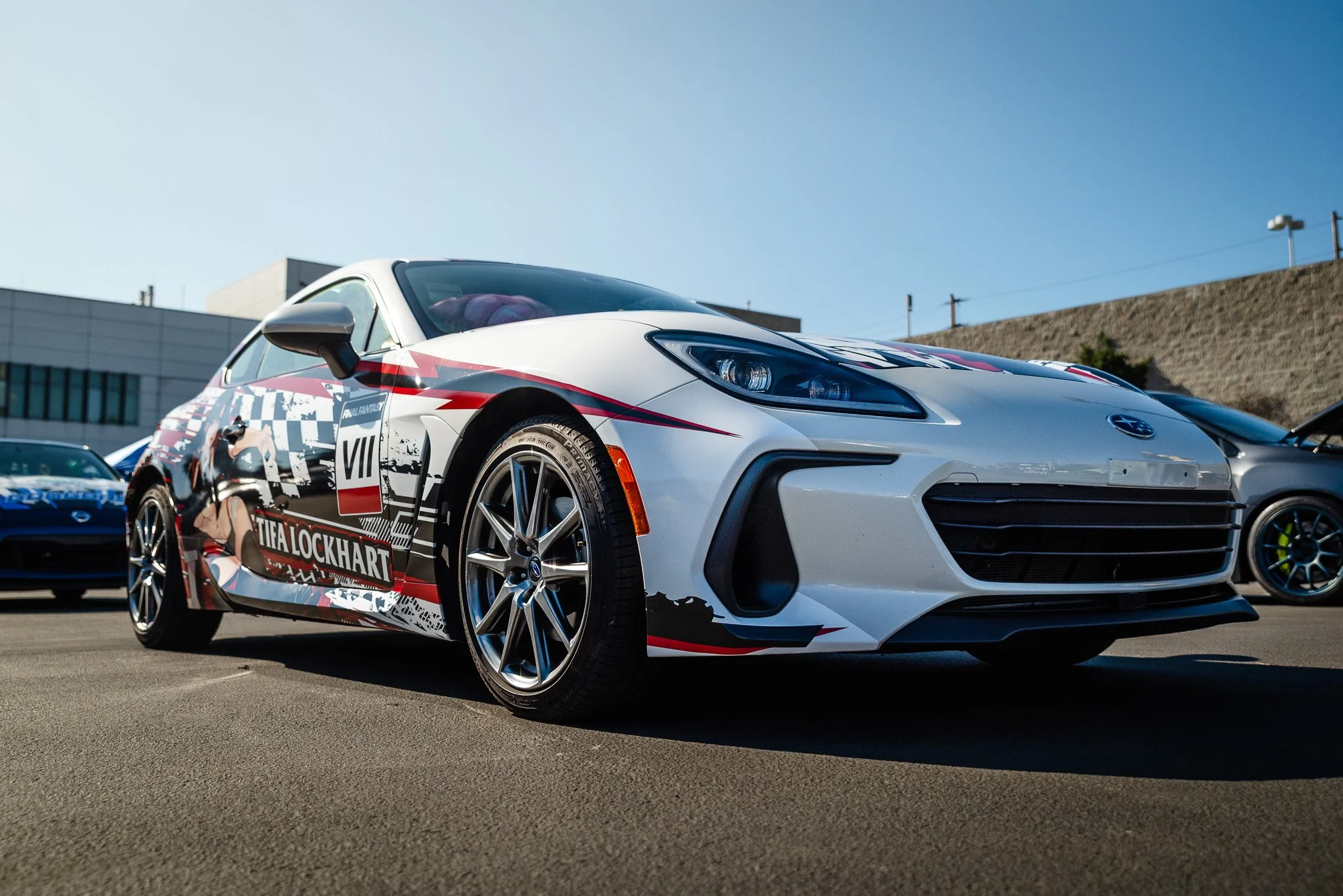
Tifa Lockhart BRZ
A bold Final Fantasy–themed build. It’s always fun to see game culture blend into the itasha world. Personally, I’ve always been more of an Aerith guy, but Tifa seems to be the more popular of the two. (Owner @lex.lao on Instagram)






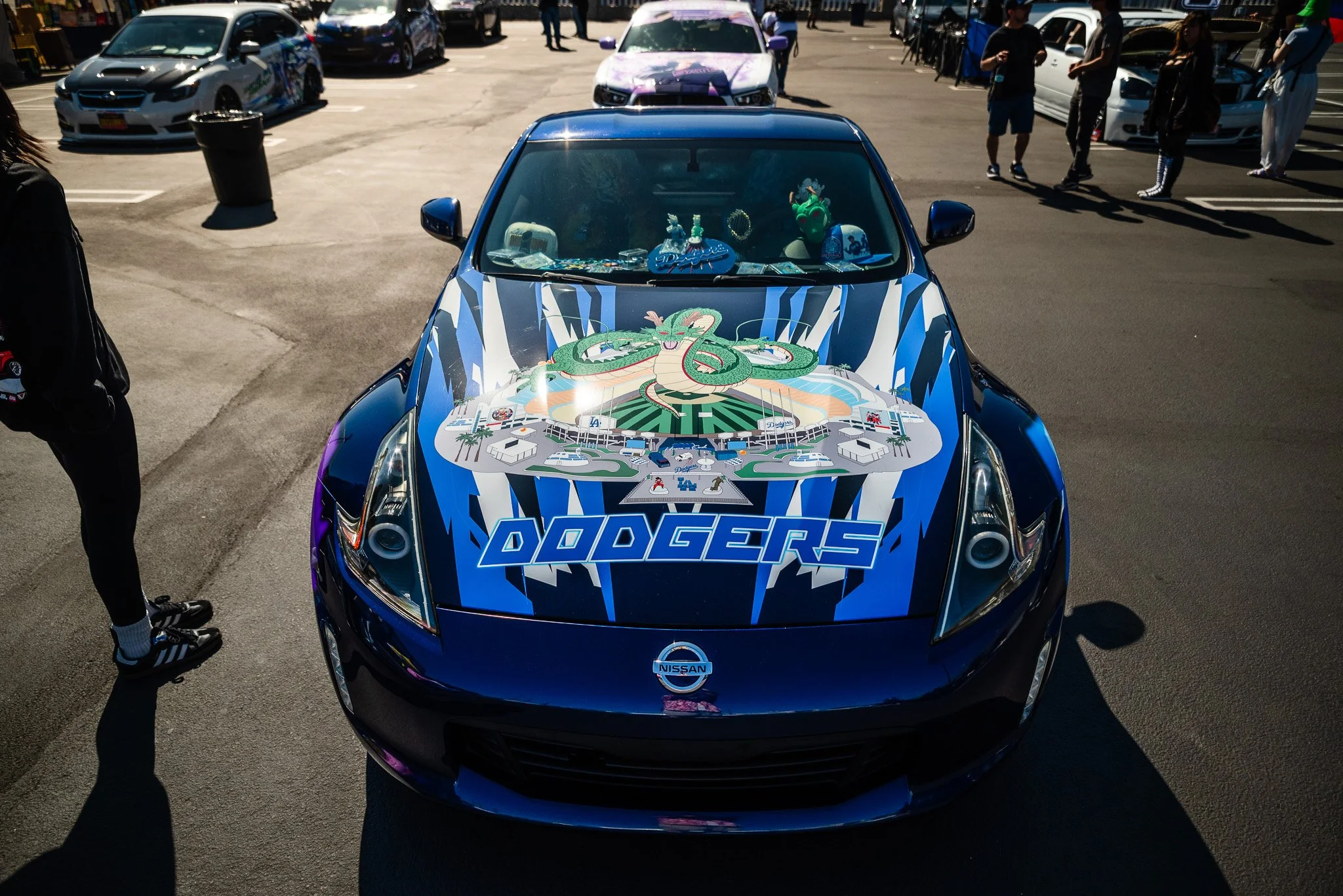
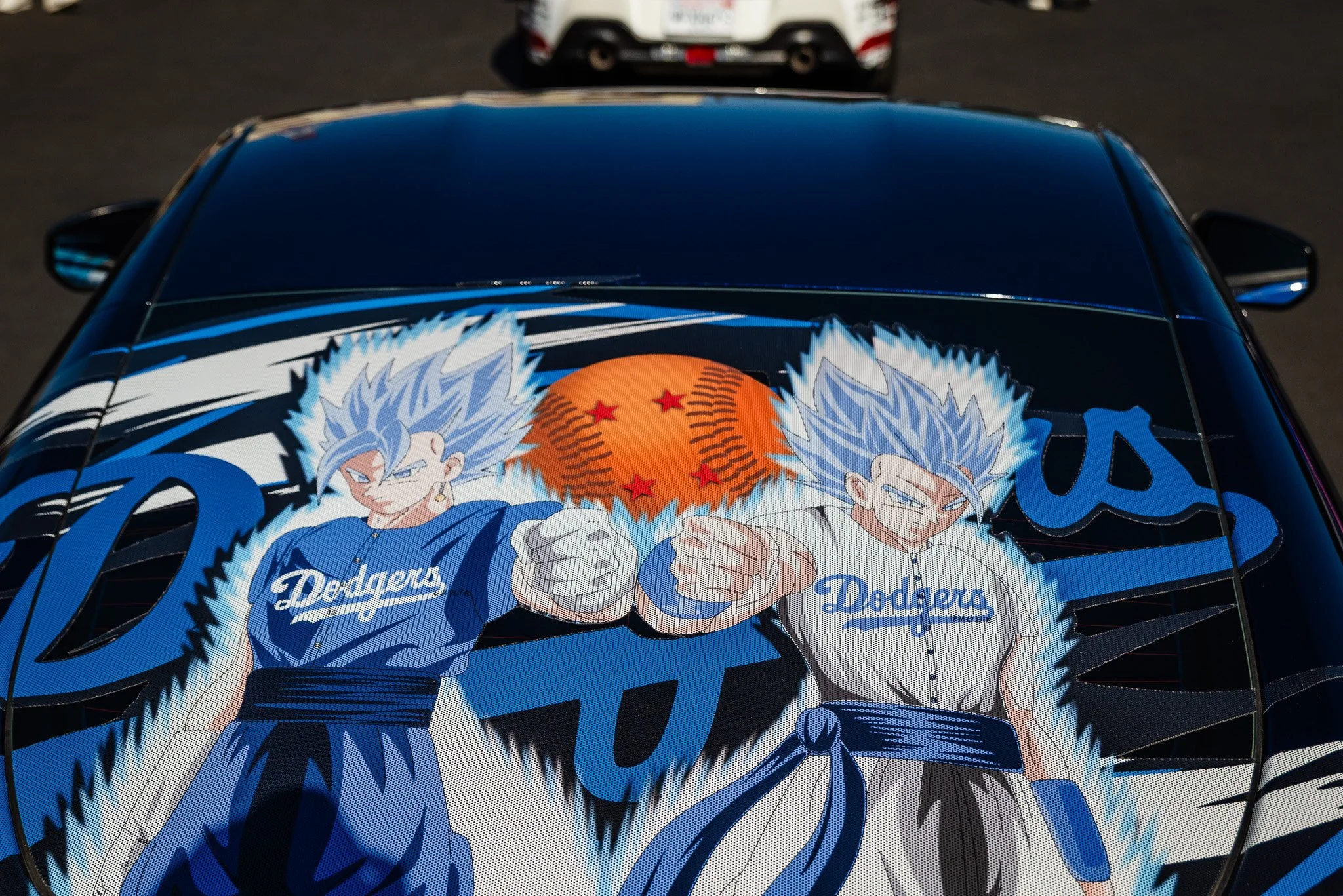
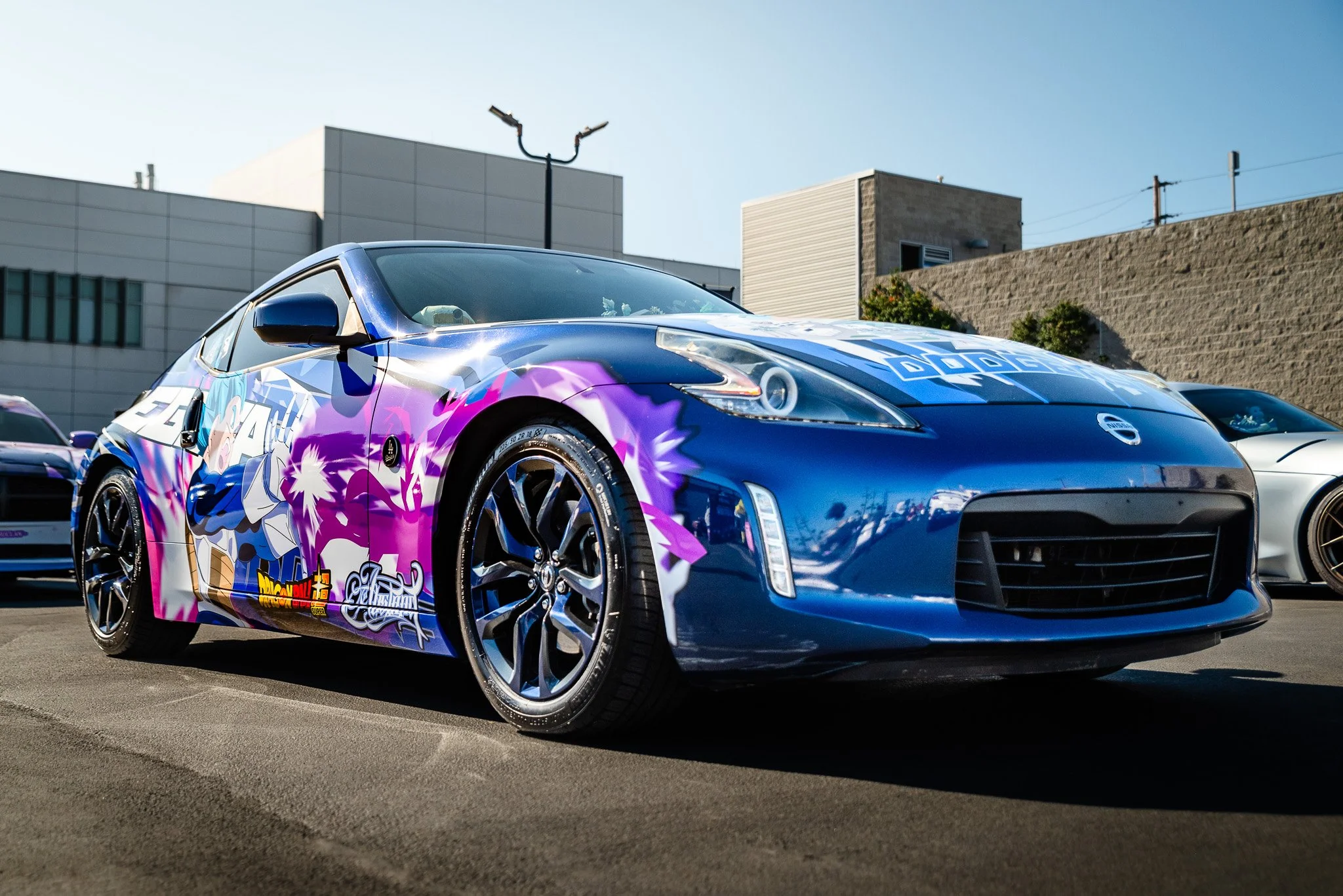
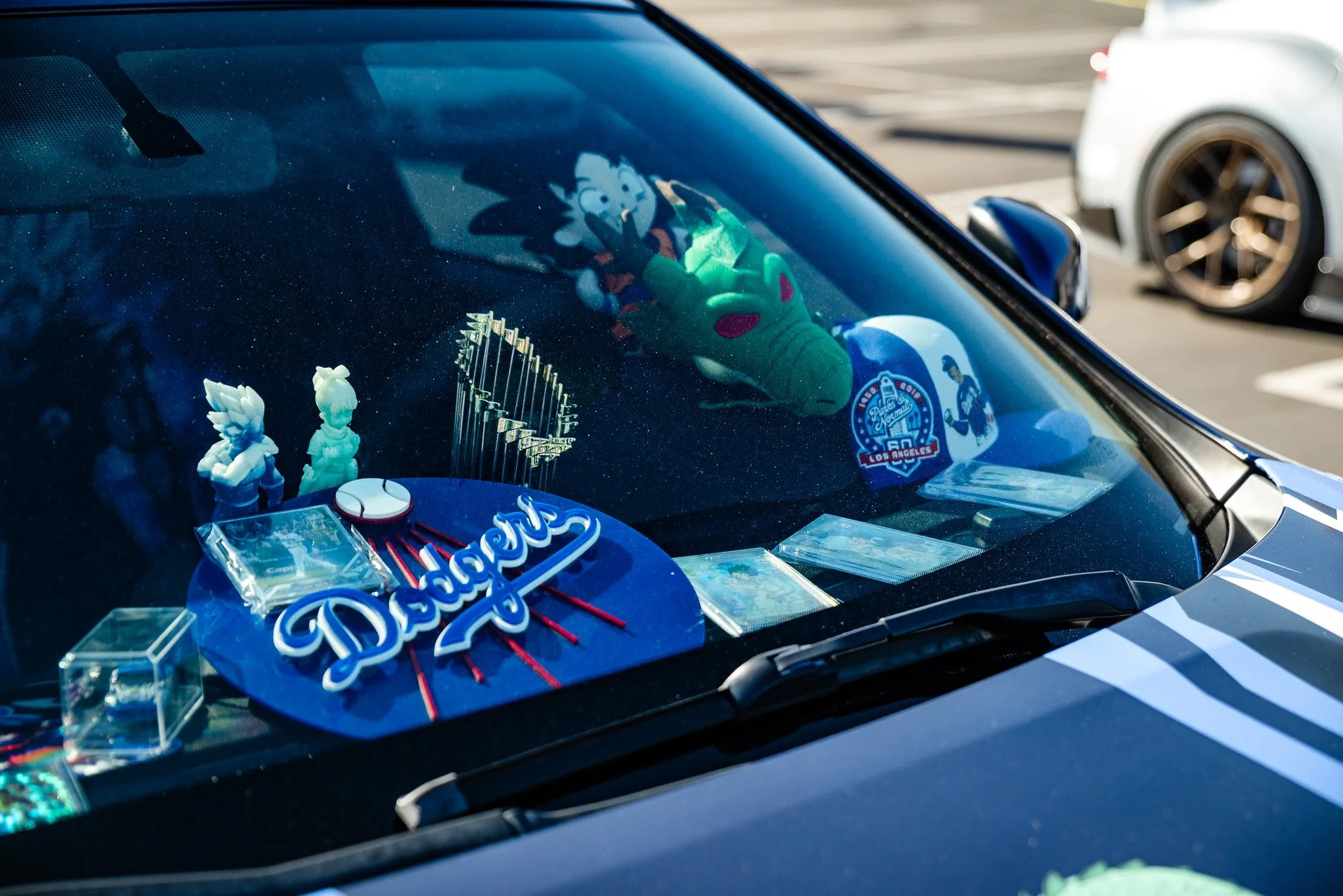
Dragon Ball Z x LA Dodgers 370Z
One of the most unexpected mashups I’ve seen. It feels so strange, but considering the two franchises here, there’re probably A LOT of people who would be into this. Either way, I love a good Z, and that Vegeta design on the side was sick so this was definitely a favorite of mine.

Umamusume Porsche Cayman
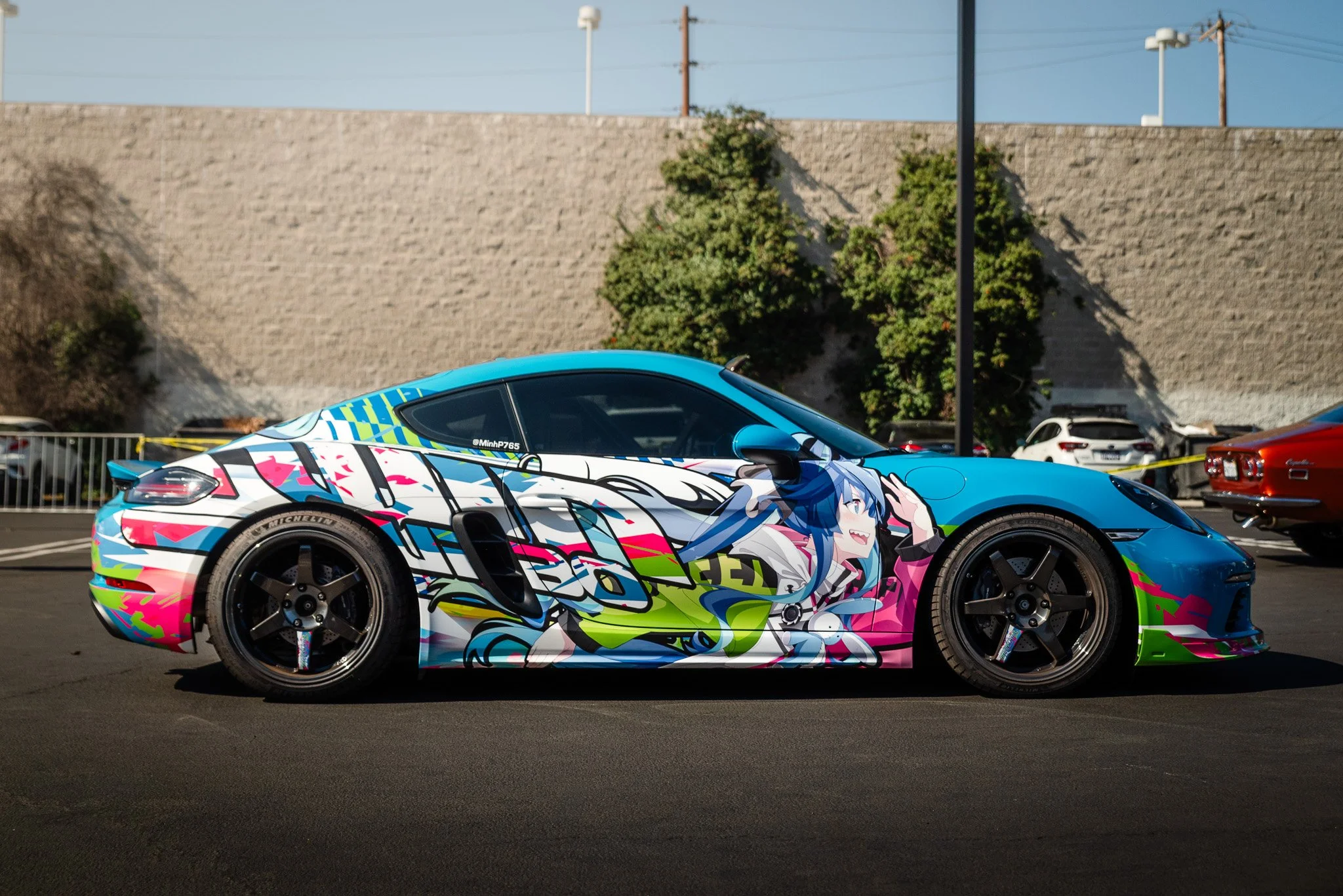
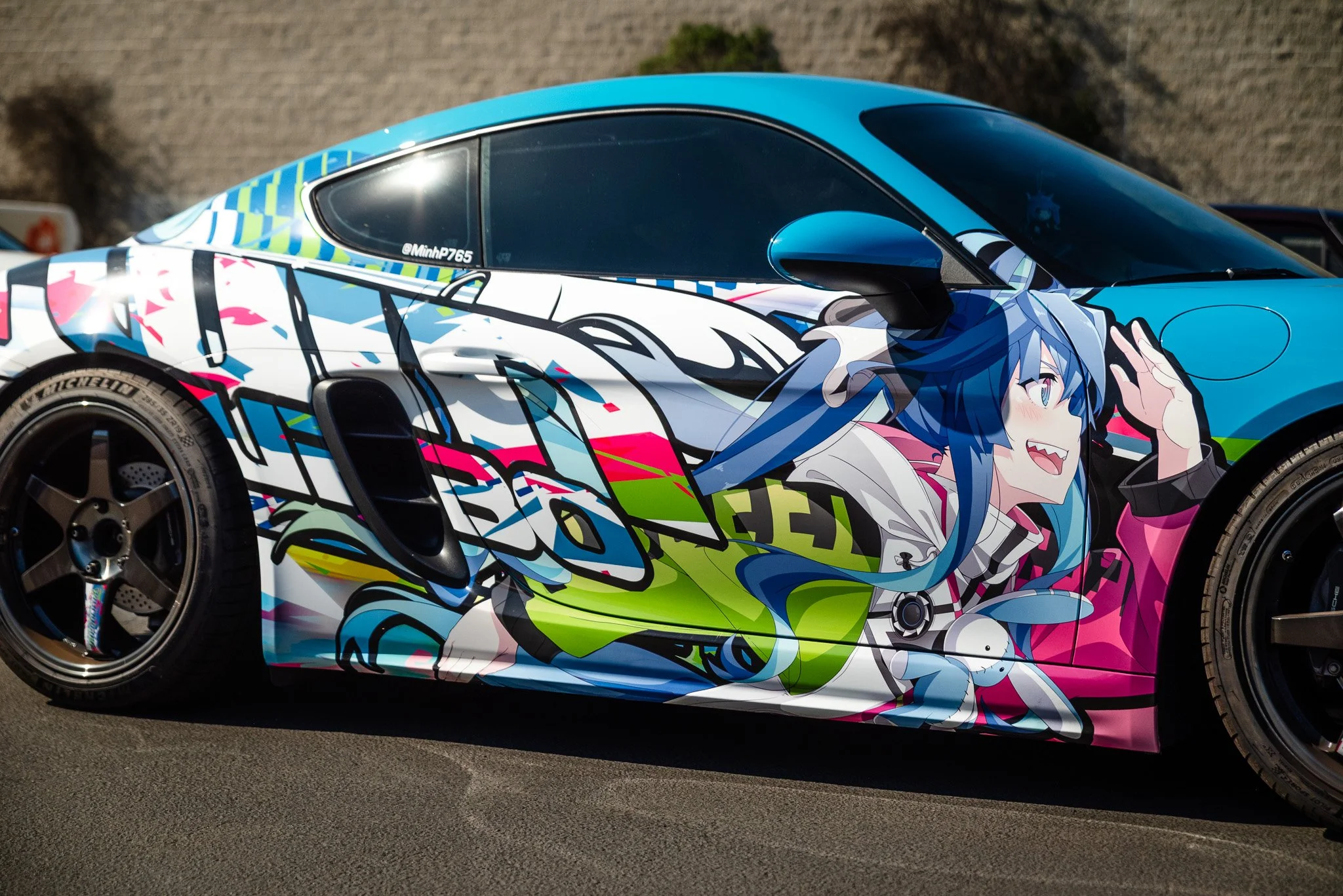
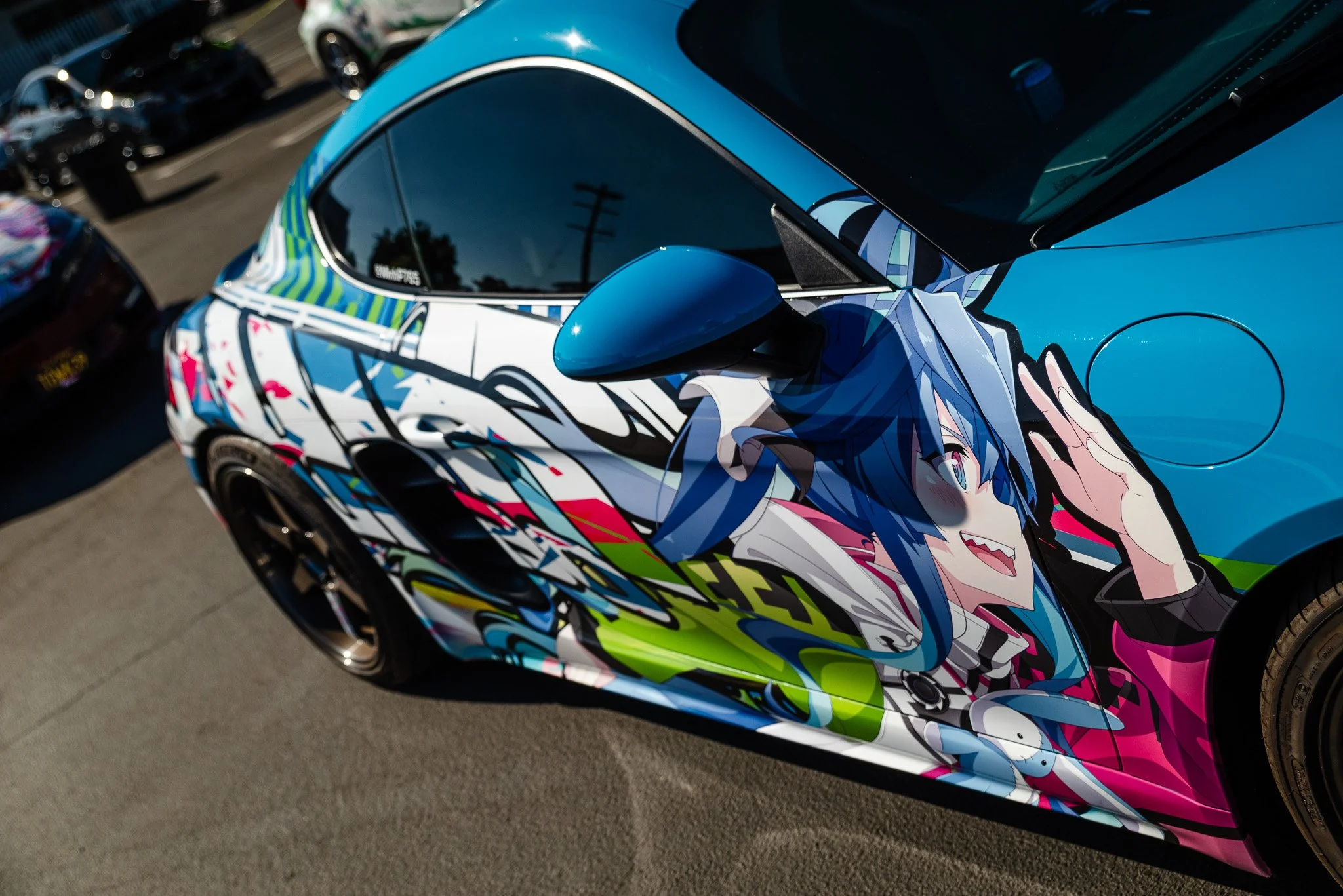
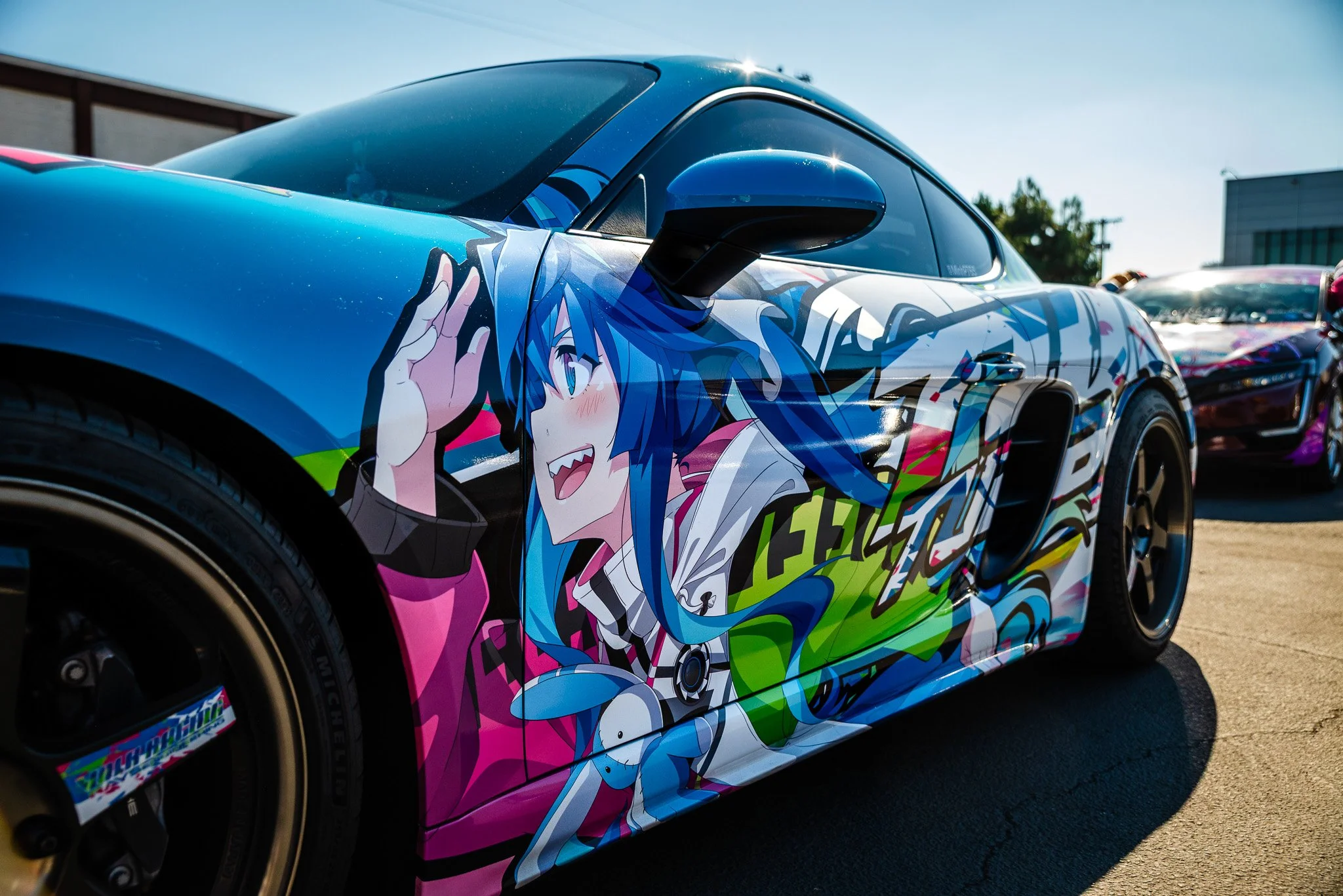
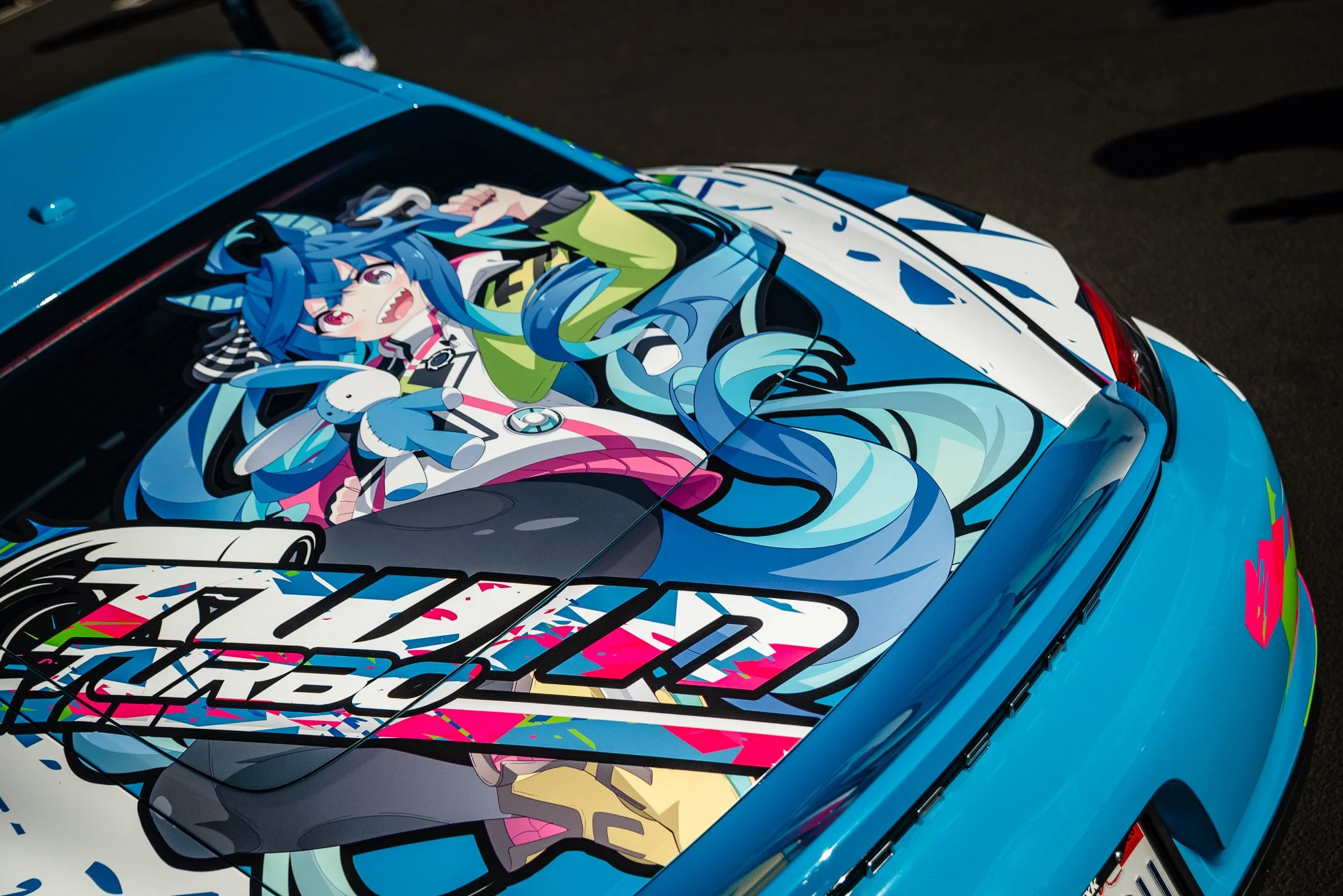
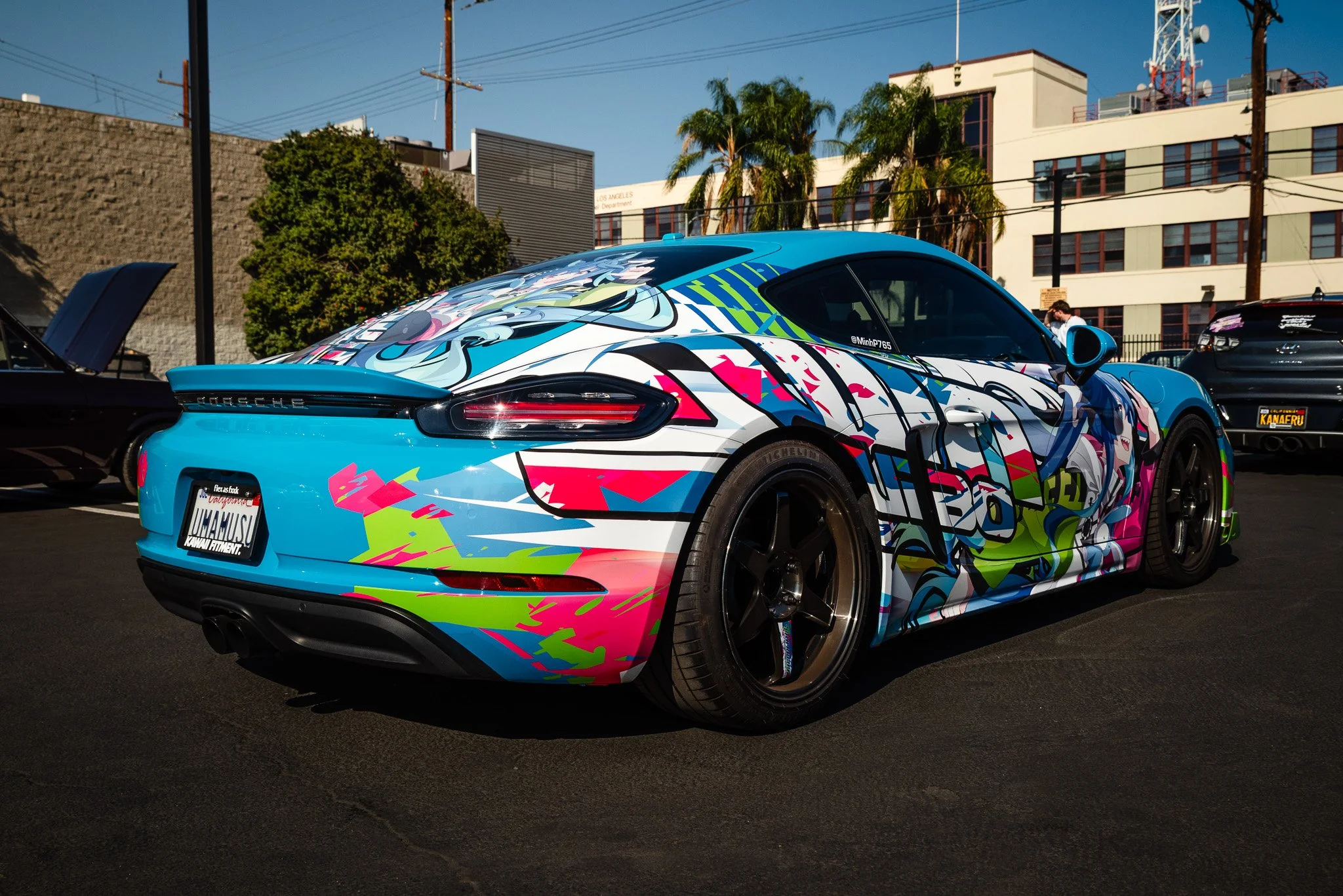
I favor JDM above all else, so its ironic that my personal favorite of the show was this Porsche. The base paint was a striking turquoise, with a partial wrap that left much of the original color shining through. The artwork featured Twin Turbo, with a sort of pop-graffiti design. I know nothing about Umamusume, but this beautifully designed piece makes me a little curious. Between this, and all the RWBs out there, I’m starting to look a little closer at German cars now… (Owner @minhp765 on Instagram)



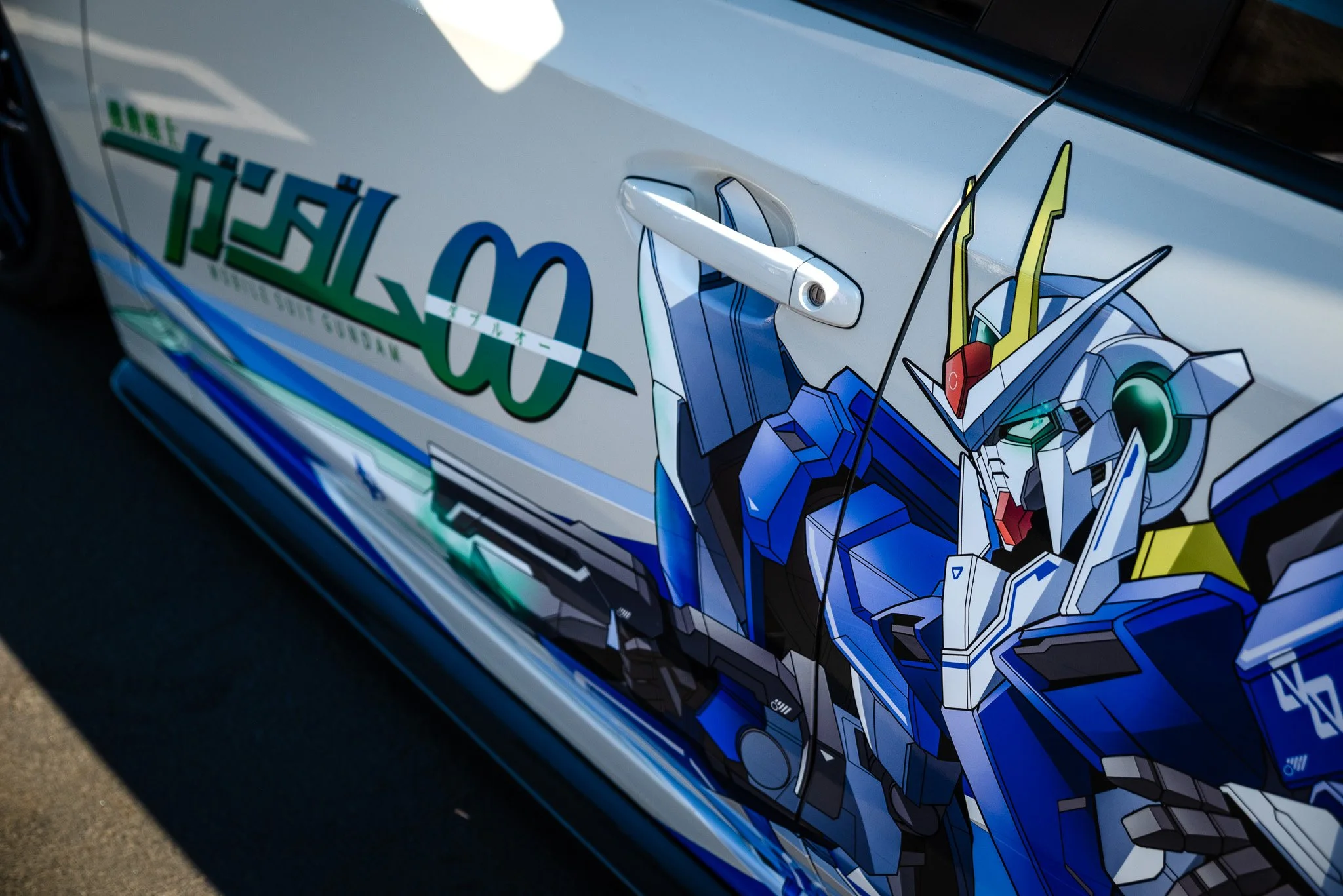
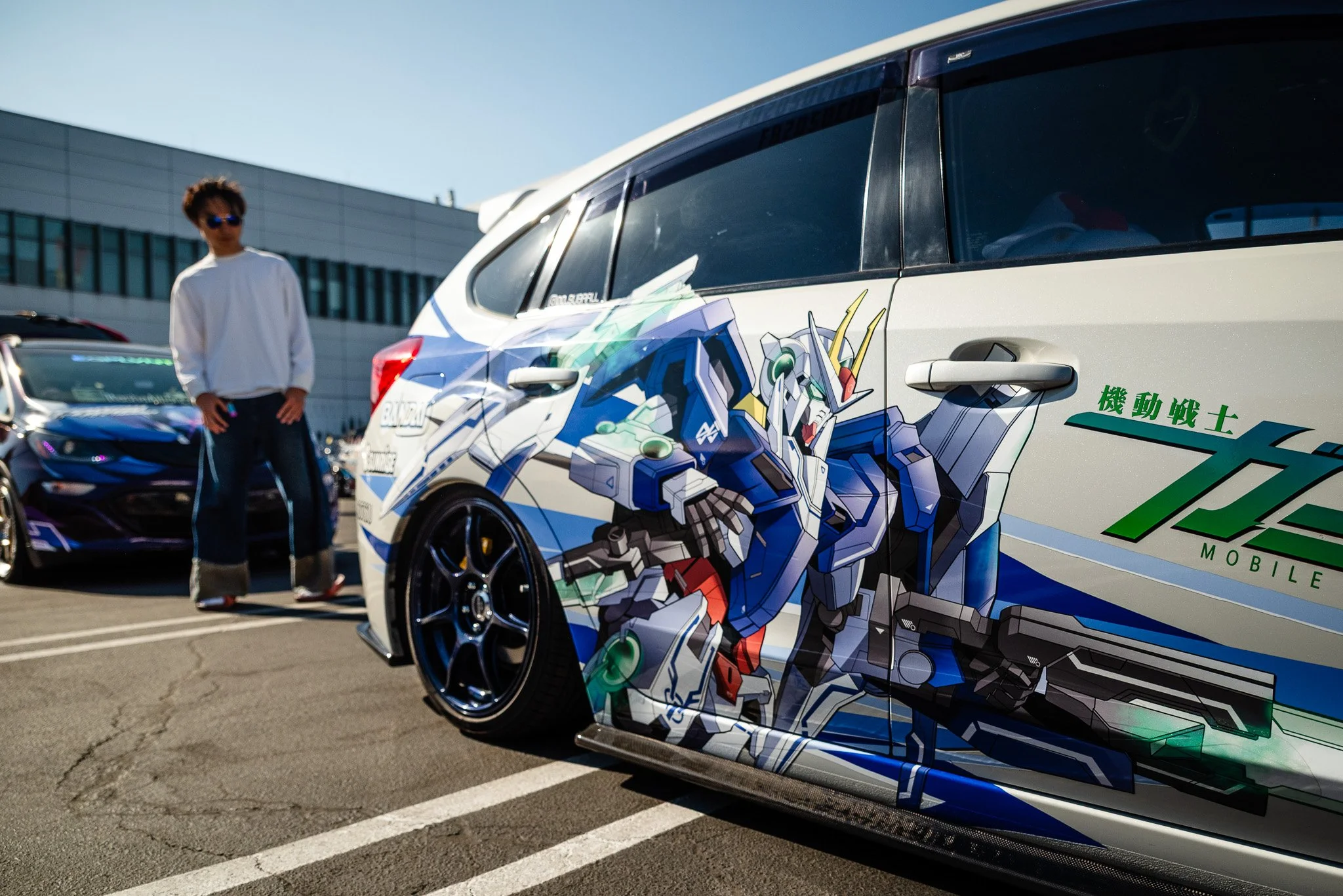
Gundam 00 Subaru Impreza
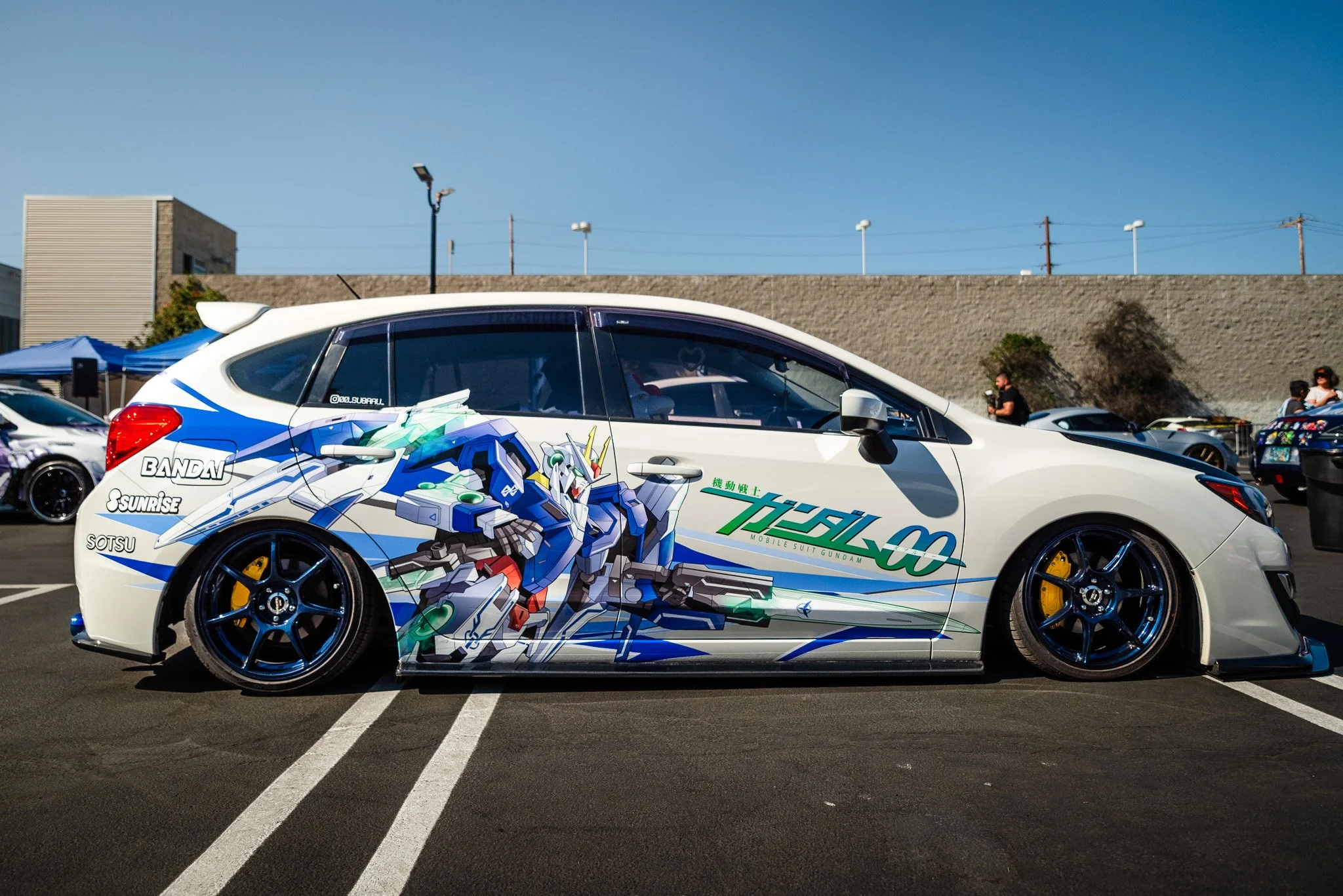
Gundam designs are always a staple at these shows. While I’m more familiar with older entries like Gundam Wing or 08th MS Team, it was great to see the franchise represented. (Owner @00_subaru_ on Instagram).
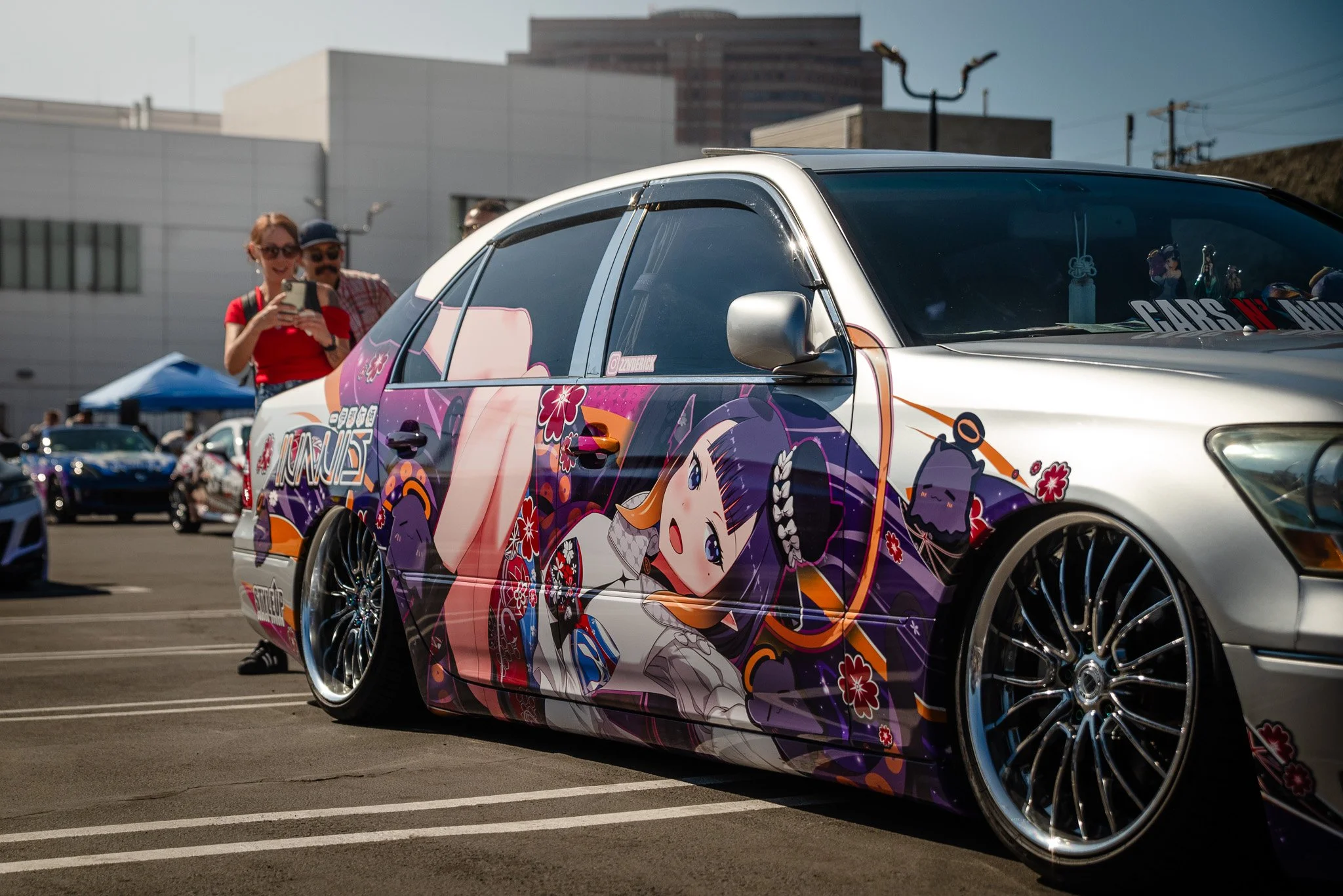
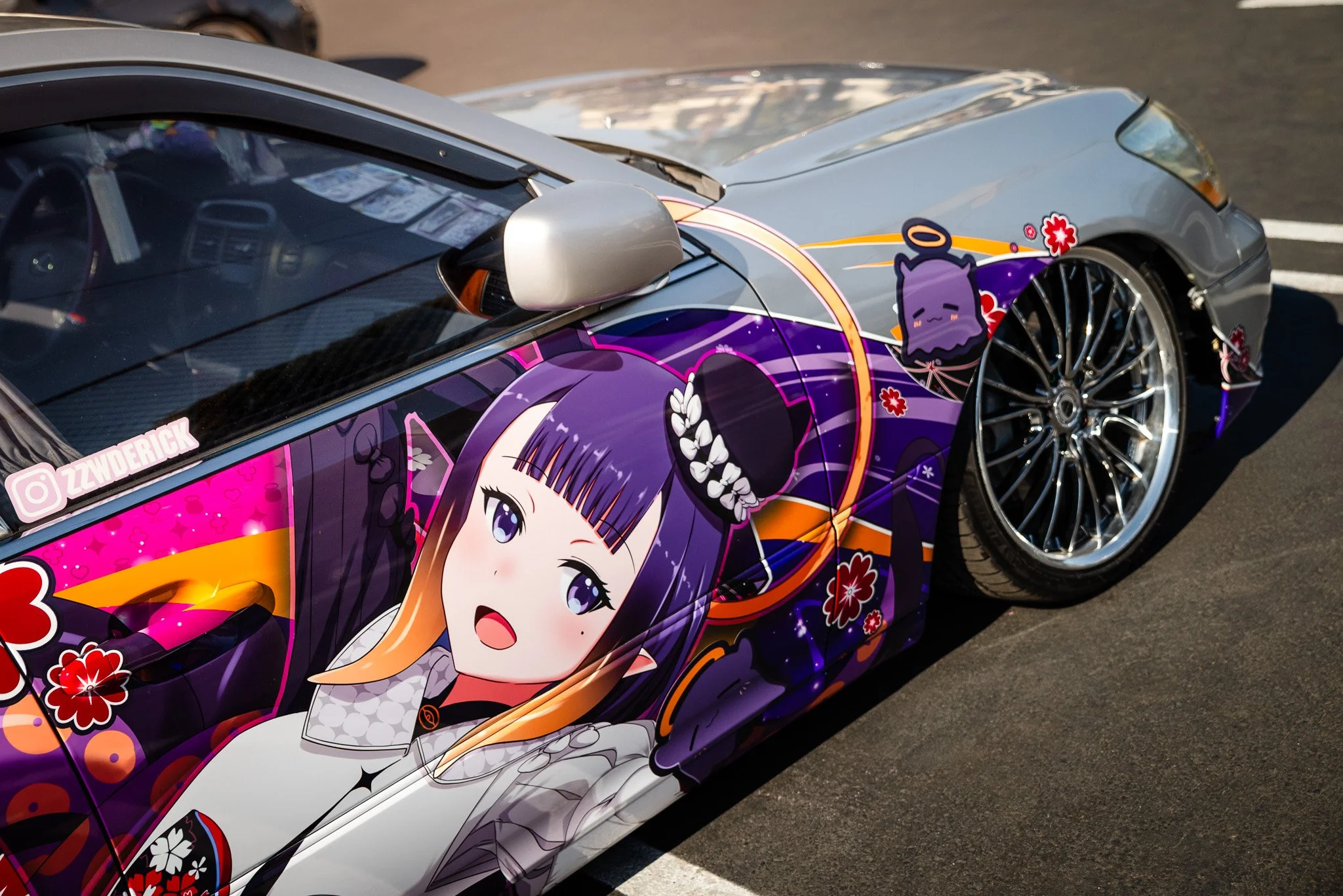
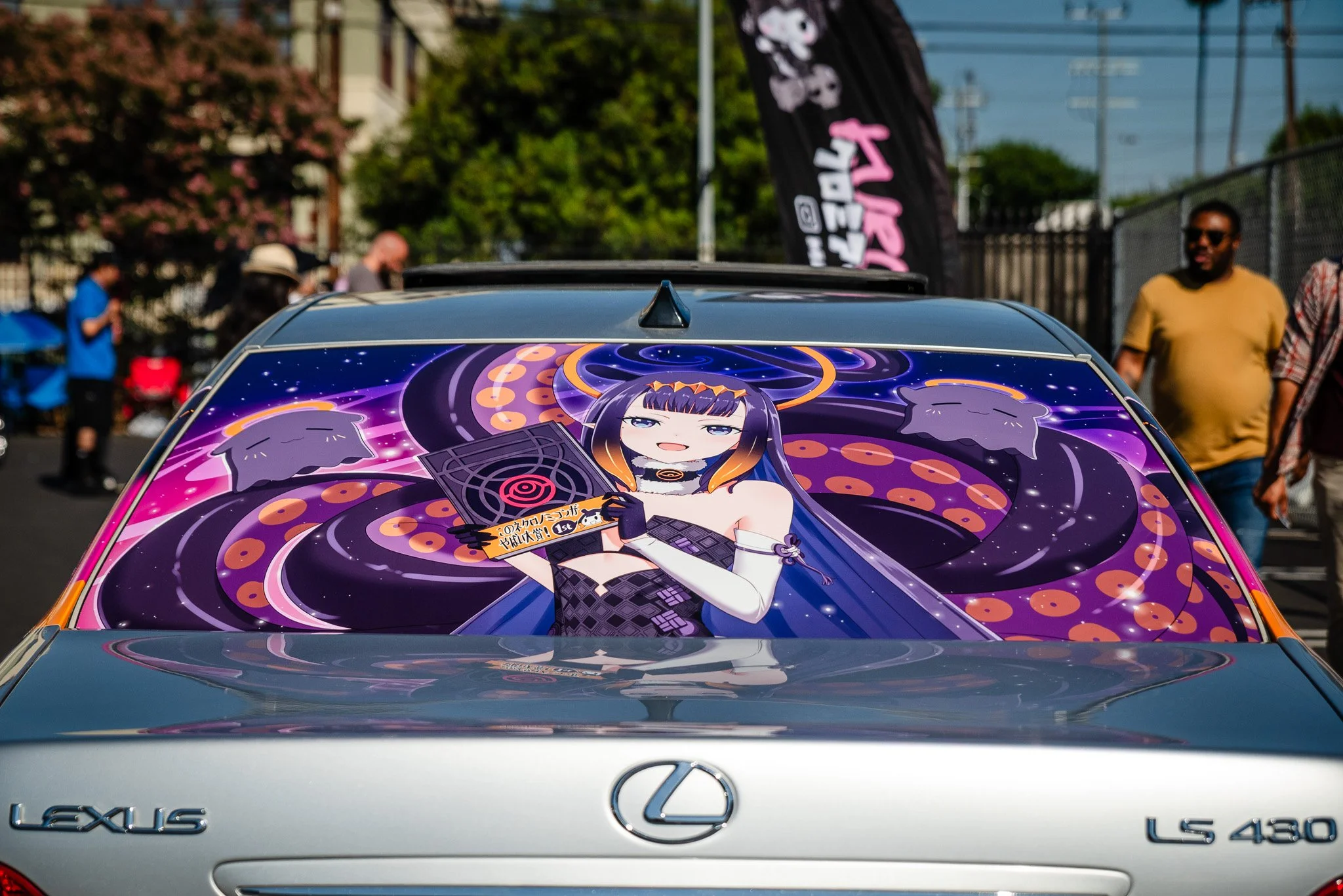
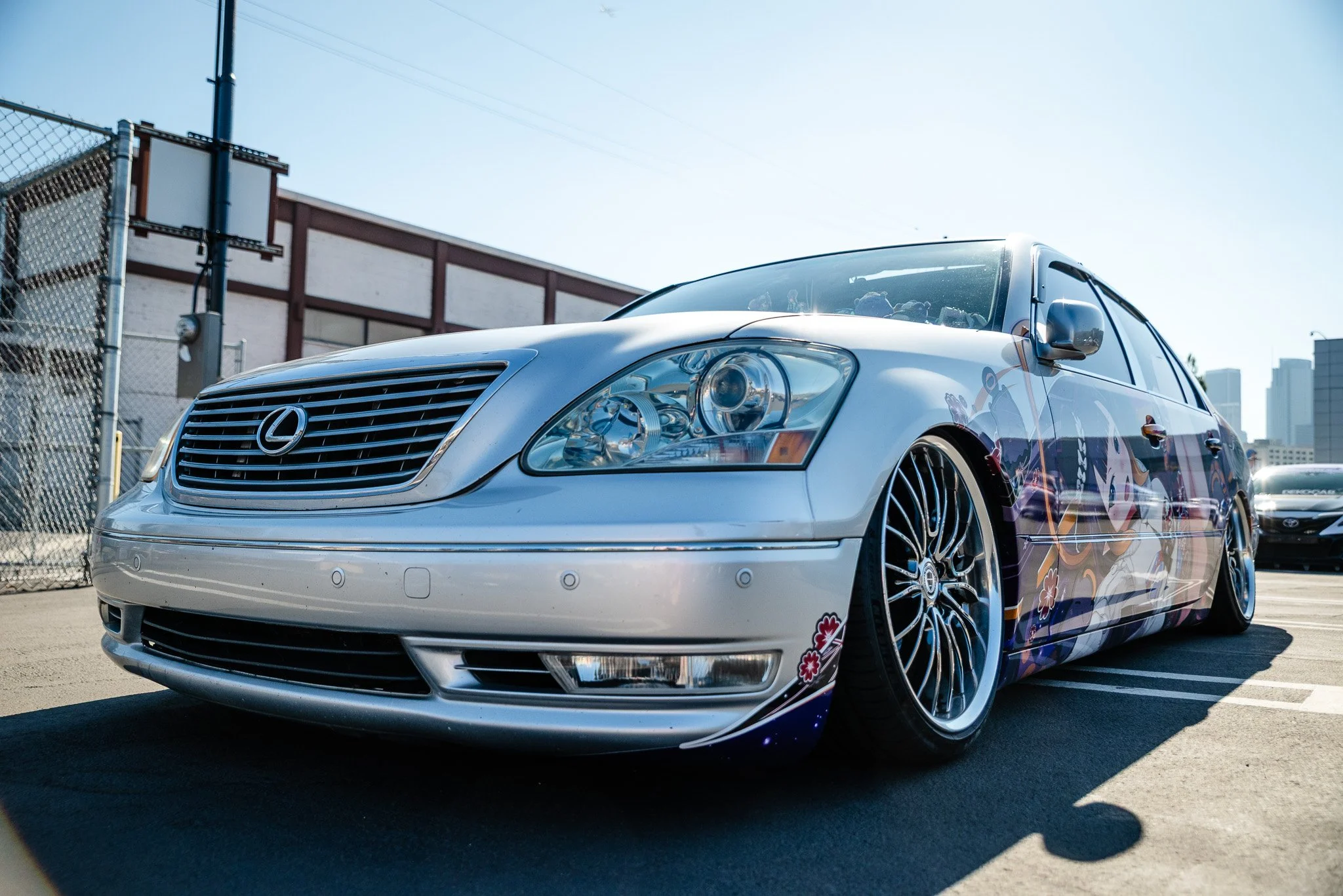
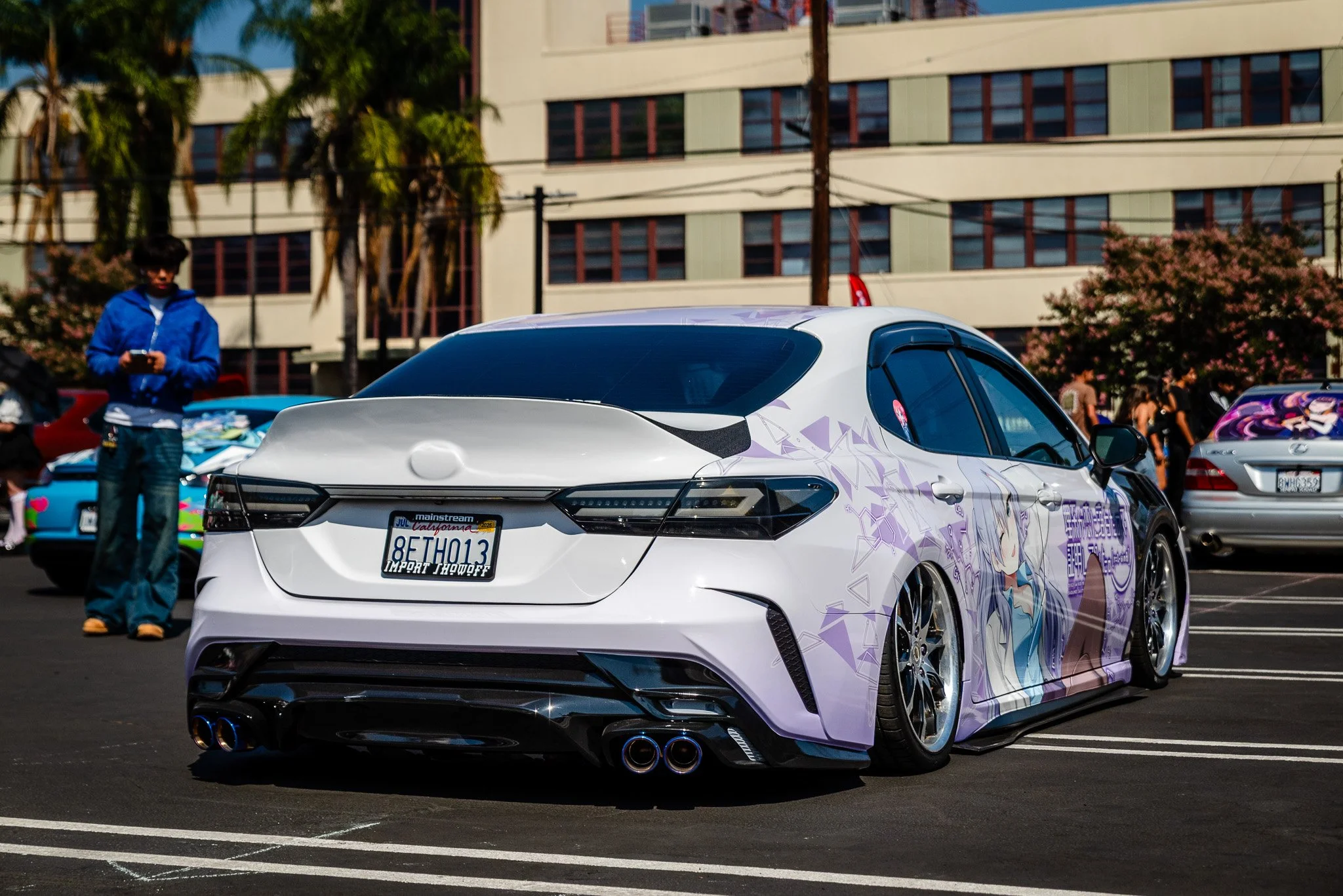
Ninomae Lexus LS430
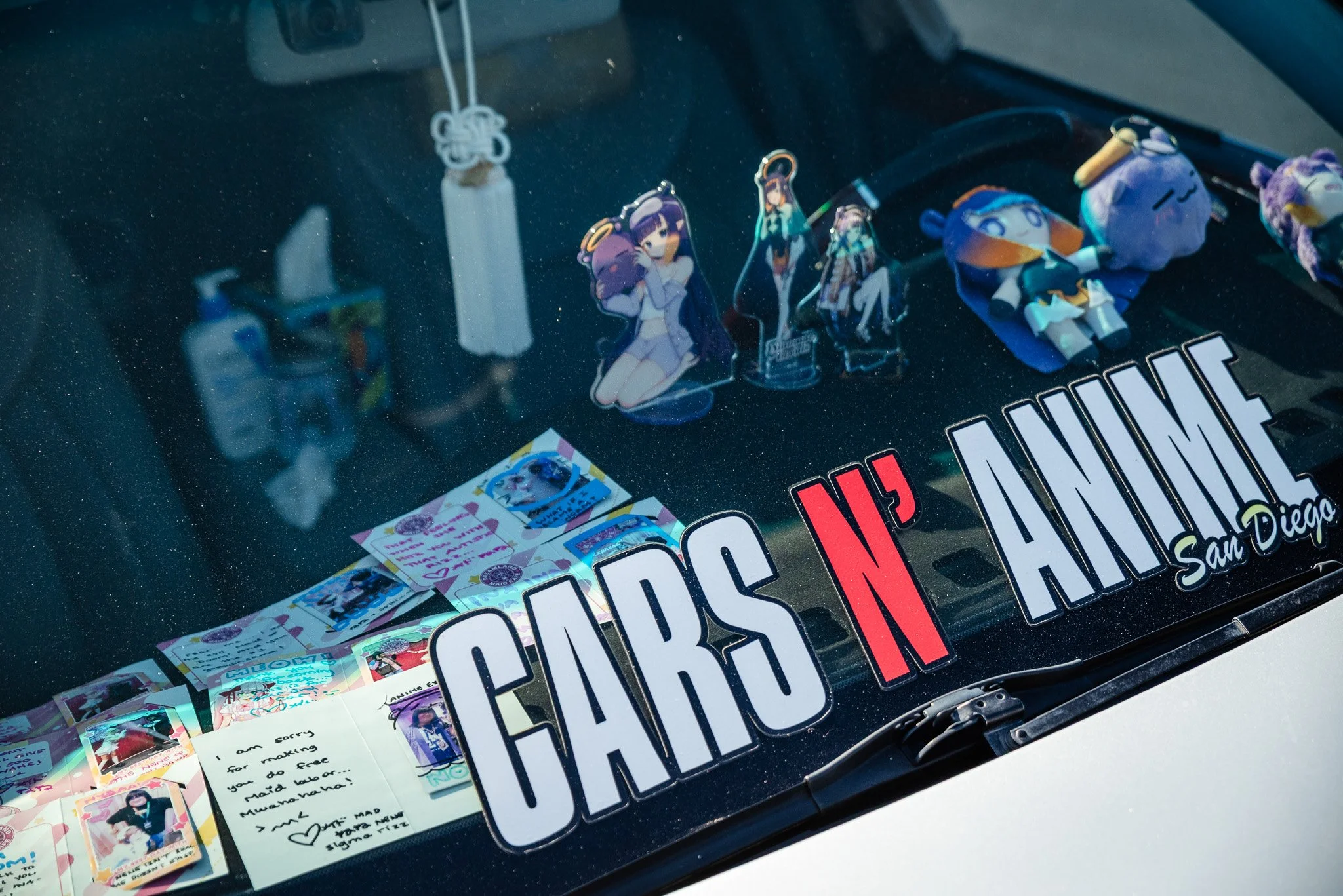
I feel like Luxury cars are rare in the itasha scene, so this one stood out. It kept much of its elegant feel while also sporting a clean, modern art style on the wrap. Dropped stance, tasteful execution—definitely a highlight. (Owner @zzwderick on Instagram)


Classic JDM Presence
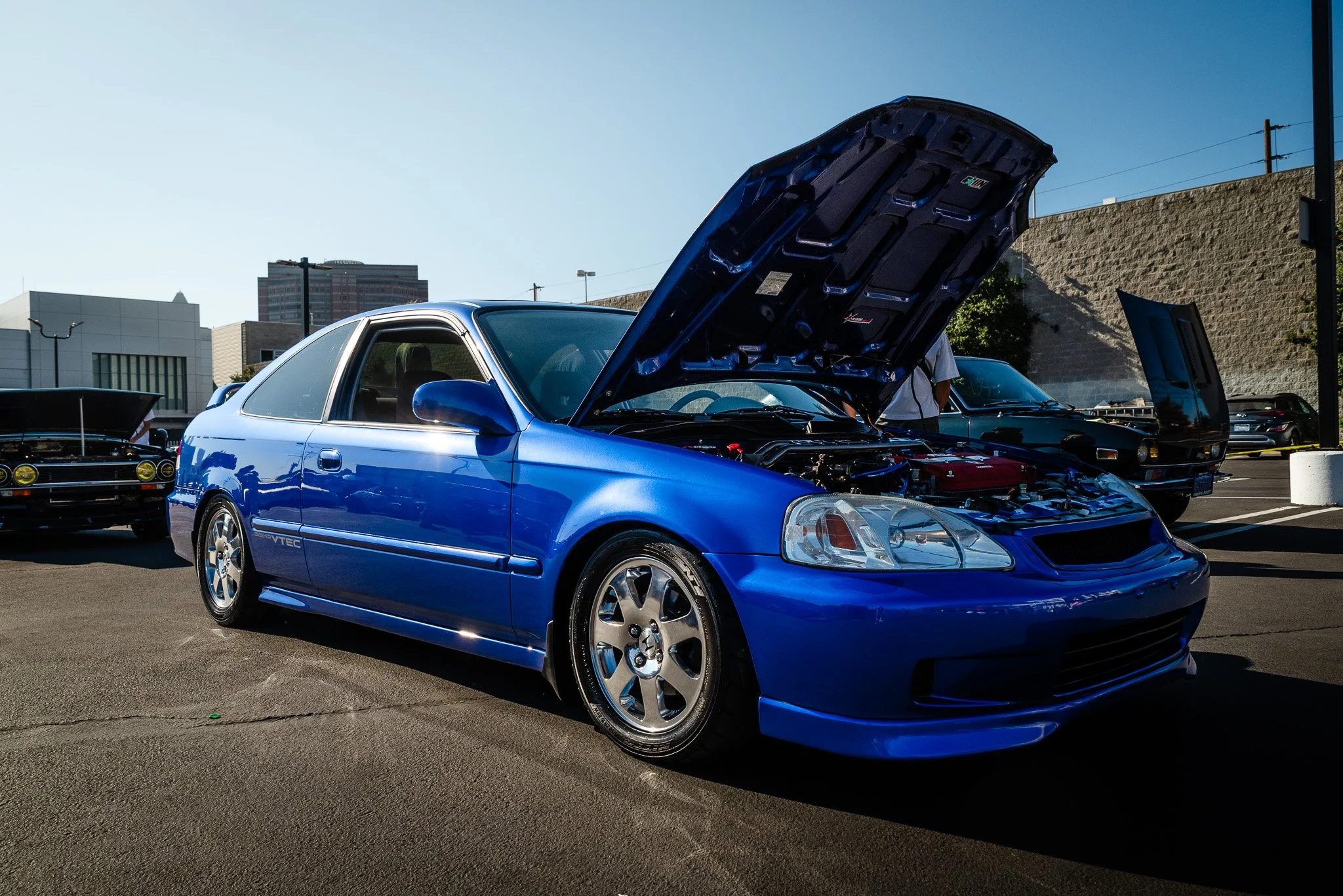
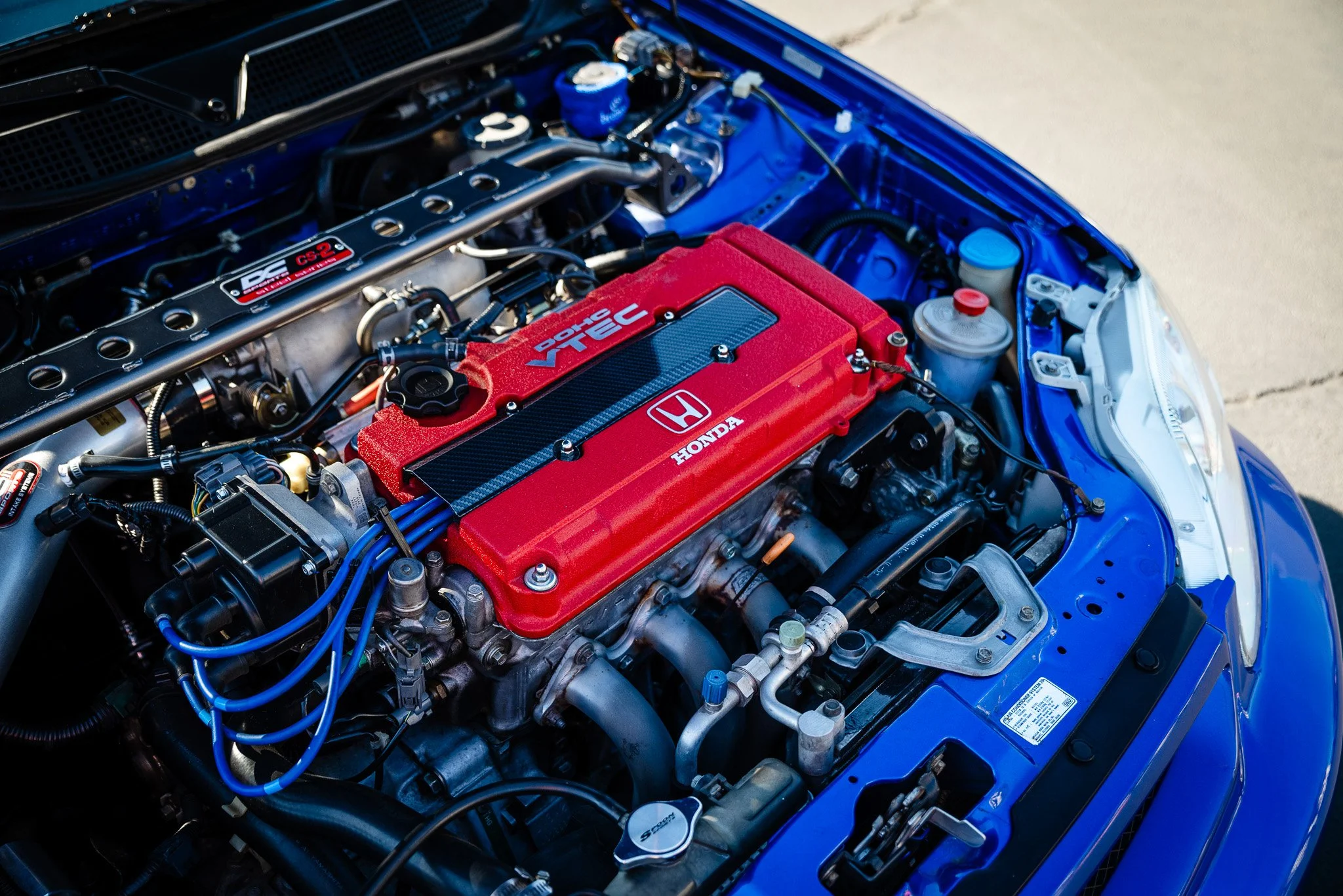
Not every car at the event was an itasha. There were a number of clean, classic JDM cars, including an immaculate blue Civic Si with a restored engine and minimal cosmetic mods. It was a reminder that sometimes simplicity and preservation make just as big of an impression as flashy wraps.
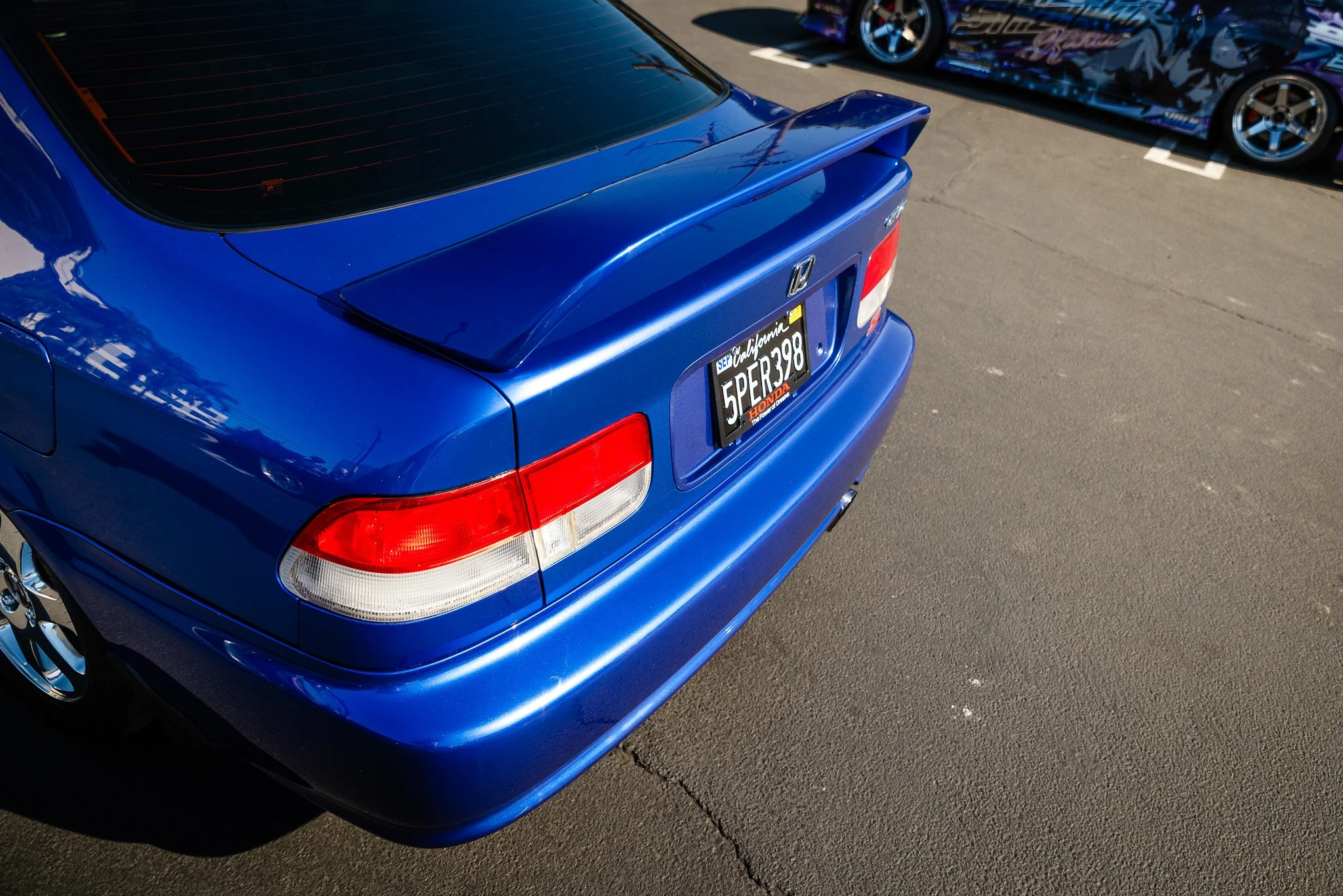

There were also, what appeared to be a few older rotary engine cars on display (they look like Mazdas and Datsuns?). I’m not too sure on the models, since pre-90s vehicles are a bit outside my area of familiarity. That said, they were absolutely gorgeous, and I went down a rabbit hole in trying to learn more about them.
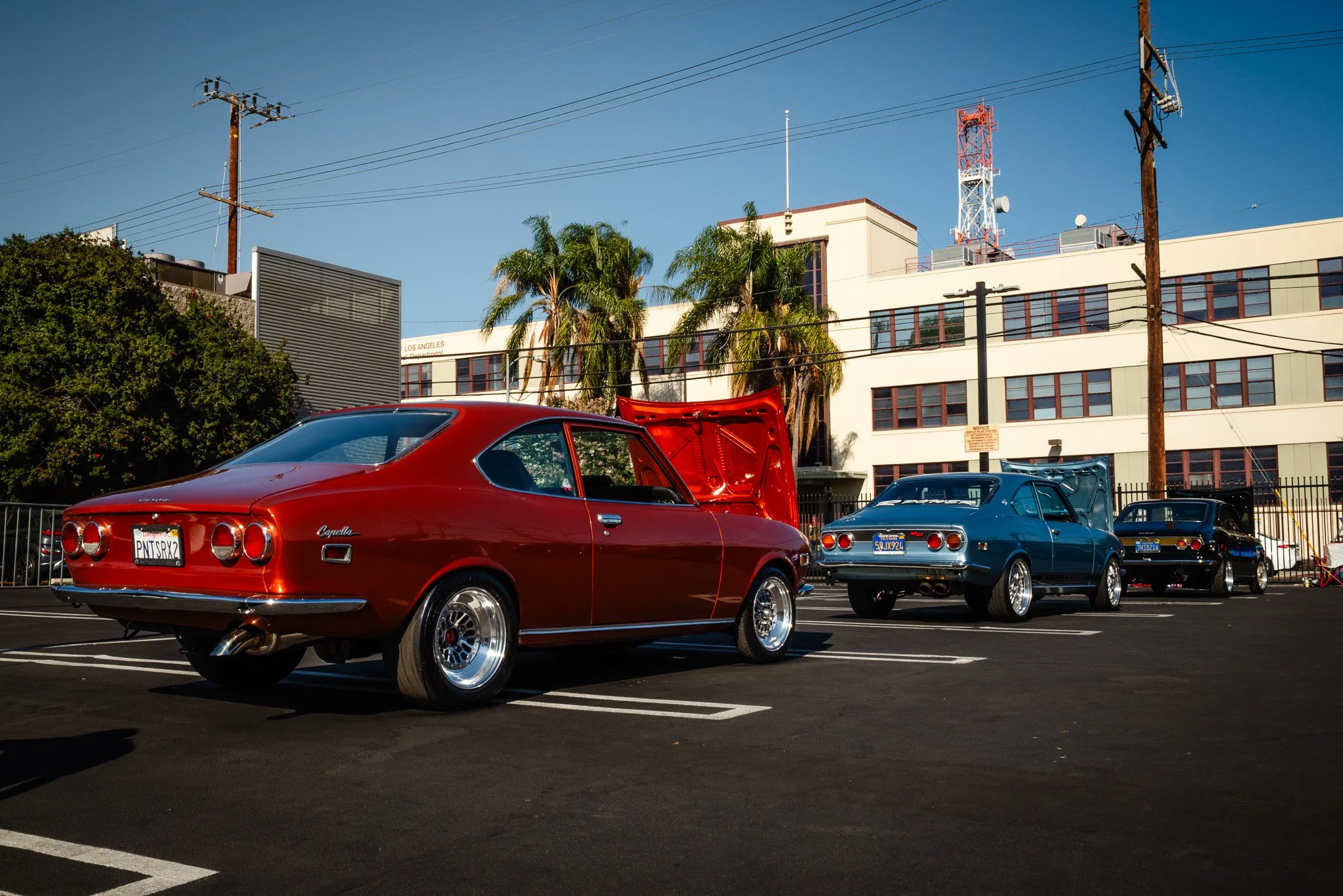

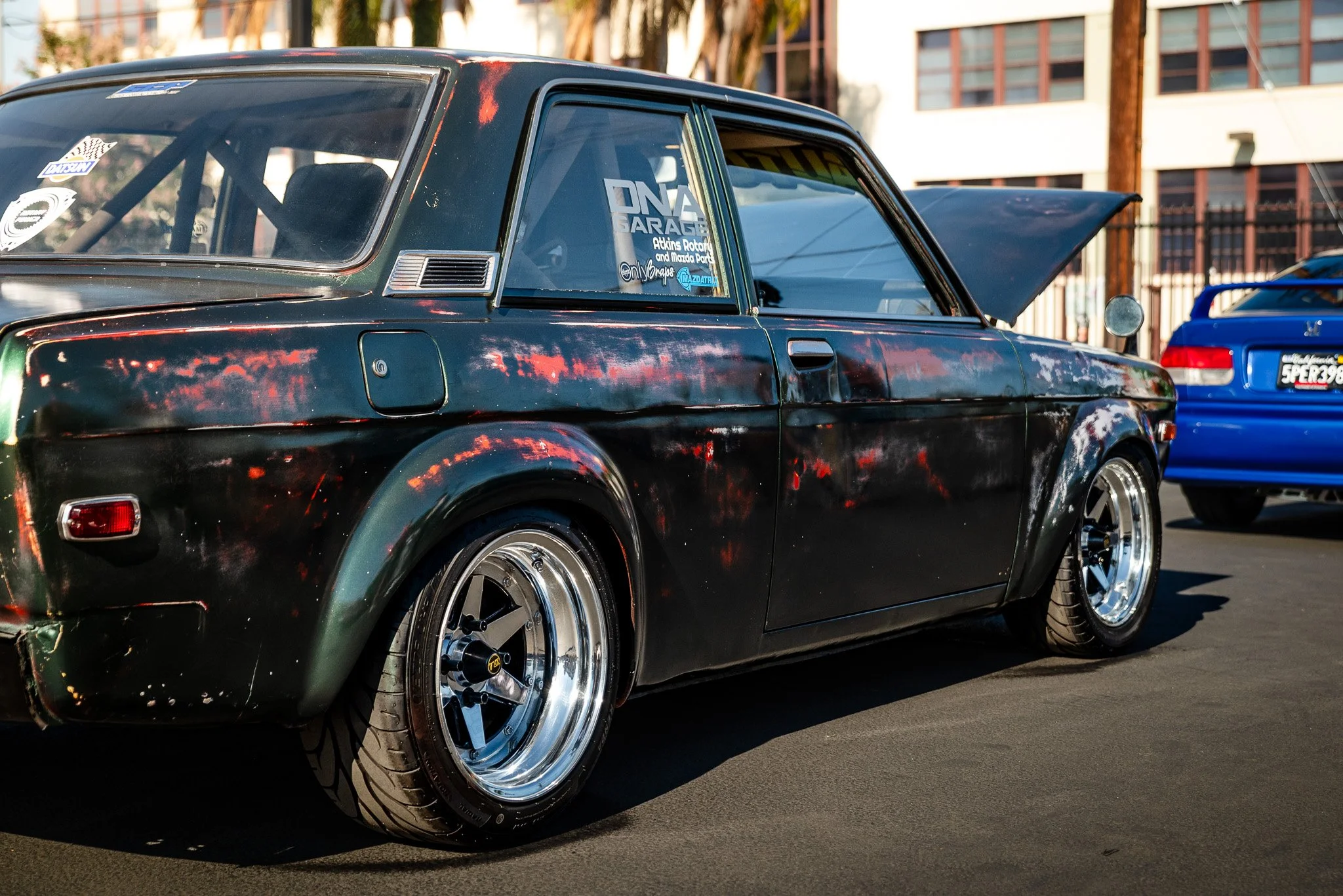
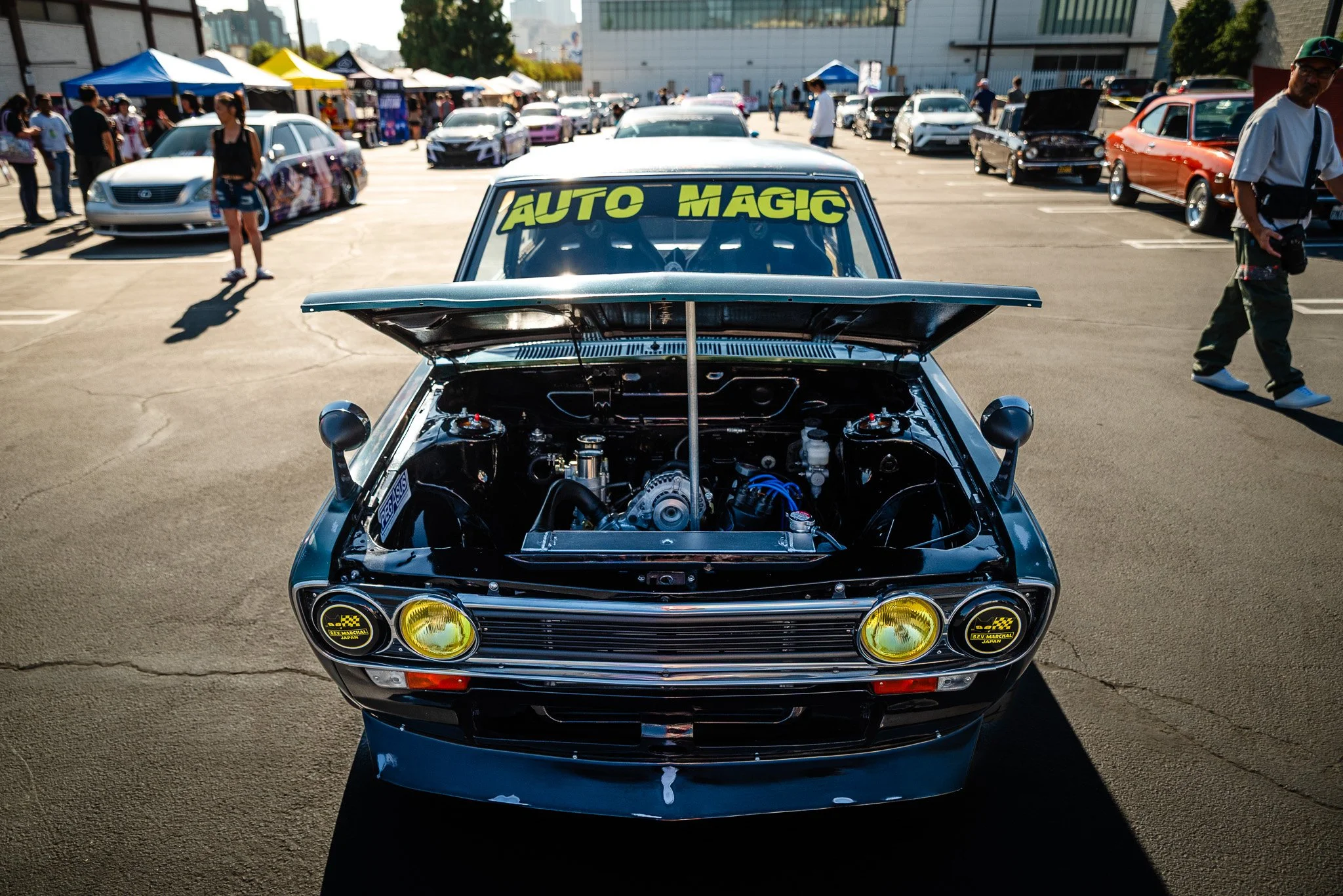
(There were many more cars, of course. The rest of the images I took are located at the end of this article.)
Beyond the Cars
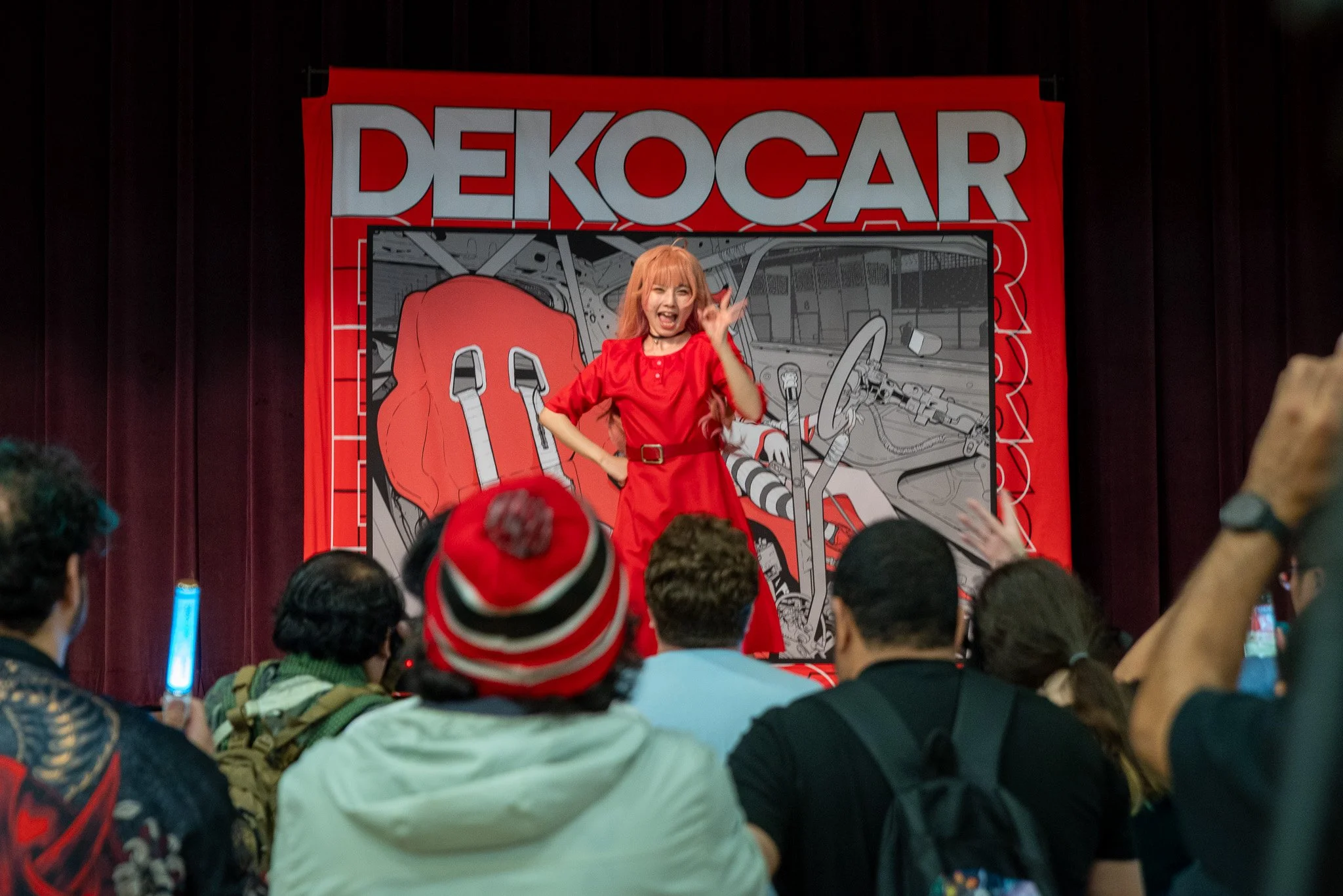
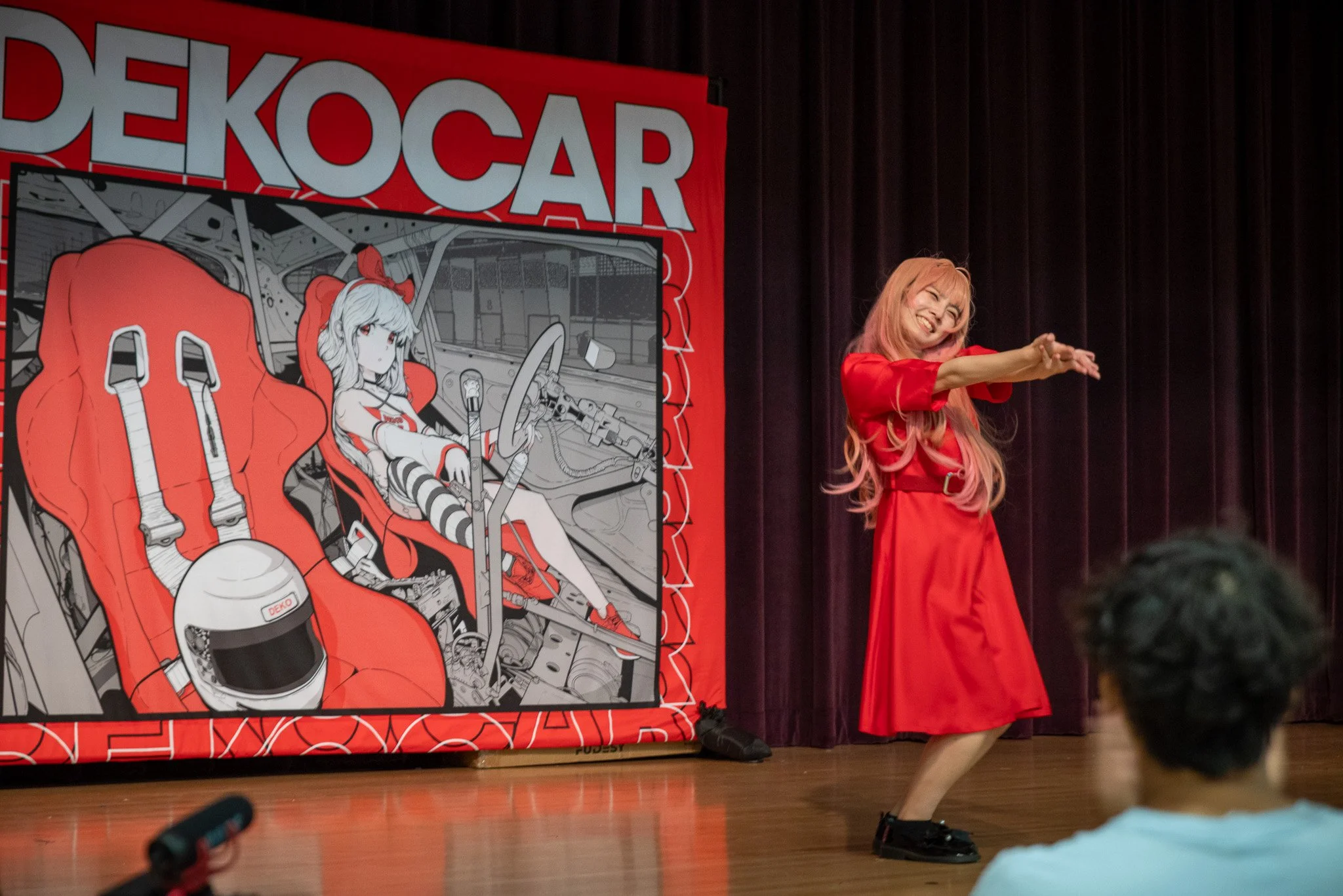
To my surprise, the event wasn’t just about vehicles. Inside the hall, there was an artist alley with merch and prints, plus a live stage. One standout moment was a performance by Hamu Cotton, a dance performer known for her anime-inspired routines. She drew an enthusiastic crowd, with plenty of fans cheering and dancing along. This added a new energy to the show compared to last visit, making it feel more like a cultural gathering than just a car meet.
Final Thoughts
Attending Dekocar at Nisei Week reminded me why I love covering these events. Even after being away for so long, there was a sense of continuity—familiar motifs mixed with new creativity, plus more variety in things to see. Compared to other events like Taste of Japan, which hosted itasha indoors with tougher lighting, I appreciated that this one was outside, where the designs could really shine.
If you’re interested in following the itasha scene, check out Dekocar on Instagram (@dekocar). They regularly post cars from events around the world and are a great resource if you want to see more.
For me, this was a refreshing return to the culture, and I’m looking forward to the next chance to document it. Stay tuned for more photo stories and coverage—both from new outings and from my archives.
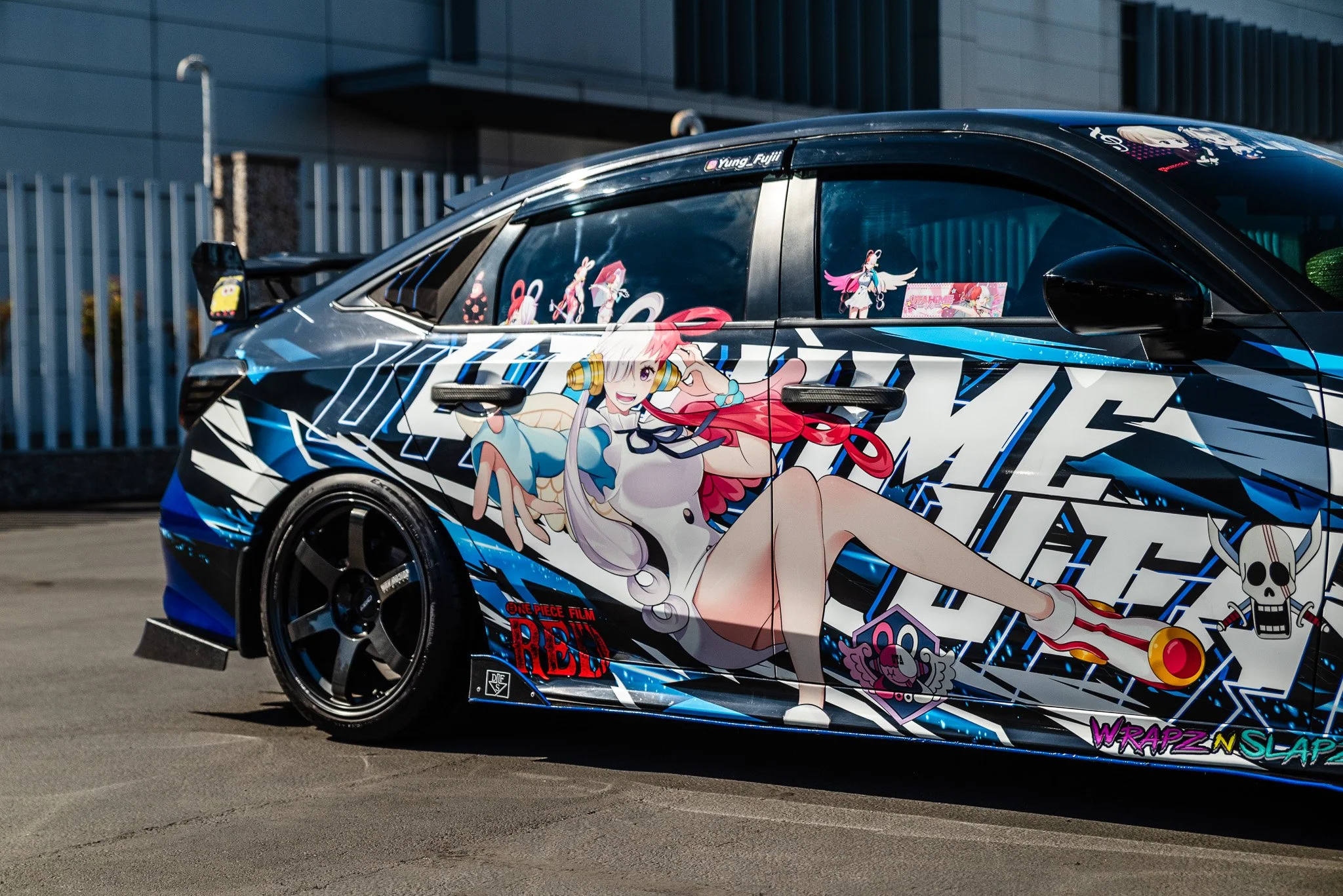
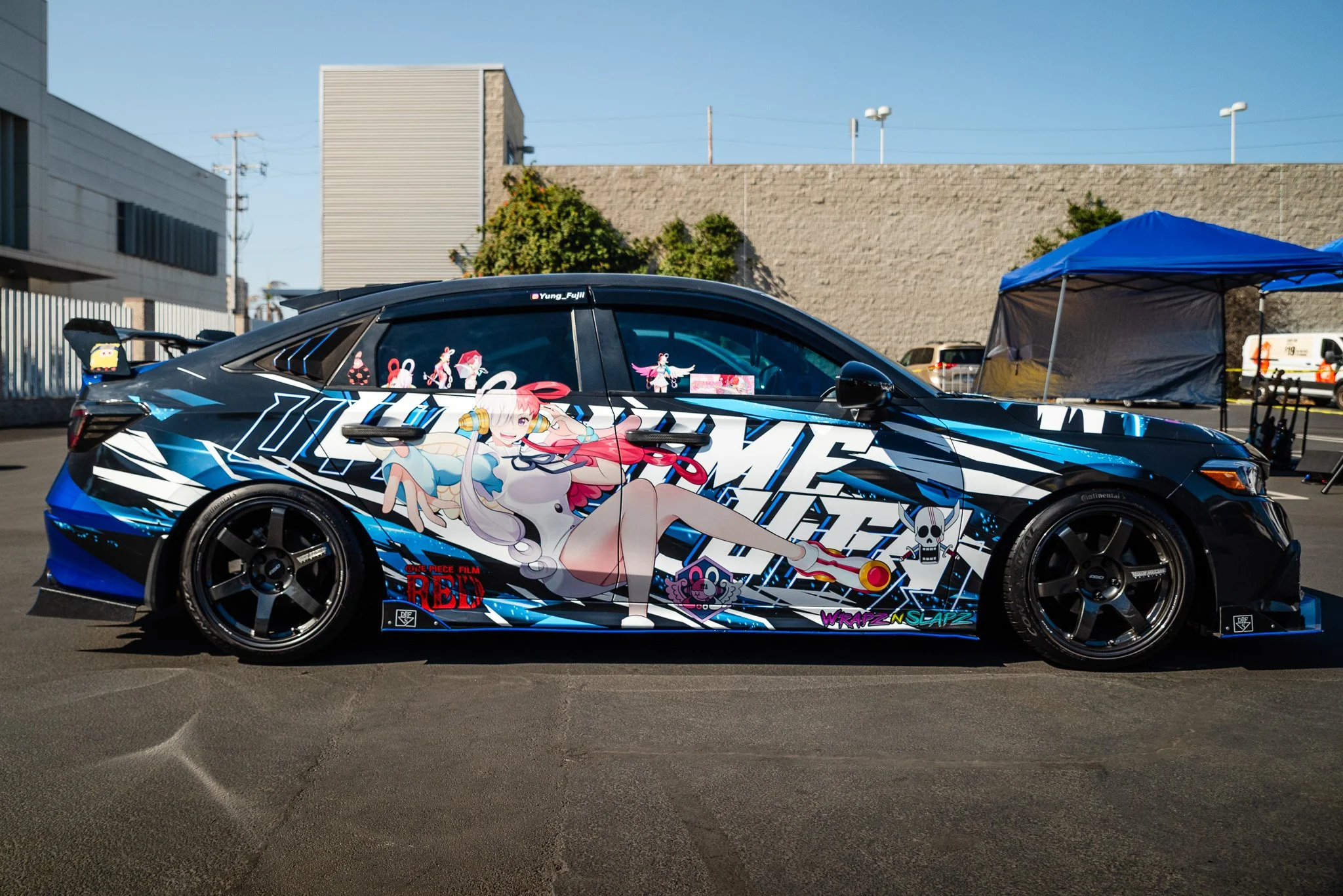
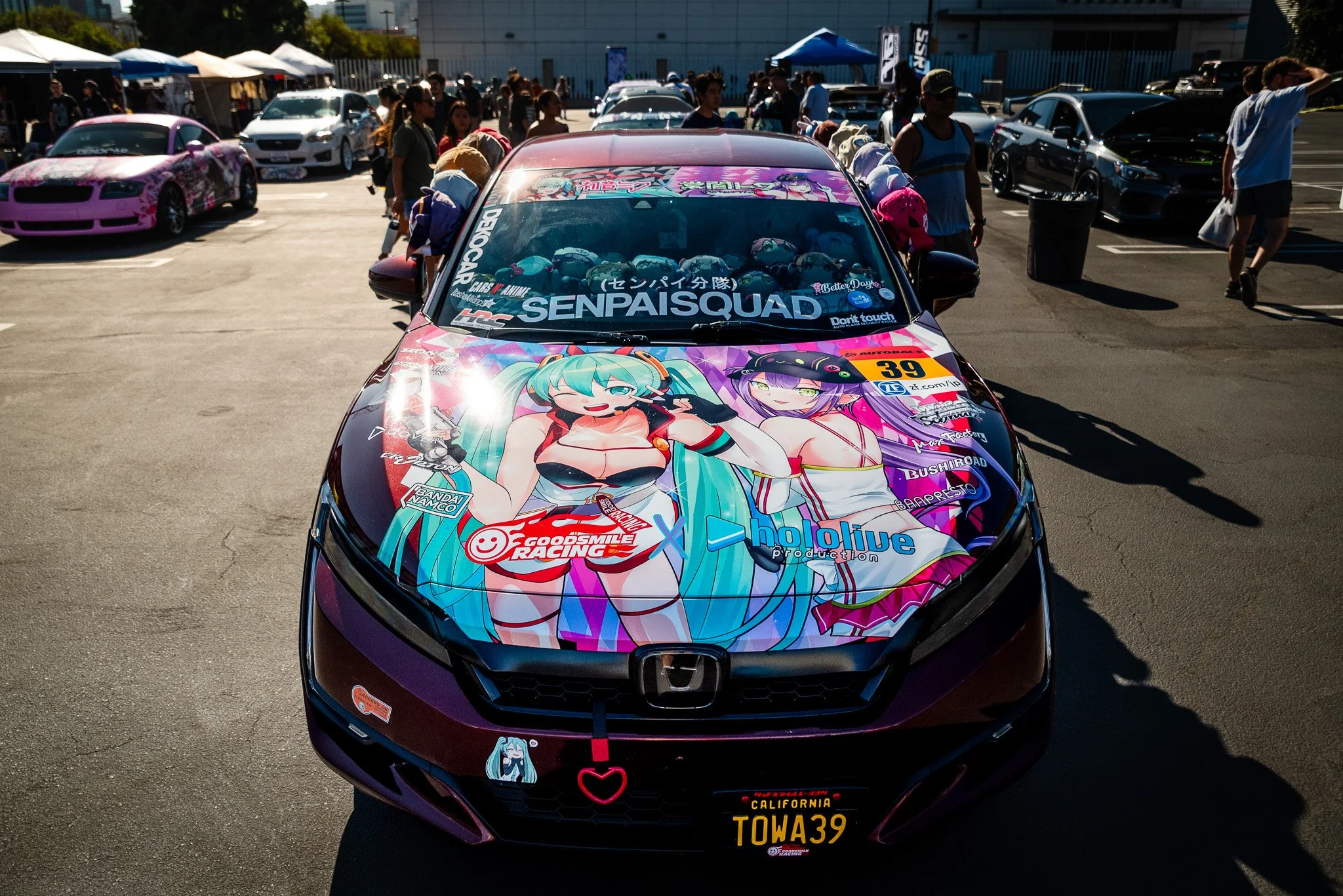
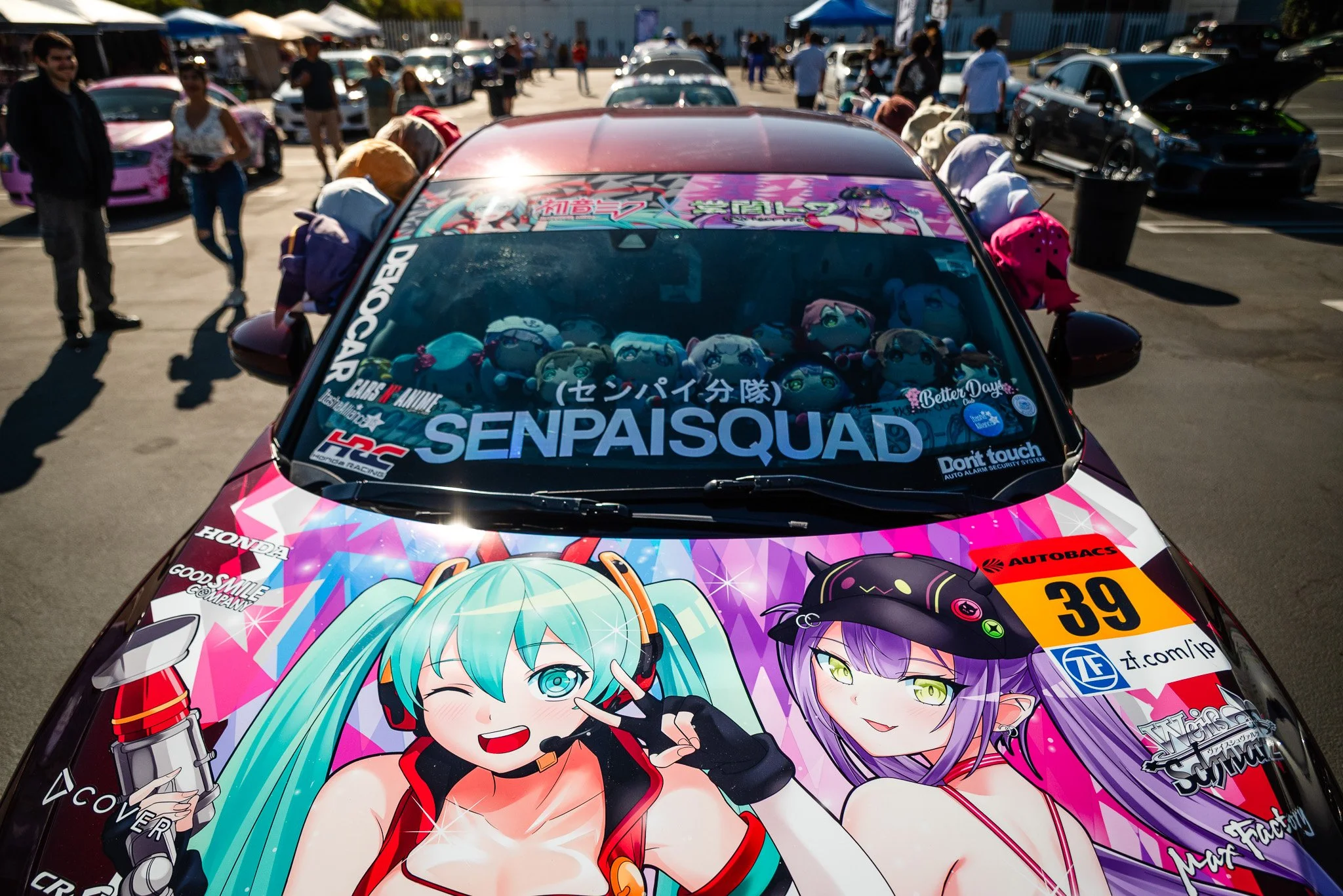
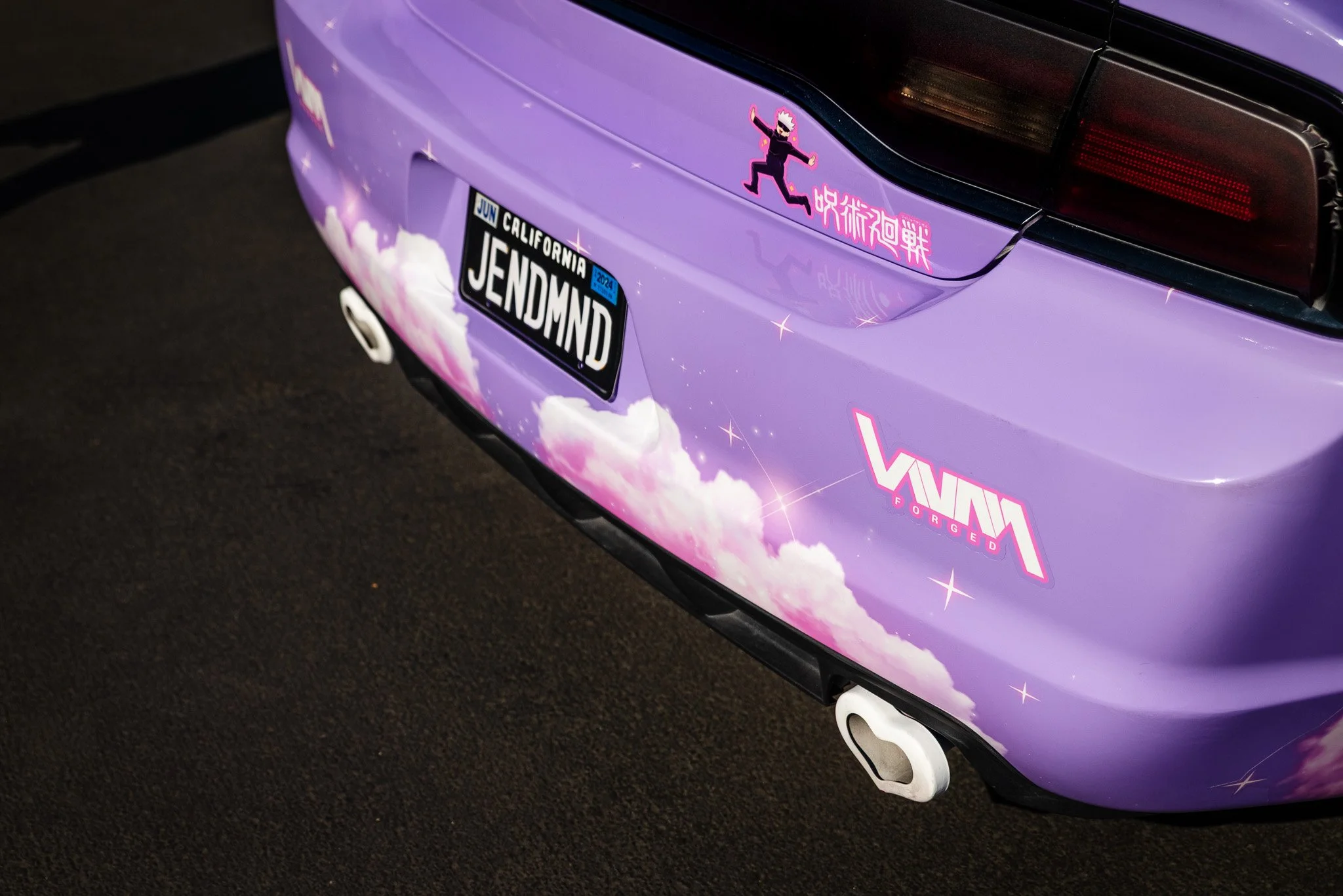
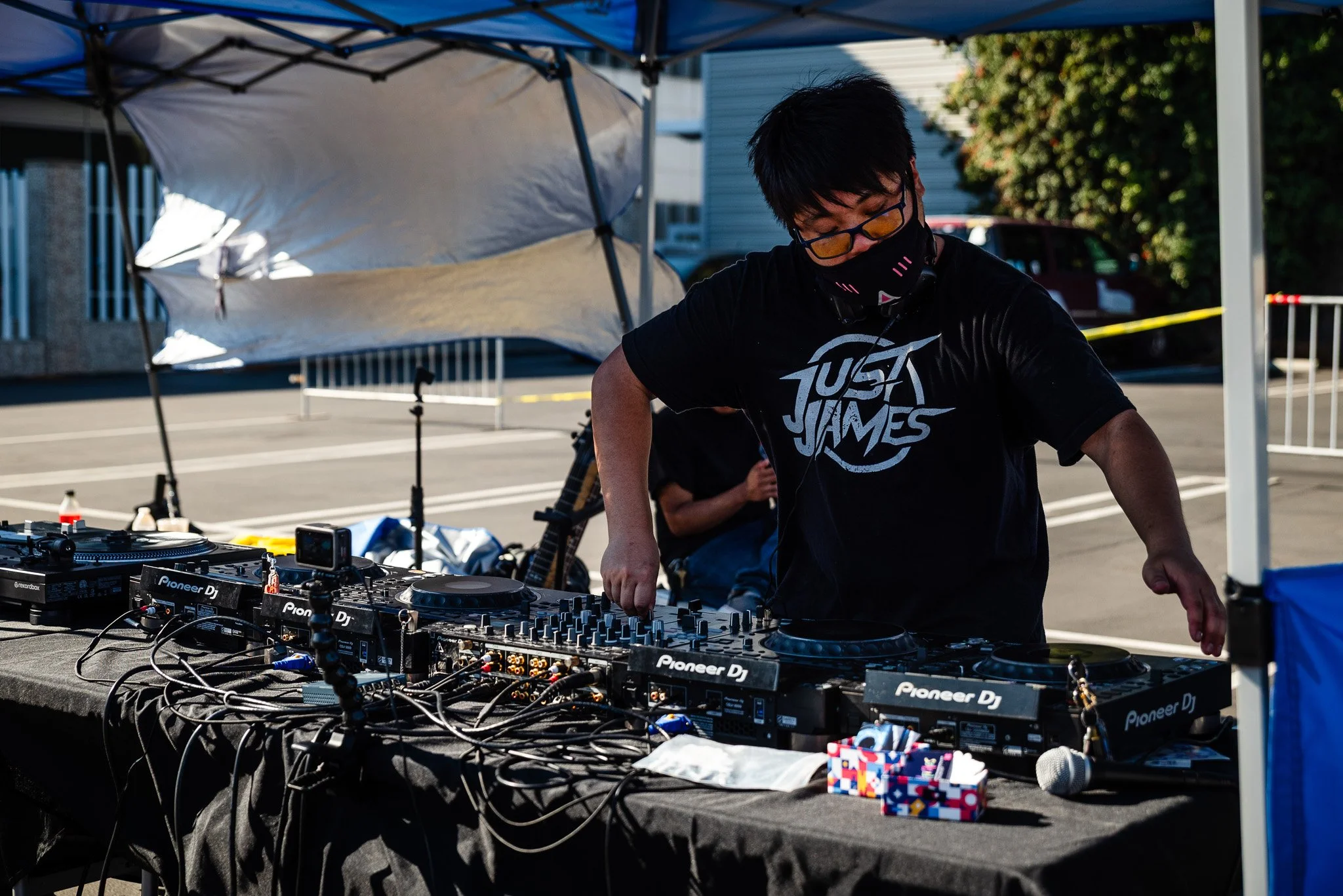
In the meantime, enjoy some more car photos from the event.








Don’t Miss Little Tokyo’s Nisei Week Grand Parade
If you're a fan of Japanese culture or someone who loves documenting unique cultural experiences, then the Nisei Week Grand Parade is one of those events that should absolutely be on your radar.
If you're a fan of Japanese culture or someone who loves documenting unique cultural experiences, then the Nisei Week Grand Parade is one of those events that should absolutely be on your radar.
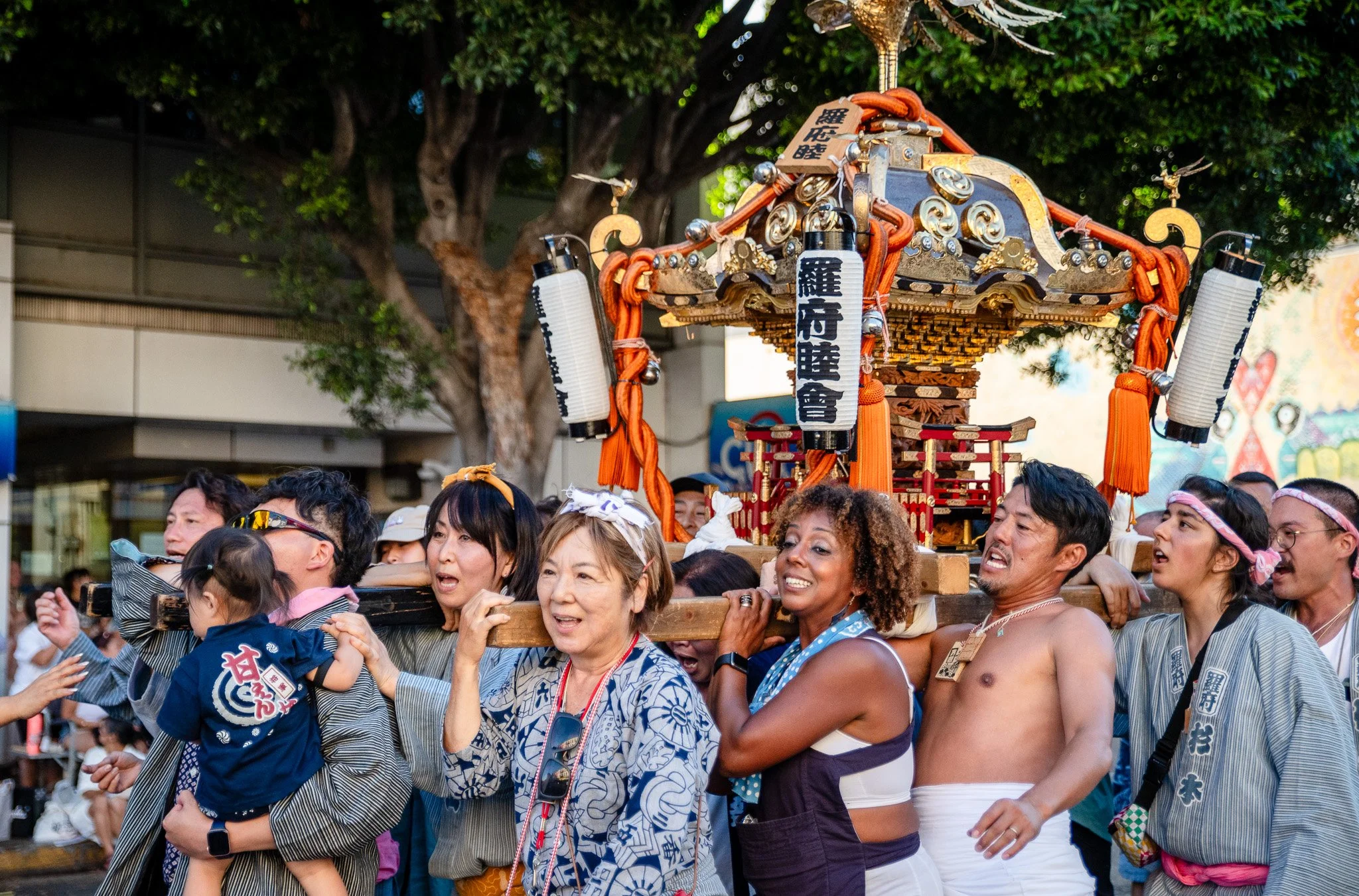
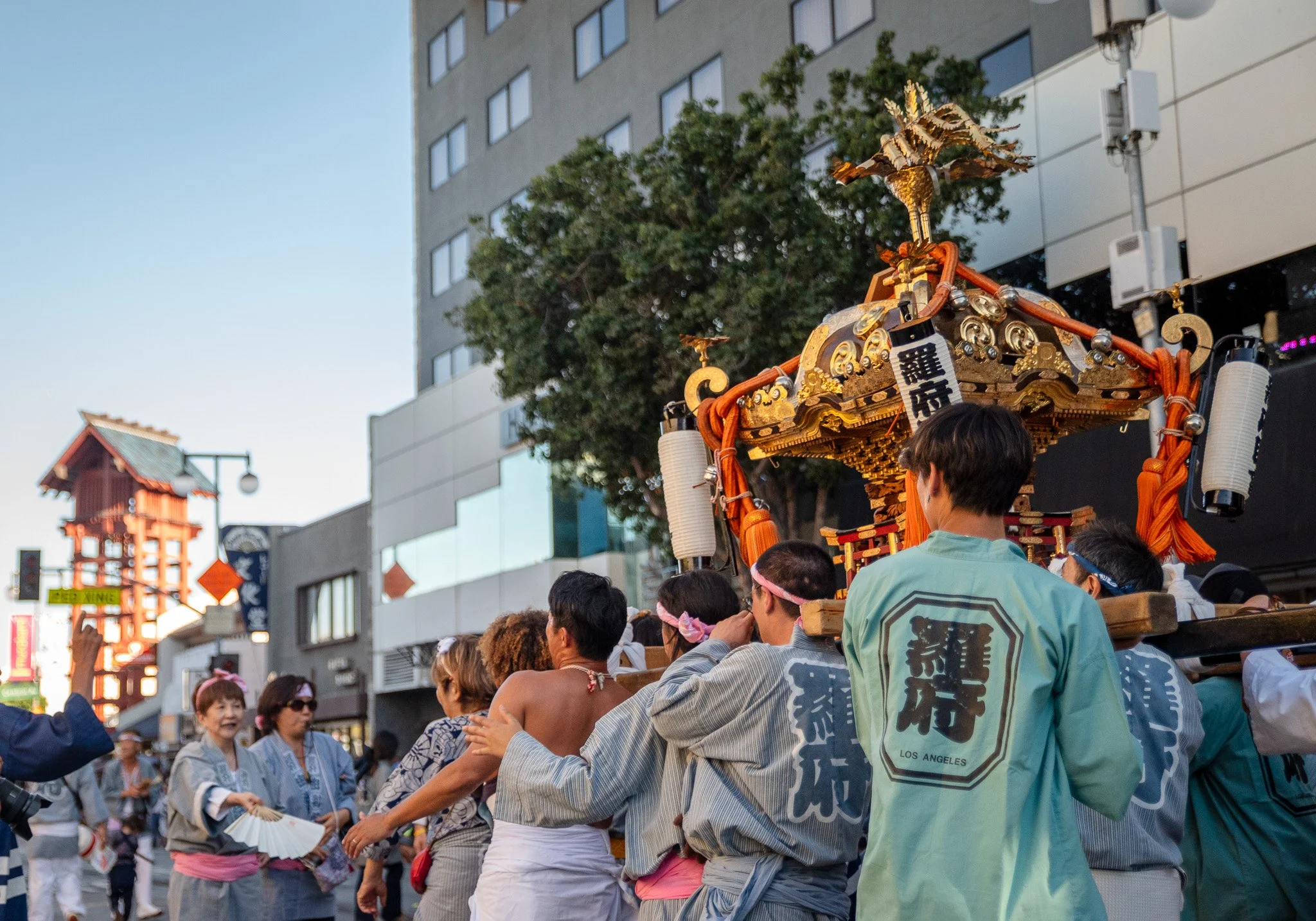
I’ve been attending Nisei Week for several years now. And while it’s changed quite a bit (like most things, if I’m being honest), it’s still one of my favorite events to cover. What keeps me coming back is the fact that there is no other way to experience such a wealth of Japanese culture, short of taking a trip to Japan. It’s colorful, it’s loud, it’s heartfelt—and it’s one of the best cultural celebrations you can attend on the West Coast. Best of all, it’s punctuated by a beautiful grand parade that encircles the Little Tokyo Japanese Village Plaza.
What is the Nisei Week Grand Parade?
The Nisei Week Grand Parade is the highlight of the multi-day Nisei Week festival, which celebrates Japanese American culture. The word Nisei refers to second-generation Japanese Americans, and the event originally began in the 1930s as a way to celebrate, preserve, and share Japanese heritage.
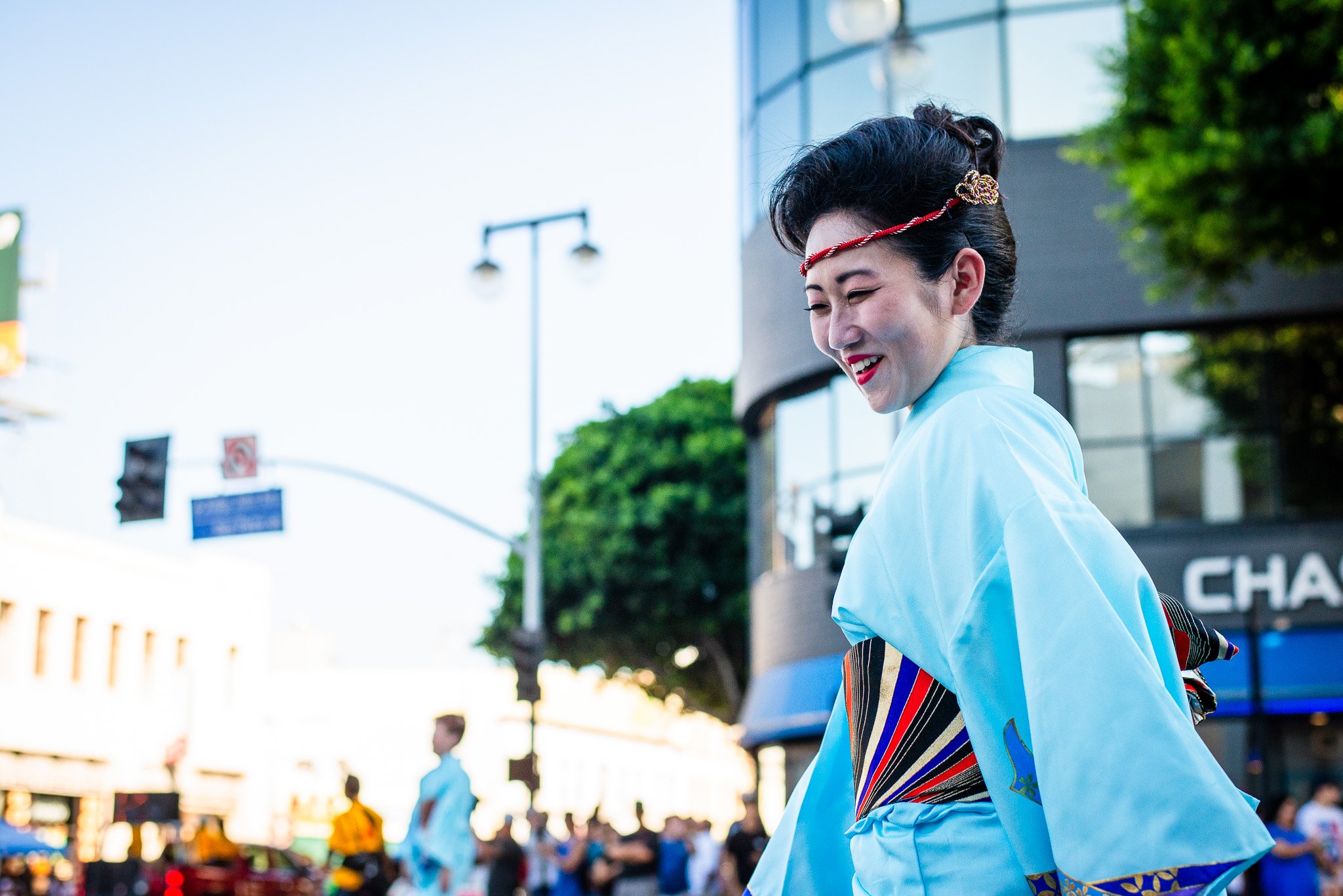
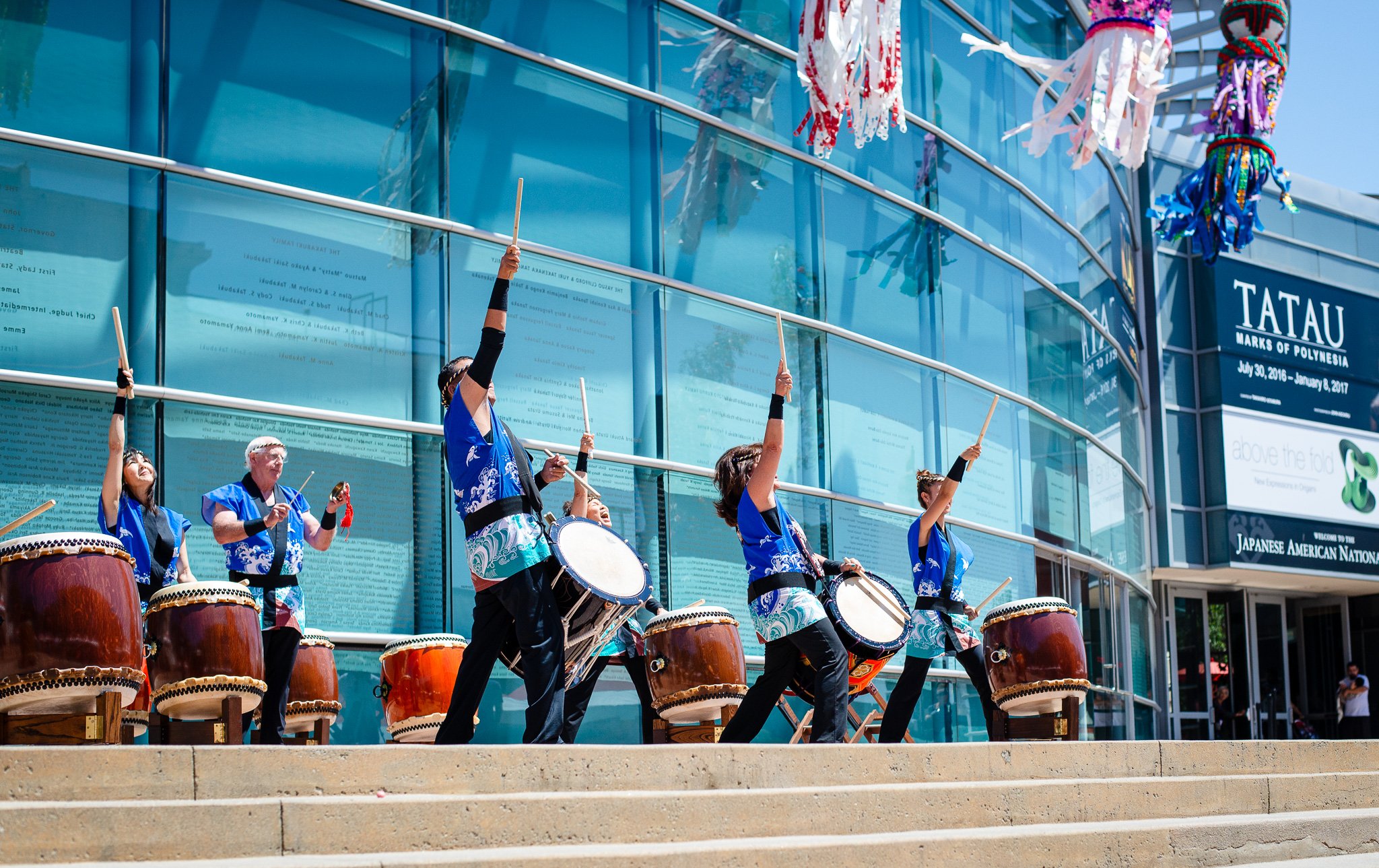
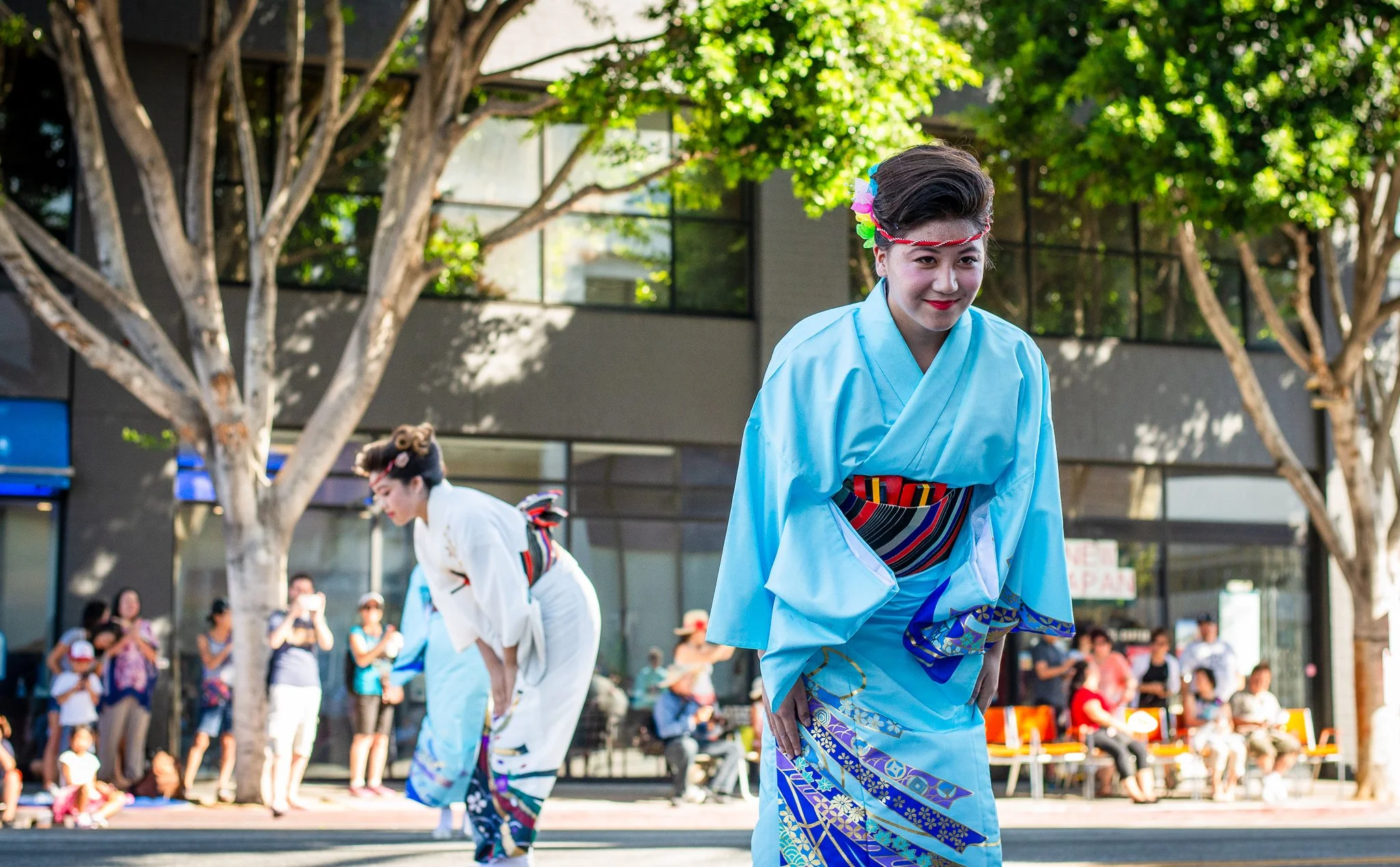
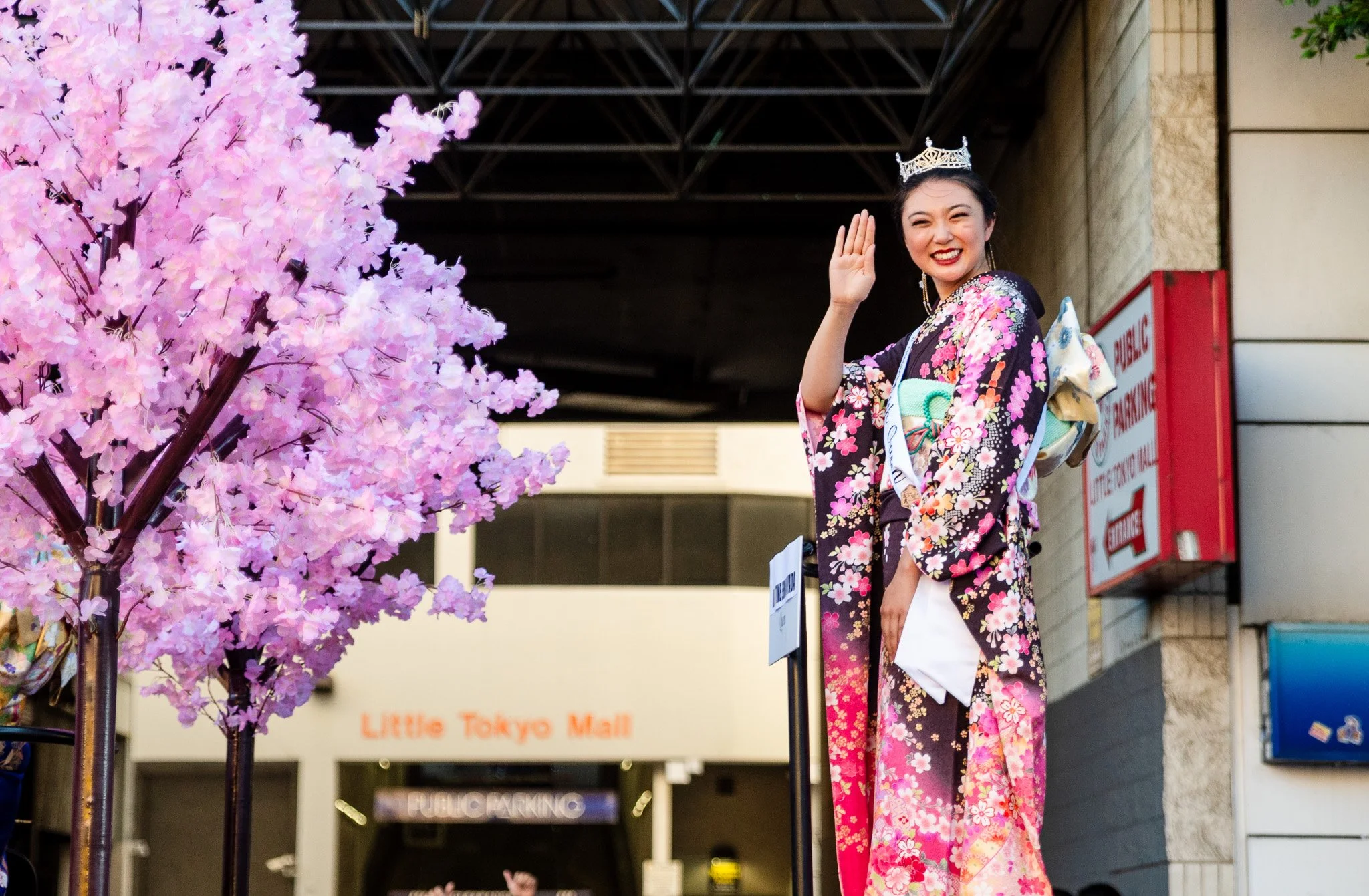
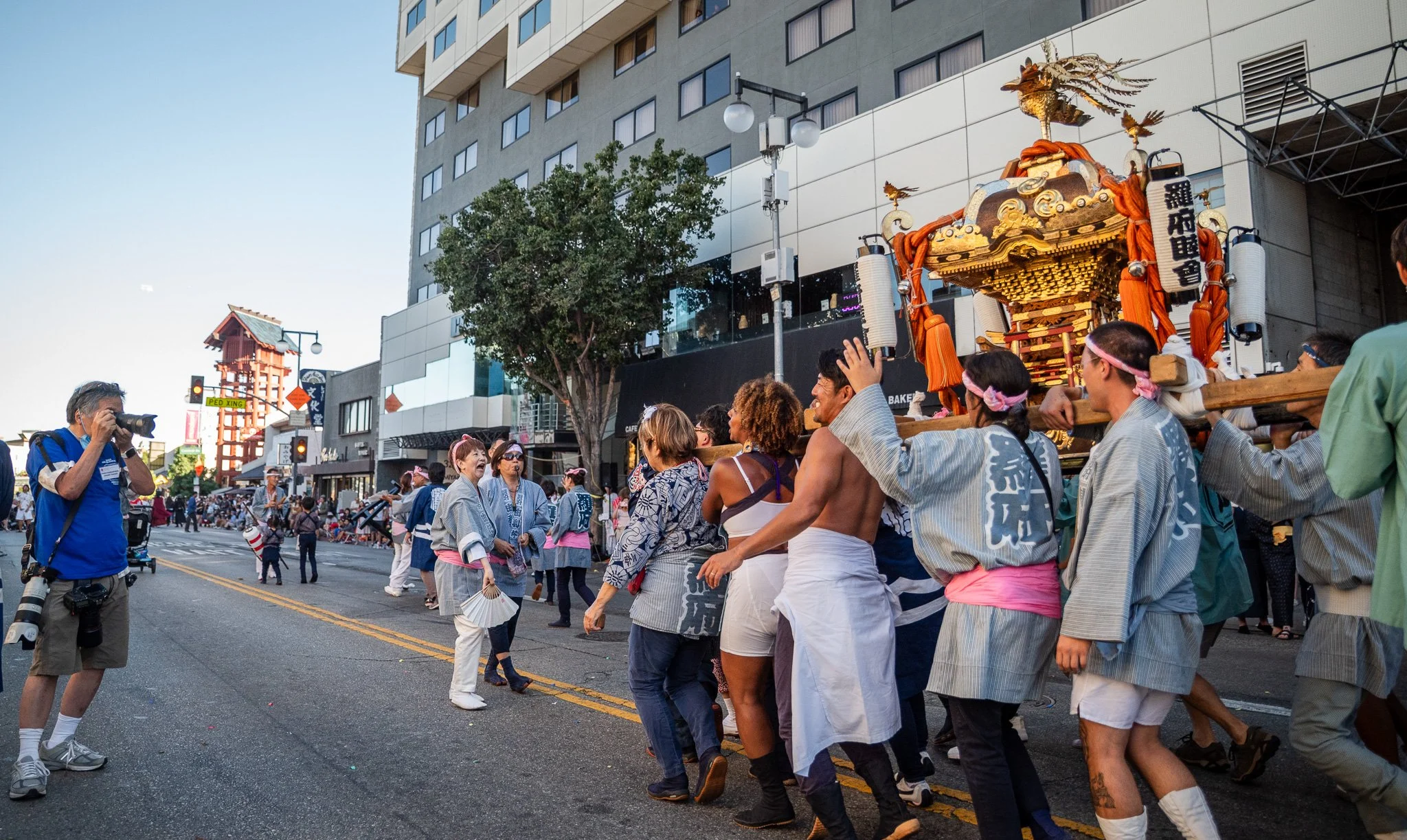
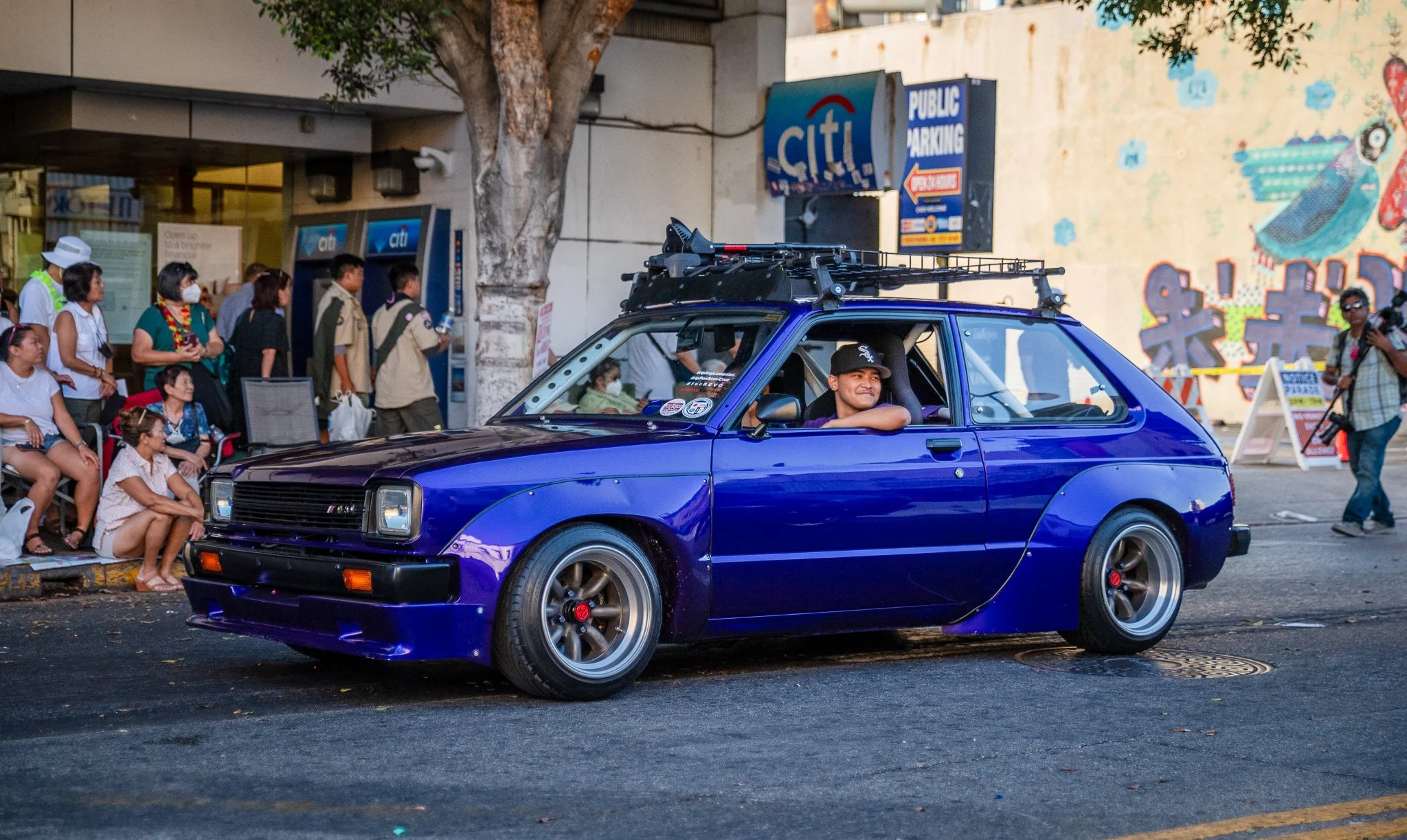
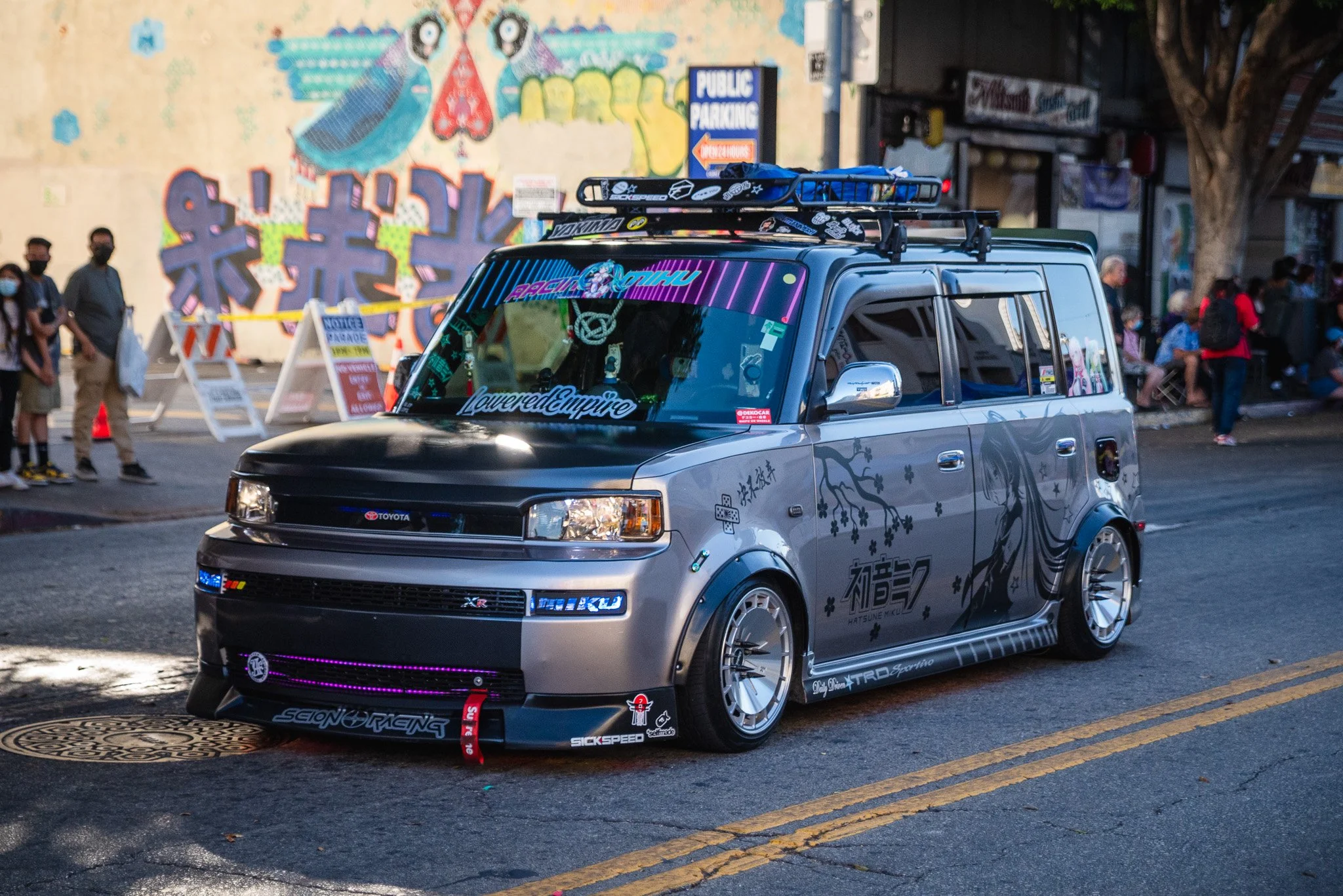
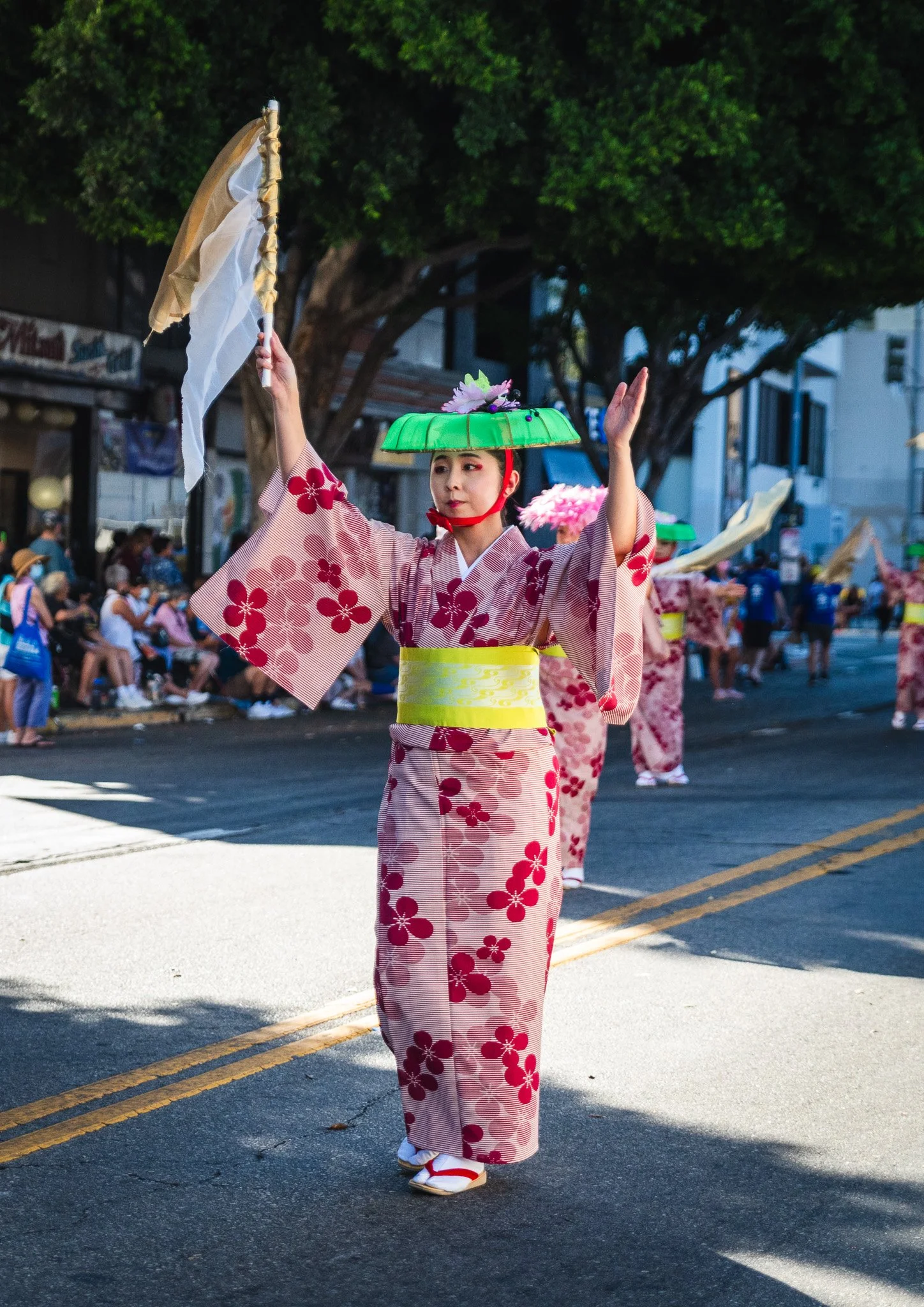
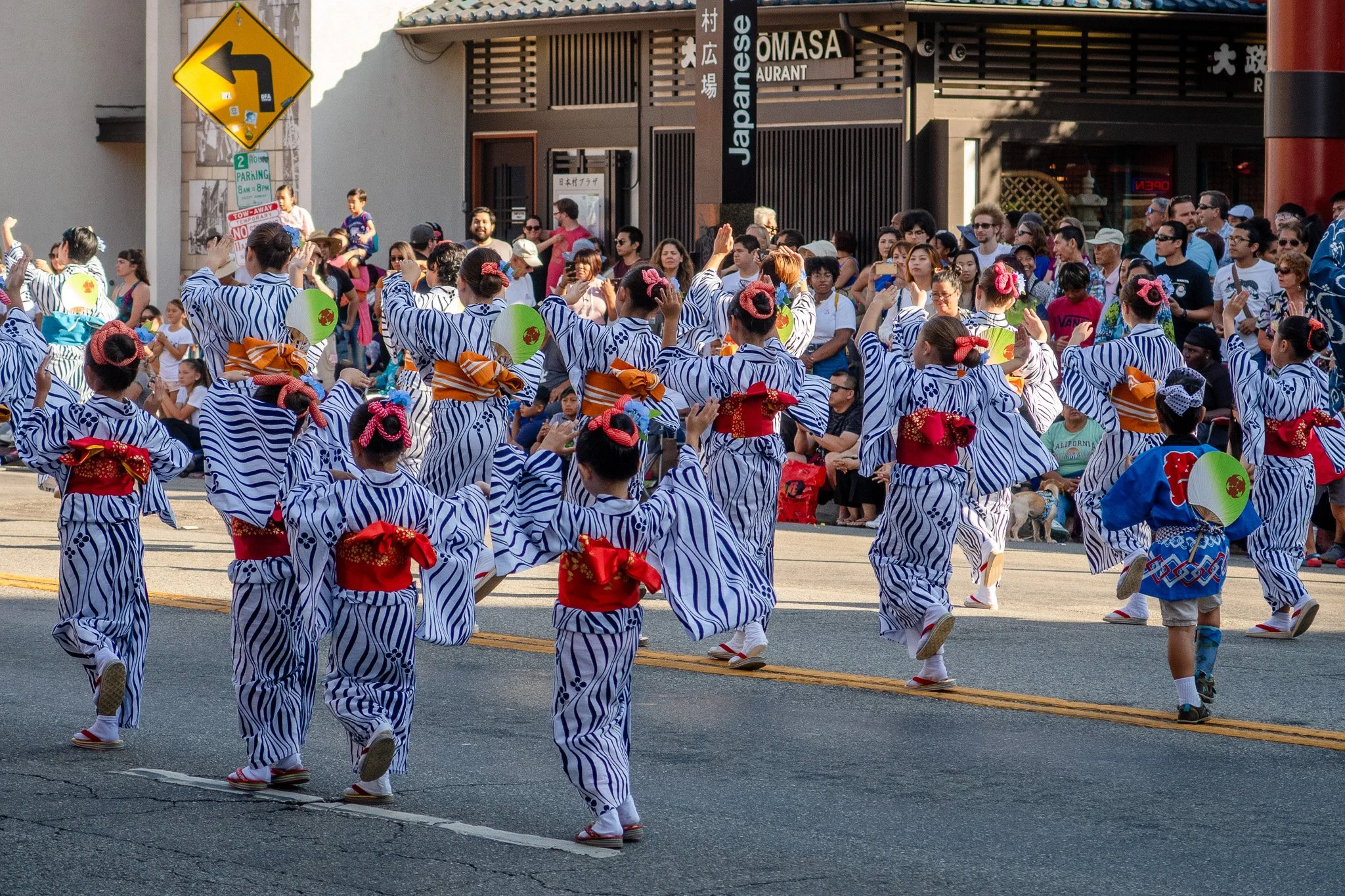
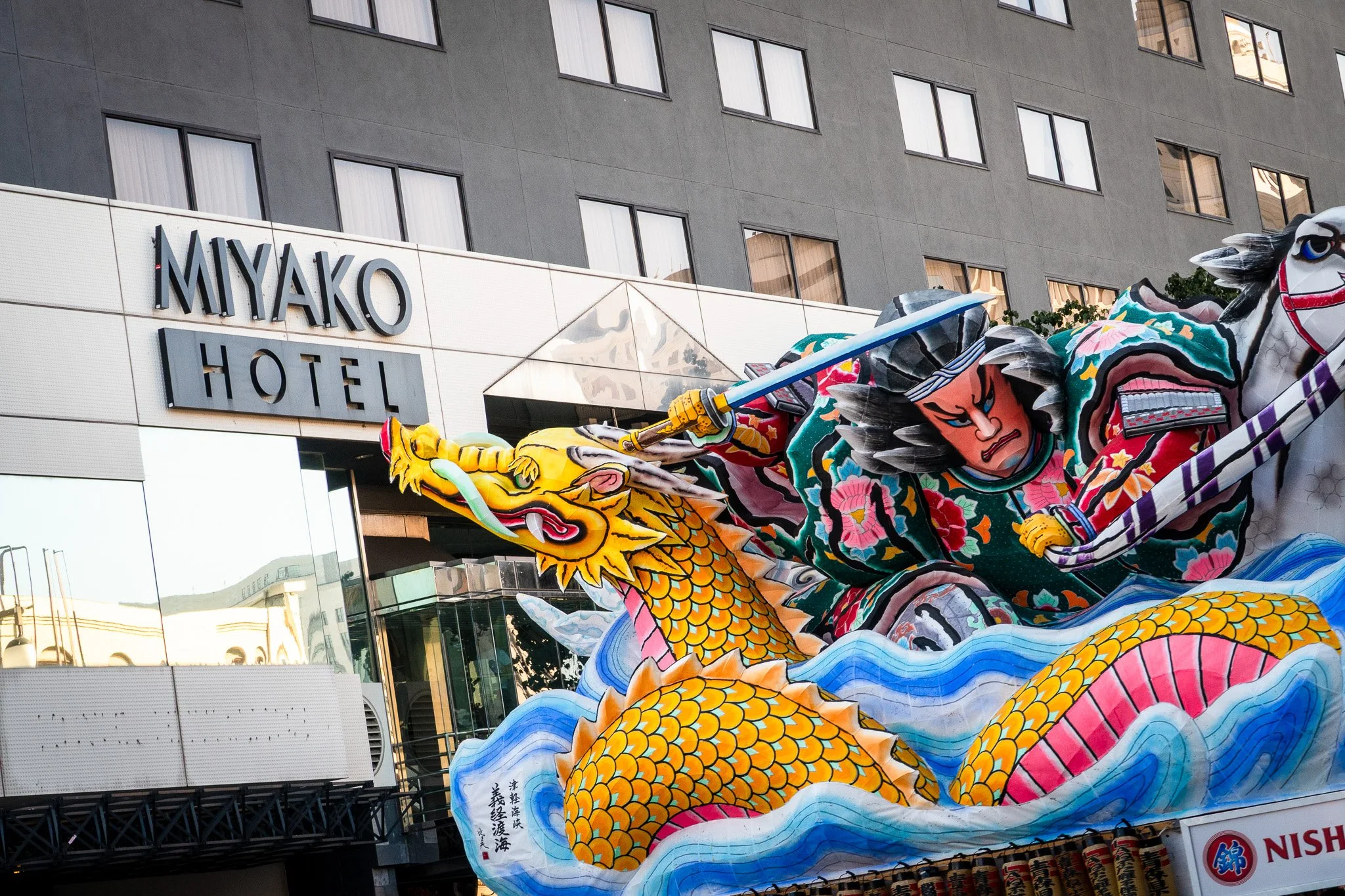
The parade itself is a unique blend of tradition and popular subculture—you’ll see taiko drummers and Bon Odori dancers one minute, then anime cosplayers, martial artists, and car clubs the next. The energy, performances, and visuals make this a must-see for anyone with an interest in Japanese culture or cultural events.
When, Where, and How to Catch It
The Grand Parade usually takes place on a Sunday afternoon (it’s on August 10th this year), typically starting around 4:00 PM. The route usually begins near 2nd Street and Central Ave, winds through the heart of Little Tokyo.
Tips for First-Time Visitors:
Arrive early to scout your spot— You’ll want to grab a spot in the shade, since the later afternoon sun can be intense. Also, some areas are a little more aesthetic than others. My favorites are the corner of 1st St & San Pedro St and the area across from the Little Tokyo Fire Tower (but only if you don’t mind the sun).
Parking can be tricky. There are parking garages and lots all over Little Tokyo, but unless you plan on being there the whole day, I would park away from Japanese Village Plaza. First off, they’re going to fill up quickly, but second, it becomes impossible to leave them once the parade starts (not that you’d want to, but you never know). Public transit is also an option, and there is a Metro station conveniently located on 1st St and Central Ave.
Bring water and sunscreen. Like I said, the sun can be brutal at this time. Also, a light bag is probably a good idea so you can keep stuff with you. You won’t want to leave your spot once everything starts.
If you’re shooting, go light on gear. One camera body and a zoom lens is ideal. A 24–70mm is a good all-arounder, but if you have something with more reach, that will help too. Photo Tip: Golden hour starts to hit just as the parade kicks off. Keep the sun in front of you and look for areas with lots of light and shadow. You can get some beautiful images at this hour.
More Than a Parade: What to Do Before and After
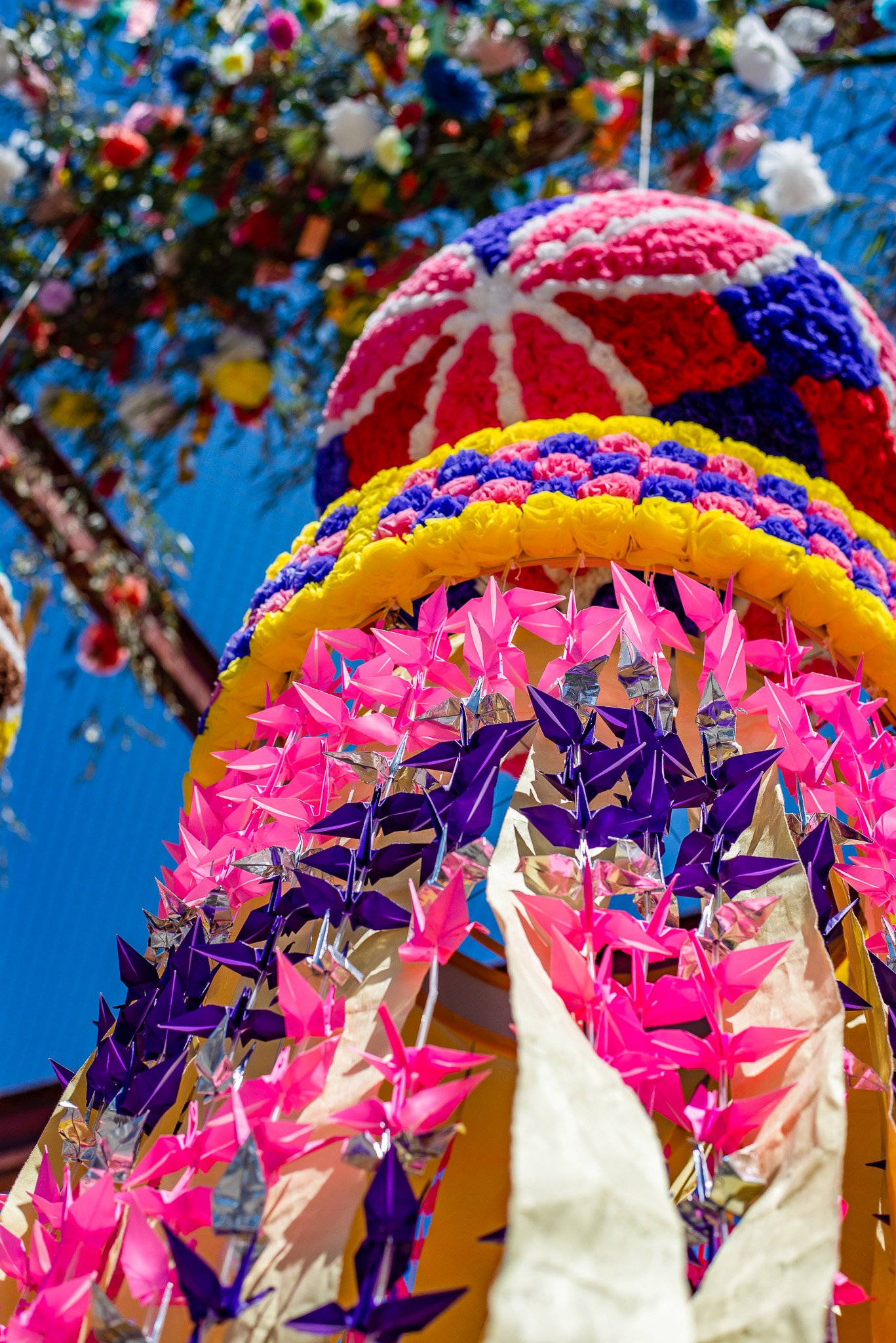
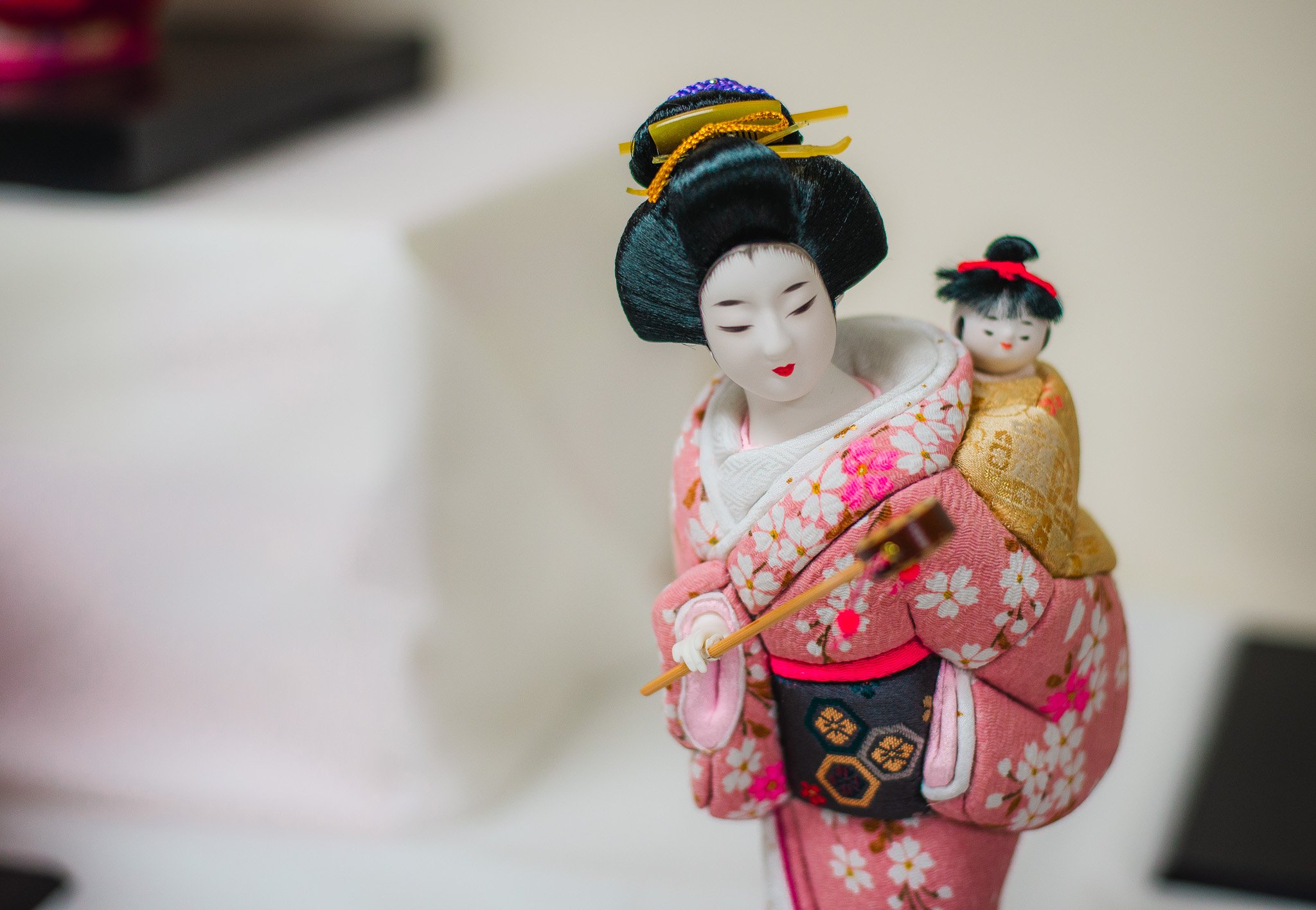
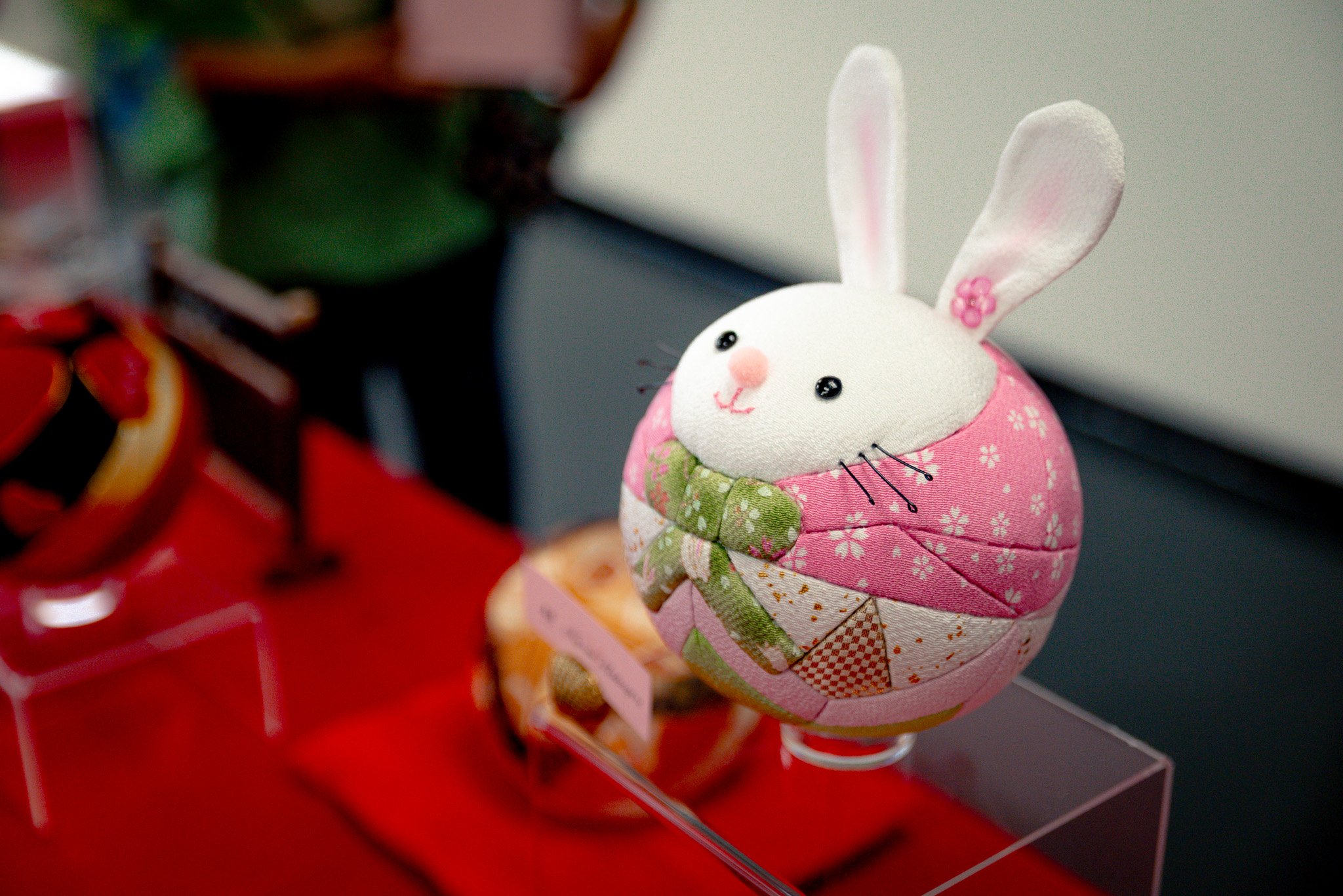
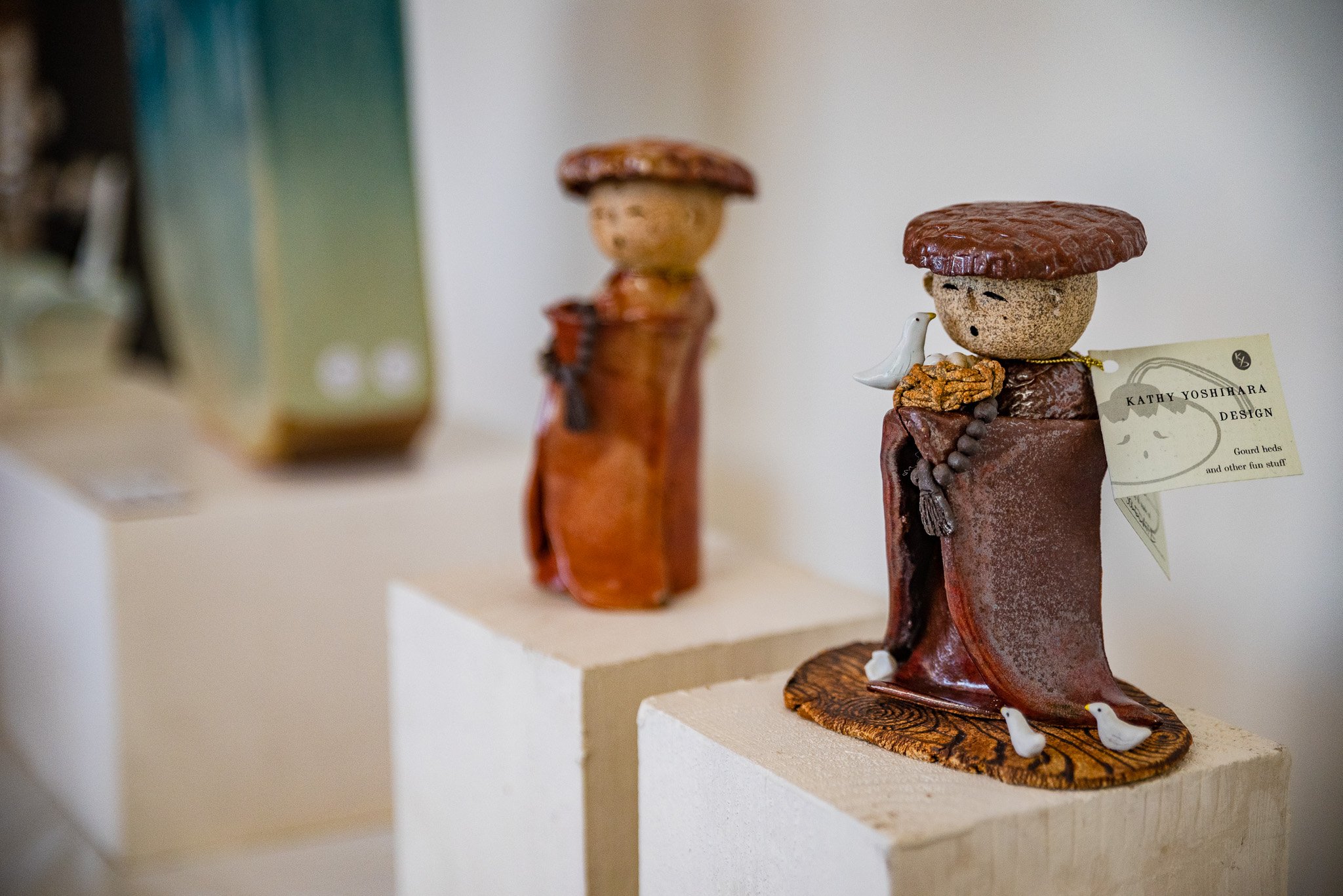
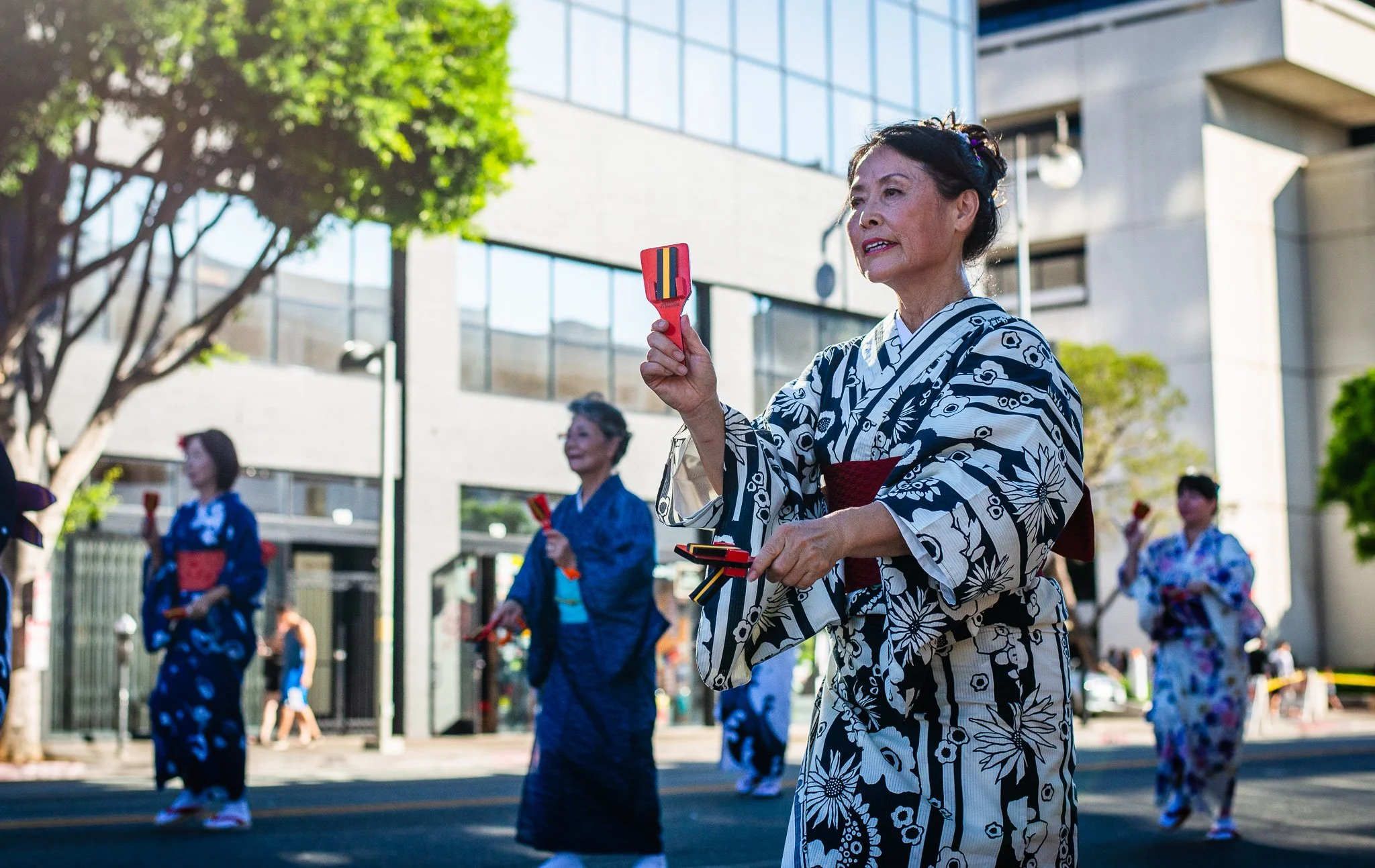
Little Tokyo is already one of the best places in LA for Japanese food, art, and culture— and Nisei Week adds even more to experience.
Here are a few things to check out before or after the parade:
Other Nisei Week Activities: The Grand Parade isn’t the only thing happening during Nisei Week. There is a variety of performances, exhibits, and attractions happening throughout Little Tokyo. Take some time to check a few of these out before setting up for the parade.
Japanese American National Museum: Located right across from the Metro station, this museum is a must-see for historical context and fascinating exhibits.
Street Food & Snacks: If you want the Japanese festival experience, there’s plenty to try. My personal favorite are the Imagawayaki cakes from Mitsuru Cafe. But you can also grab Takoyaki from Tanota, fresh mochi from Fugetsu-Do, and onigiri rice balls from Marukai Market.
Shopping: Kinokuniya, Japangeles, Popkiller, Anime Jungle— there’s no shortage of places to load up on Japanese books, fashion, stationery and gifts.
Street Photography (of course): Little Tokyo has always been one of my favorite places to take photos. From the crowds, to the decor, and colorful character that is LA, there’s just so much to capture and appreciate. This is definitely a place to have fun with a camera.
Final Thoughts: A Living Celebration Worth Capturing
Nisei Week isn’t just a festival— it’s a vibrant celebration of cultural, expression, and community. Whether you’re there to connect with Japanese heritage or capture it through your lens, the Grand Parade is an unforgettable experience.
If this post inspired you to visit—or if you’ve attended in the past—I’d love to see your photos. Tag me on Instagram or drop a link in the comments.
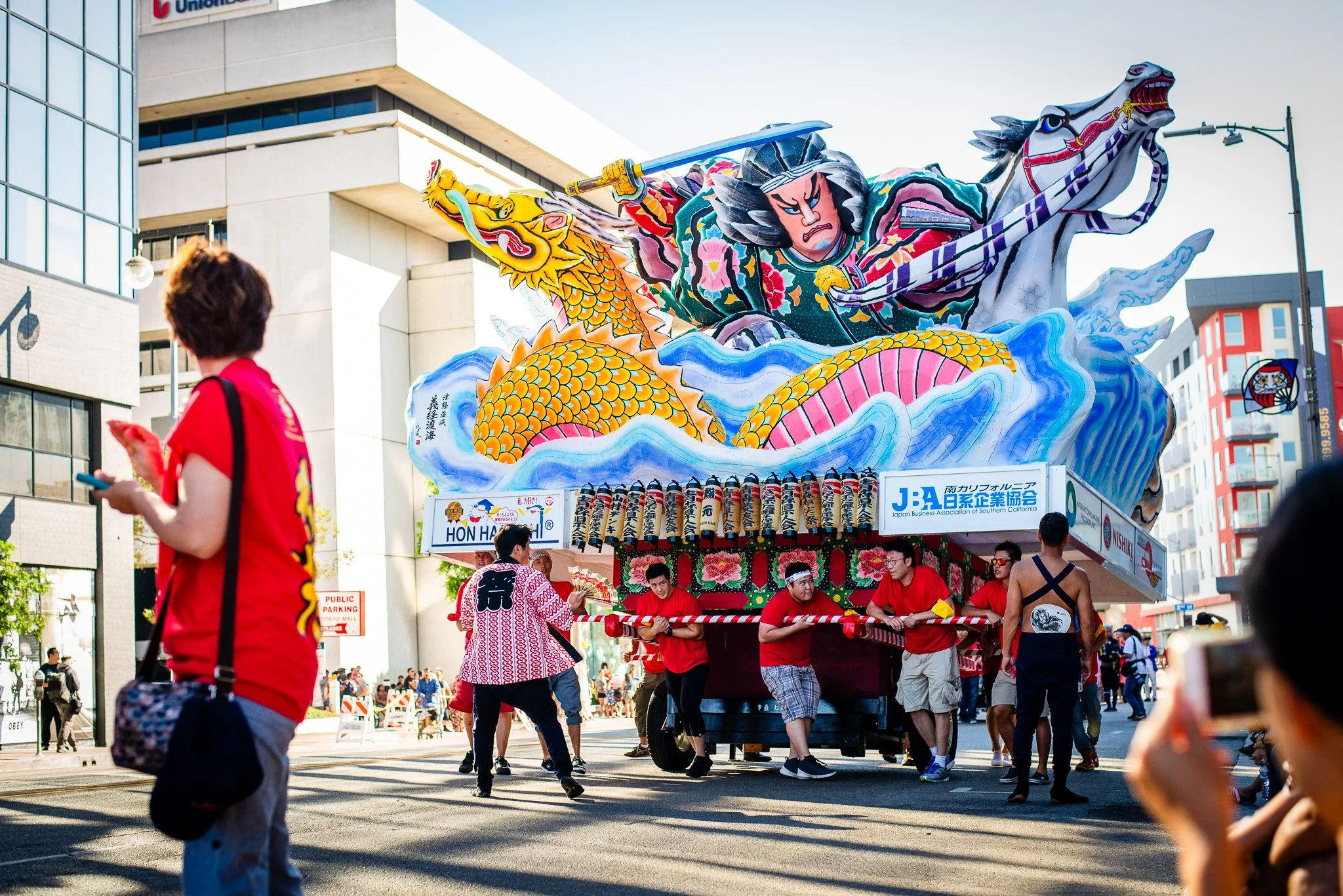
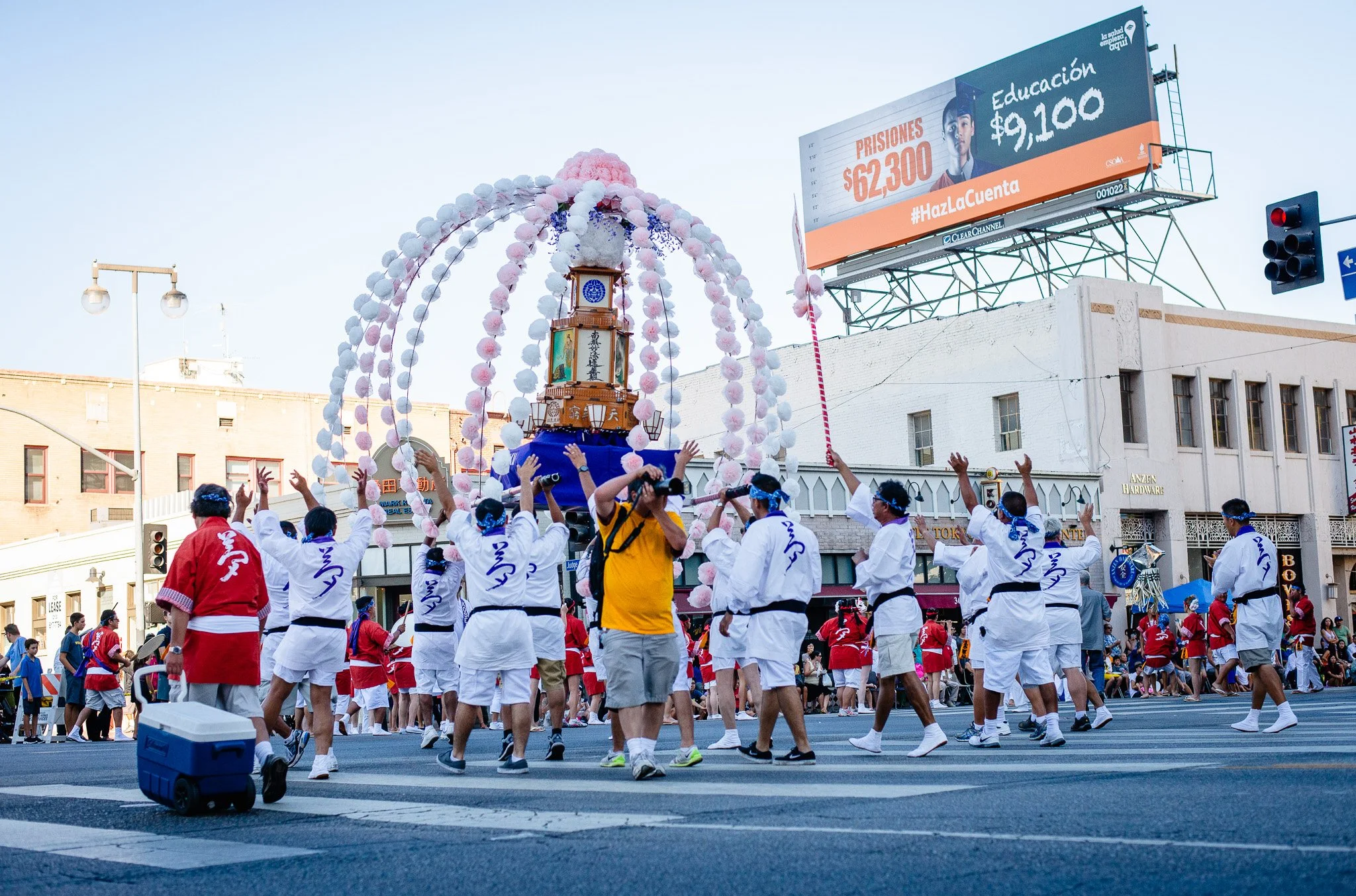
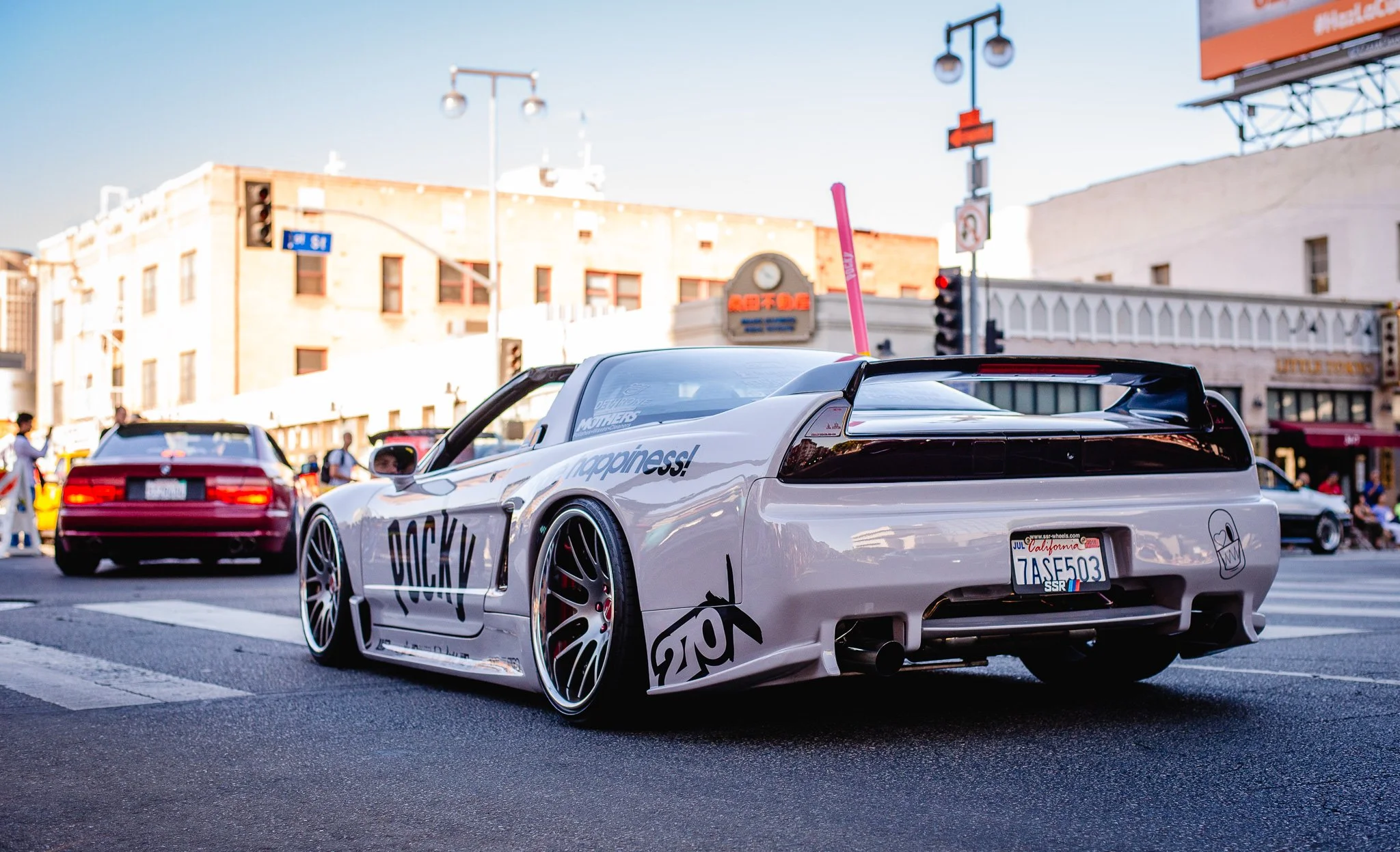
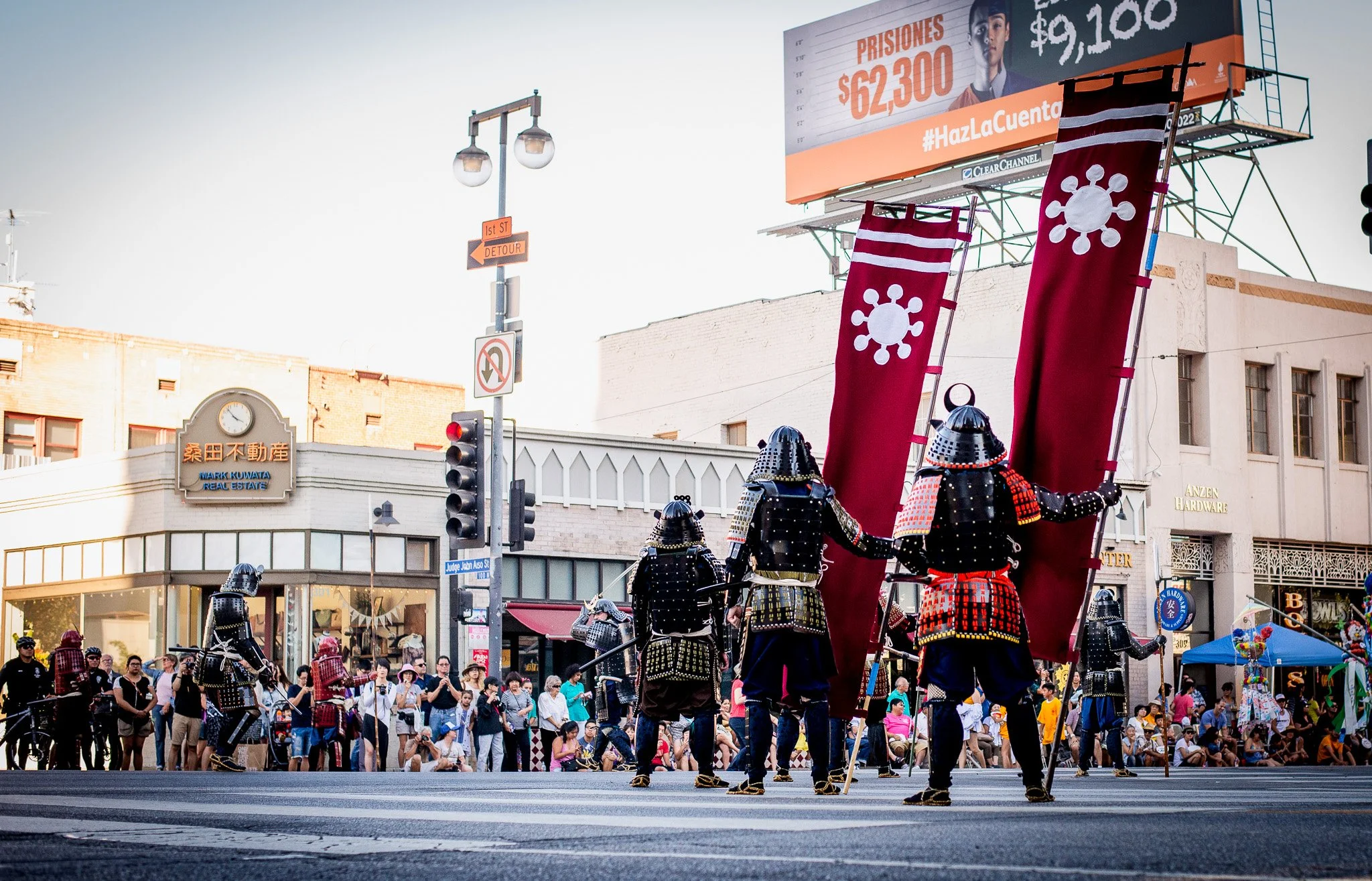
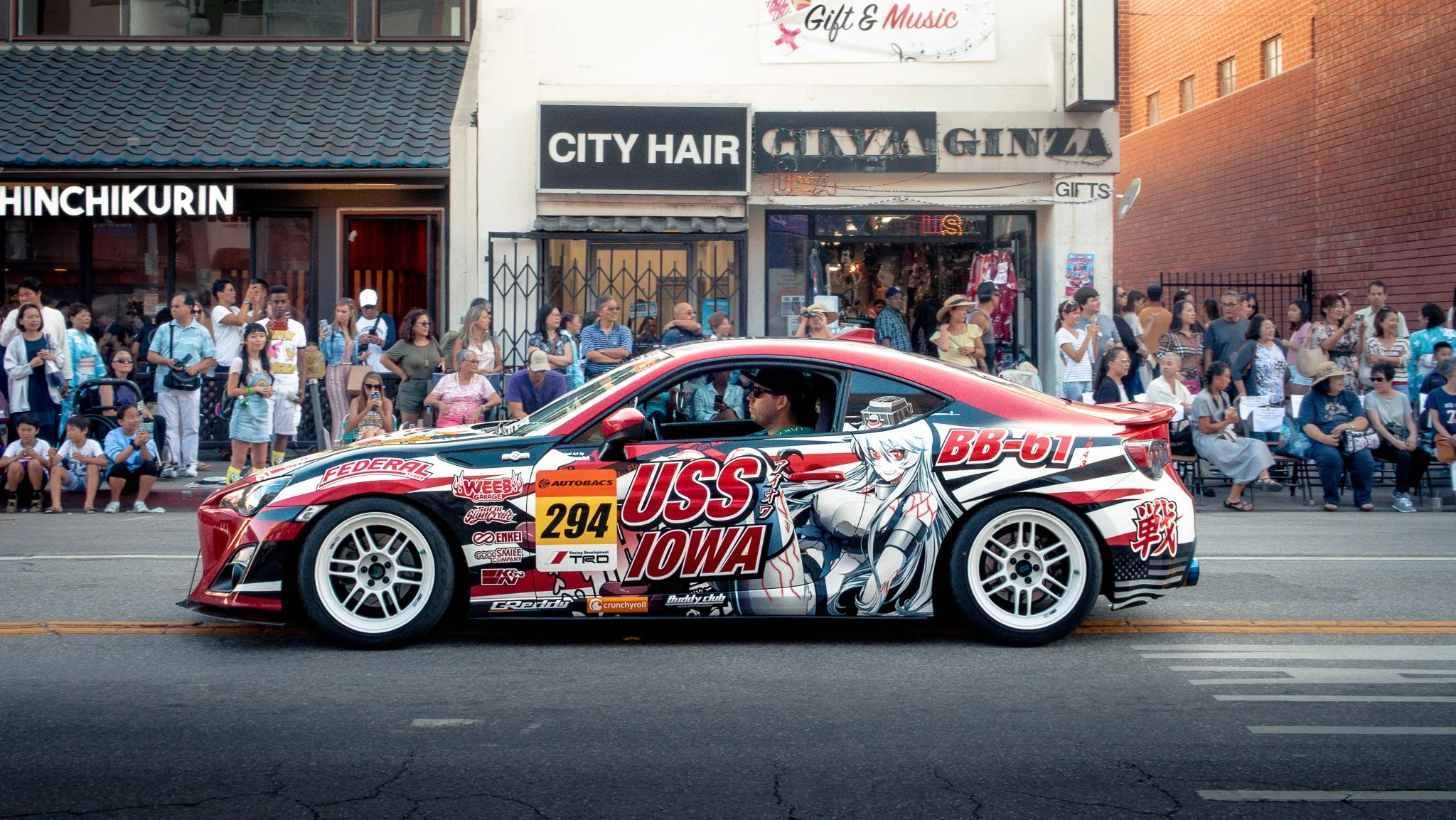
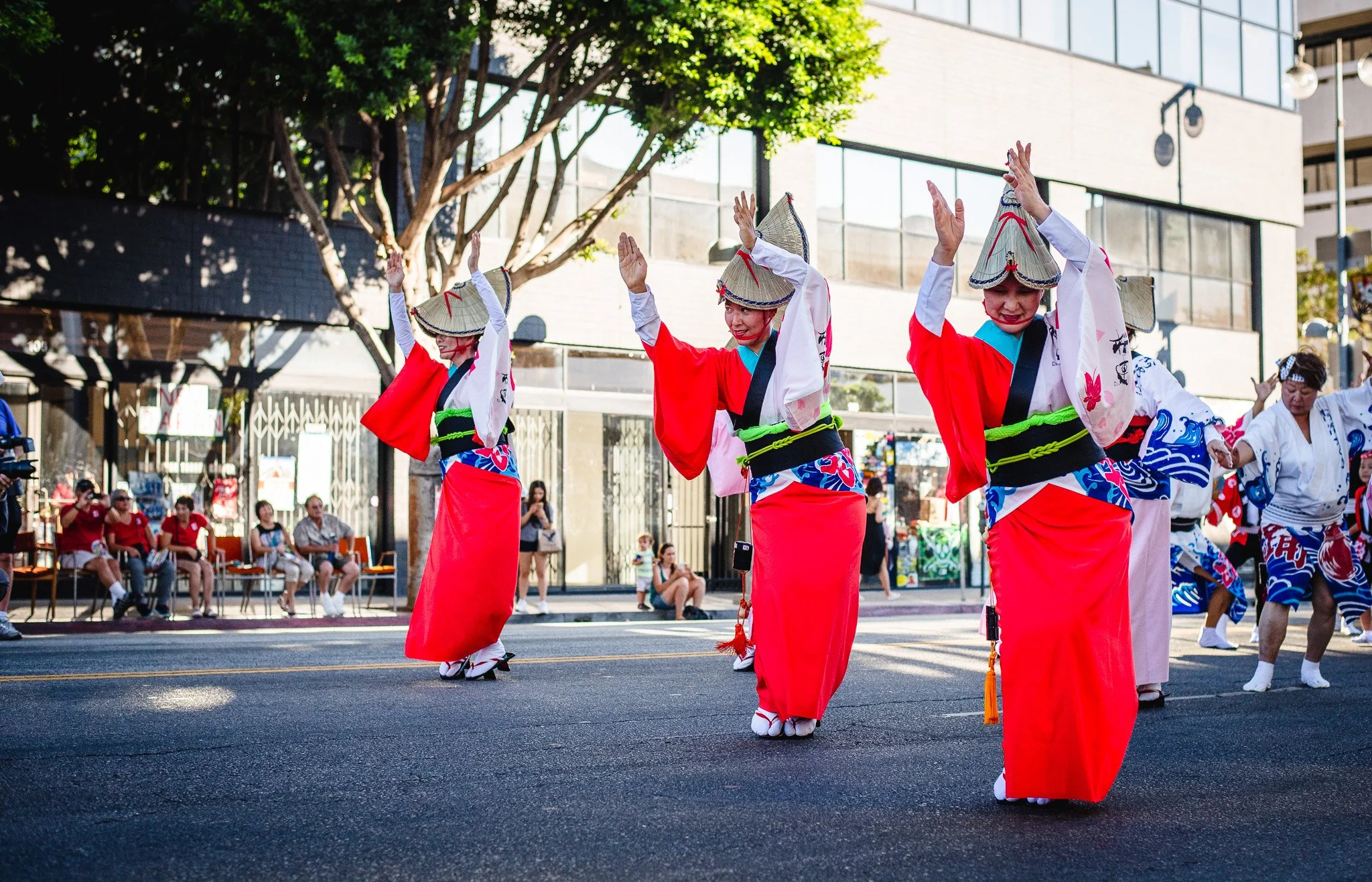
In the meantime, check out some of the images I’ve captured from previous Nisei Week Parades. It’ll give you a good idea of what’s in store.













Dekocar at Taste of Japan 2025
Itasha have become one of my favorite things to photograph in recent years. So when I saw that Dekocar was doing another display at the Taste of Japan festival in Anaheim this summer, I knew I had to check it out.
Itasha have become one of my favorite things to photograph in recent years. While my interest in the art dates back to 2014—during my first trip to Tokyo—it wasn’t until 2019 that I really began photographing them, thanks to the Dekocar showcase at Nisei Week. That event flipped a switch in me, and I’ve been on the lookout for Itasha events ever since.
So when I saw that Dekocar was doing another display at the Taste of Japan festival in Anaheim this summer, I knew I had to check it out.
Now, I’ve been to a Taste of Japan event before, and to be honest, it’s not the most dynamic festival. It’s fairly typical of a lot of free summer events we get in SoCal—mostly vendor booths and a single main stage, light on immersive experiences. Though to be fair, Nisei Week is also free, yet is a much richer cultural experience overall. So, "free" doesn't always mean lackluster—but in this case, I wasn’t expecting anything groundbreaking either.
This is a fairly typical scene at the event, though it gets much more crowded the further in you go.
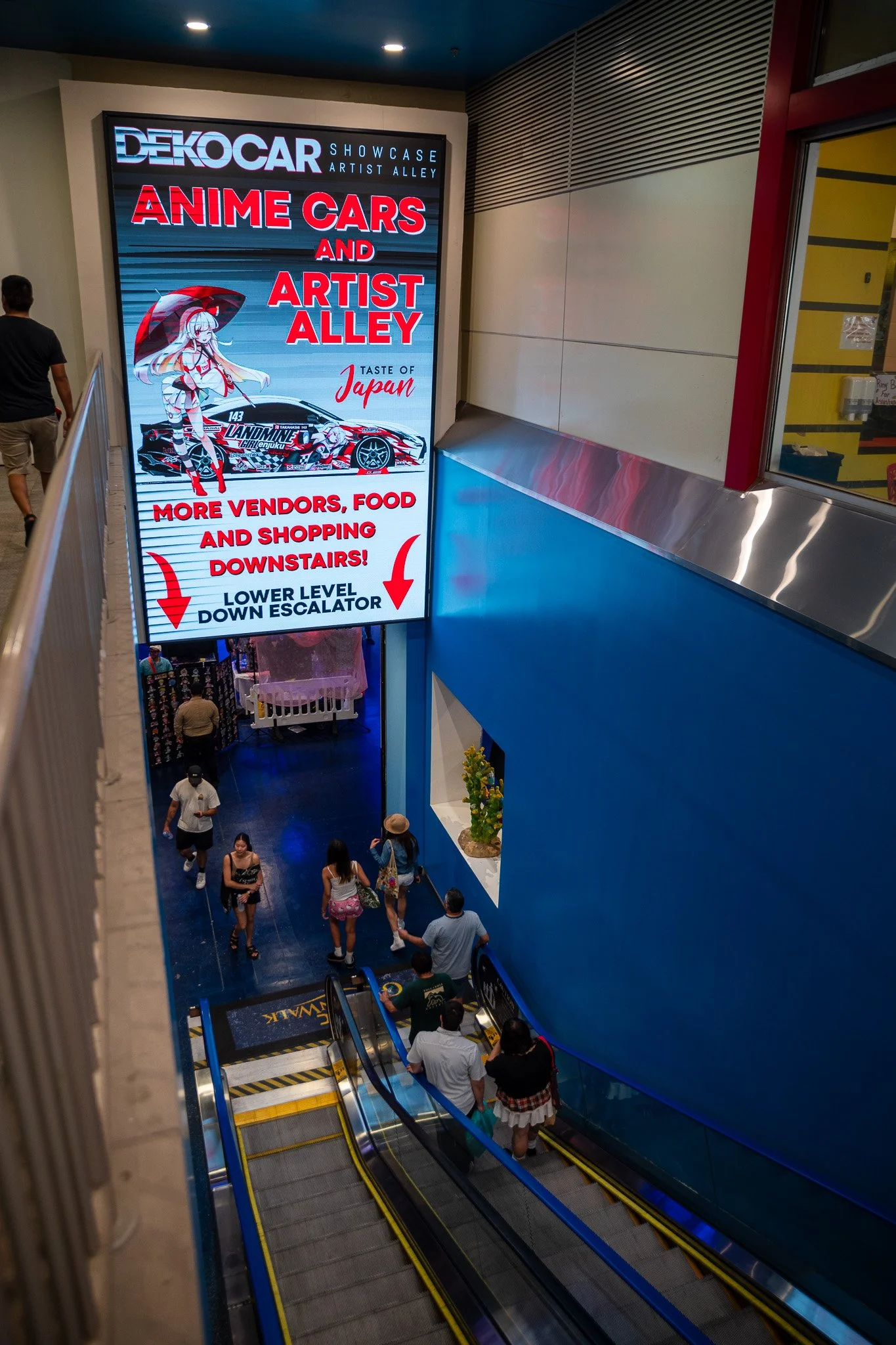
When I arrived, though, I was surprised—it was packed. The event took place at the STC Anaheim Gardenwalk, a kind of multi-level outdoor mall, and this year’s crowd definitely filled the space. After wandering around a bit, I made my way down to the parking garage where the Dekocar display was being held. It turned out to be a blessing: not only was it cooler (mid-June heat is no joke), but it also gave the display a kind of underground, exclusive feel that worked surprisingly well.
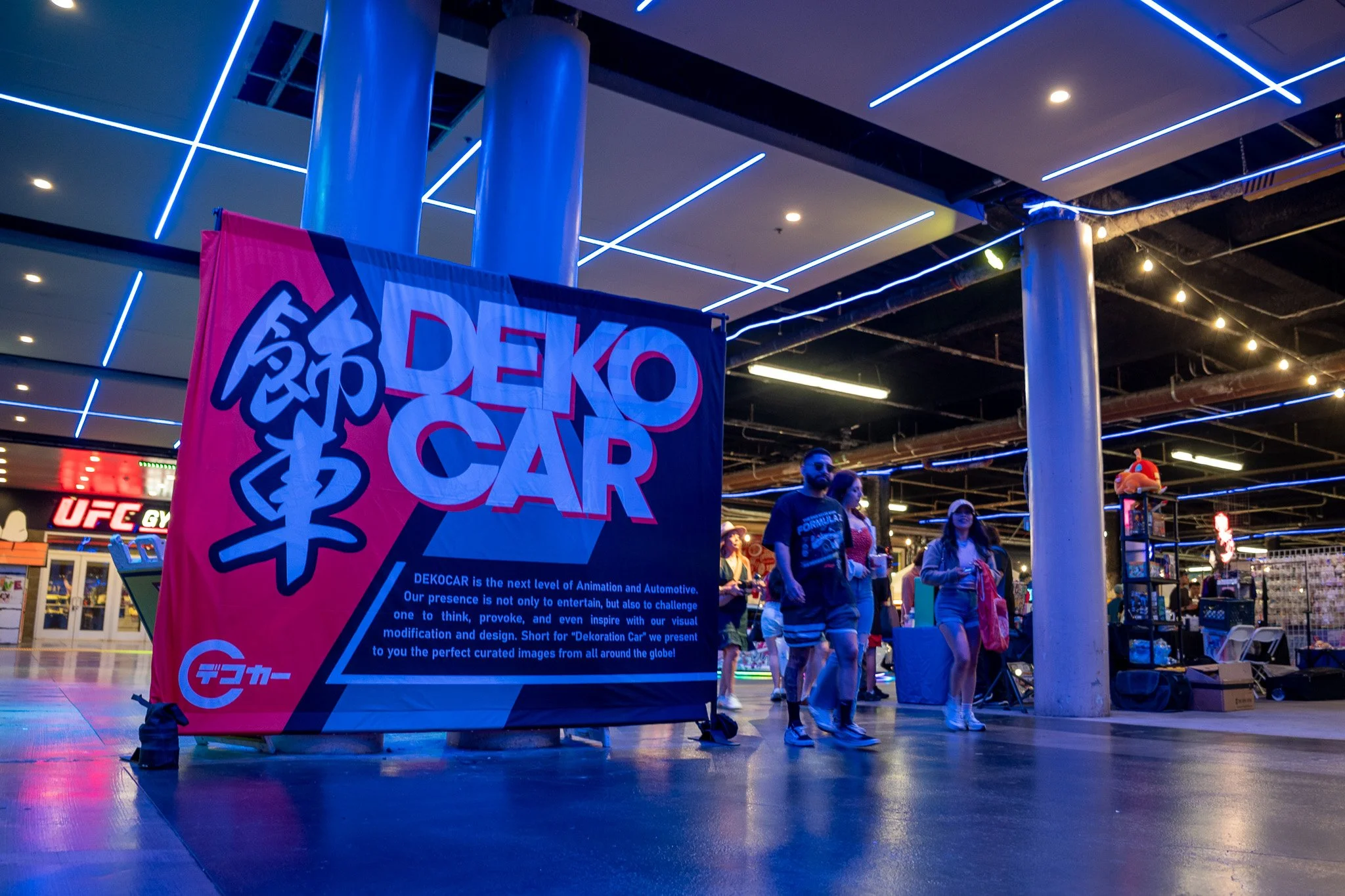
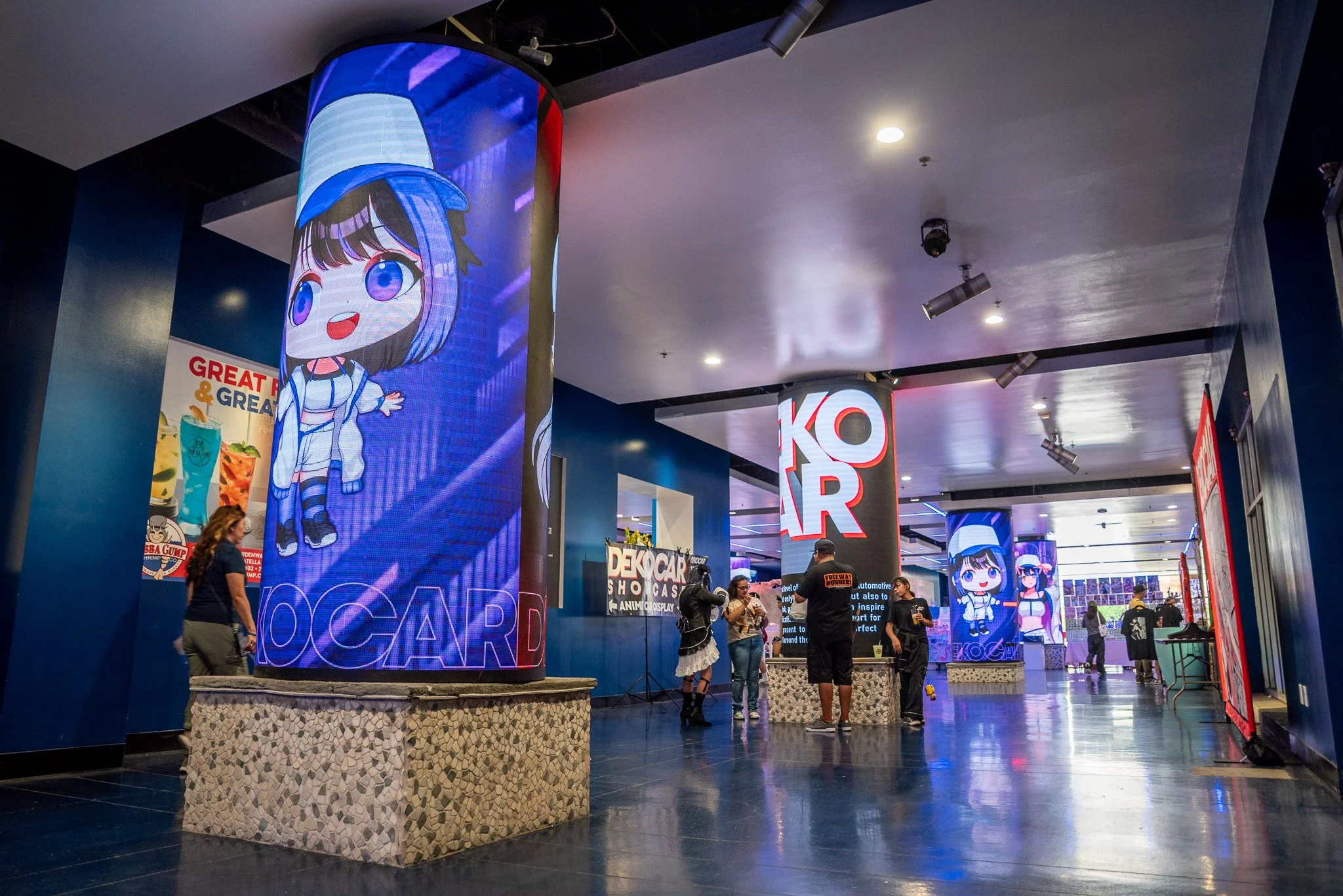
One thing that really caught me off guard was how much branding Dekocar had this year. Columns were wrapped with Dekocar graphics, there were banners, LED signage—it felt like the brand had leveled up since I last saw them at Anime Impulse in 2020. Their digital footprint might still be niche, but in person, they’ve built a strong identity.
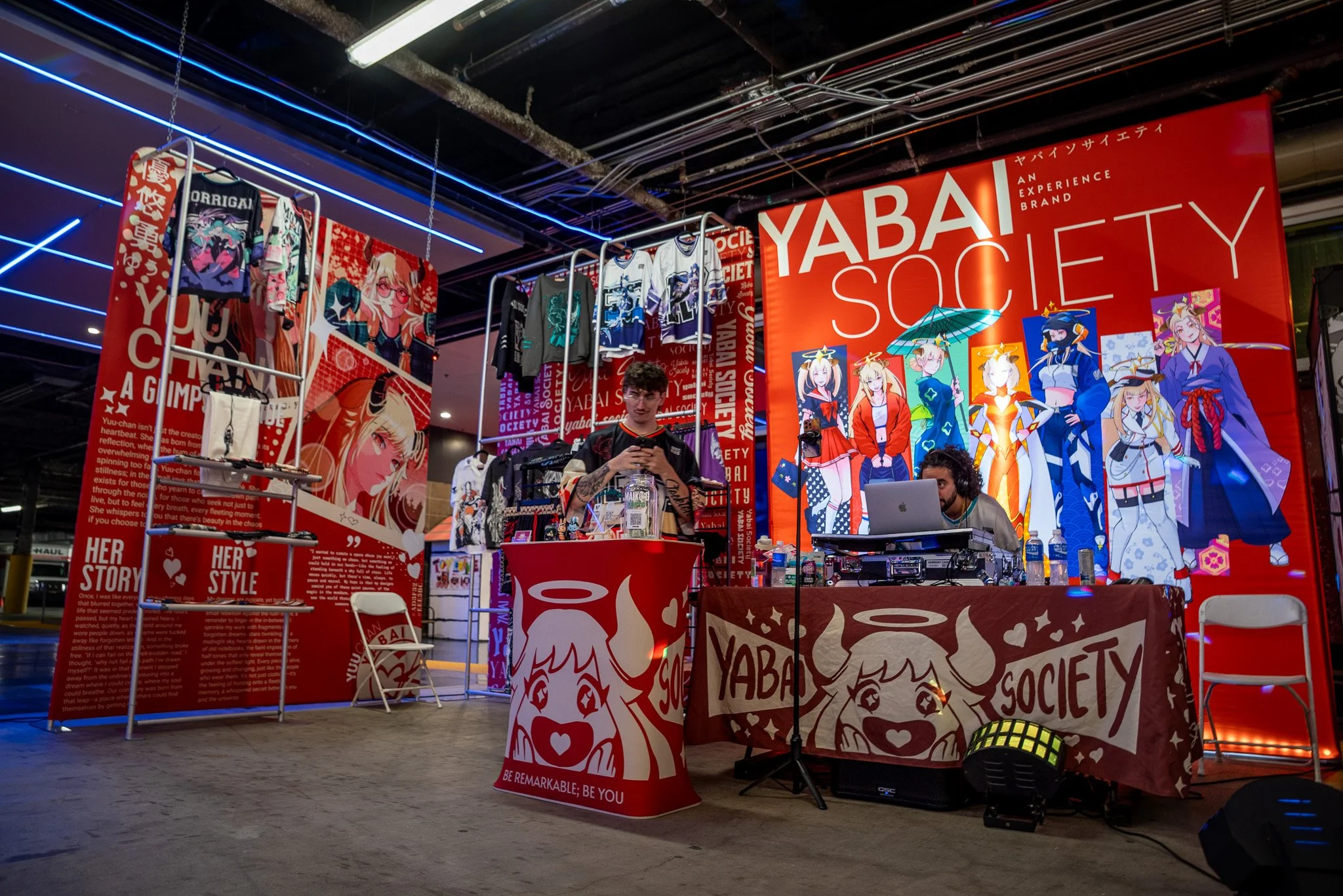
There was a DJ, a few vendor booths, and even a surprise appearance from Pocari Sweat, who apparently now have a U.S. presence and are distributing through Costco (now I need to get a membership again). They were handing out free bottles, which was a huge win considering how hot it was. Naturally, I grabbed a couple.


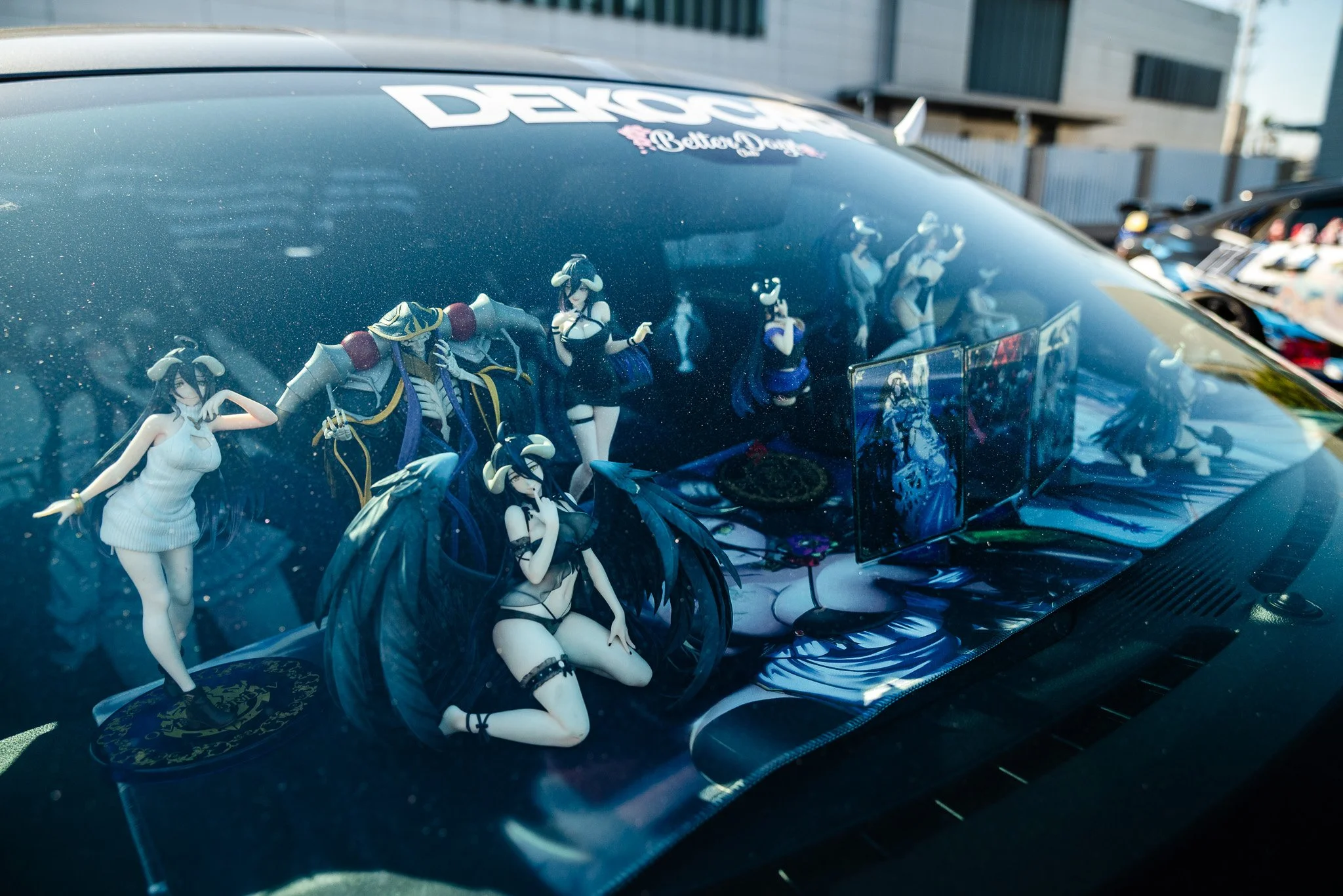
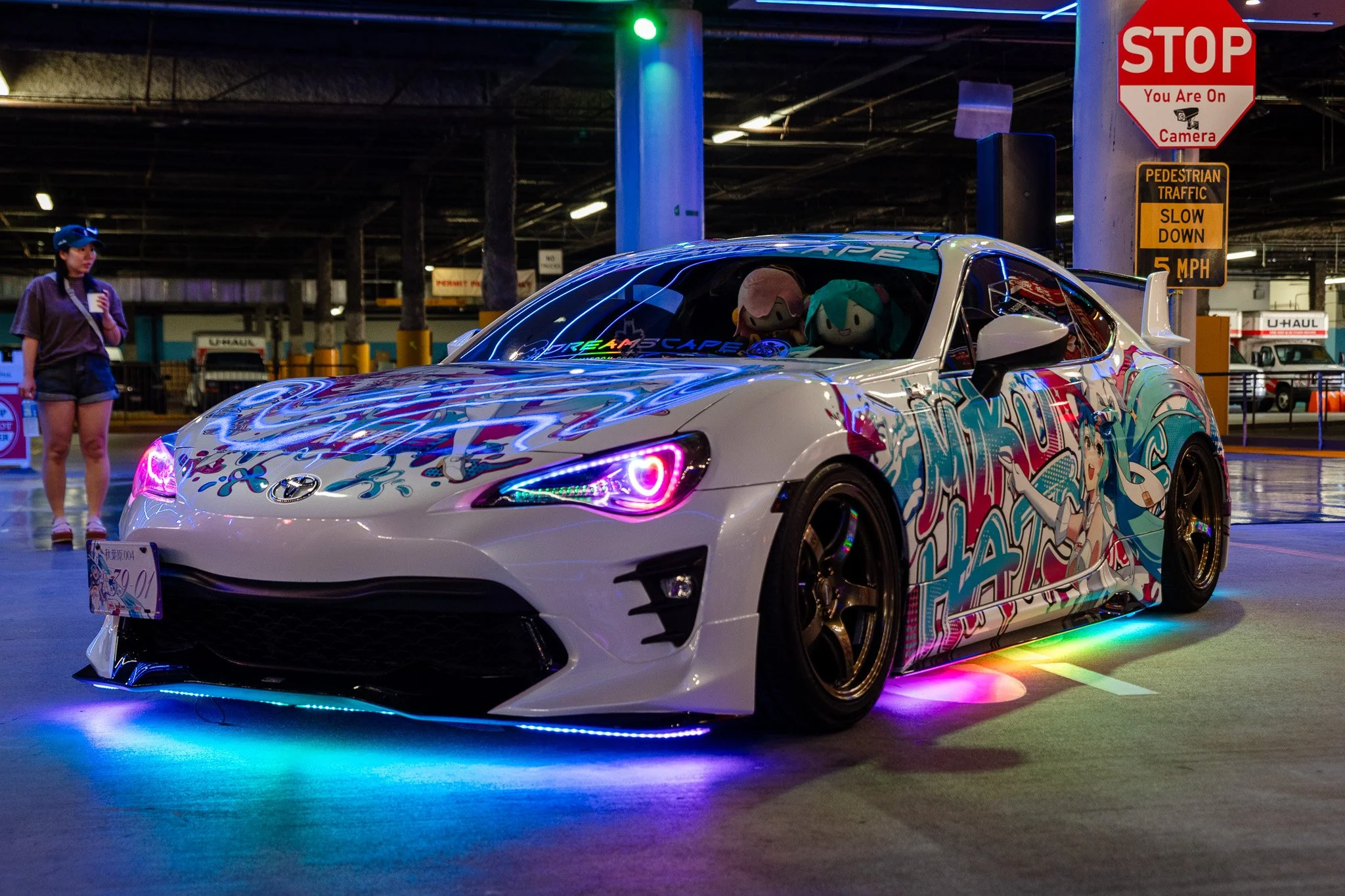
If I had to call out one issue with the setup, though, it’d be the lighting. The garage was pretty dim—fine for escaping the heat, but not ideal for showcasing the vibrant and intricate art of the Itasha wraps. These striking designs are meant to be seen, and poor lighting completely robs them of their impact. On the upside, the dim environment did make the LED underglow and other lighting effects really pop. A bit of a silver lining, I suppose.
Lighting is all over the place down here.
Photographically speaking, it wasn’t a disaster, even with the lighting. I shot both photo and video and didn’t run into many issues, thanks to the fact that the cars were stationary. The only time I struggled was when I tried to grab a portrait of the Pocari Sweat crew under their dark canopy (see the crew portrait above to see what I mean- my Nikon Z5’s autofocus had a tough time locking in under those conditions).
That said, creating solid images from these would take a lot of work, given the uneven lighting, harsh reflections, and dark shadows. Maybe I’ll try something with them in the future, but for now, here’s a complete set of images with basic edits:

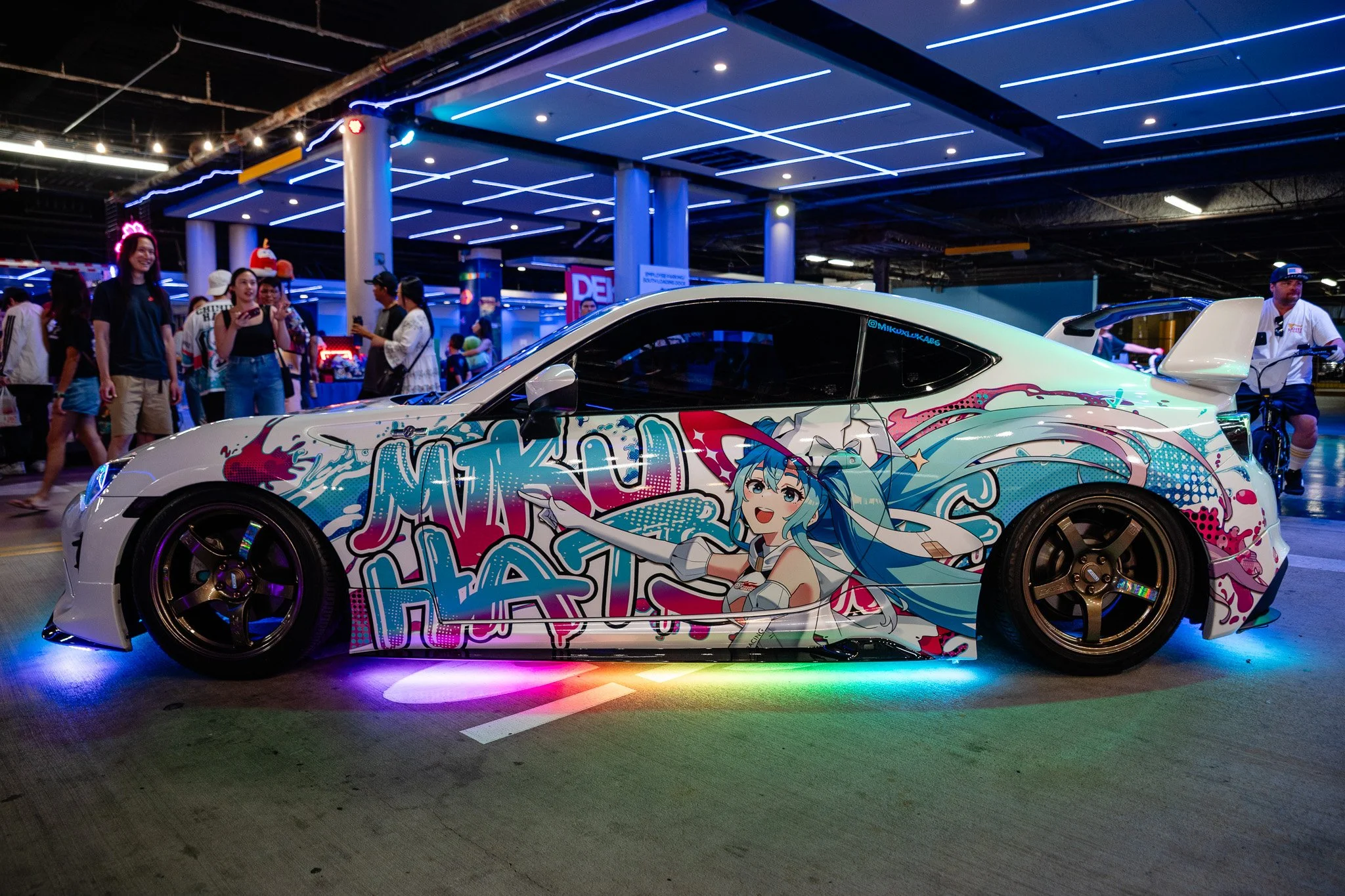
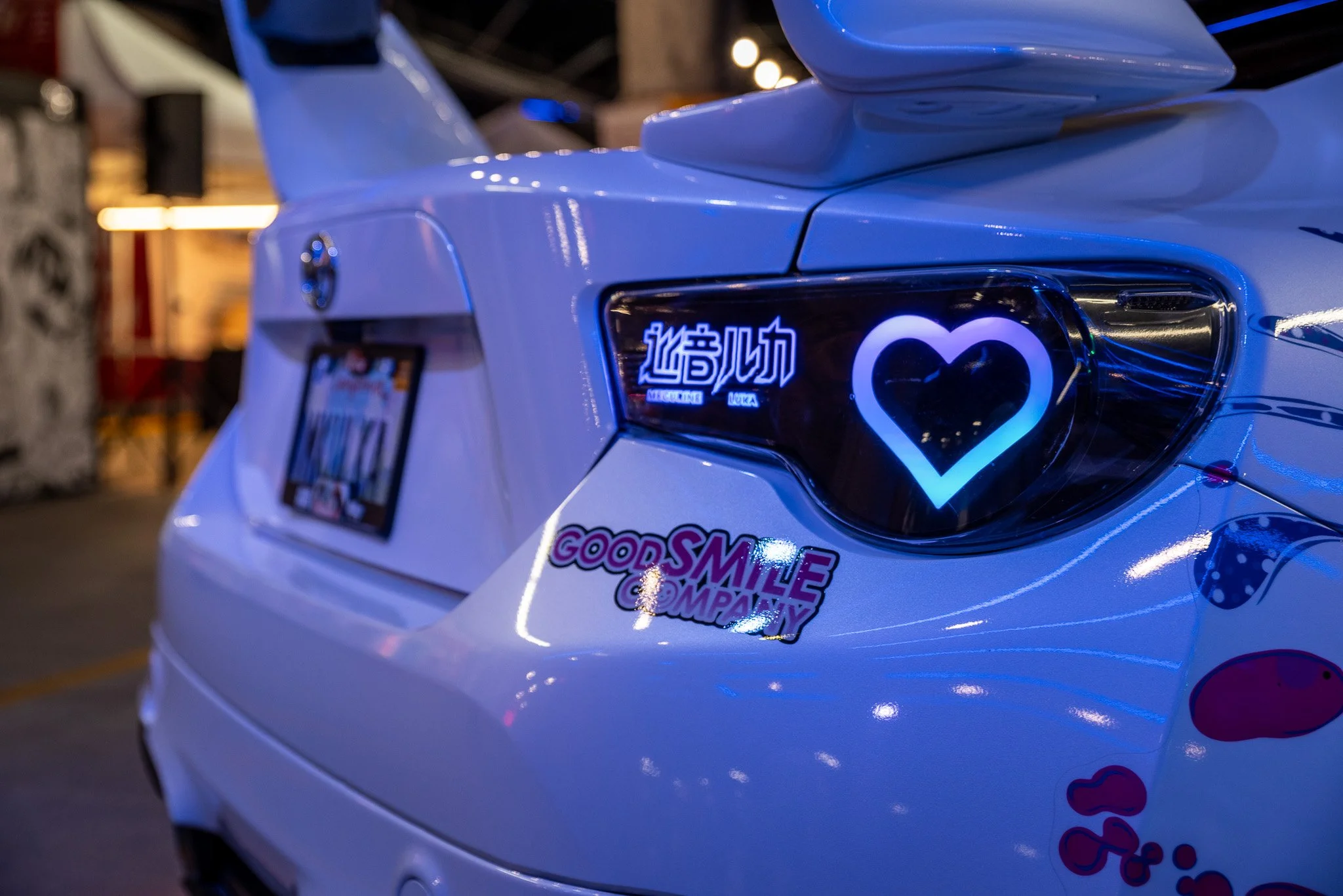
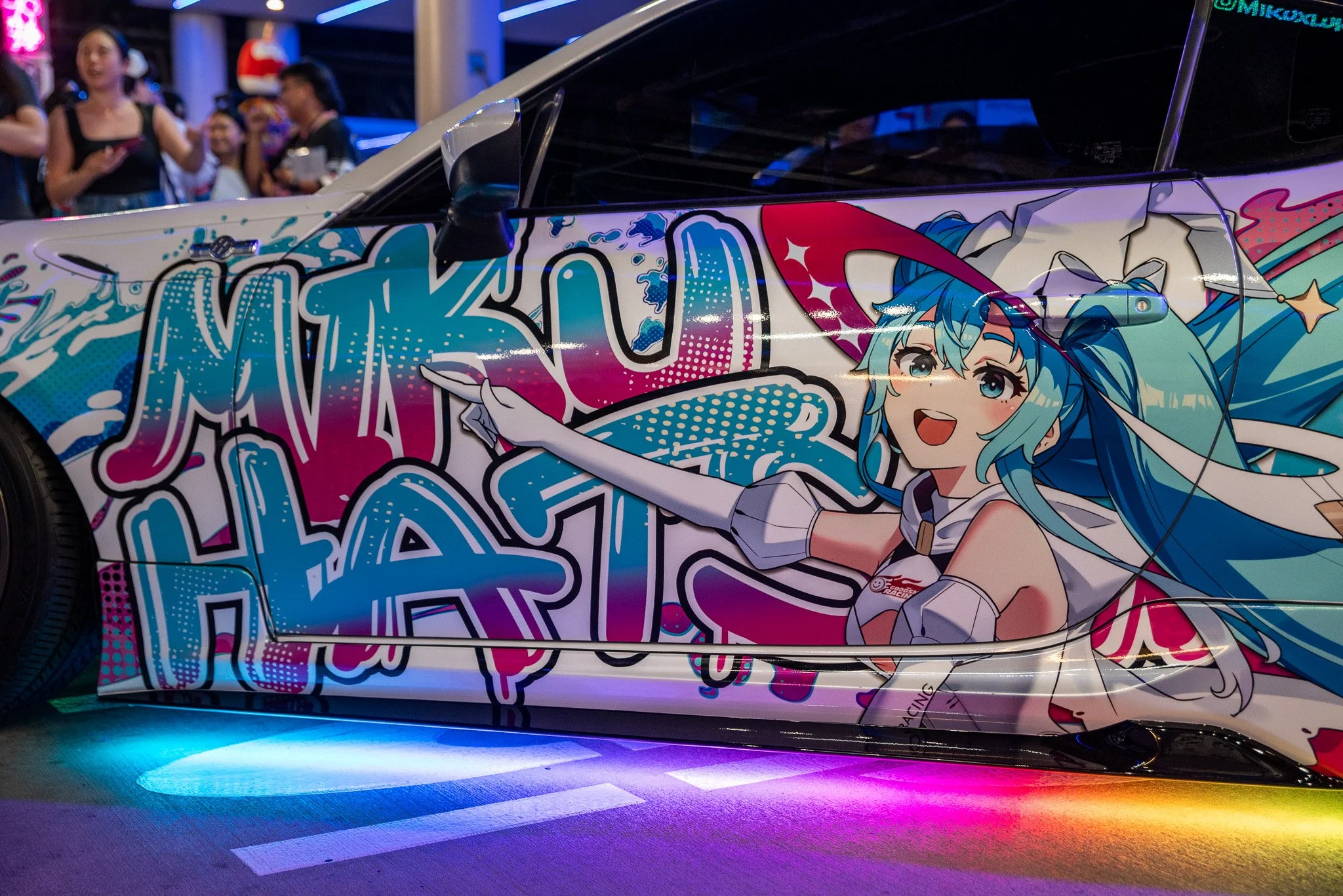
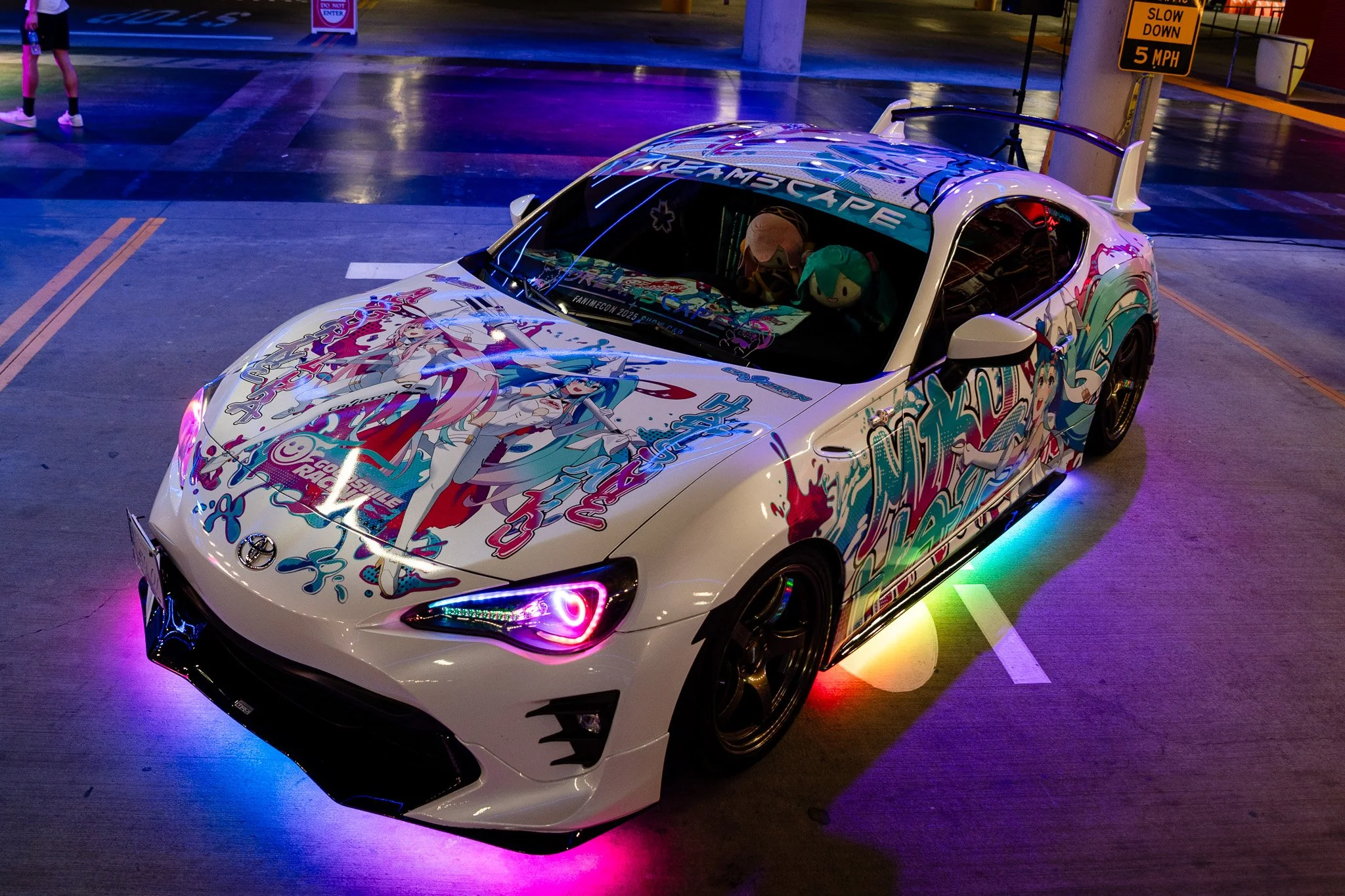
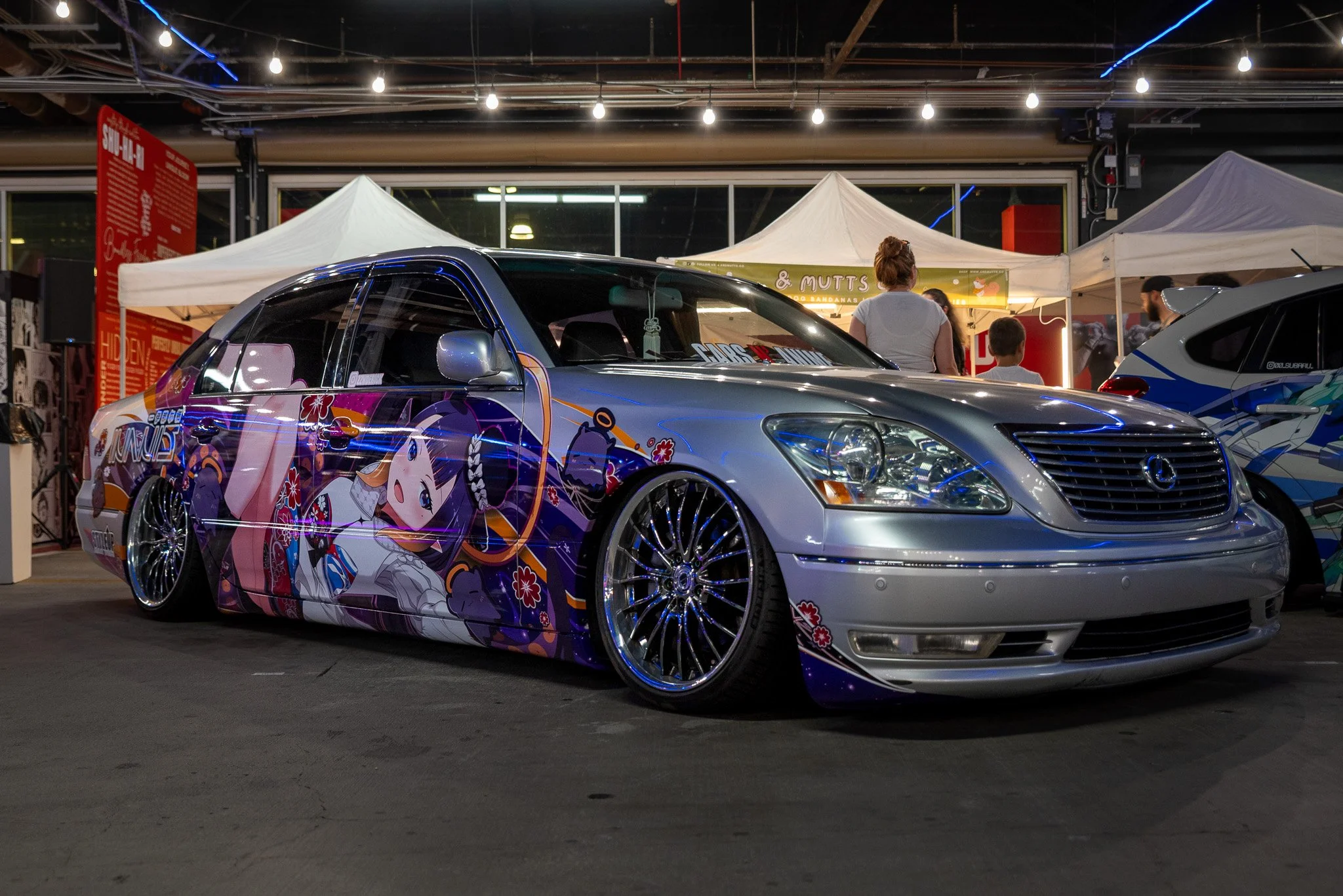
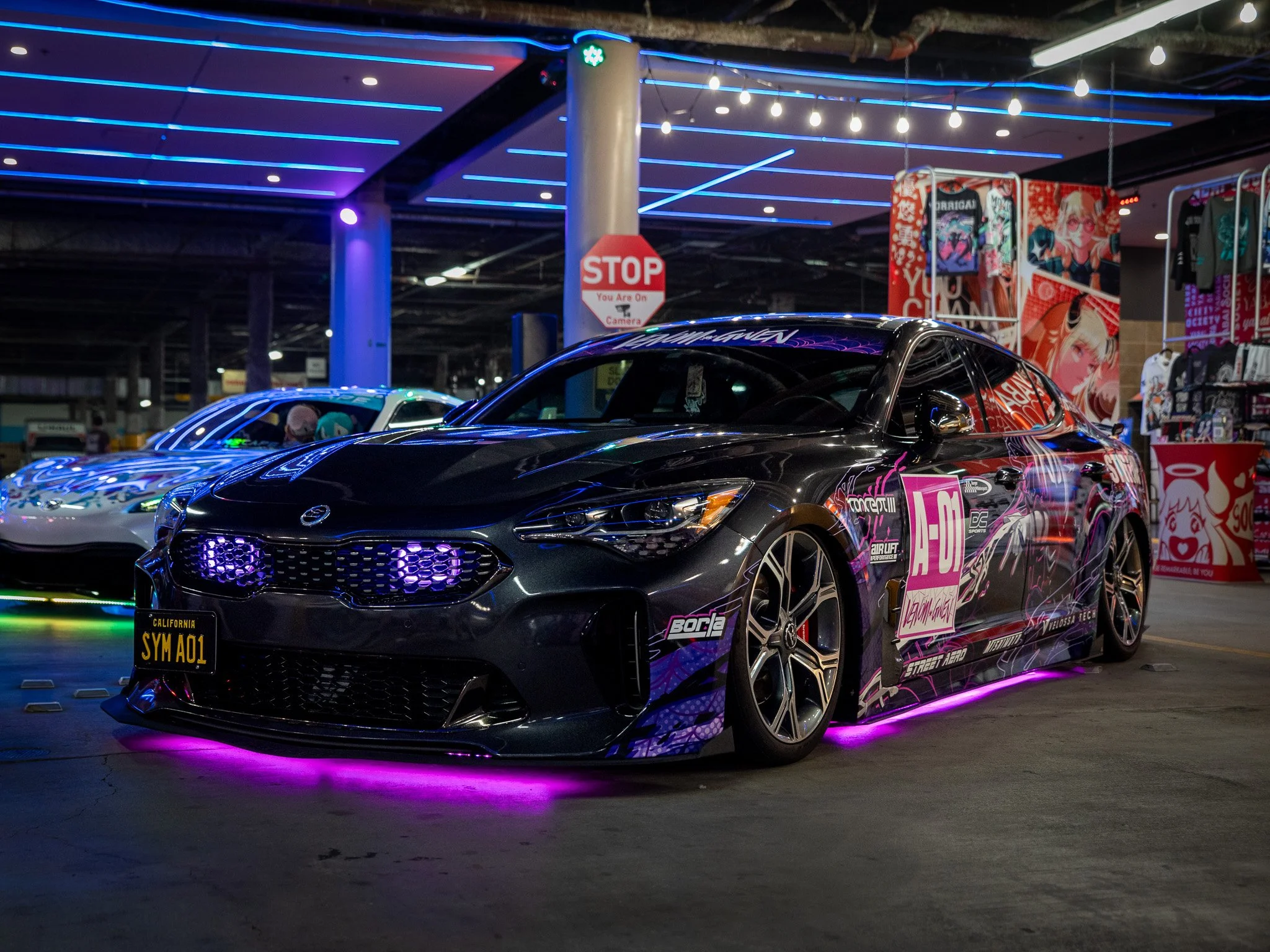
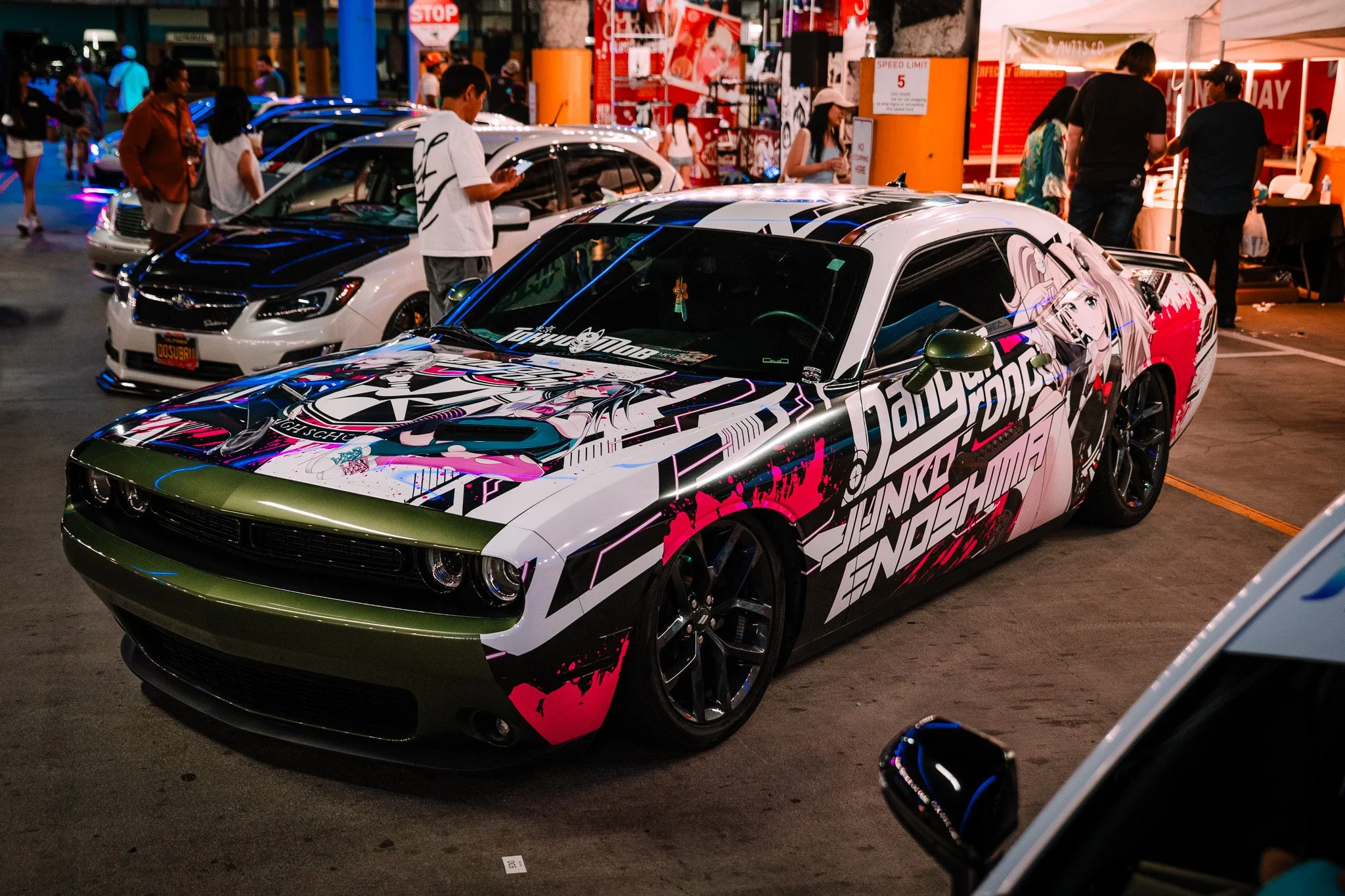

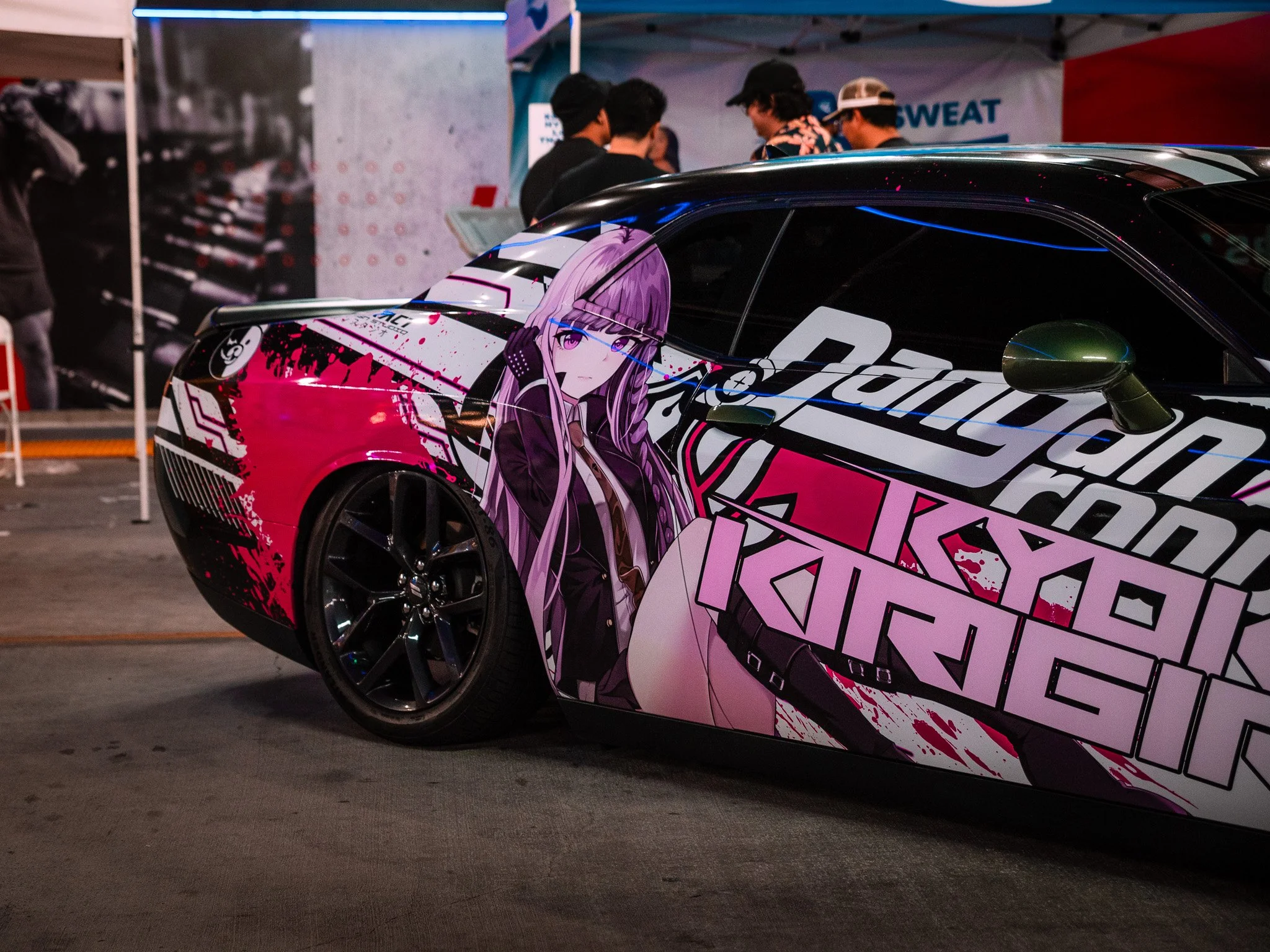


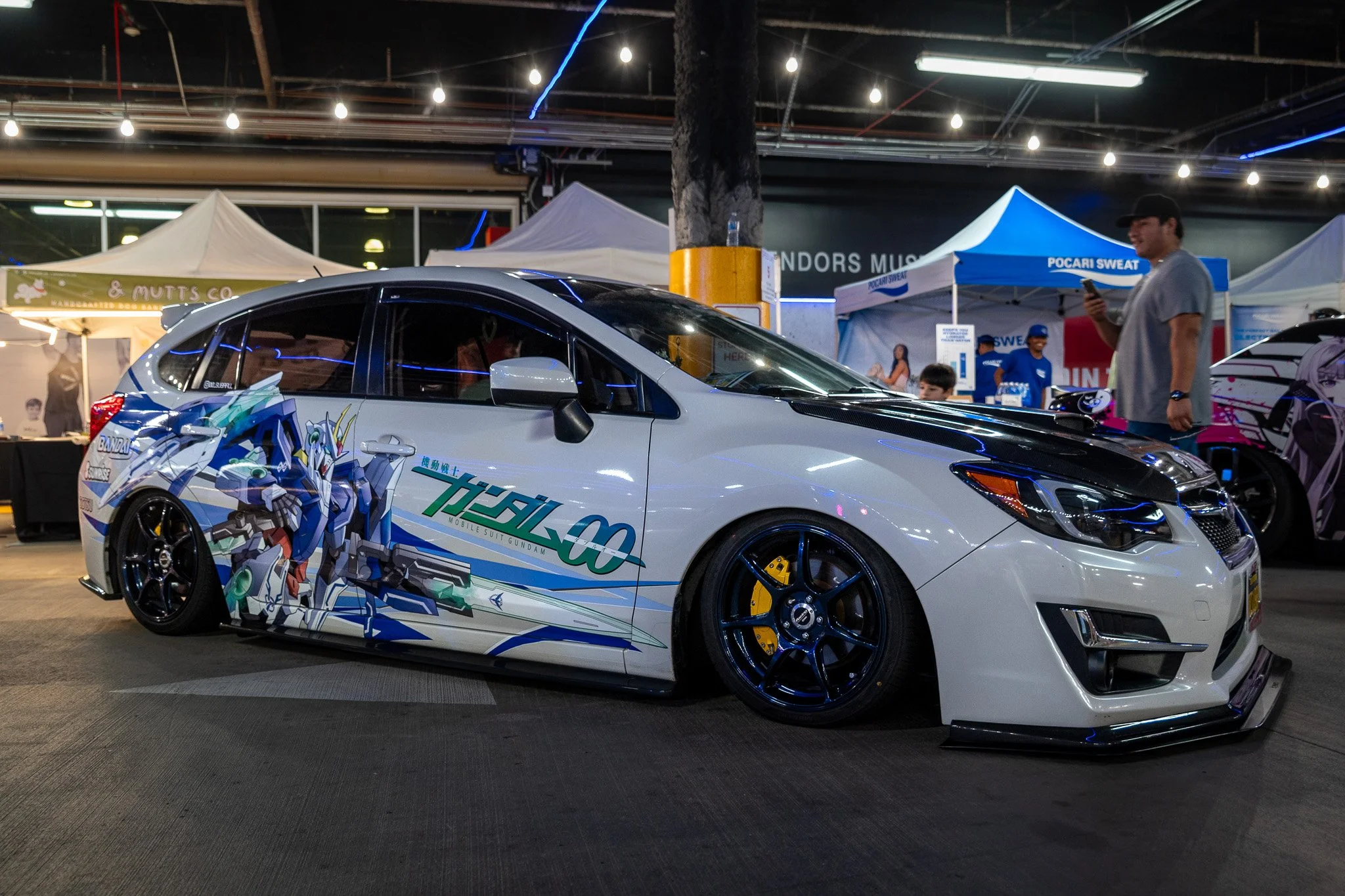
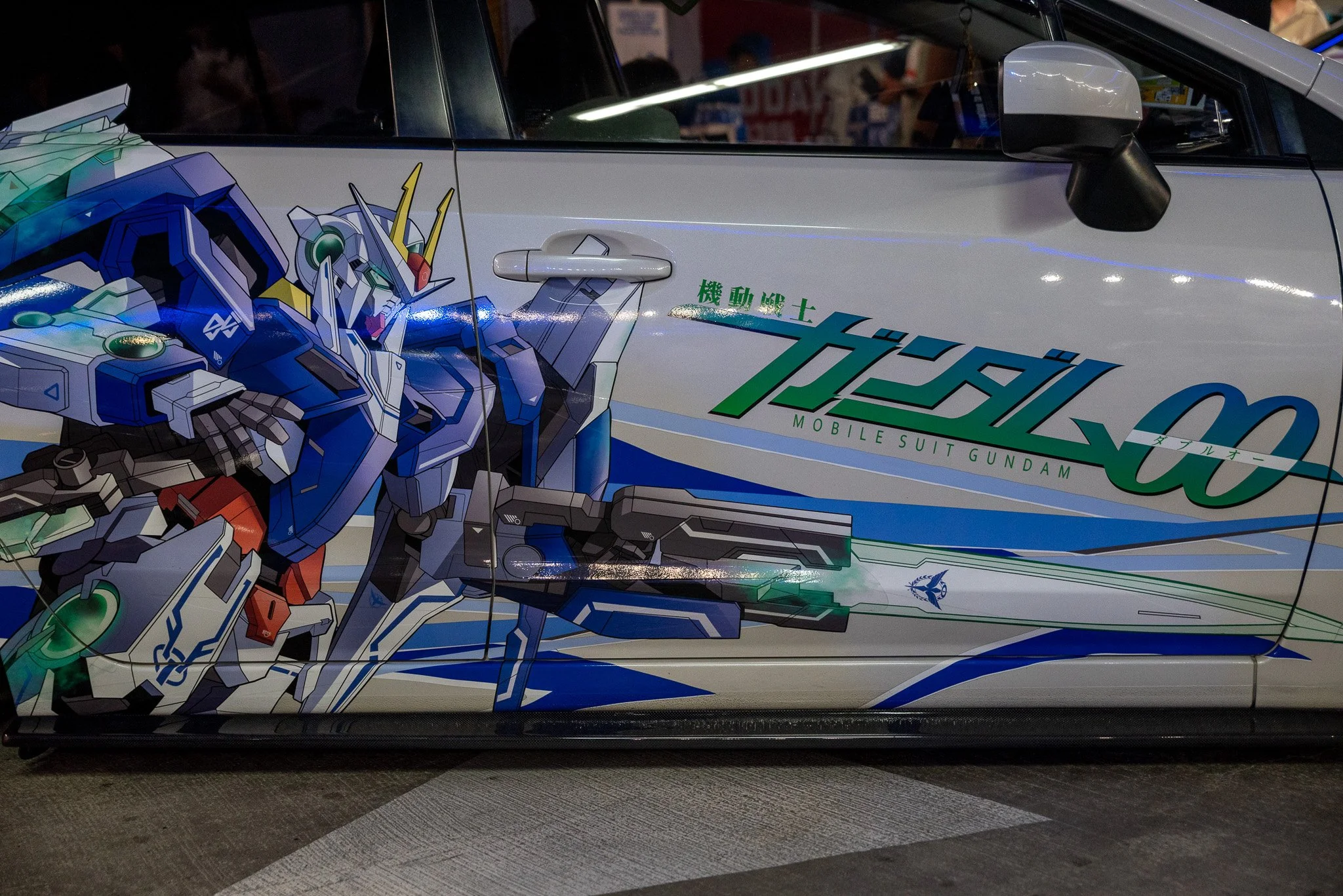

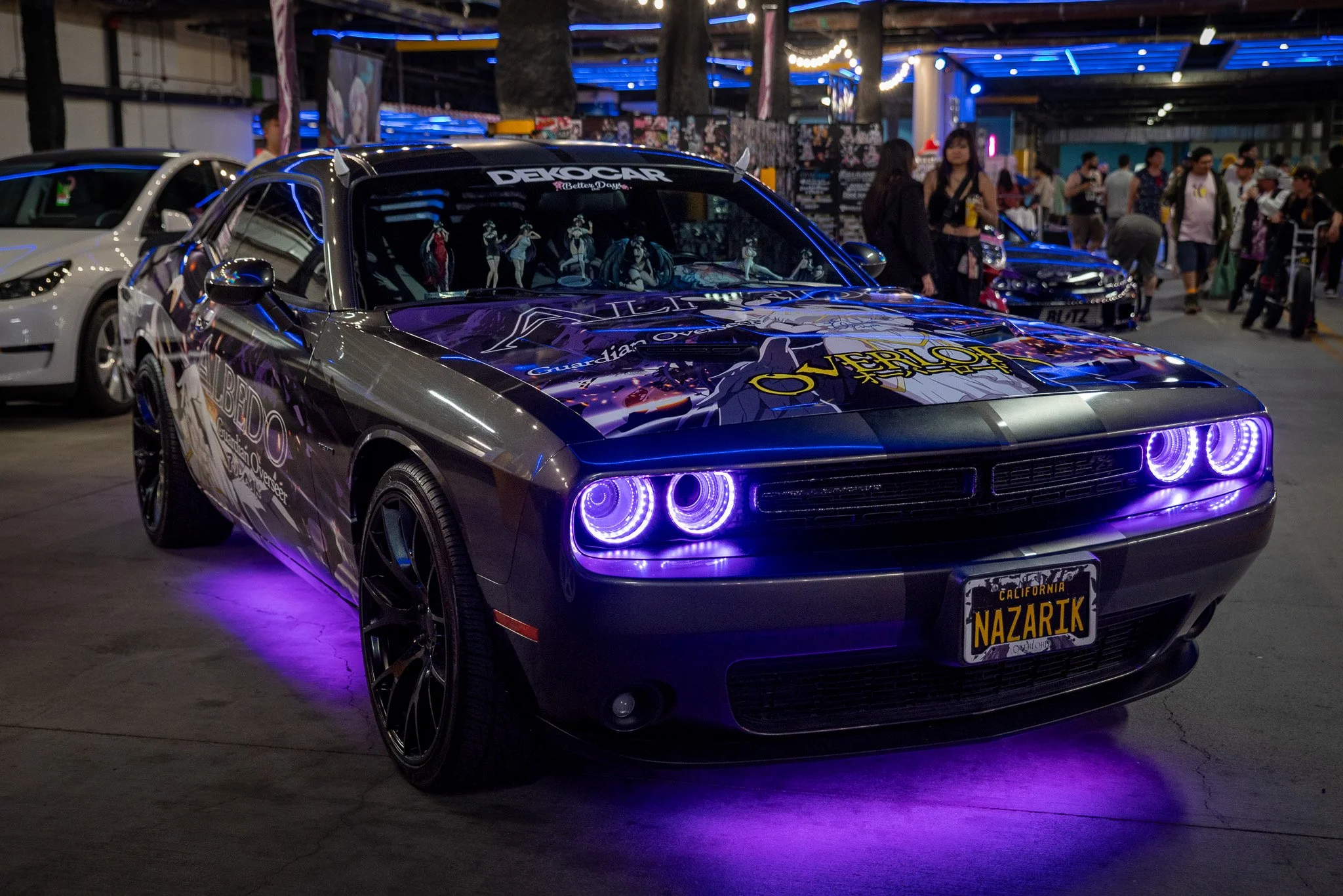
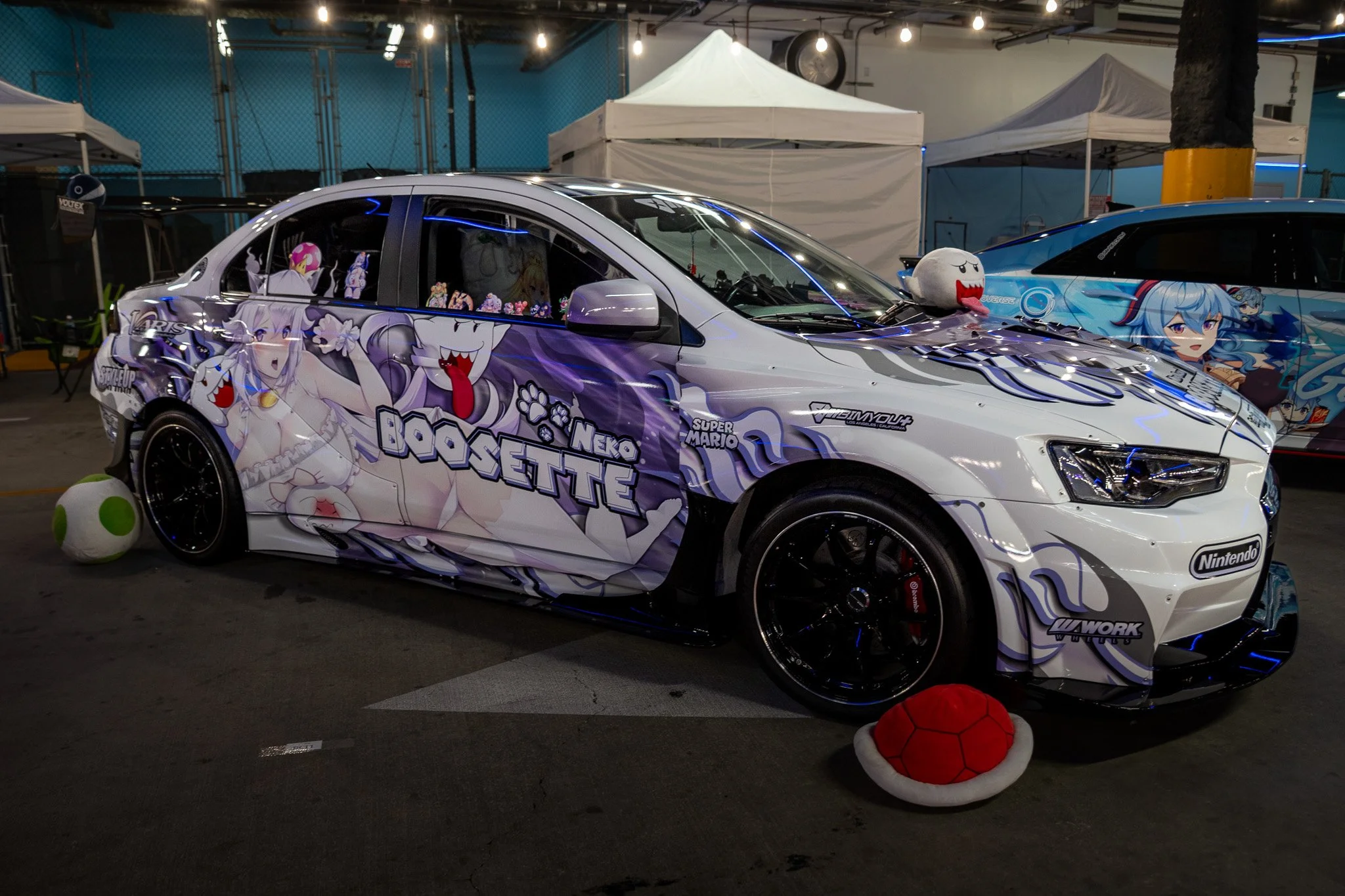
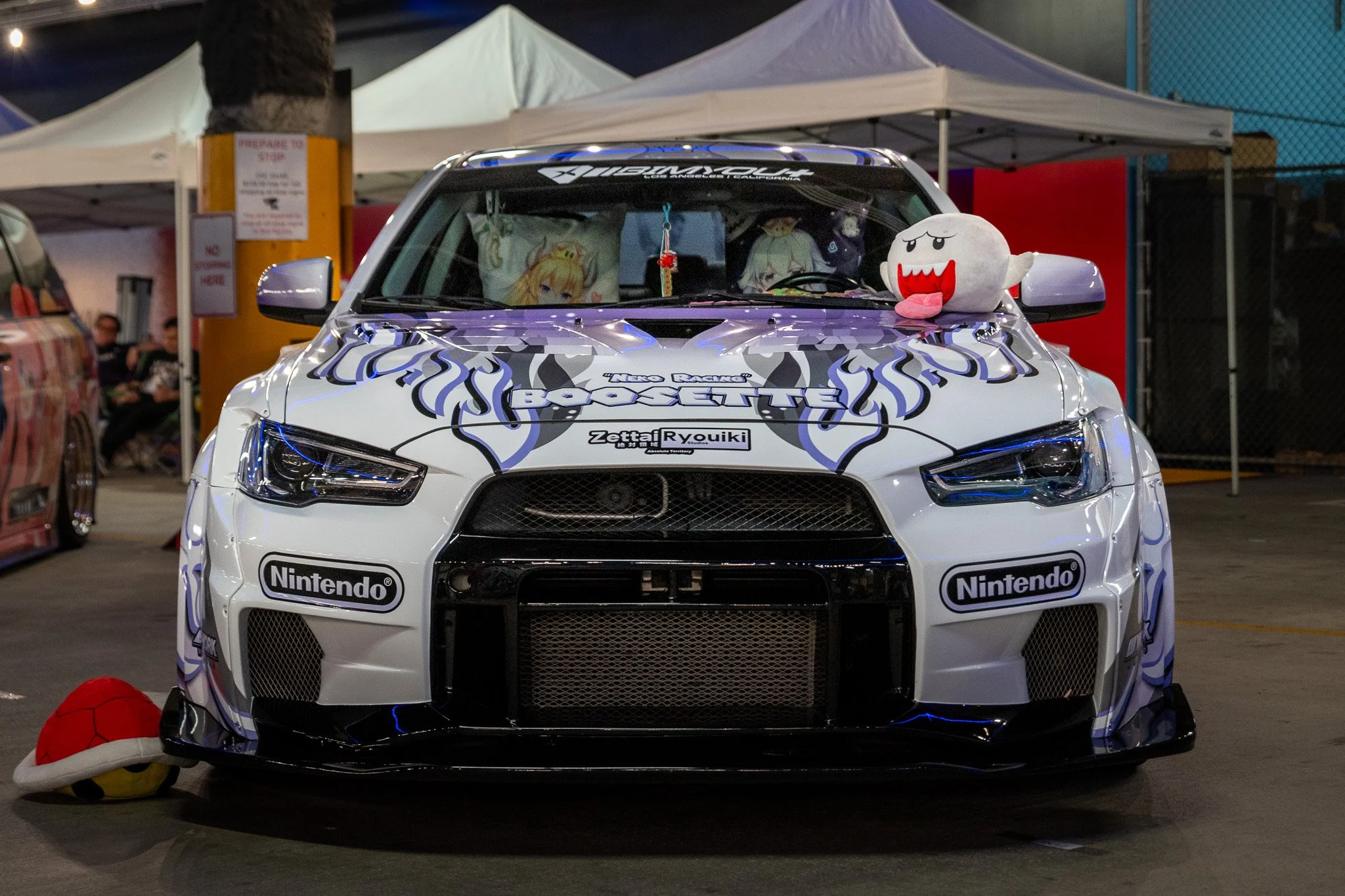
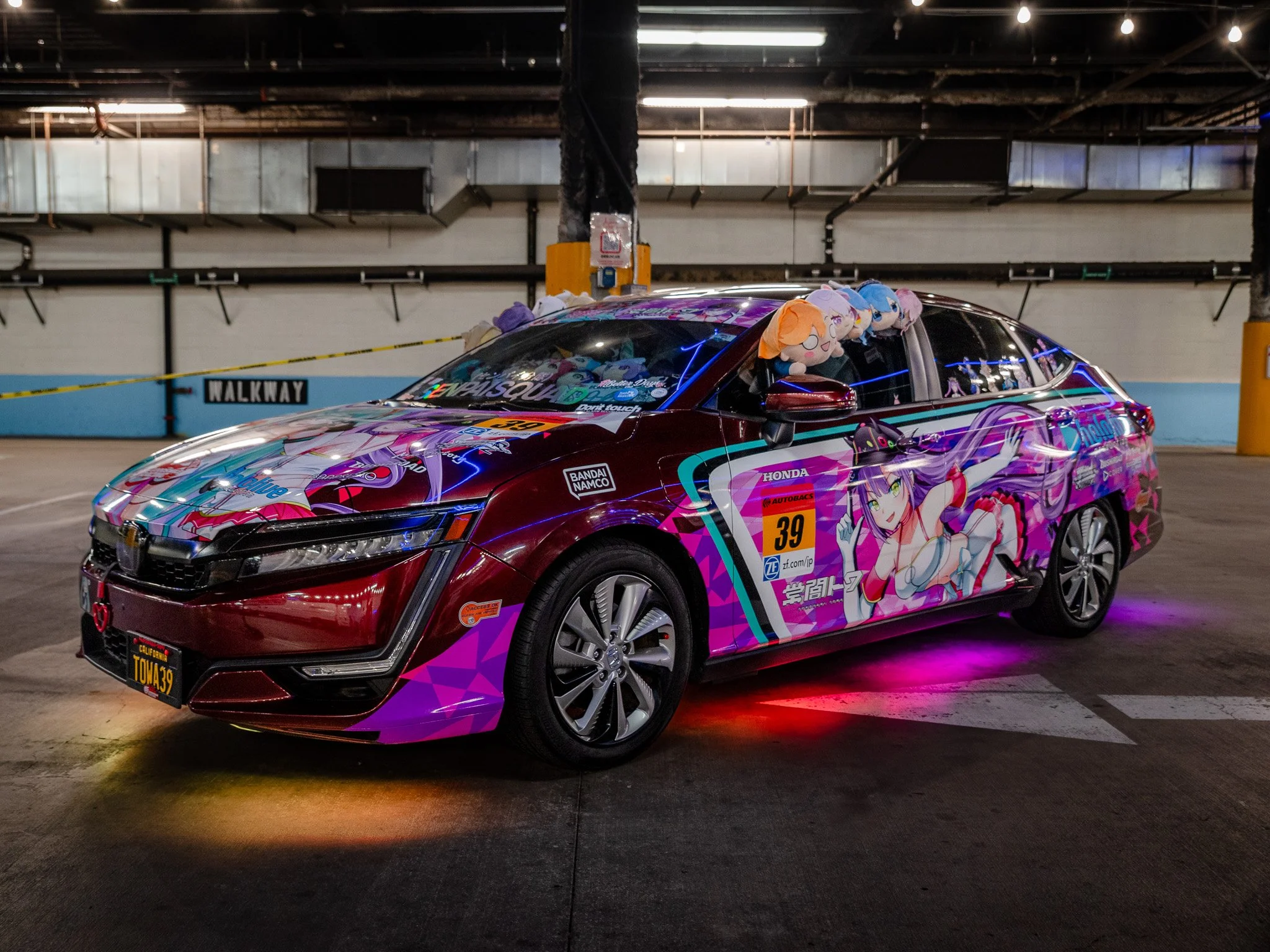
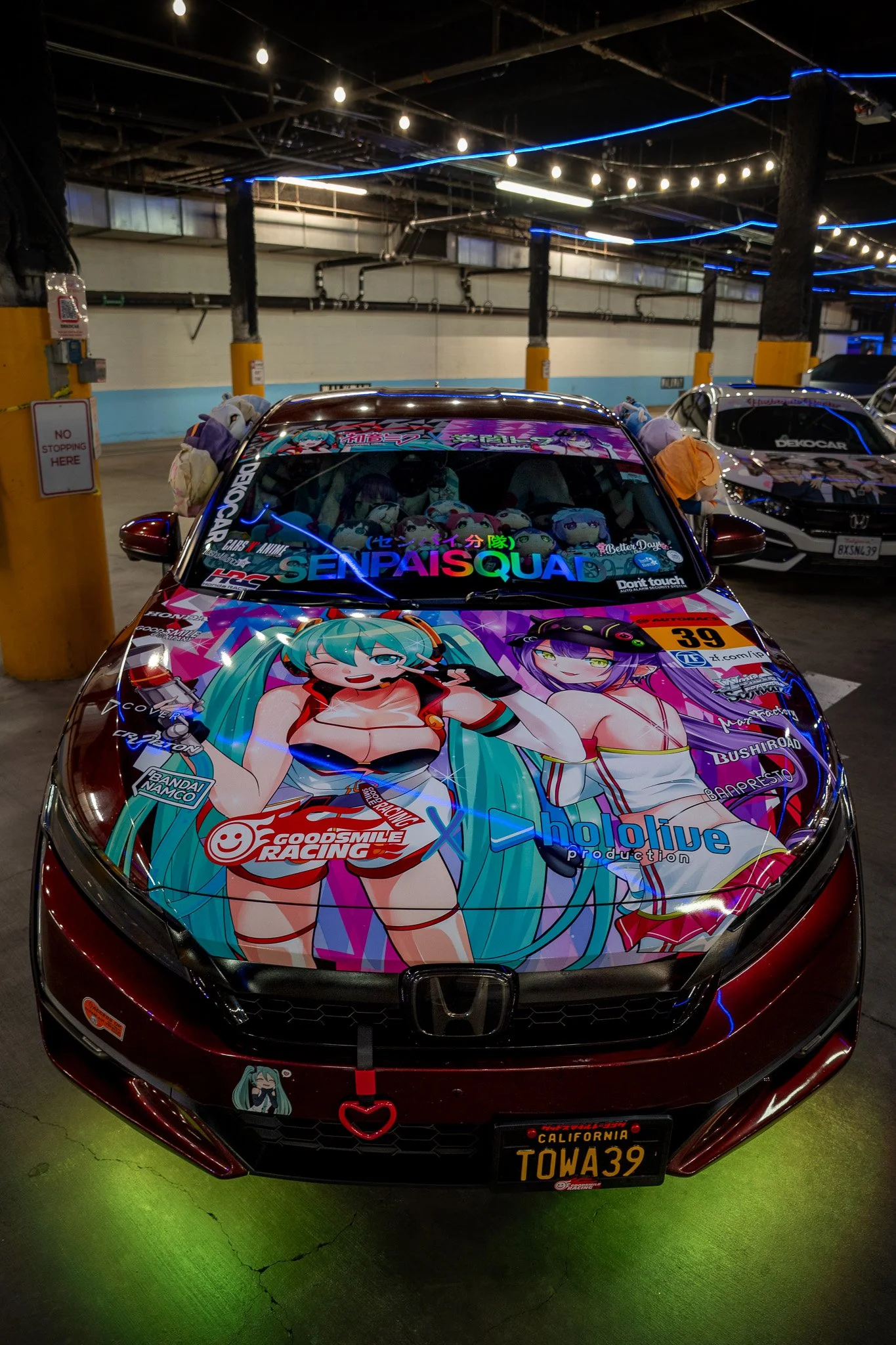
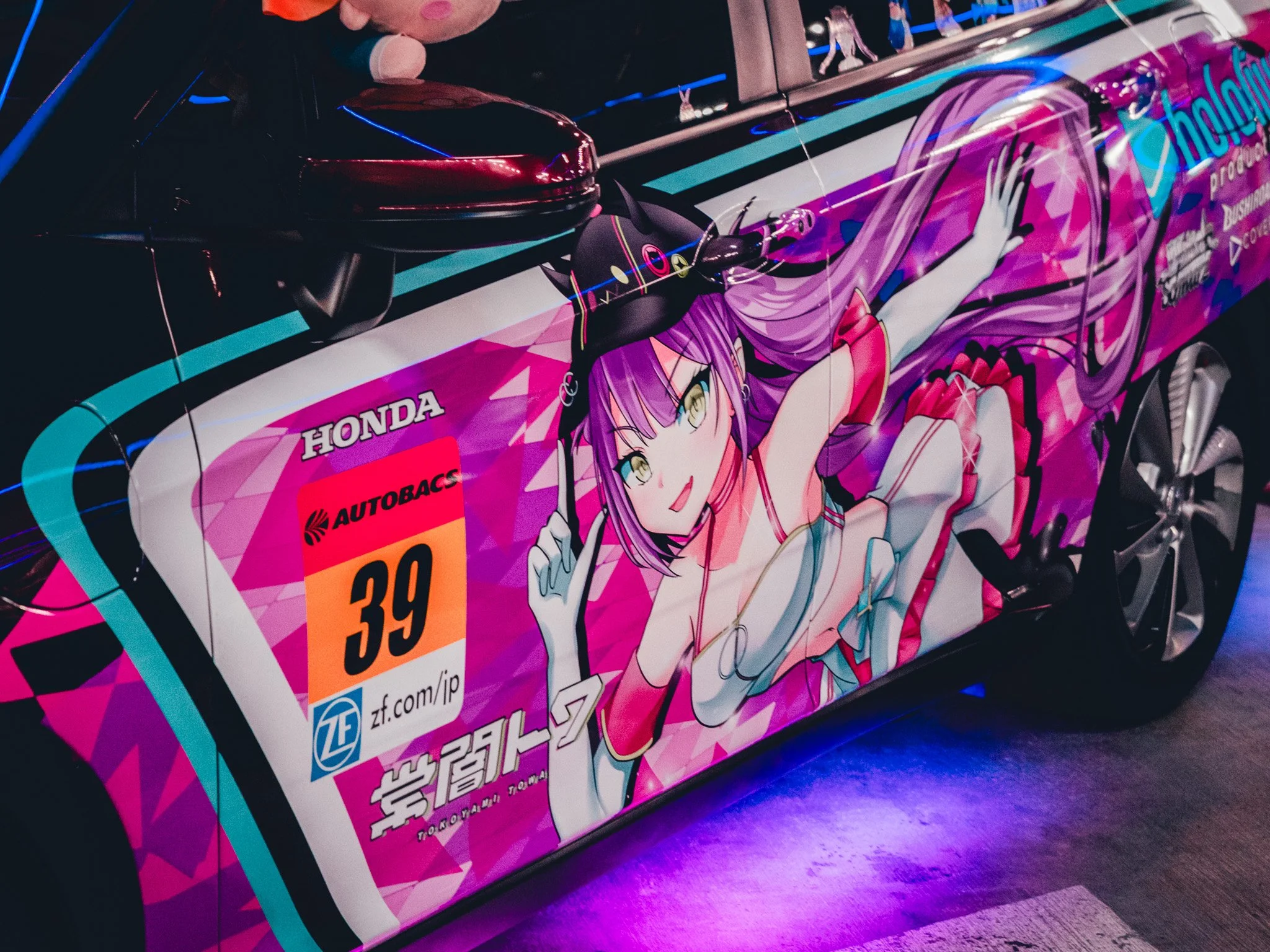
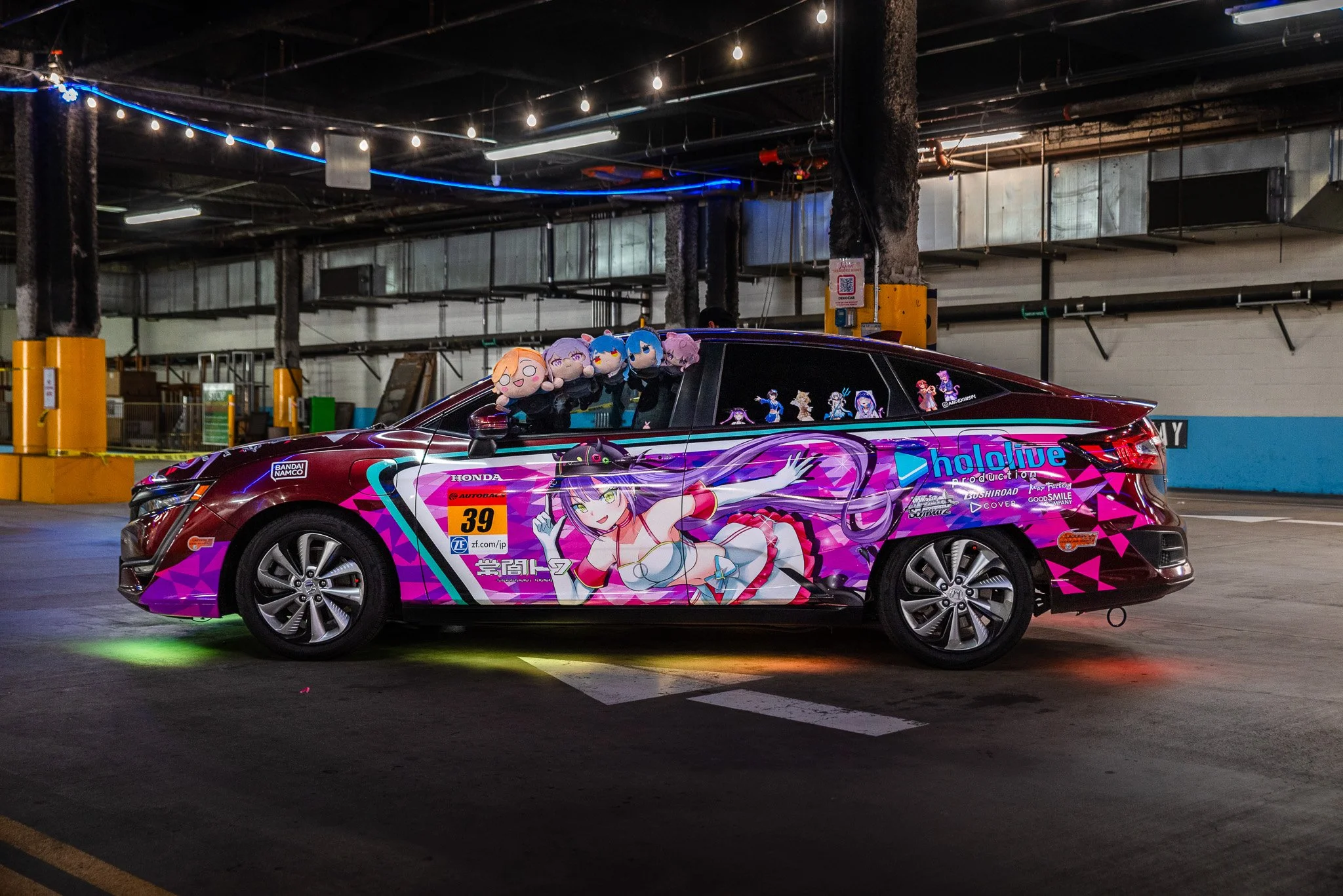

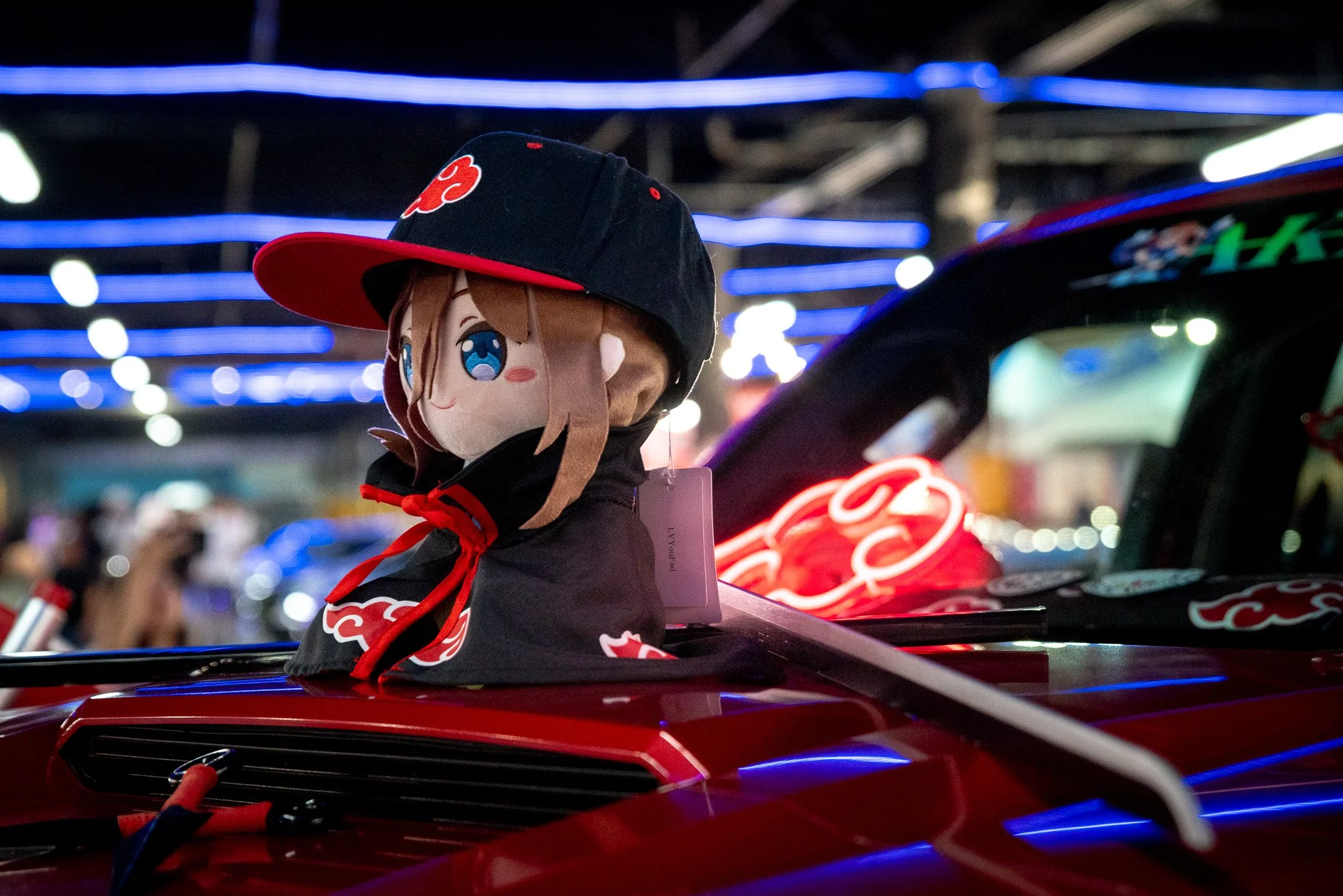
All in all, the event was solid. The display wasn’t as big as the one I saw back at Nisei Week 2019, but it was definitely larger and more refined than the last Taste of Japan showing. Even better, I found out that Dekocar will be back at Nisei Week again this year on August 16—which I’m seriously hyped for. That event is one of my favorite memories of photographing Itasha. I’ll definitely be there, and if you’re into car culture, anime, or just want something unique to photograph, you should go too.
Just note that this is not the same weekend as the Nisei Week Grand Parade, which happens one week earlier on the 10th. If you only have one day to spend in Little Tokyo, the parade weekend offers a deeper cultural experience (plus there are usually a few Itasha in that parade anyway). But if the cars are your main draw, the Dekocar weekend is where it’s at.
If you’ve ever had a memorable encounter with Itasha—or if you know of a cool upcoming event I should check out—drop it in the comments or send me a message. I would love to check it out!