

Donut Media’s Past Gas Podcast launched a series on JDM
Donut Media's Past Gas podcast just started a series last month covering the history of JDM (Japanese Domestic Market) car culture. I'm really happy to see them dedicate a series to this subject.
Photo by Iban Lopez Luna on Pexels
Donut Media's Past Gas podcast just started a series last month covering the history of JDM (Japanese Domestic Market) car culture. I'm really happy to see them dedicate a series to this subject. It's not only an important piece of automotive history in Japan, but a significant chapter in global car history as well — and honestly, a landmark moment in the broader arc of Heisei culture.
This culture, of course, crossed borders and influenced enthusiasts all over the world, particularly here in the US. Street racing and car modification were huge in the late '90s and early 2000s, and the passion for it is still very much alive today.
I'm not sure how long the series is going to run, but so far it's covered the early history of the Japanese auto industry, its venture into professional racing, the oil crisis of the 1970s (and how that shaped the design and production of Japanese vehicles), and their reception in the US. It's also gotten into illegal street racing and the foundations of JDM counterculture — things like independent zines and underground car clubs, as well as the more formalized, legitimately sanctioned versions of those same communities.
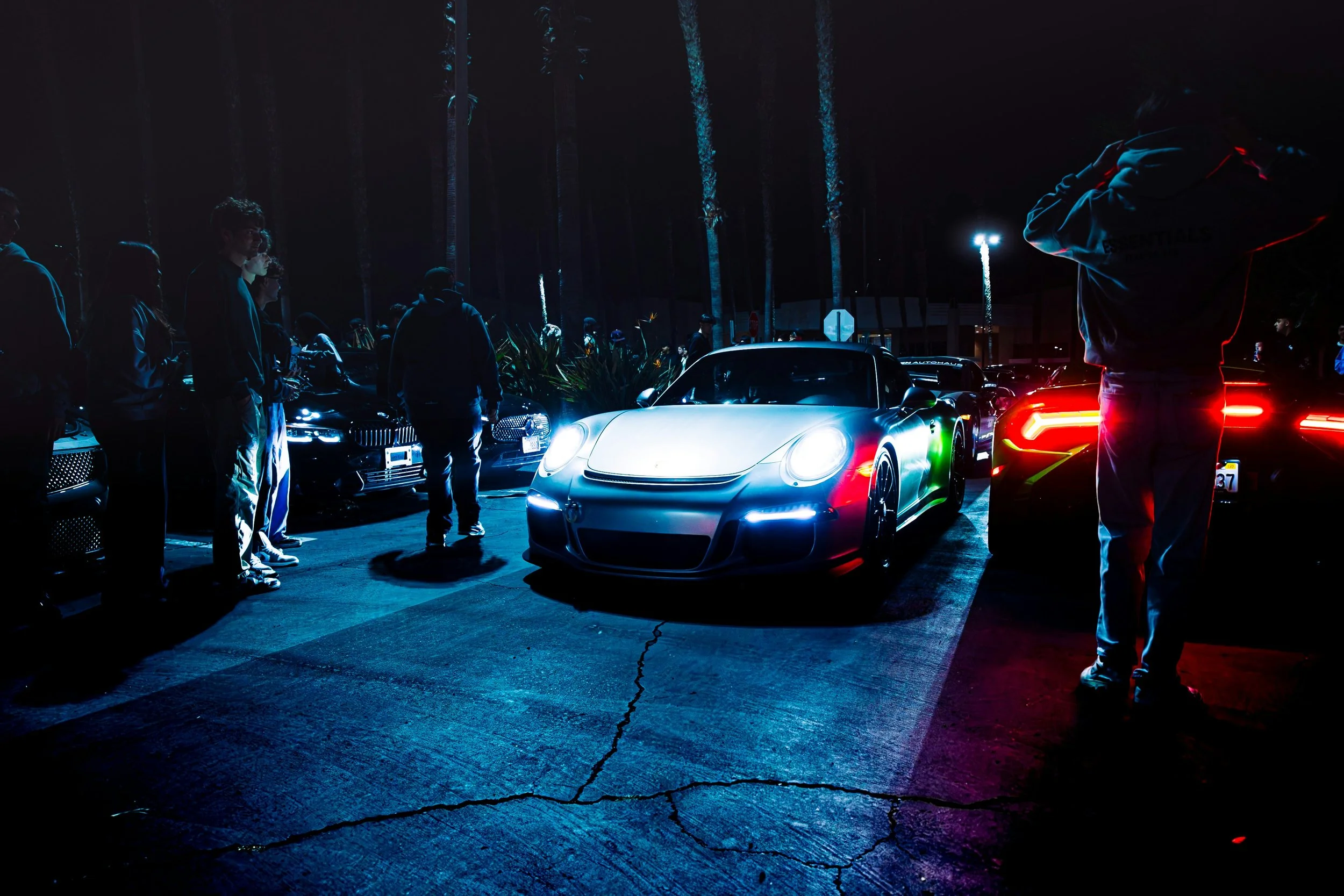
Photo by Komorebi Photo on Unsplash
Personally, I think it's a great way to get a quick, digestible understanding of the Japanese car scene: the events that led up to it, the influence it had going forward, and just an appreciation of JDM culture in general. As I mentioned, JDM is kind of a foundational component of what I'd consider the greater impact of the Heisei era. It's something a lot of fans have a real passion for, but may not necessarily know the history behind.
And that's kind of the point, isn't it? Taking our own personal experiences and memories and grounding them in a broader historical context, understanding where they all fit in. Sure, we all have our love for the culture, but I think a lot of people may not fully realize just how significant it is or how much bigger it is than we even recognize. So I'm glad Donut put this together. It's a great way to better appreciate where all of this came from.
As far as the format goes — it's a pretty straightforward podcast. It's just Nolan (the host) reading through a script they've put together. If you're a fan of JDM and car culture and want a bit of a deeper dive, this is a great way to do it. That said, don't go in expecting the high-production-value, fun and entertaining content you'd normally find on the Donut YouTube channel. This leans more academic. And for those who want to really dig in, I think that's perfectly appropriate. Just set your expectations accordingly.
Hopefully there are many more episodes to come. Right now there are six, and episode one mentions that JDM is the subject of season two (which is how it's listed in my podcast app). The only thing throwing me off is that season one apparently has 318 episodes, and season two only has six so far. I can't imagine them doing 300 episodes just on JDM — but hey, if somehow they pulled that off, I wouldn't complain.
Head on over to your podcast app of choice and subscribe to Past Gas. You can also check the show out on Spotify (first episode below). Let me know what you think.

Dekocar at Taste of Japan 2025
Itasha have become one of my favorite things to photograph in recent years. So when I saw that Dekocar was doing another display at the Taste of Japan festival in Anaheim this summer, I knew I had to check it out.
Itasha have become one of my favorite things to photograph in recent years. While my interest in the art dates back to 2014—during my first trip to Tokyo—it wasn’t until 2019 that I really began photographing them, thanks to the Dekocar showcase at Nisei Week. That event flipped a switch in me, and I’ve been on the lookout for Itasha events ever since.
So when I saw that Dekocar was doing another display at the Taste of Japan festival in Anaheim this summer, I knew I had to check it out.
Now, I’ve been to a Taste of Japan event before, and to be honest, it’s not the most dynamic festival. It’s fairly typical of a lot of free summer events we get in SoCal—mostly vendor booths and a single main stage, light on immersive experiences. Though to be fair, Nisei Week is also free, yet is a much richer cultural experience overall. So, "free" doesn't always mean lackluster—but in this case, I wasn’t expecting anything groundbreaking either.
This is a fairly typical scene at the event, though it gets much more crowded the further in you go.
When I arrived, though, I was surprised—it was packed. The event took place at the STC Anaheim Gardenwalk, a kind of multi-level outdoor mall, and this year’s crowd definitely filled the space. After wandering around a bit, I made my way down to the parking garage where the Dekocar display was being held. It turned out to be a blessing: not only was it cooler (mid-June heat is no joke), but it also gave the display a kind of underground, exclusive feel that worked surprisingly well.
One thing that really caught me off guard was how much branding Dekocar had this year. Columns were wrapped with Dekocar graphics, there were banners, LED signage—it felt like the brand had leveled up since I last saw them at Anime Impulse in 2020. Their digital footprint might still be niche, but in person, they’ve built a strong identity.
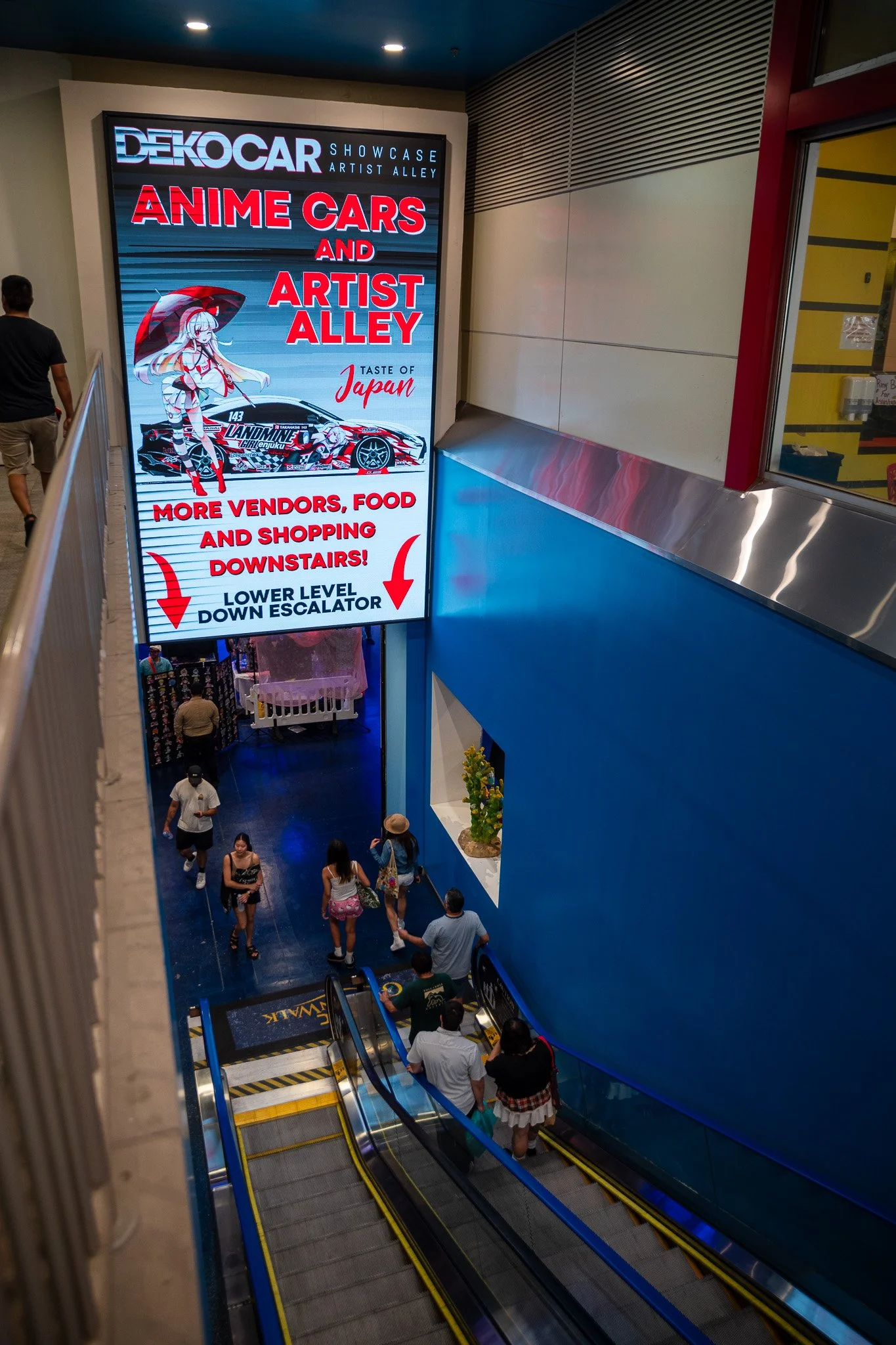
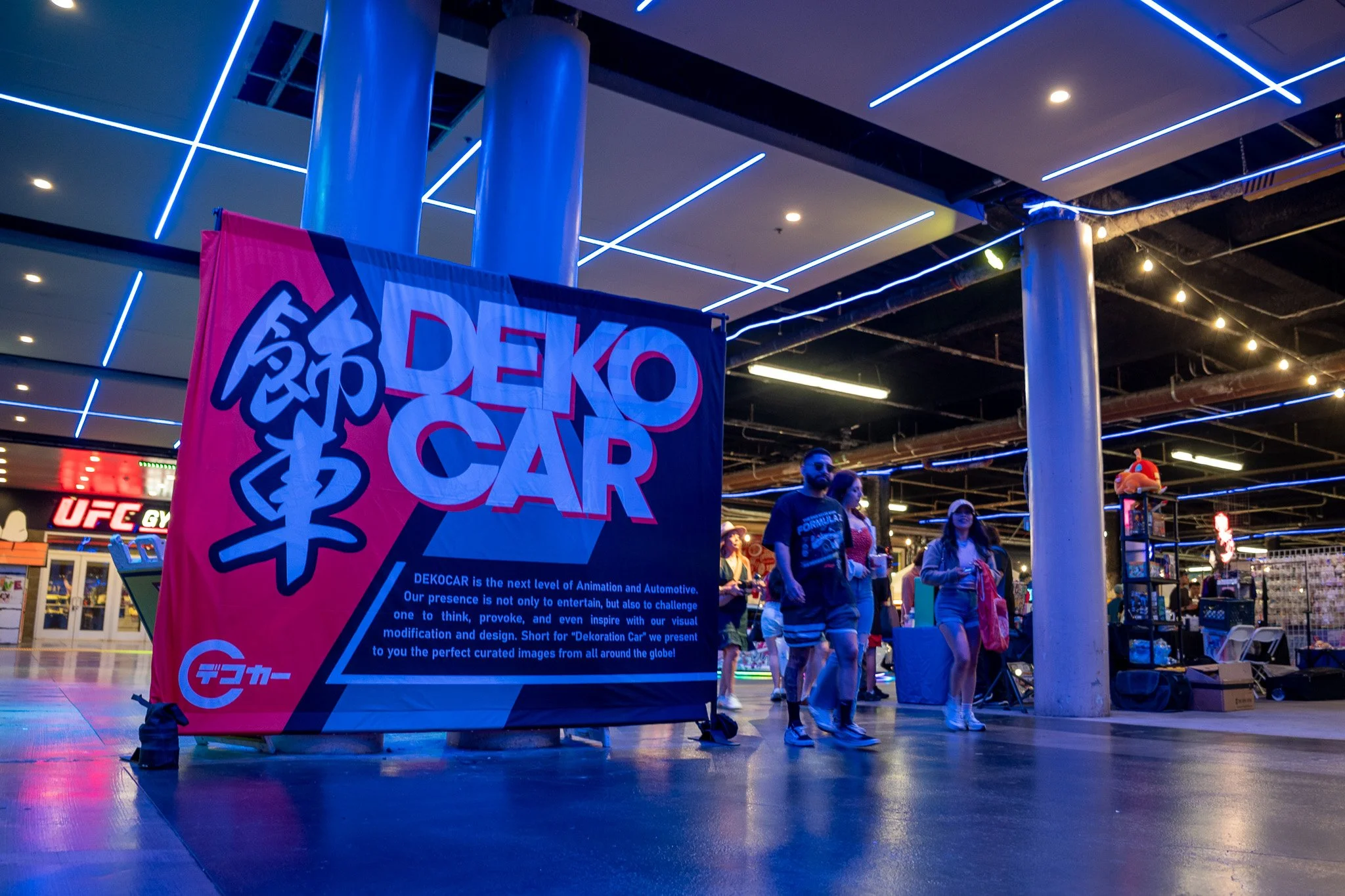
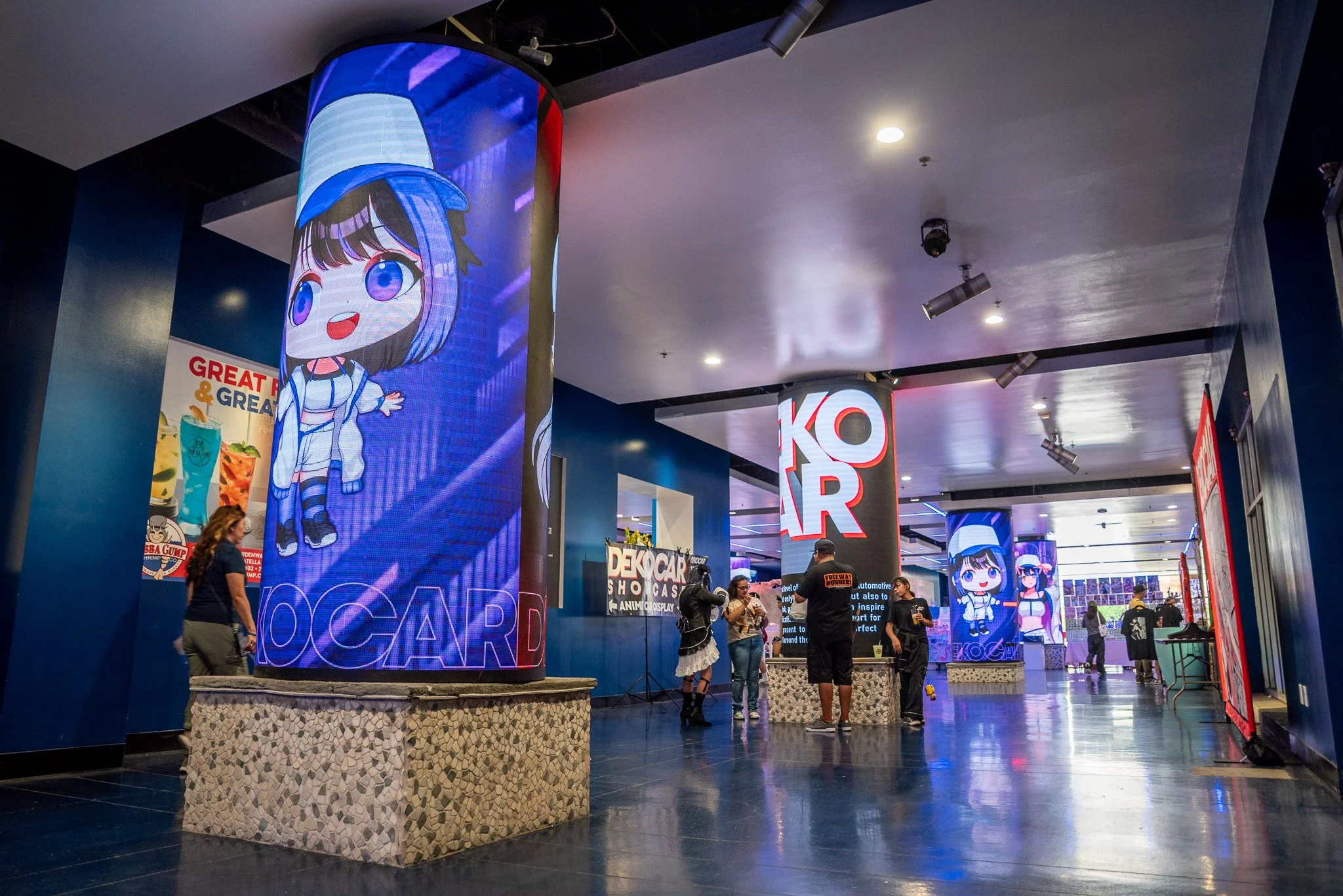
There was a DJ, a few vendor booths, and even a surprise appearance from Pocari Sweat, who apparently now have a U.S. presence and are distributing through Costco (now I need to get a membership again). They were handing out free bottles, which was a huge win considering how hot it was. Naturally, I grabbed a couple.
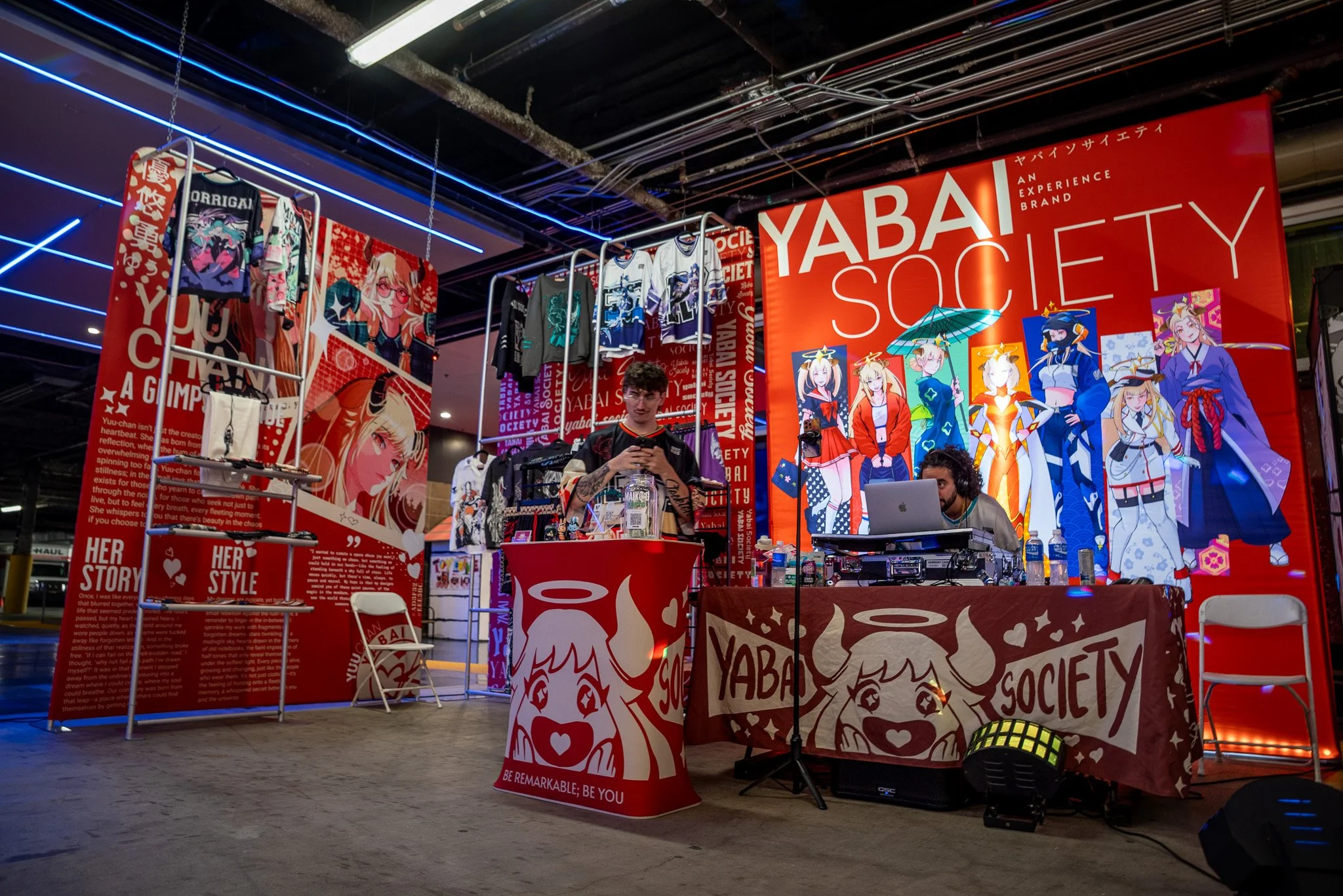


If I had to call out one issue with the setup, though, it’d be the lighting. The garage was pretty dim—fine for escaping the heat, but not ideal for showcasing the vibrant and intricate art of the Itasha wraps. These striking designs are meant to be seen, and poor lighting completely robs them of their impact. On the upside, the dim environment did make the LED underglow and other lighting effects really pop. A bit of a silver lining, I suppose.
Lighting is all over the place down here.
Photographically speaking, it wasn’t a disaster, even with the lighting. I shot both photo and video and didn’t run into many issues, thanks to the fact that the cars were stationary. The only time I struggled was when I tried to grab a portrait of the Pocari Sweat crew under their dark canopy (see the crew portrait above to see what I mean- my Nikon Z5’s autofocus had a tough time locking in under those conditions).
That said, creating solid images from these would take a lot of work, given the uneven lighting, harsh reflections, and dark shadows. Maybe I’ll try something with them in the future, but for now, here’s a complete set of images with basic edits:
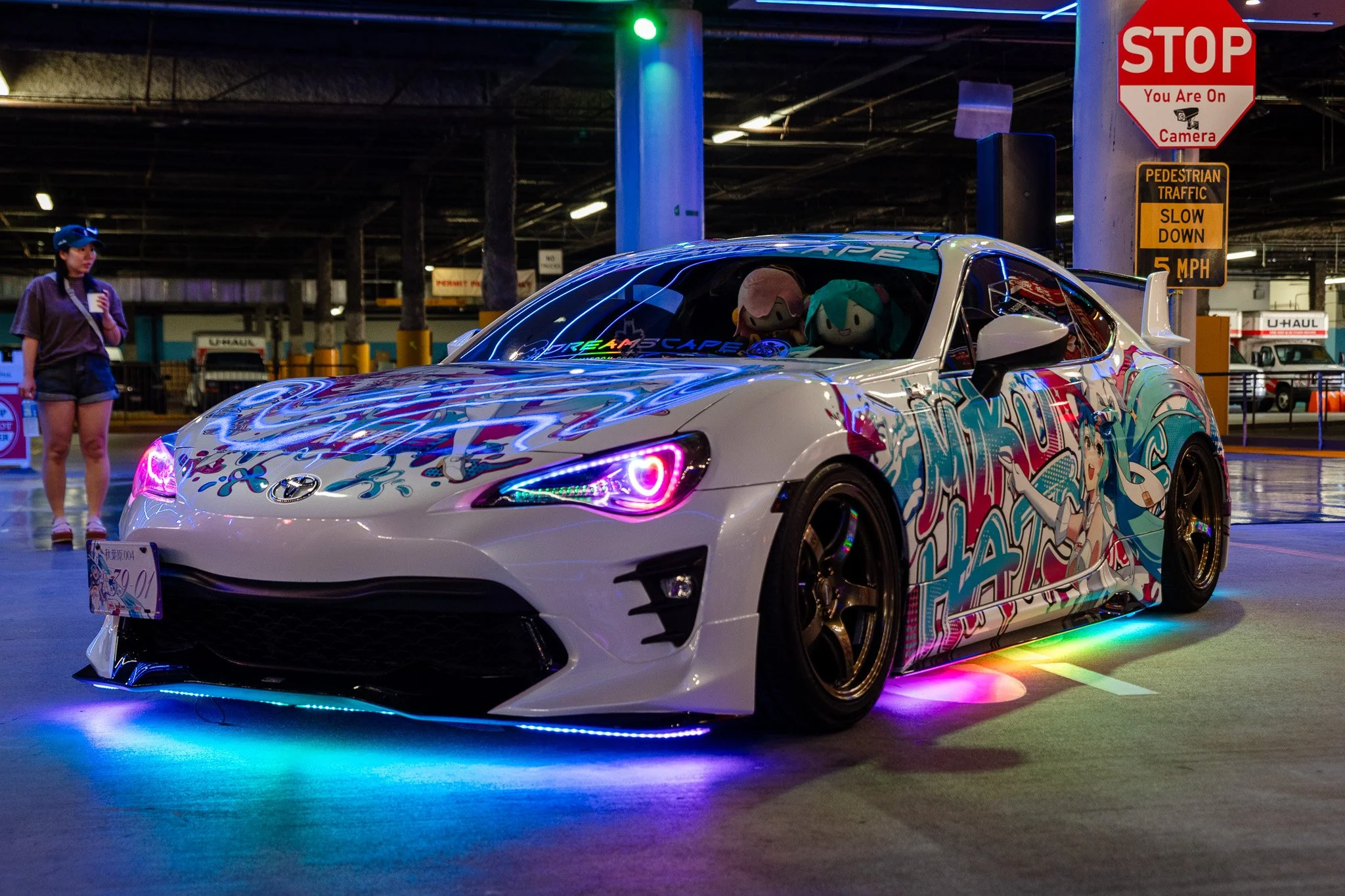

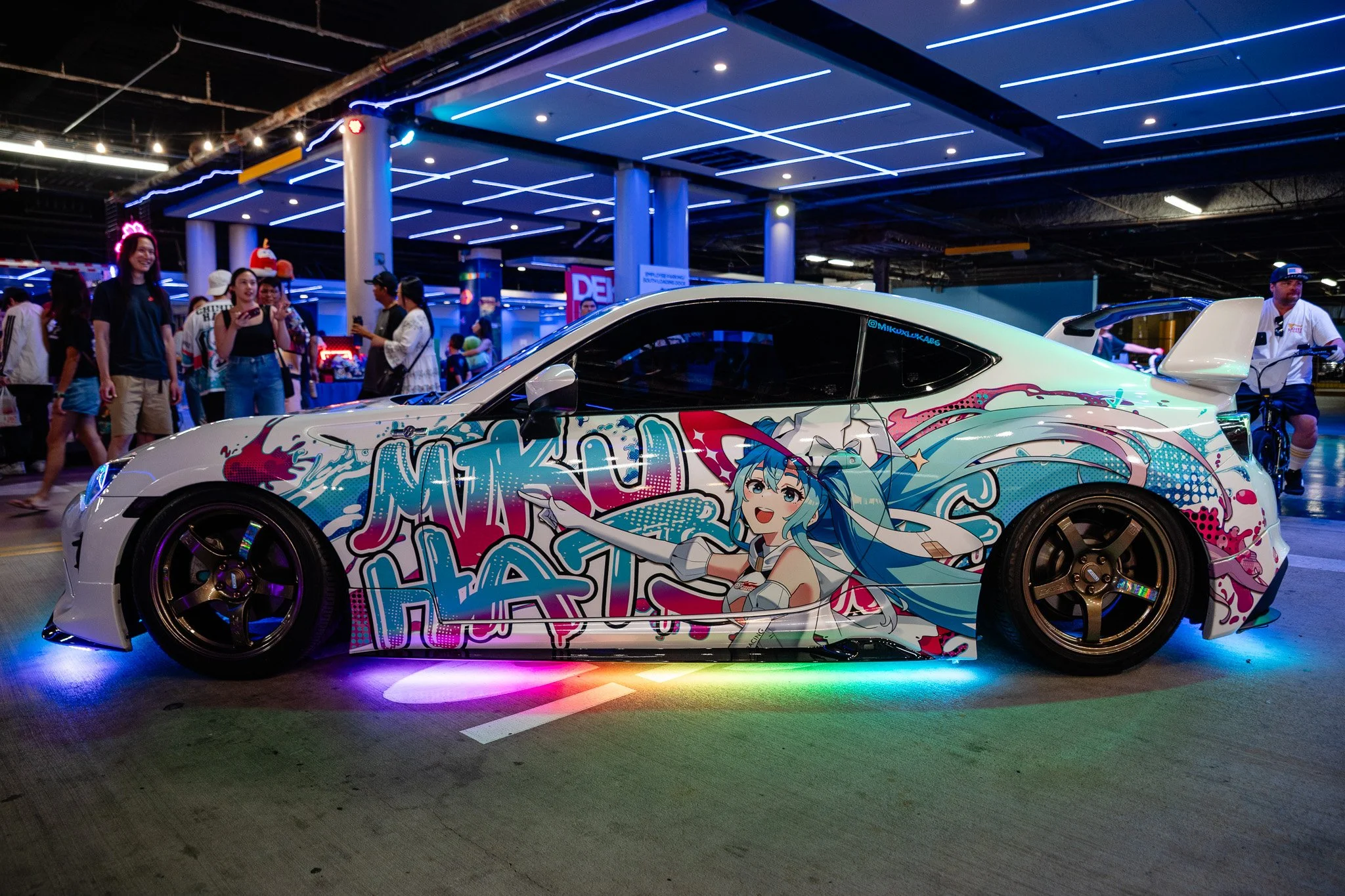
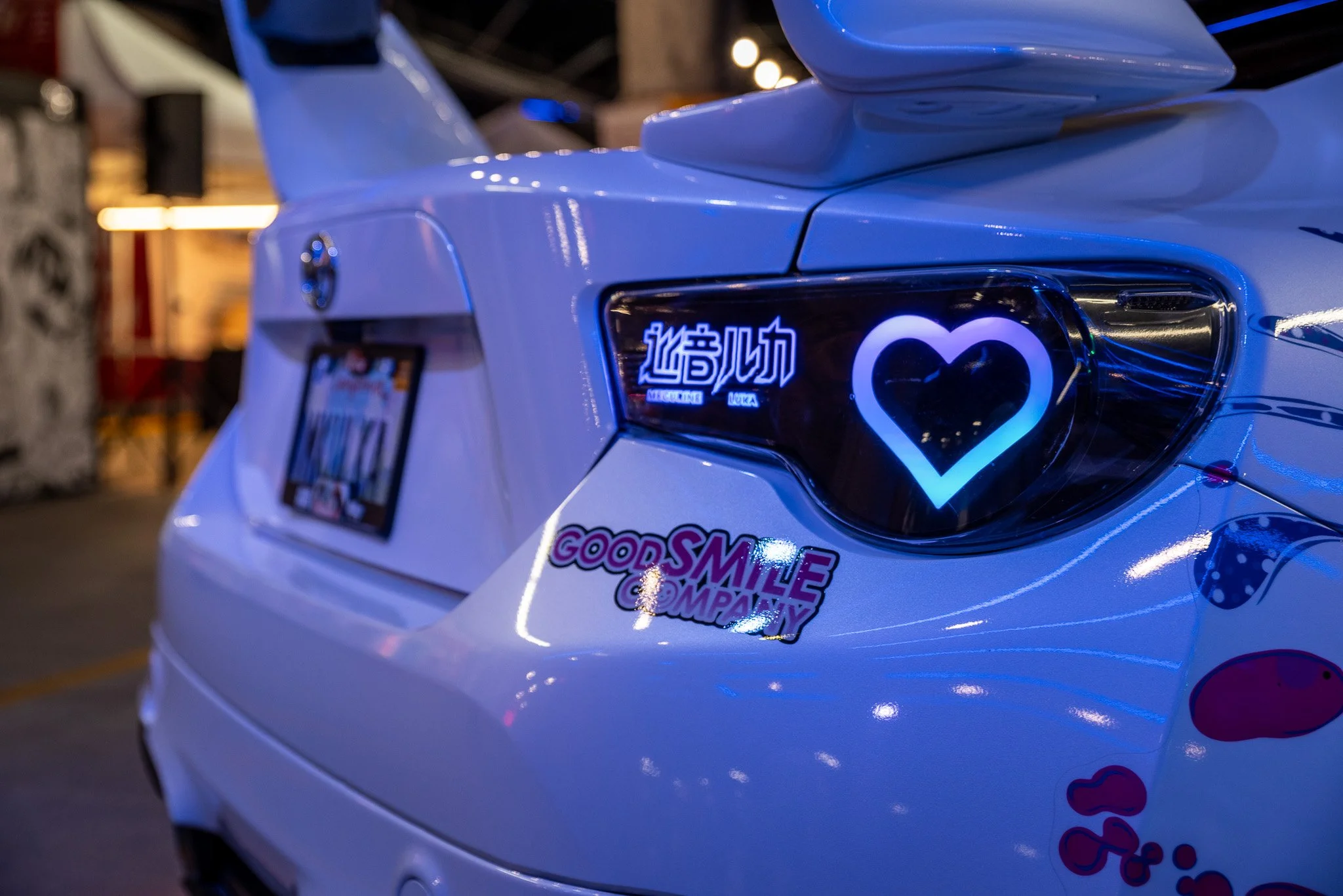
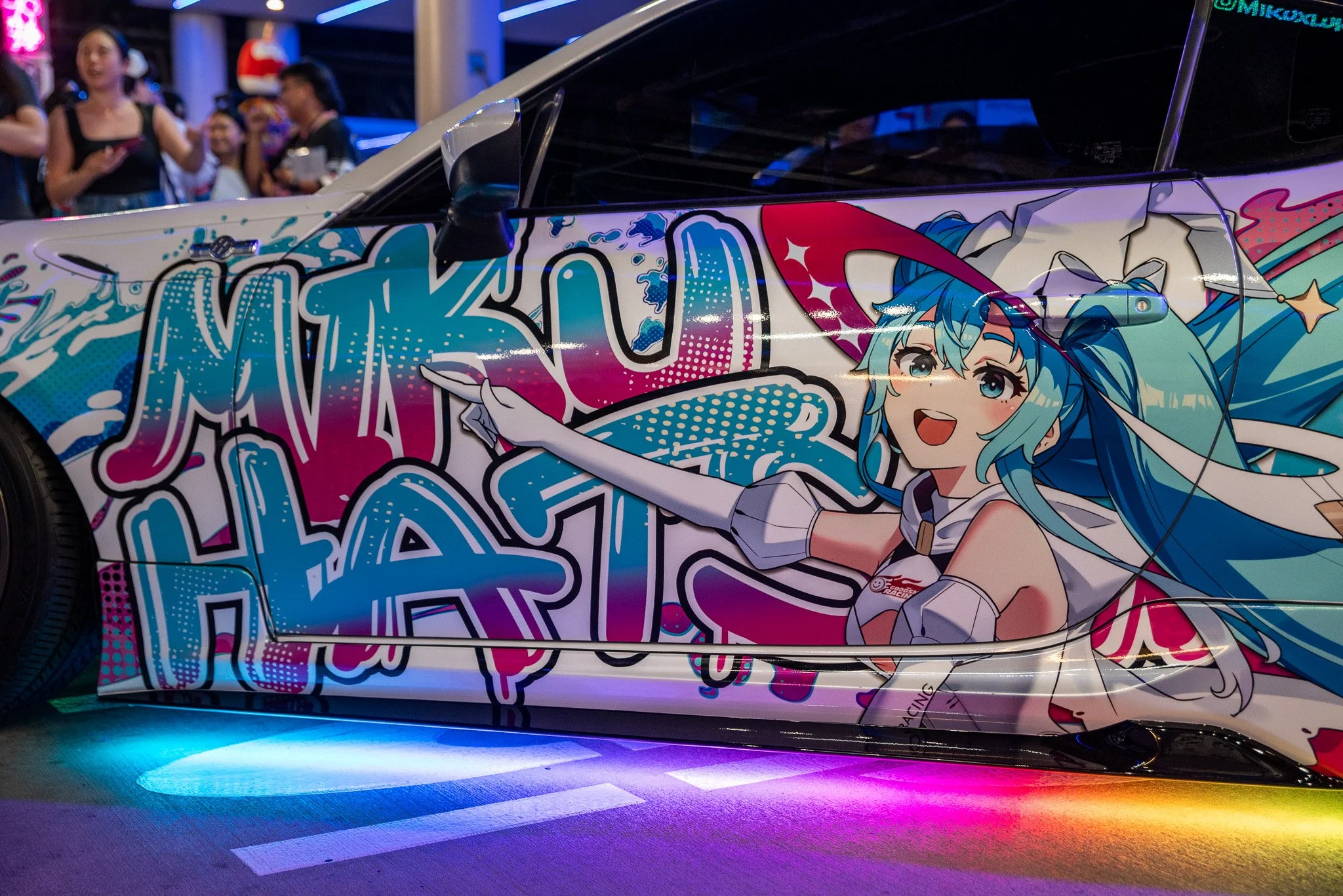
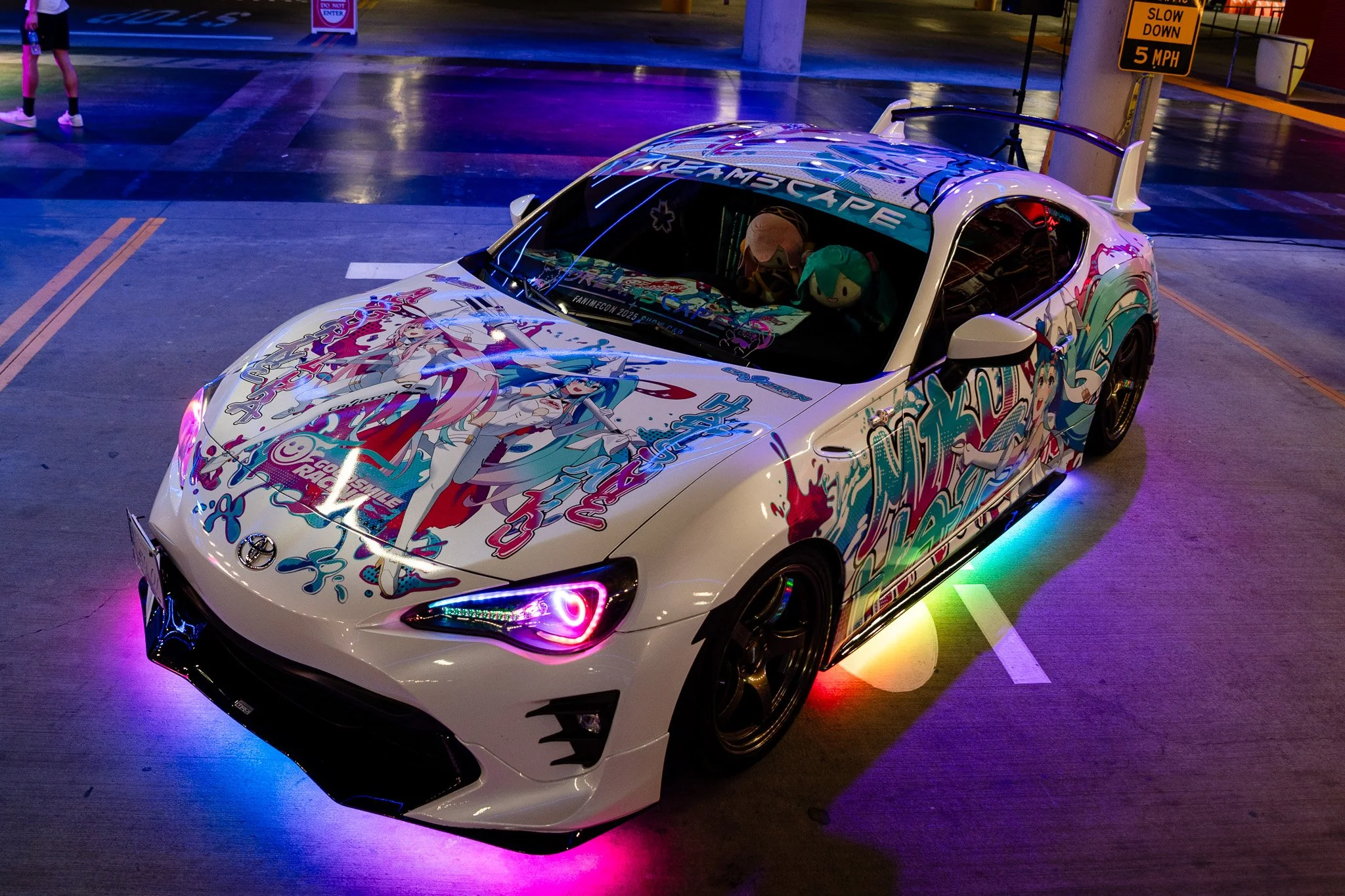
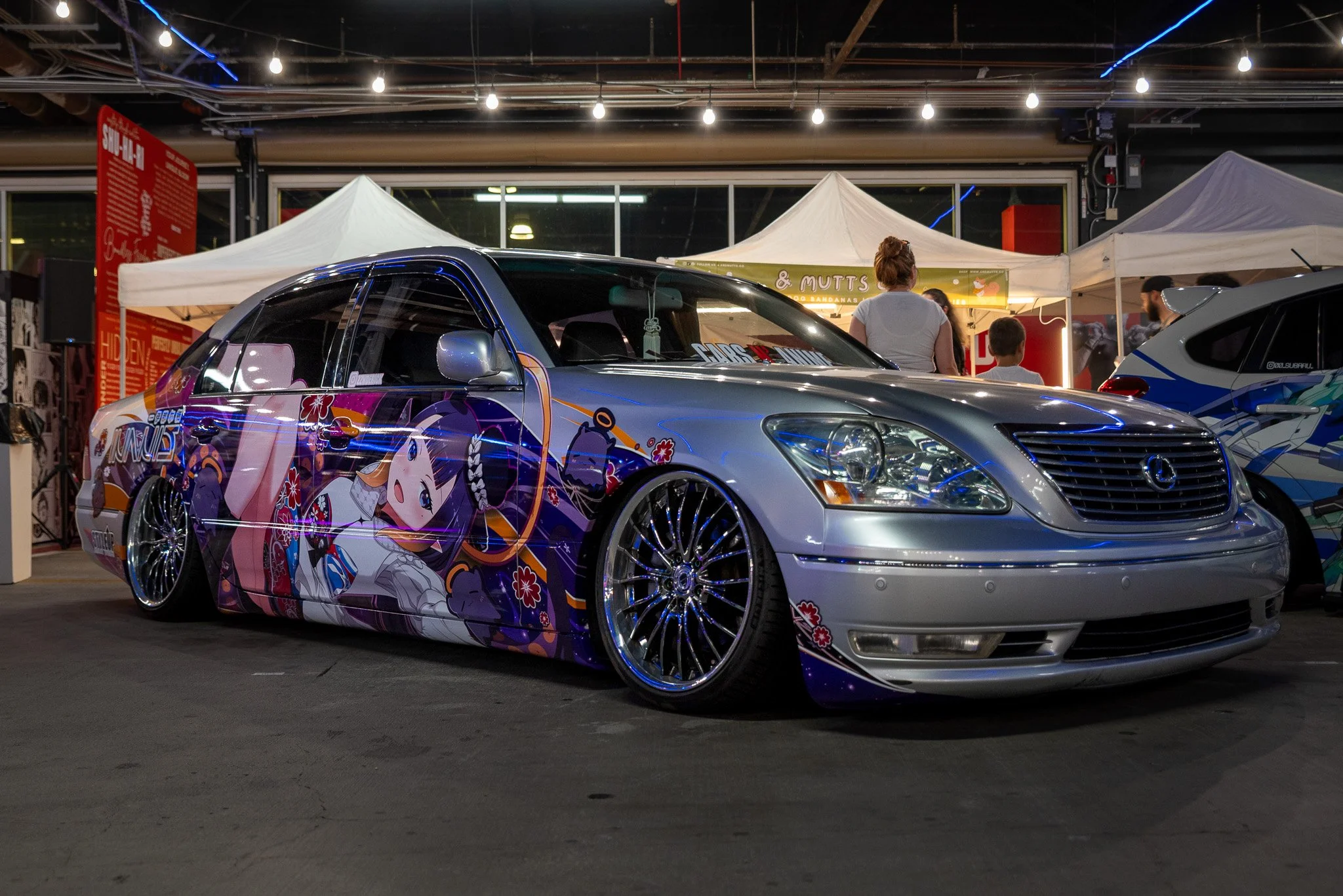
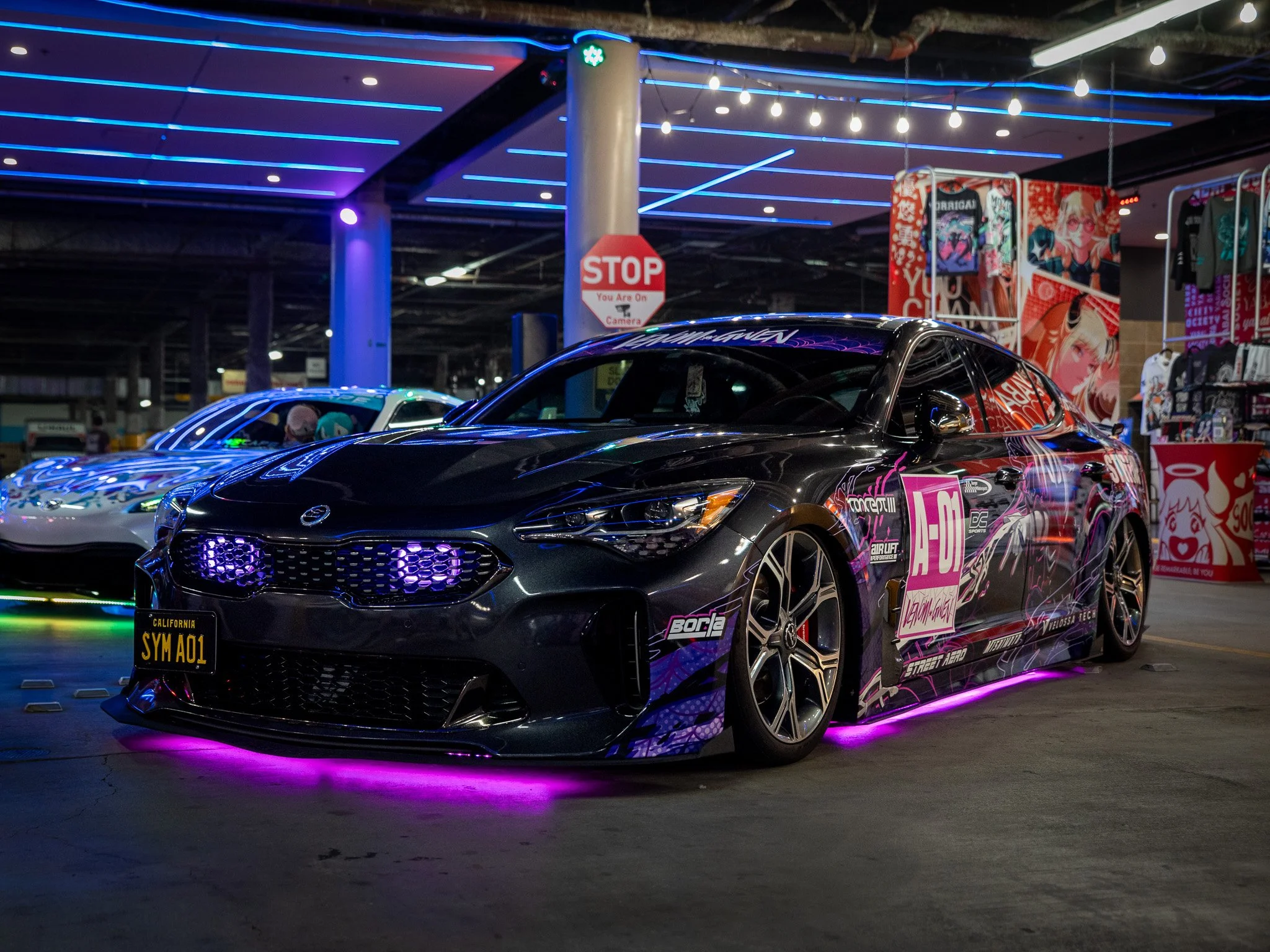
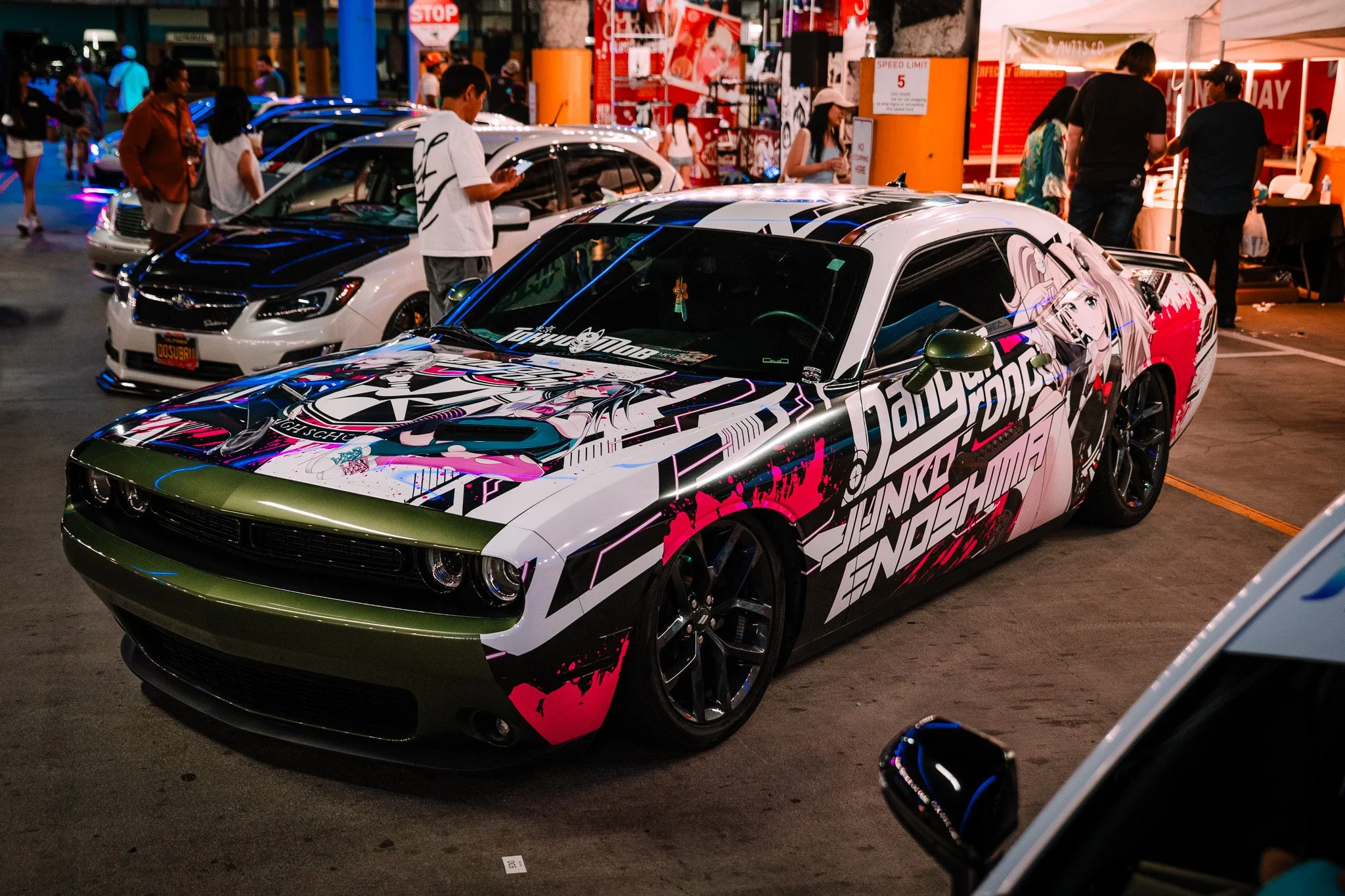

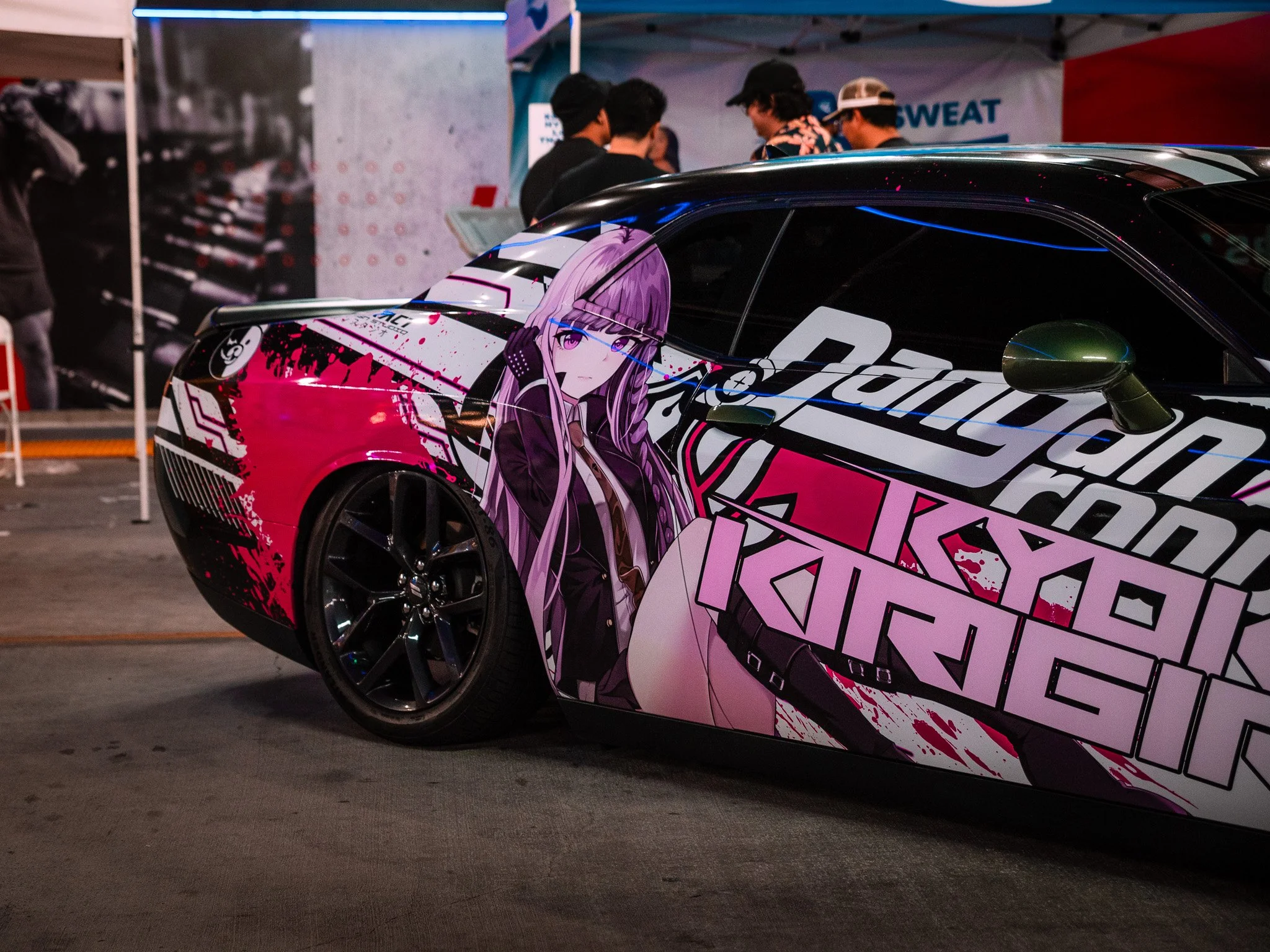


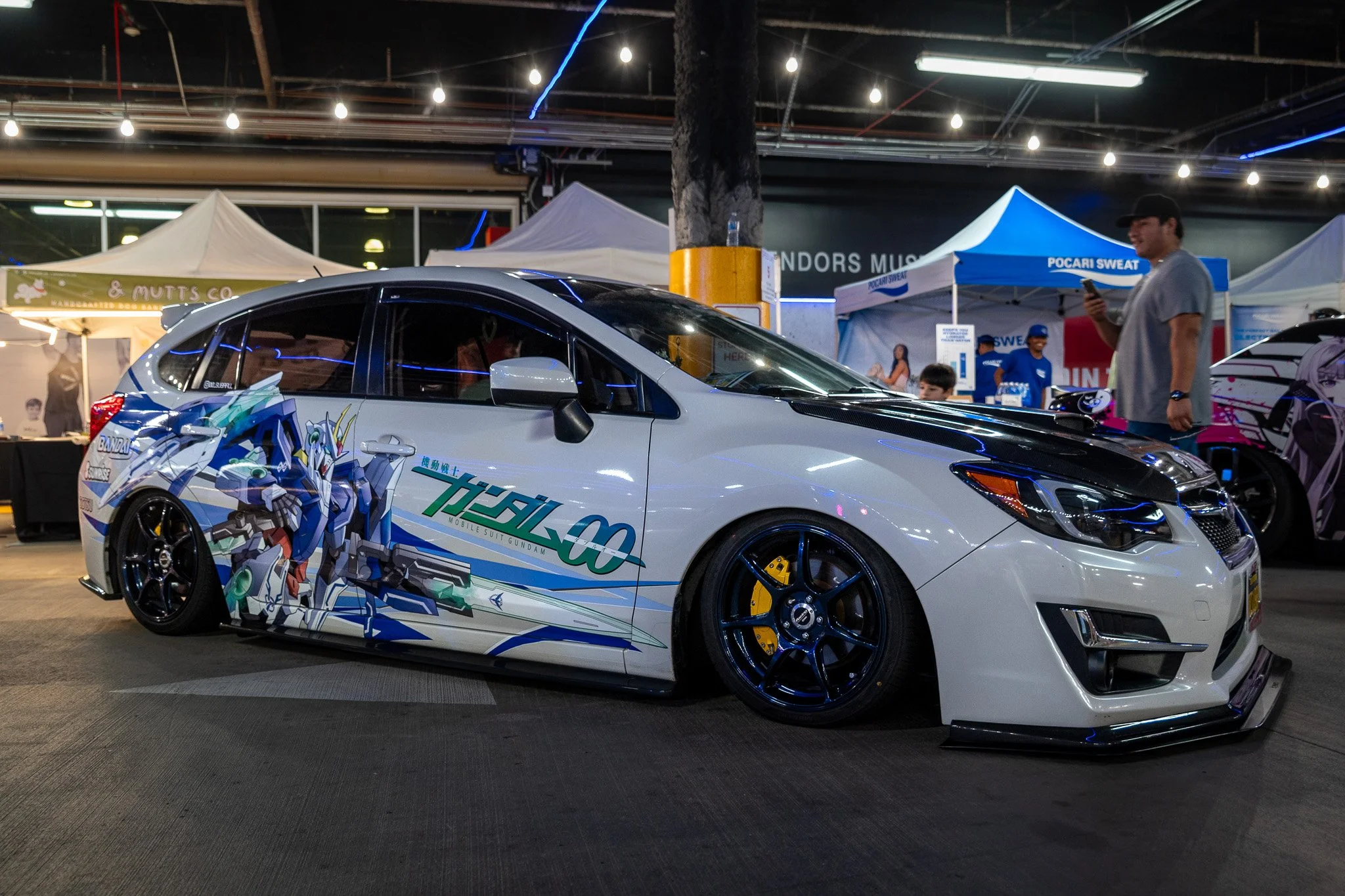
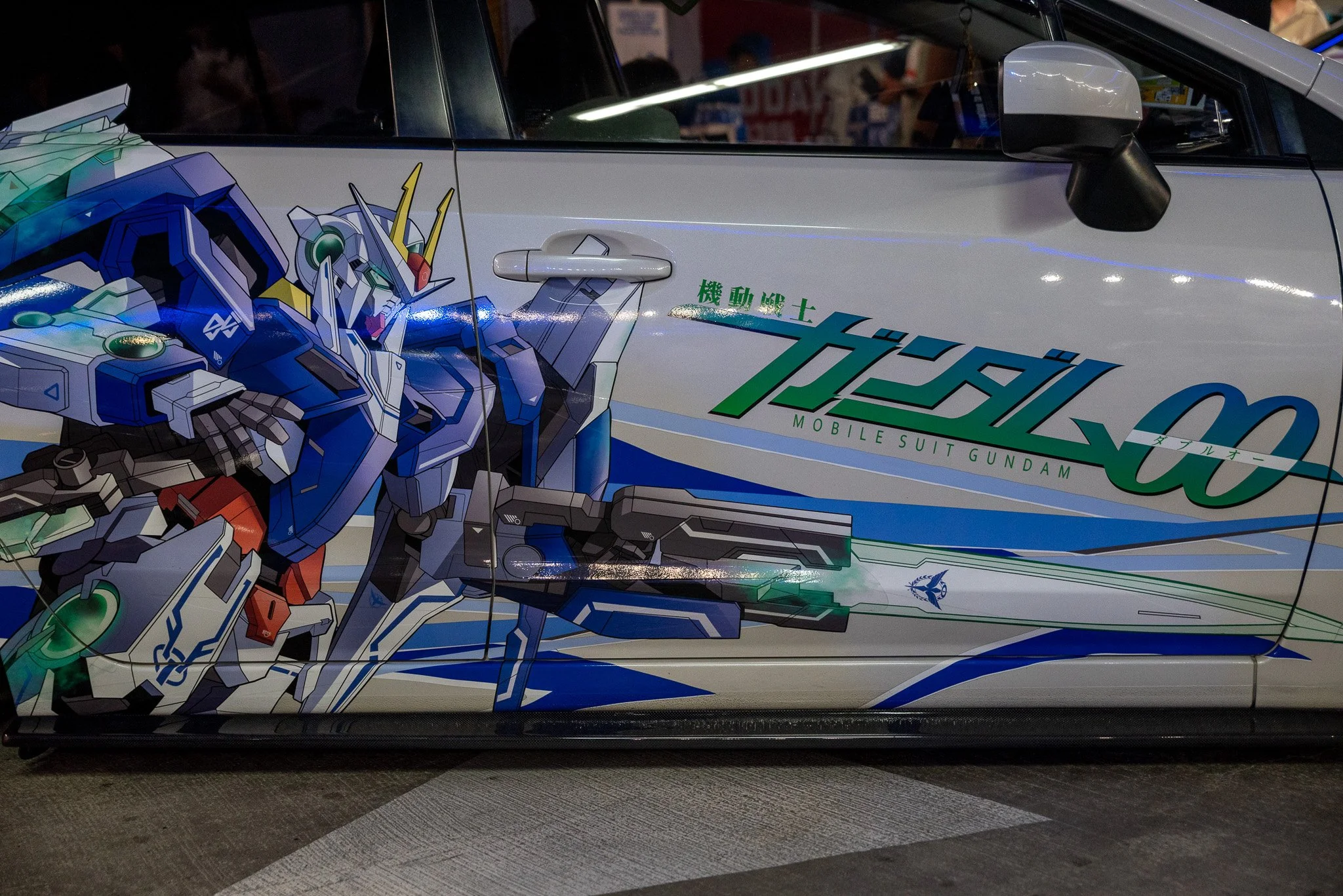

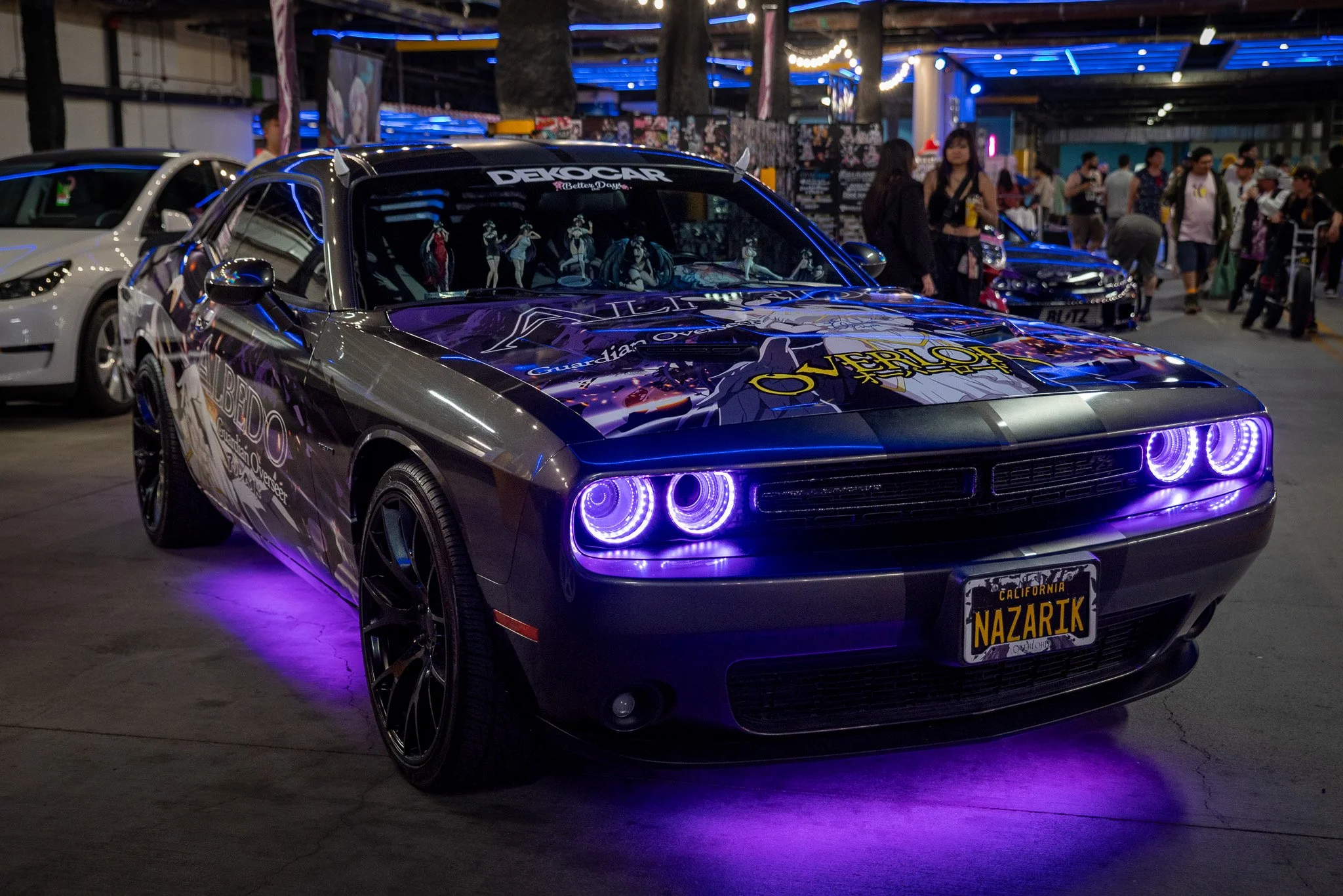
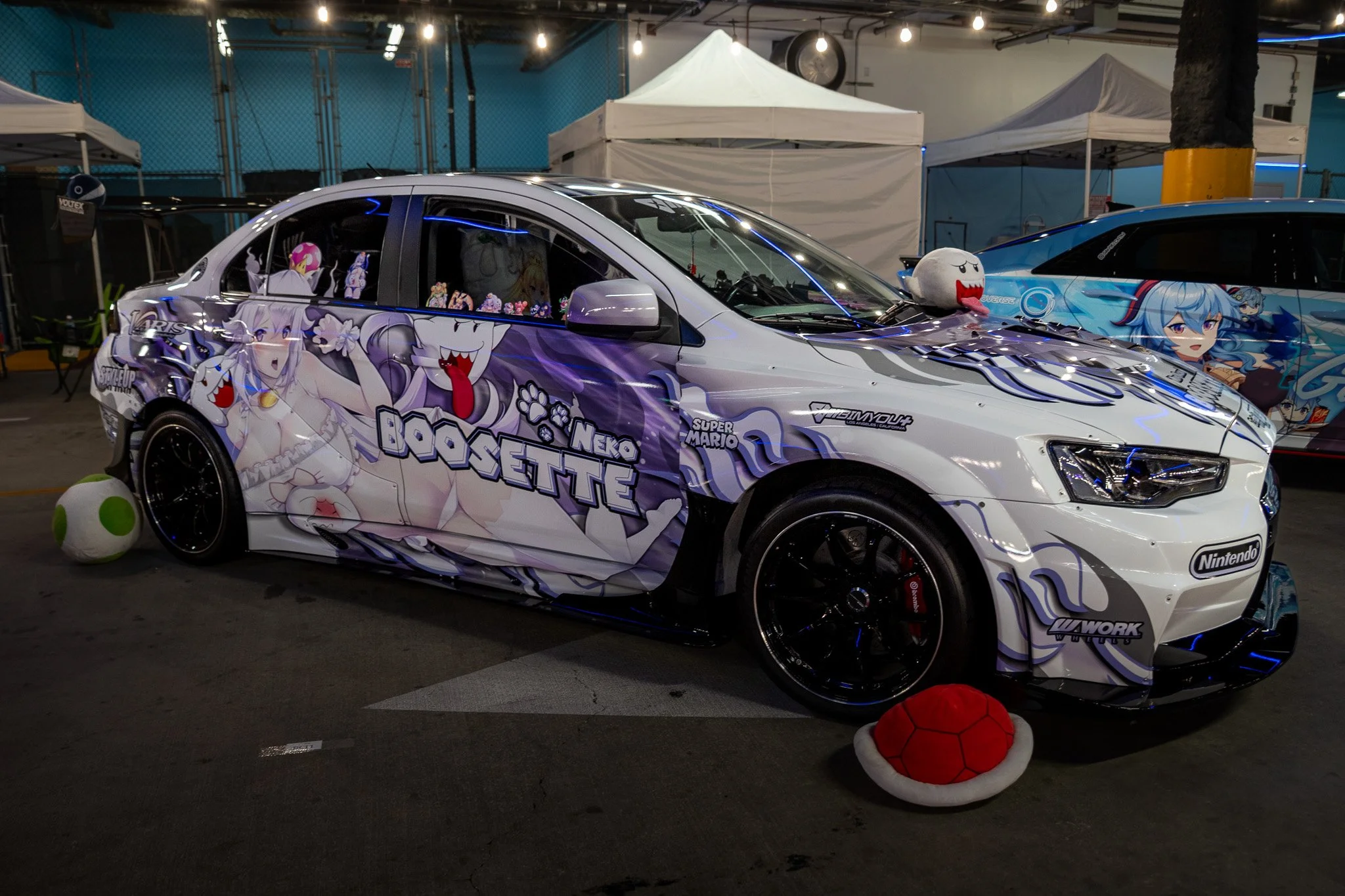
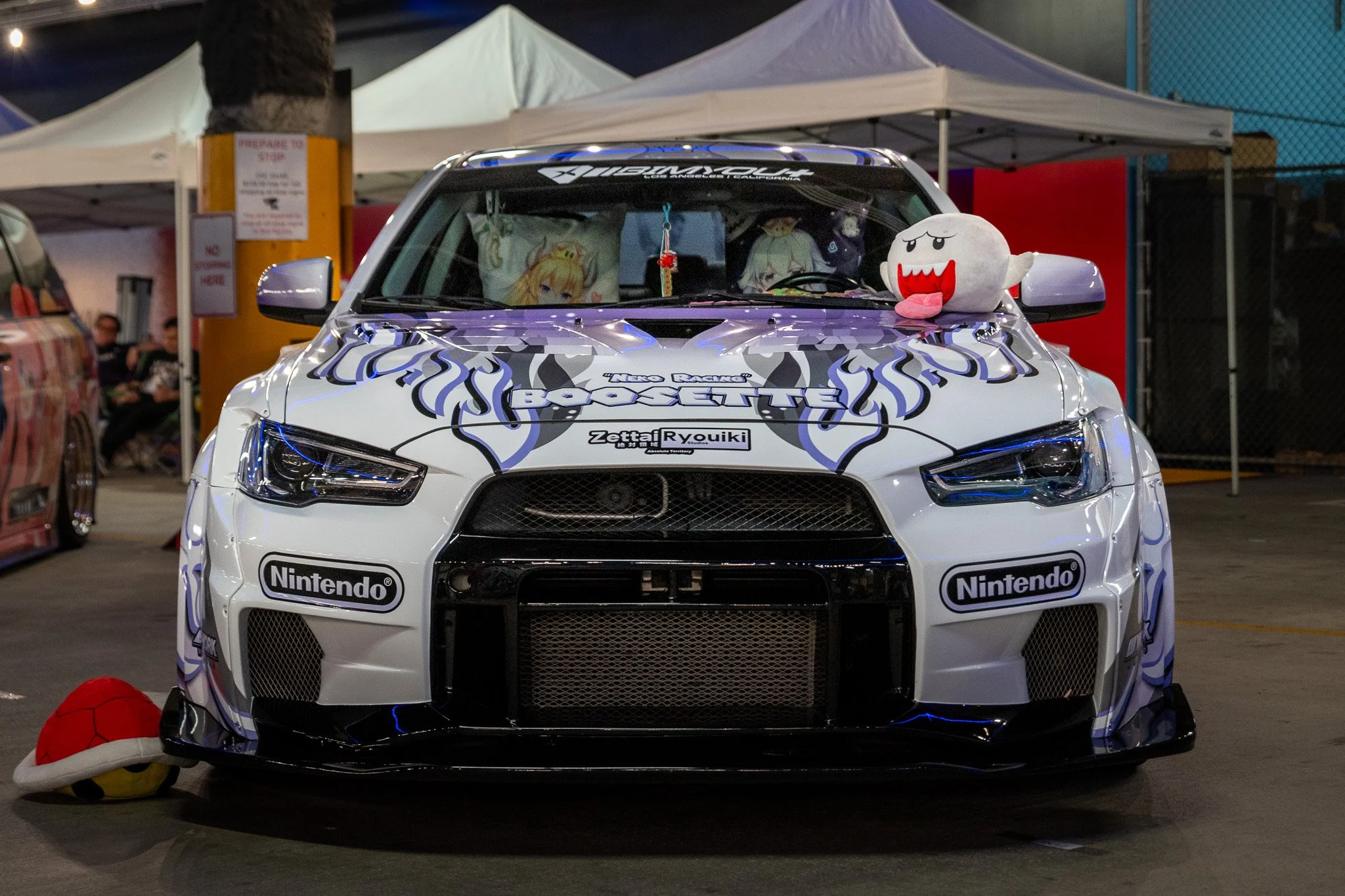
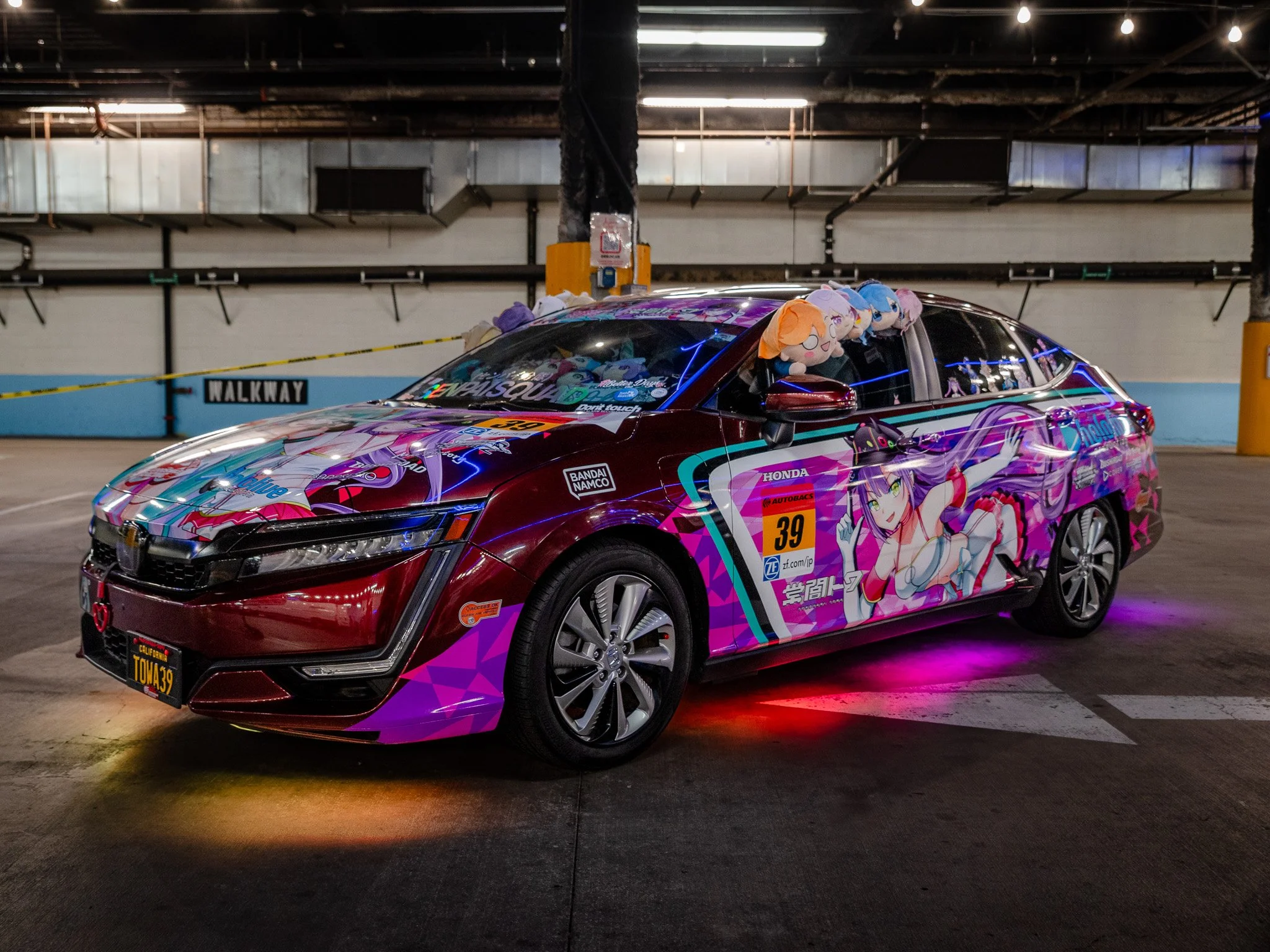
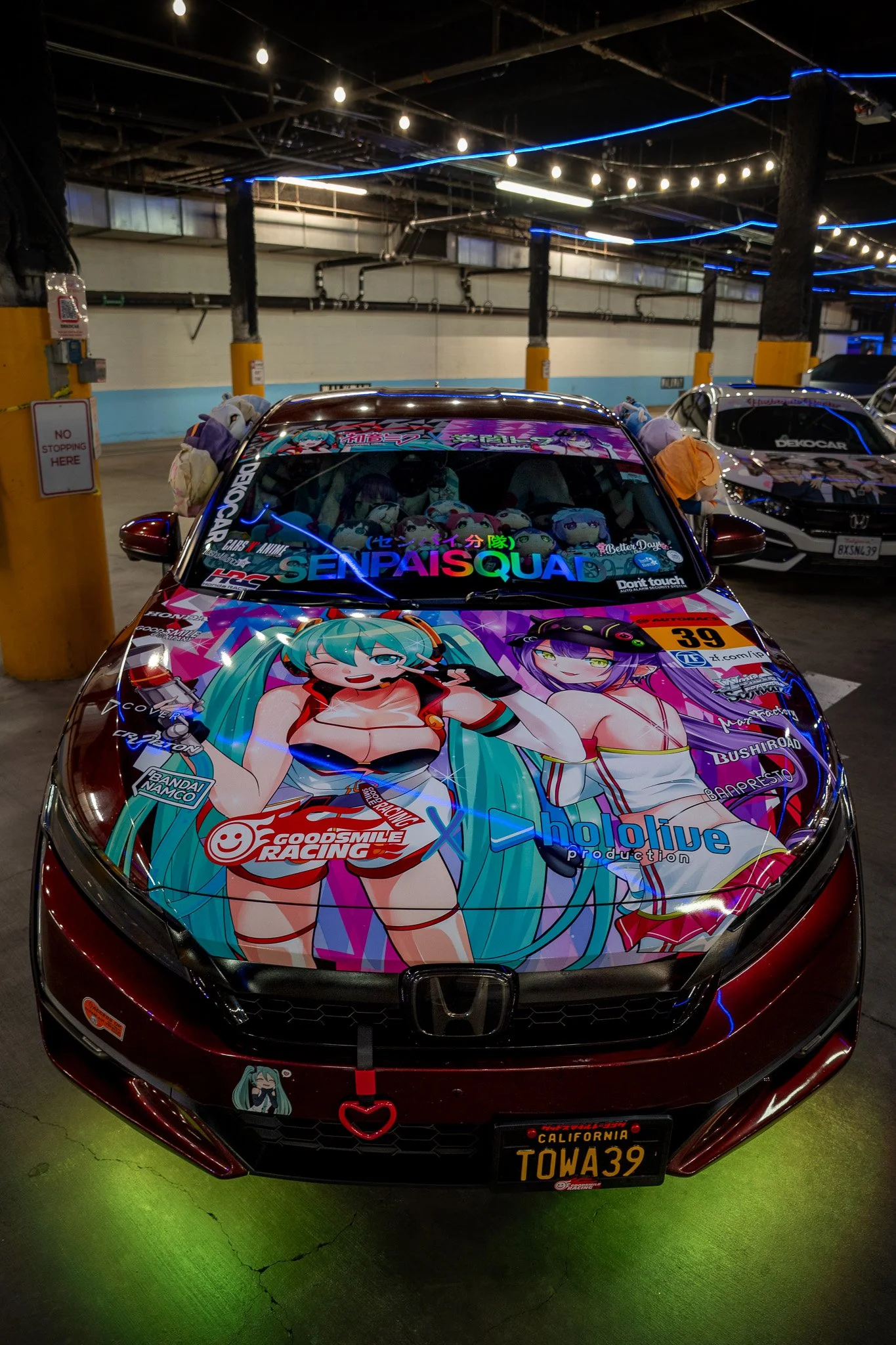
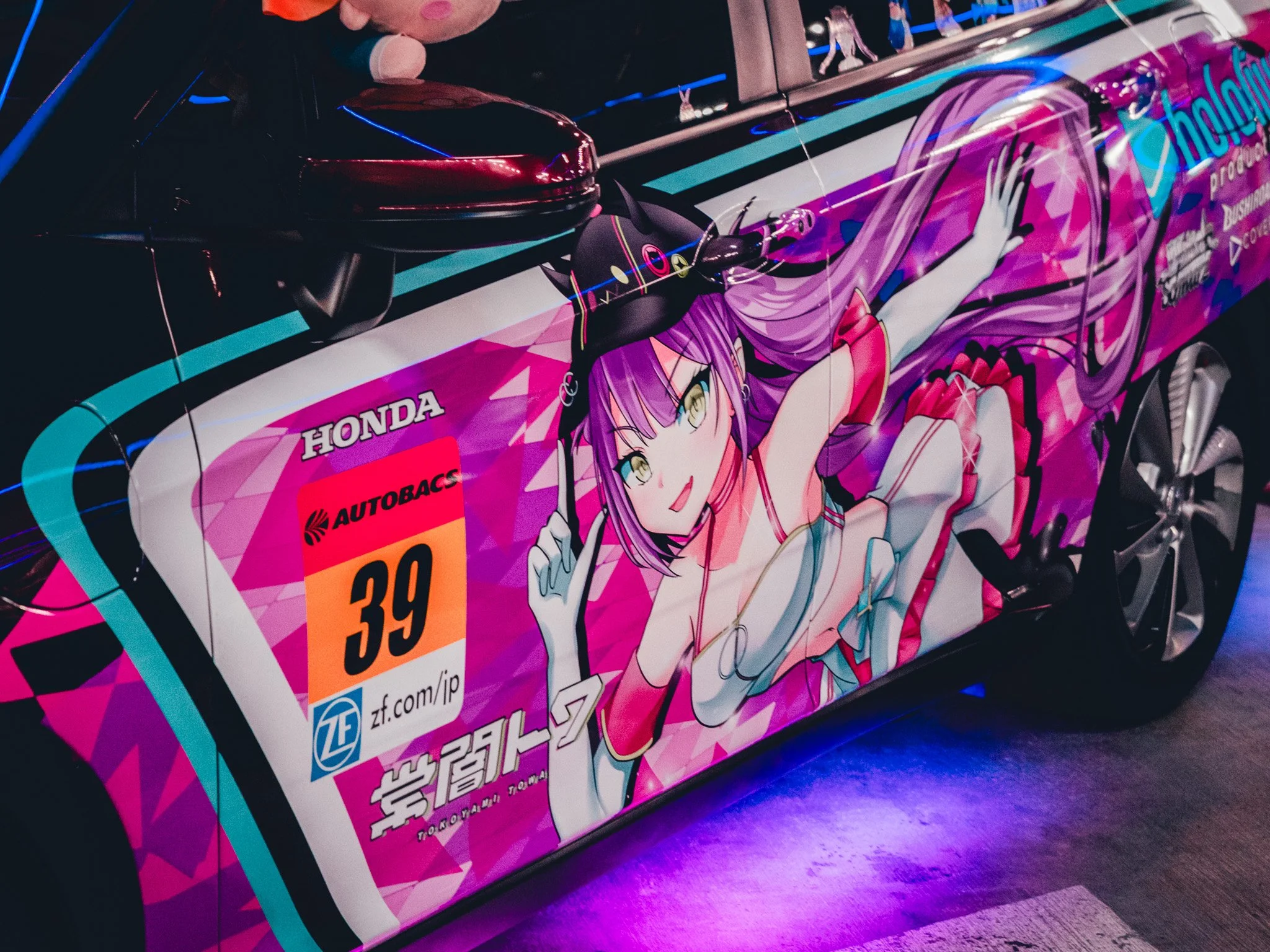
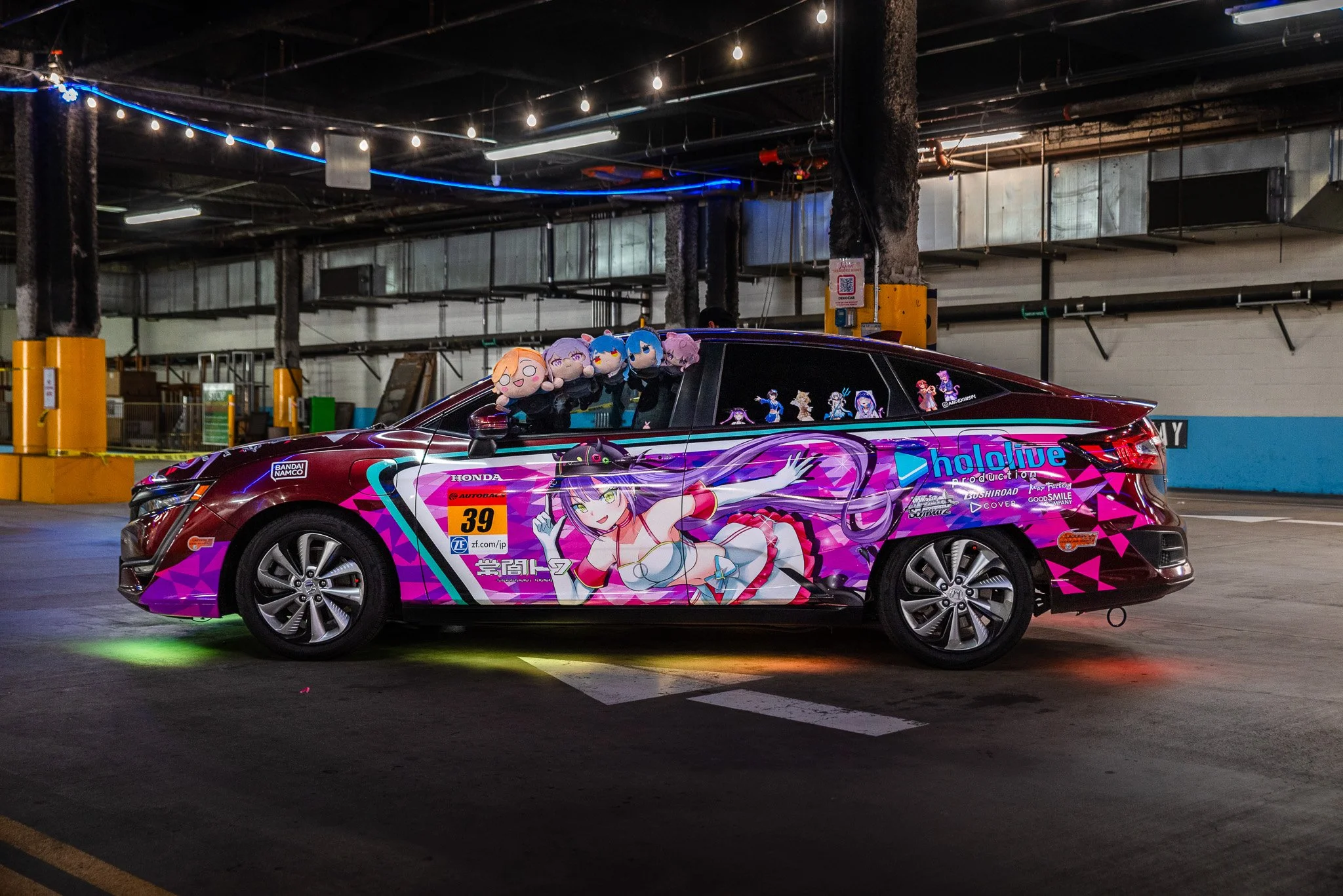

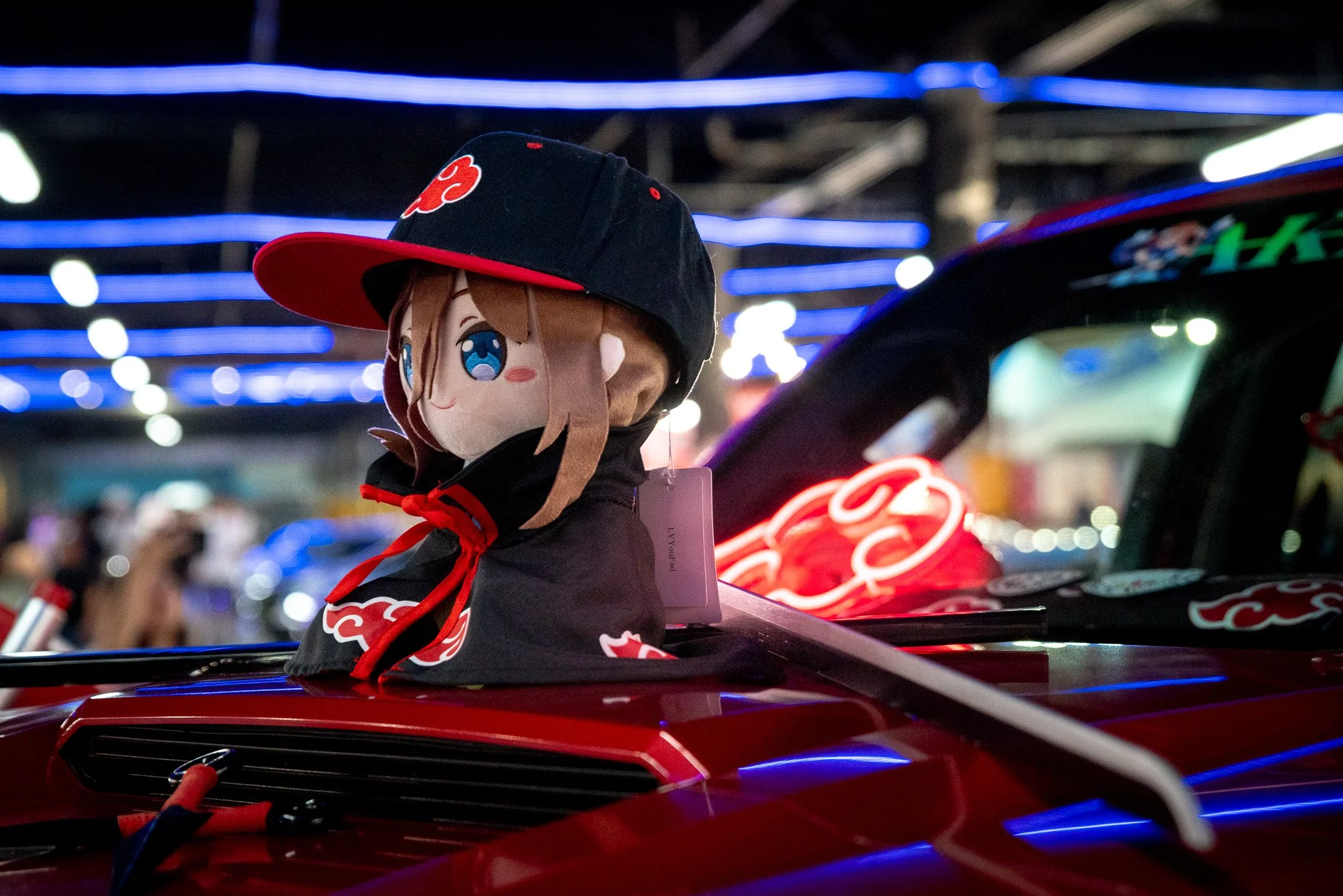
All in all, the event was solid. The display wasn’t as big as the one I saw back at Nisei Week 2019, but it was definitely larger and more refined than the last Taste of Japan showing. Even better, I found out that Dekocar will be back at Nisei Week again this year on August 16—which I’m seriously hyped for. That event is one of my favorite memories of photographing Itasha. I’ll definitely be there, and if you’re into car culture, anime, or just want something unique to photograph, you should go too.
Just note that this is not the same weekend as the Nisei Week Grand Parade, which happens one week earlier on the 10th. If you only have one day to spend in Little Tokyo, the parade weekend offers a deeper cultural experience (plus there are usually a few Itasha in that parade anyway). But if the cars are your main draw, the Dekocar weekend is where it’s at.
If you’ve ever had a memorable encounter with Itasha—or if you know of a cool upcoming event I should check out—drop it in the comments or send me a message. I would love to check it out!