Remembering Shibuya Halloween: My Night at Tokyo’s Wildest Street Party
In honor of Halloween, I wanted to look back on one of my favorite memories from my last trip to Japan — the night I found myself in the middle of the Shibuya Halloween party in Tokyo.
In honor of Halloween, I wanted to look back on one of my favorite memories from my last trip to Japan — the night I found myself in the middle of the Shibuya Halloween party in Tokyo.
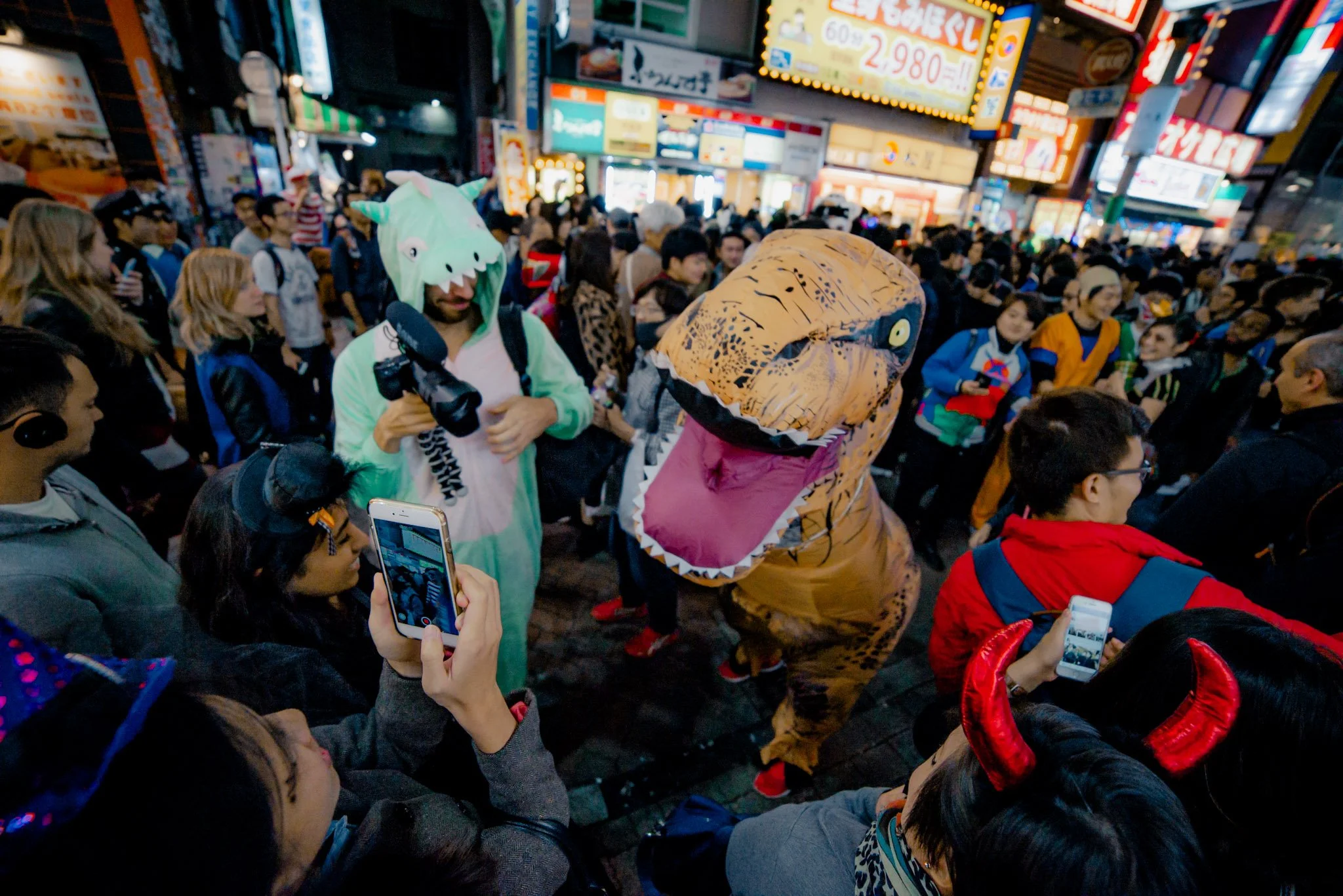
Imagine a sea of costumed people flooding the streets around Shibuya Crossing, lights flashing, signs glowing, and an atmosphere filled with energy, laughter, and creativity. It was easily the biggest and most unforgettable Halloween party I’ve ever experienced- and probably, my favorite Tokyo experience overall, so far.
A Brief History of Shibuya Halloween
For those unfamiliar, Shibuya Halloween started in the early 2000s as a spontaneous street gathering. There wasn’t an official organizer — just young people showing up in costume around Shibuya Crossing, one of Tokyo’s most famous landmarks.
As social media and tourism grew in the 2010s, so did the event. By the mid-decade, it had exploded into a massive phenomenon. Between 2016 and 2018, crowd estimates ranged from 60,000 to 70,000 people filling the streets of Shibuya.
But with that many people came challenges. In the late 2010s, city officials introduced a public drinking ban to help manage the chaos. This, likely in response to an incident where partygoers overturned a truck the year before. Then, after the tragic crowd crush in Seoul’s Itaewon district in 2022, authorities became even more cautious about large, unregulated gatherings.
Today, Shibuya Halloween is technically discouraged — the city enforces restrictions on public drinking and smoking, and on sale of alcohol during Halloween week, and police heavily patrol the area. I’ve even read that scooter and e-bike services will be suspended this year as well. That said, there is nothing really preventing people from going to the neighborhood, and so its no surprise that Instagram has plenty of images of people continuing to attend. However, the event (if you can still call it that) appears to have largely faded, leaving patrons to seek out smaller, organized events and club parties.
My Experience at Shibuya Halloween
I attended Shibuya Halloween in 2016, during the event’s peak years — though it honestly happened by accident. It was the last night of our Tokyo trip, and my friend and I were looking for something to do before our early flight the next morning. We decided to head to Shibuya, not realizing what night it was.
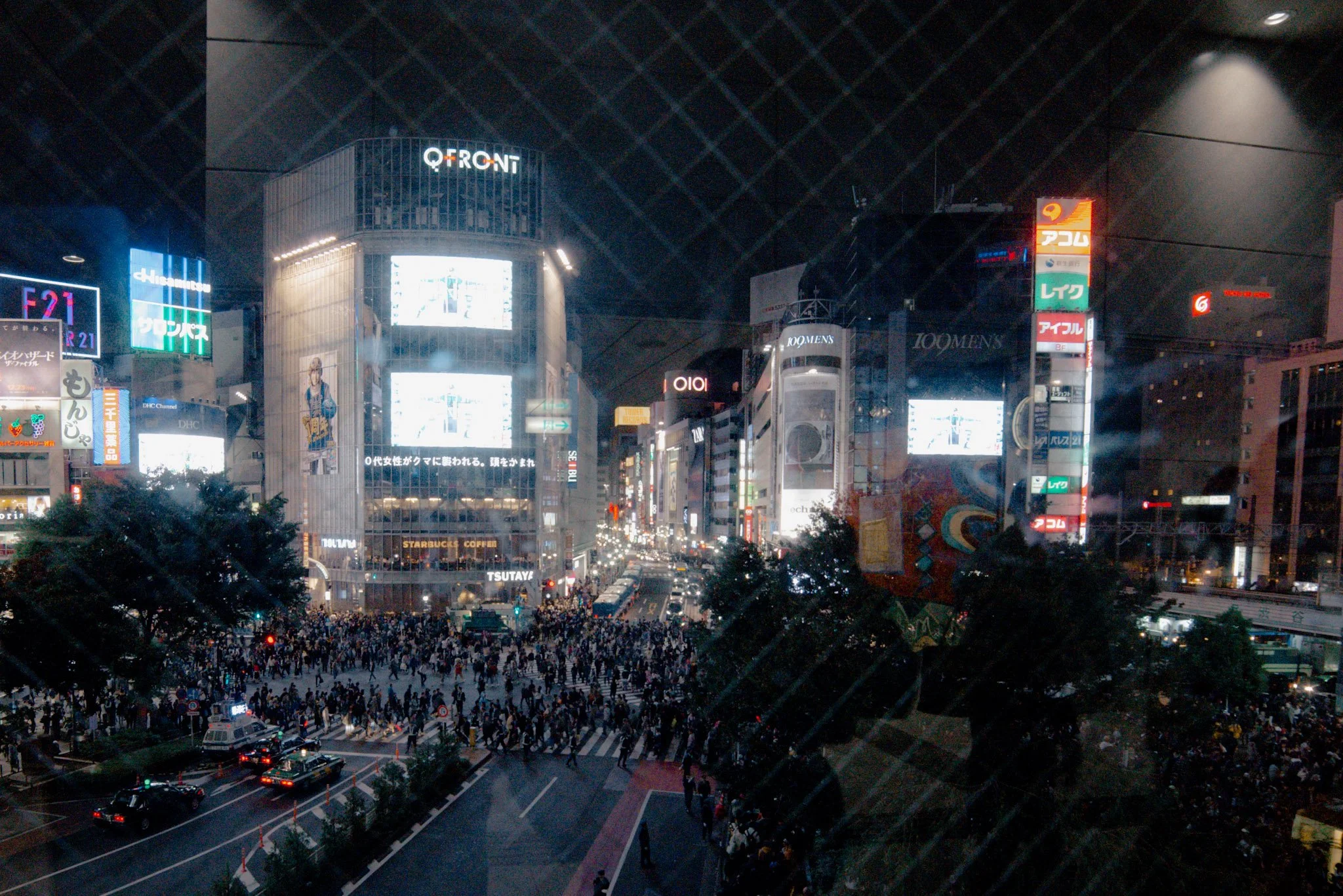
When we stepped off the train, we immediately knew something was happening. The station was pretty packed, and it got even more crowded once we were outside by the Hachiko statue. By the time we reached the famous scramble crossing, we were shoulder-to-shoulder with the people around us.
It was obvious that something was happening, just based on all the people who were crowding around the windows in Shibuya Station.
Despite the density, it was surprisingly orderly — no pushing or shoving, just everyone waiting patiently for the lights to change, while police corralled the crowds with light sticks and megaphones. The moment the signal turned, a wave of people surged across the intersection- the ambient sound slowly growing from a low rumble to loud chatter, laughter, and music.
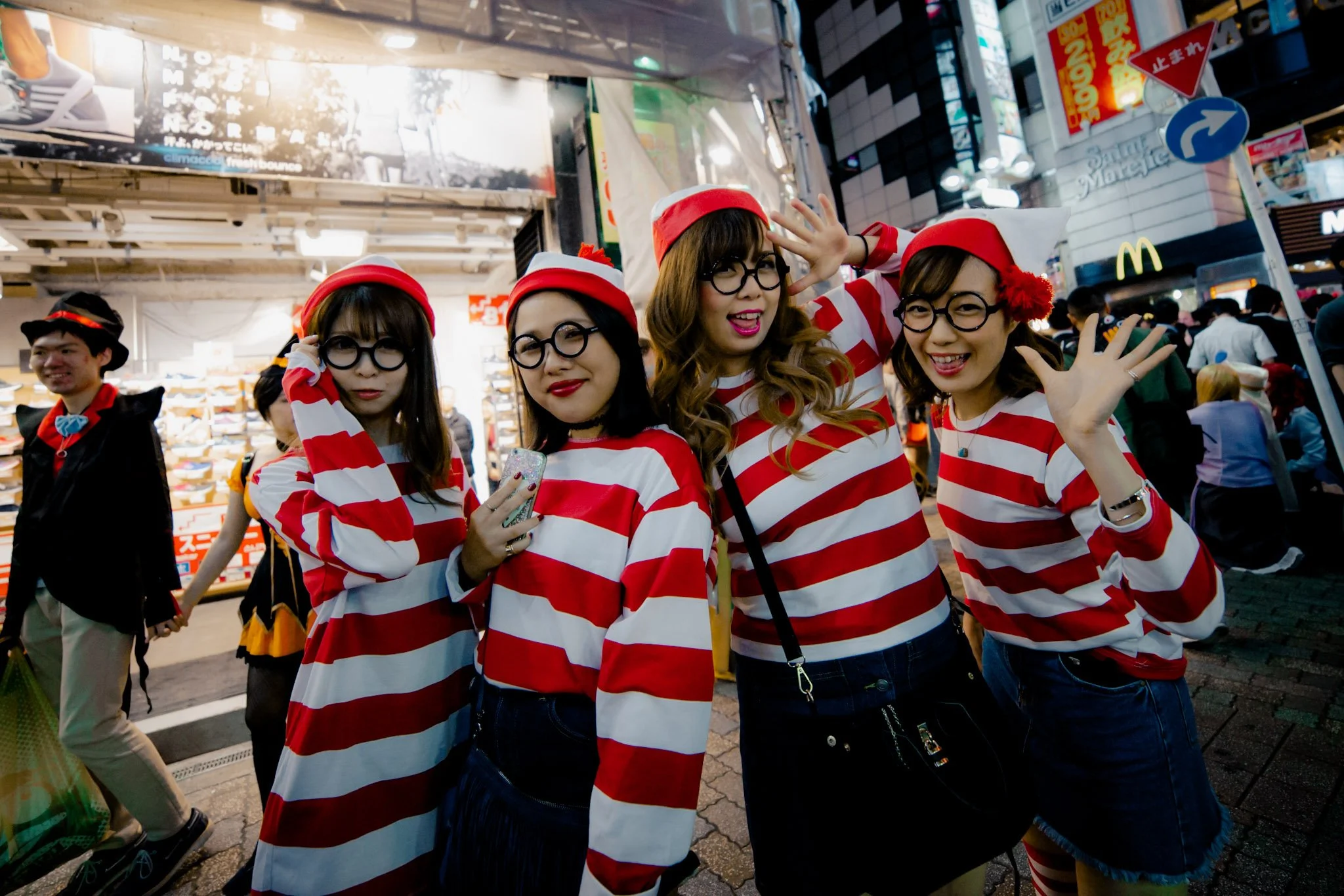
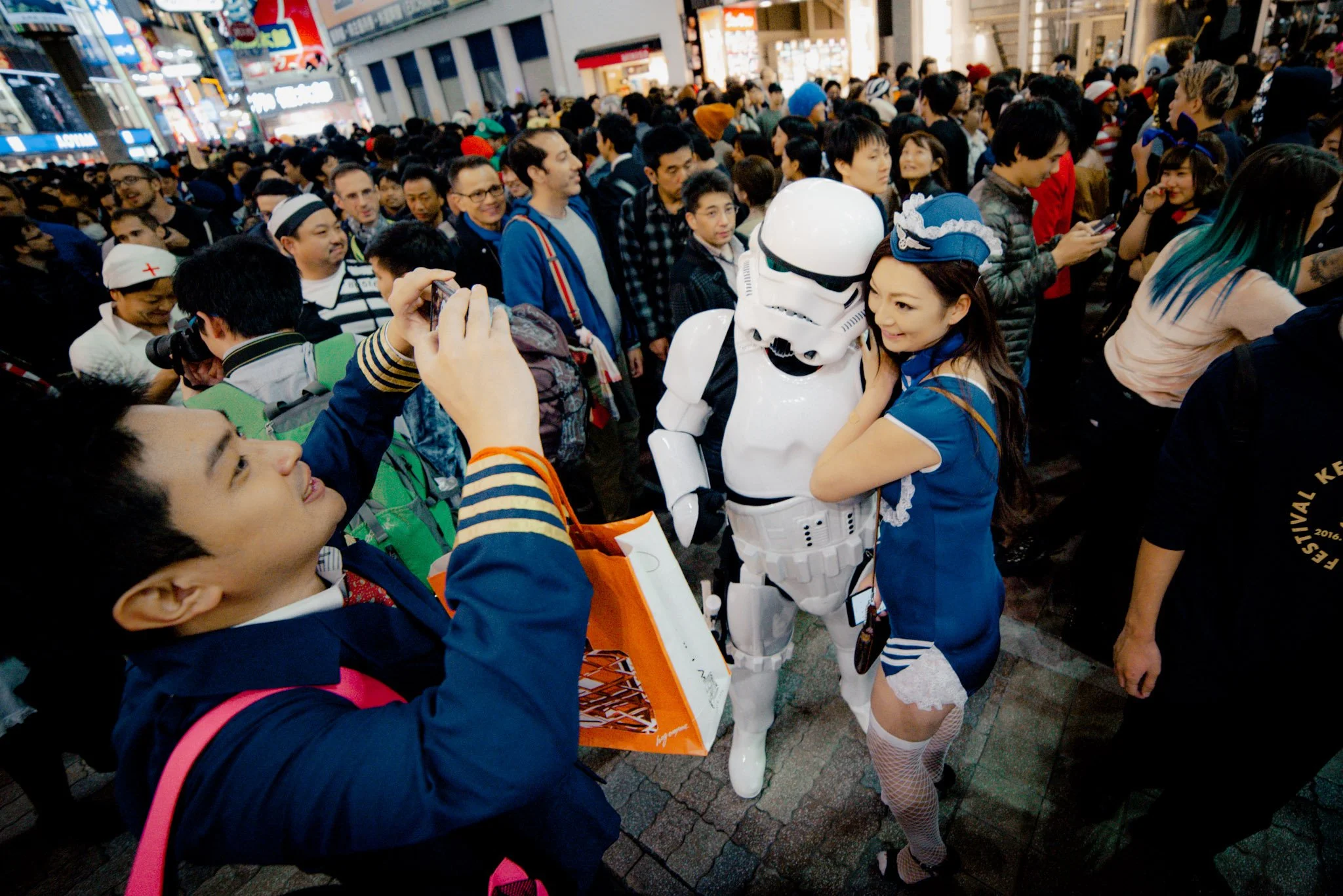
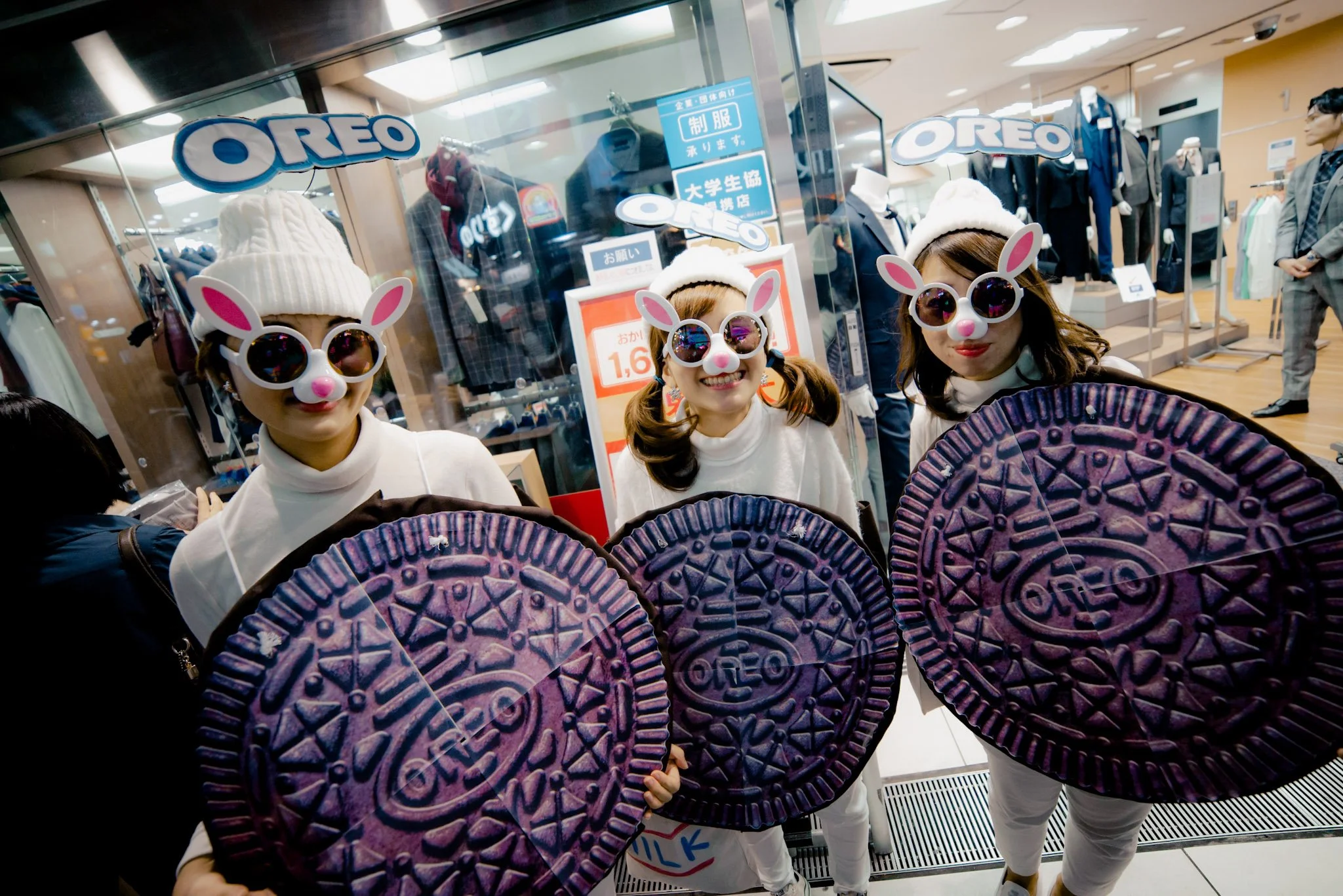
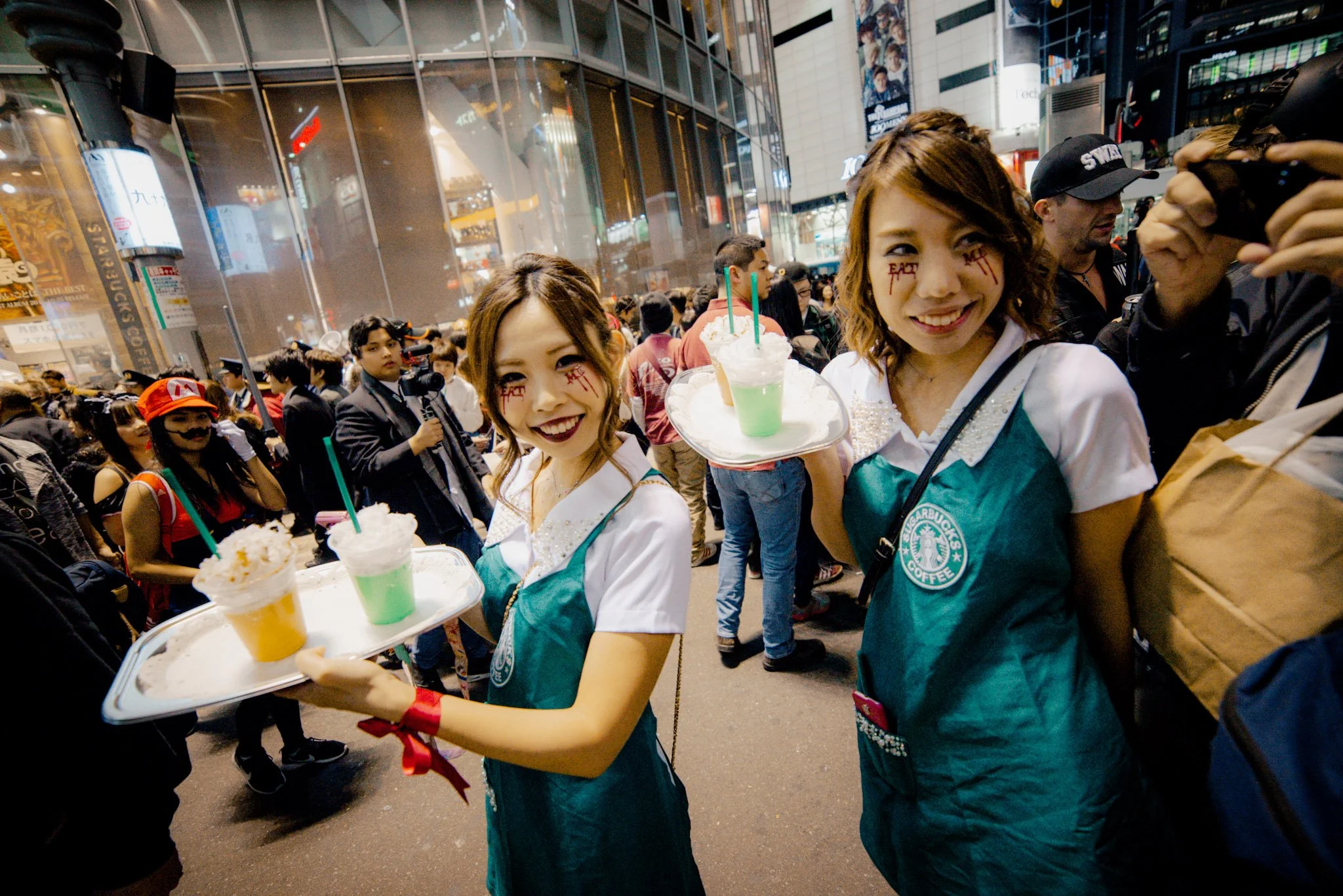
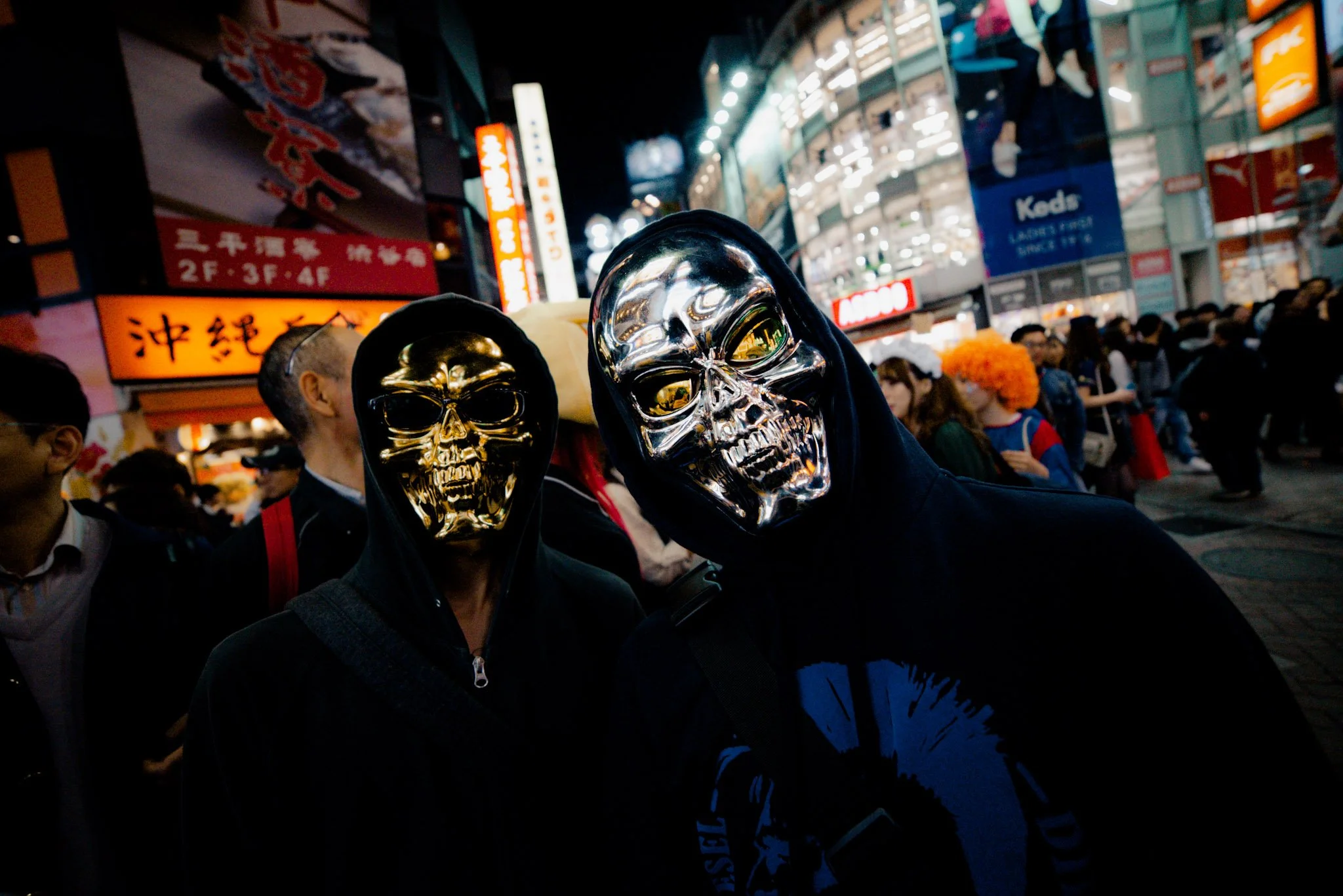
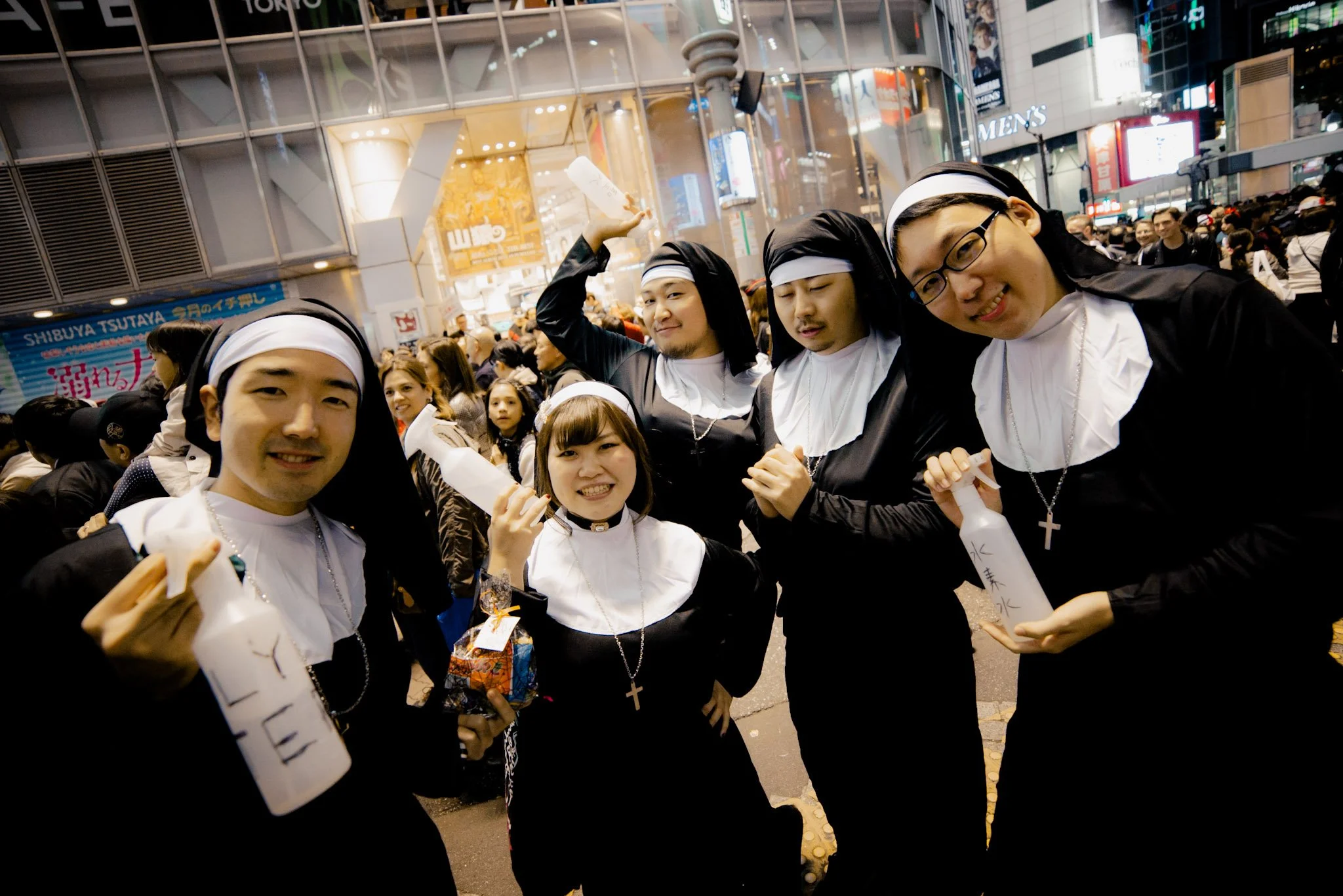
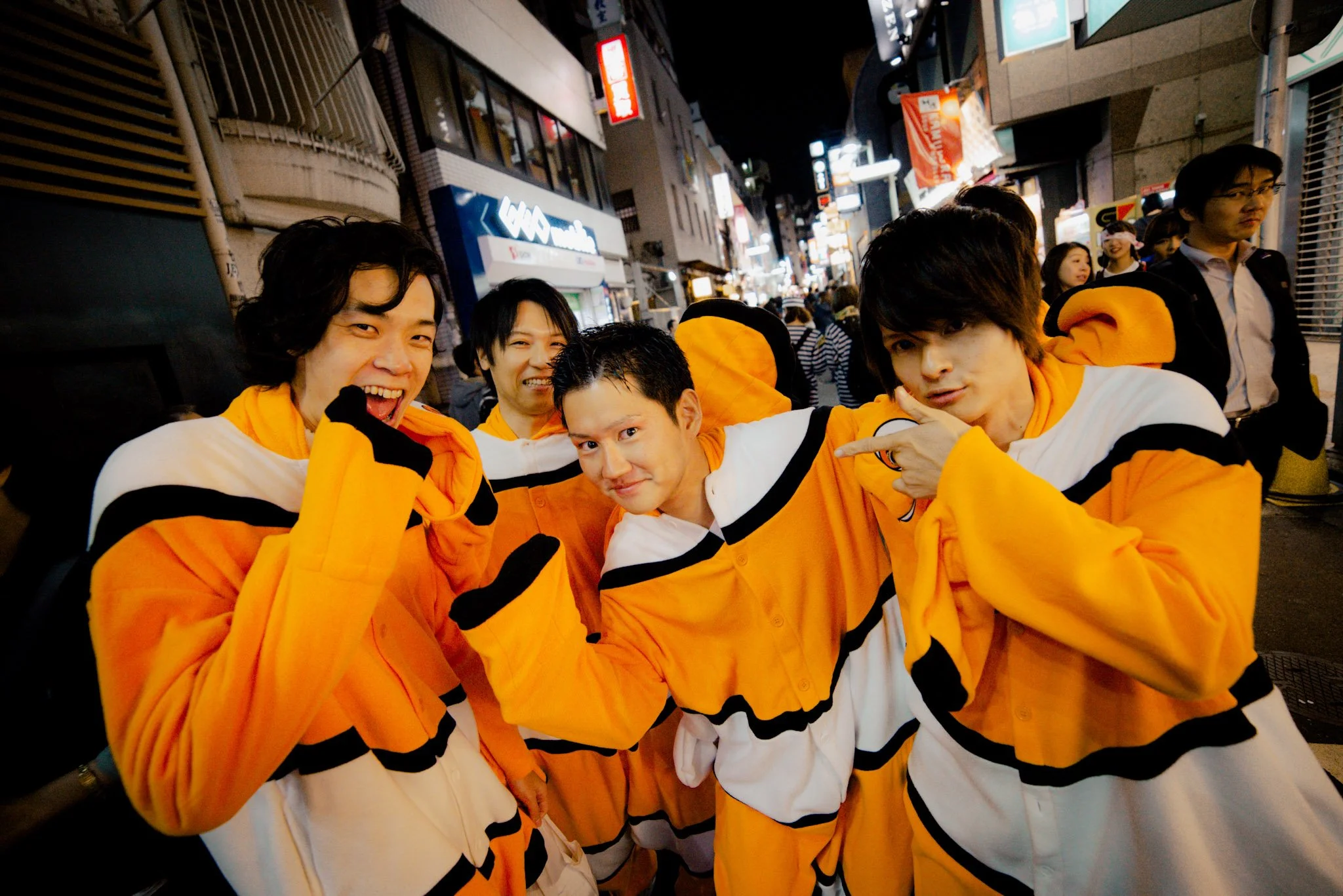
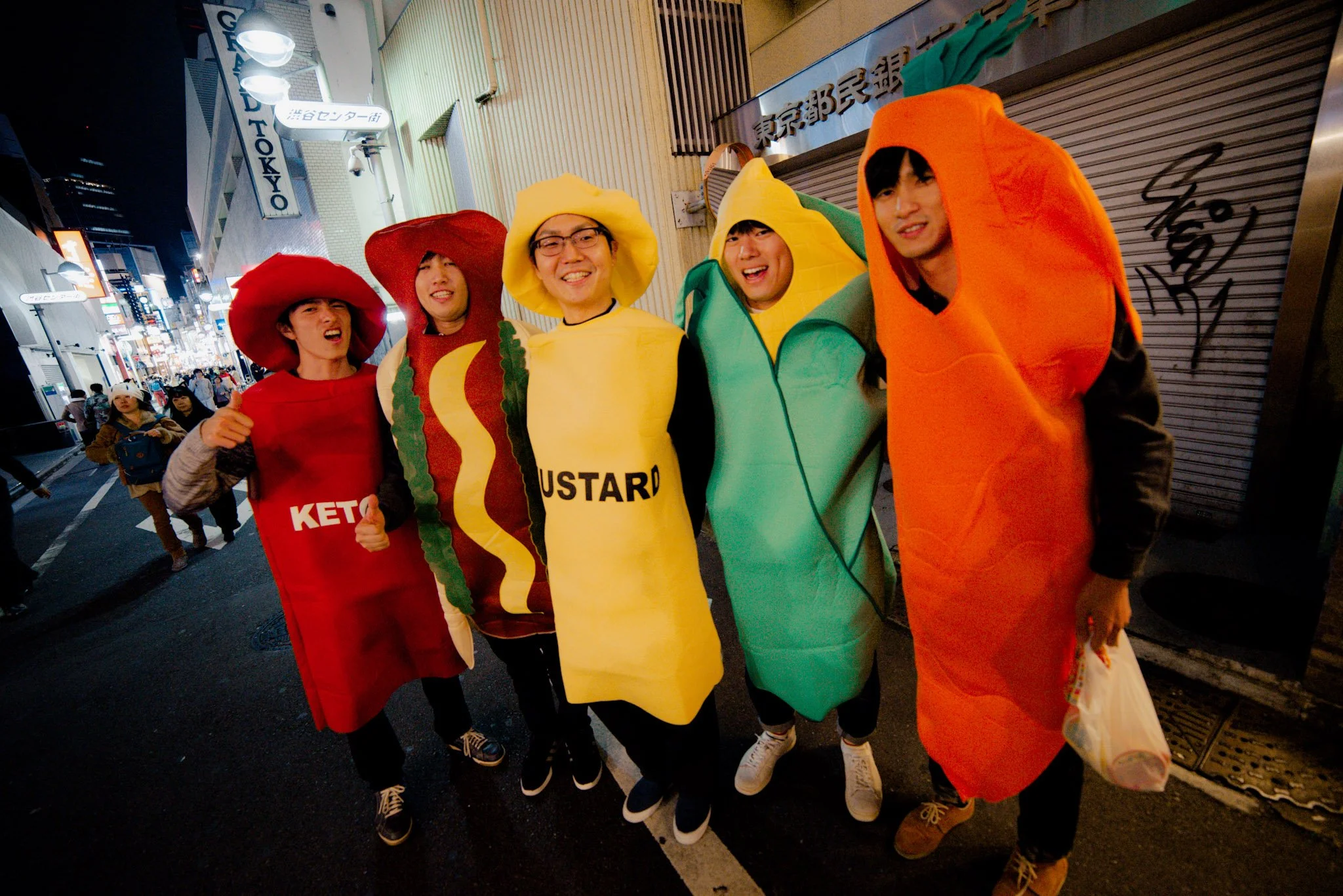
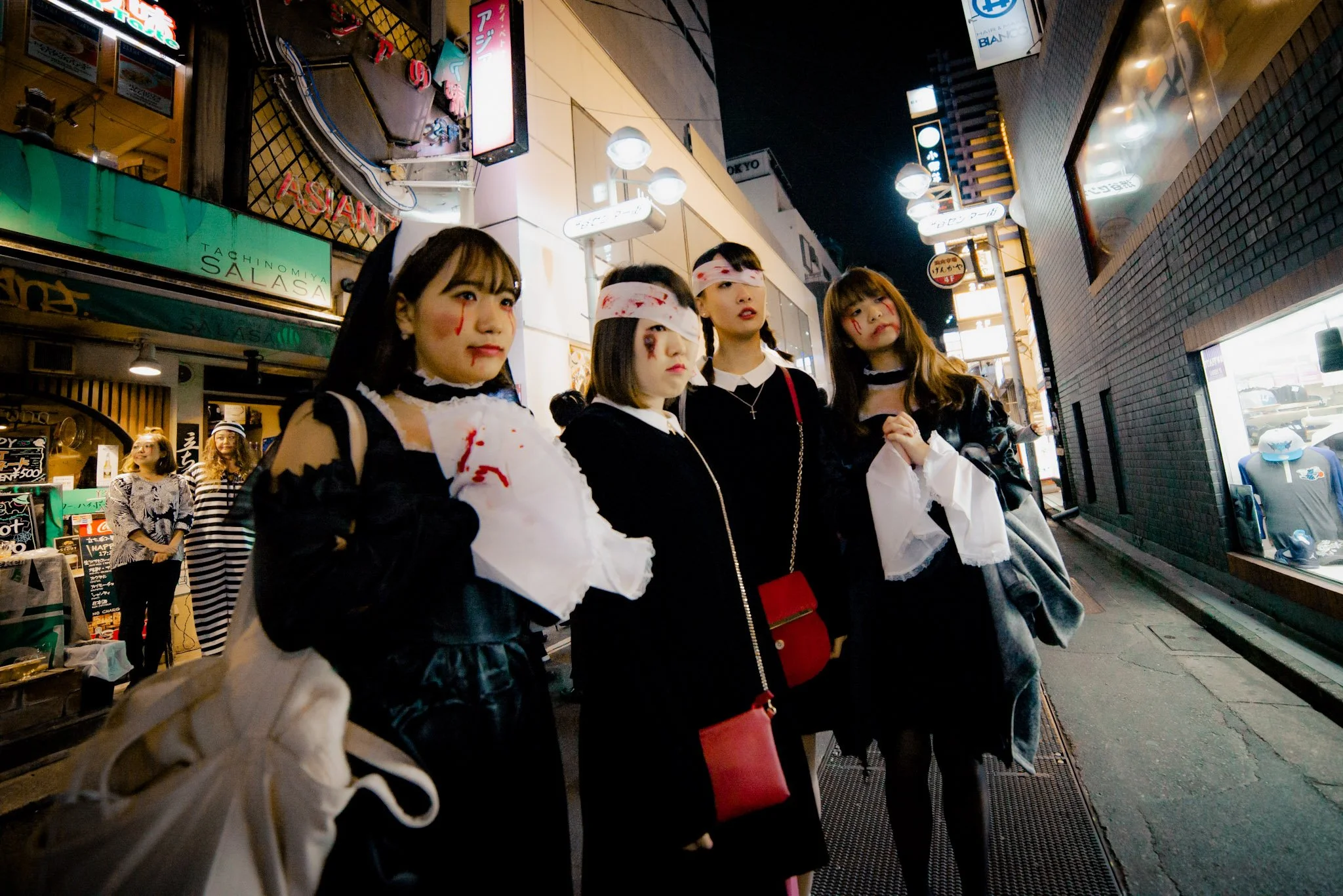
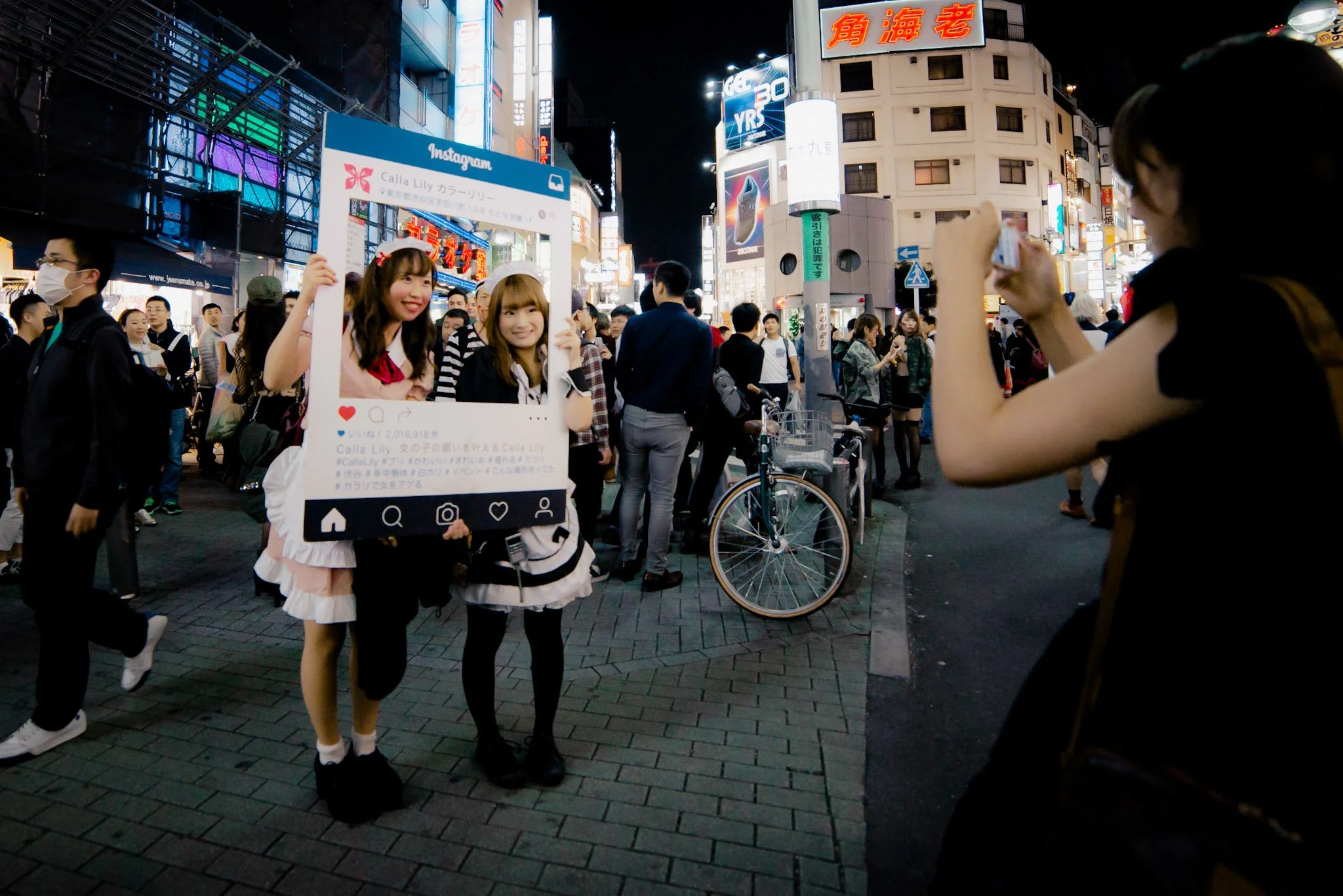
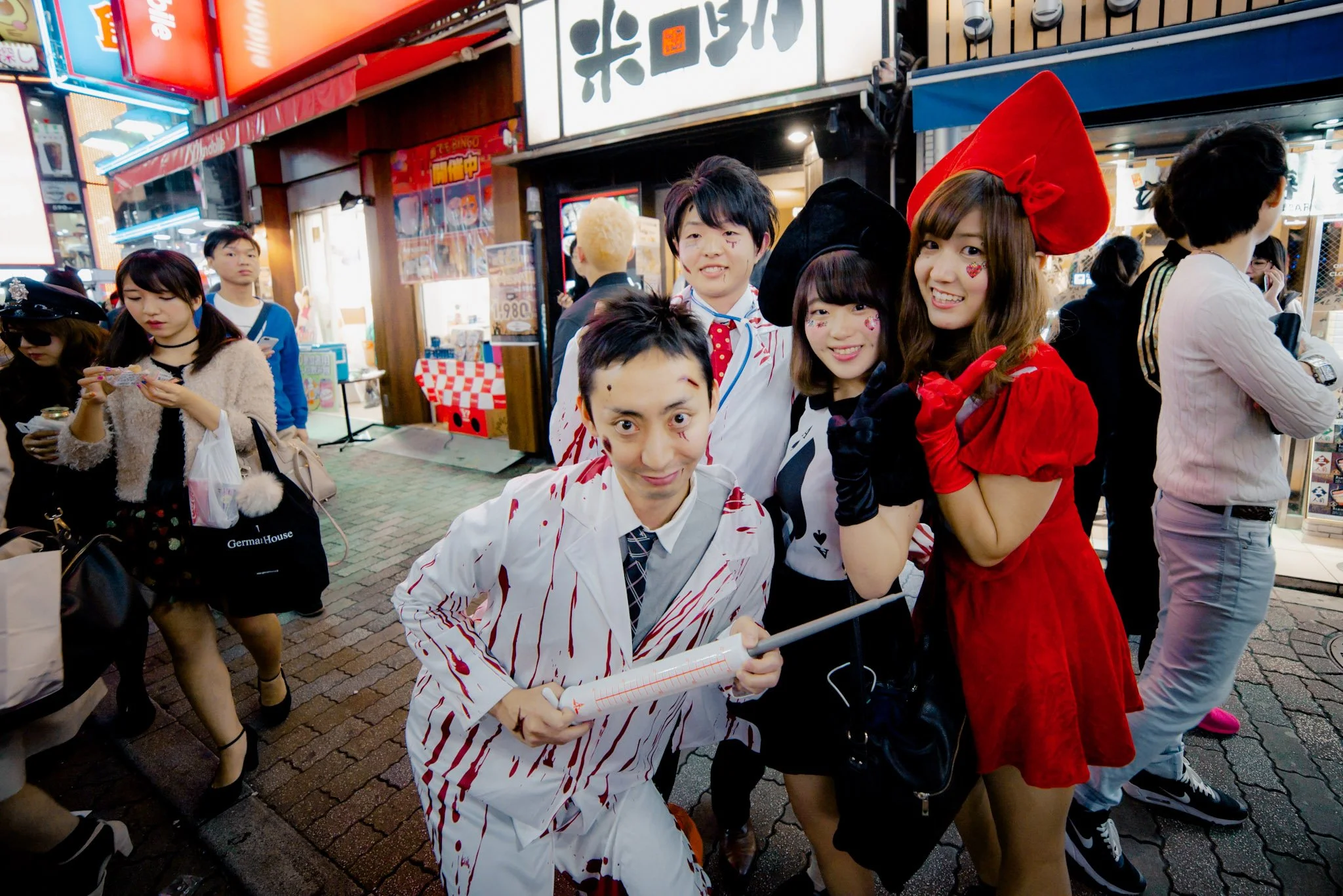
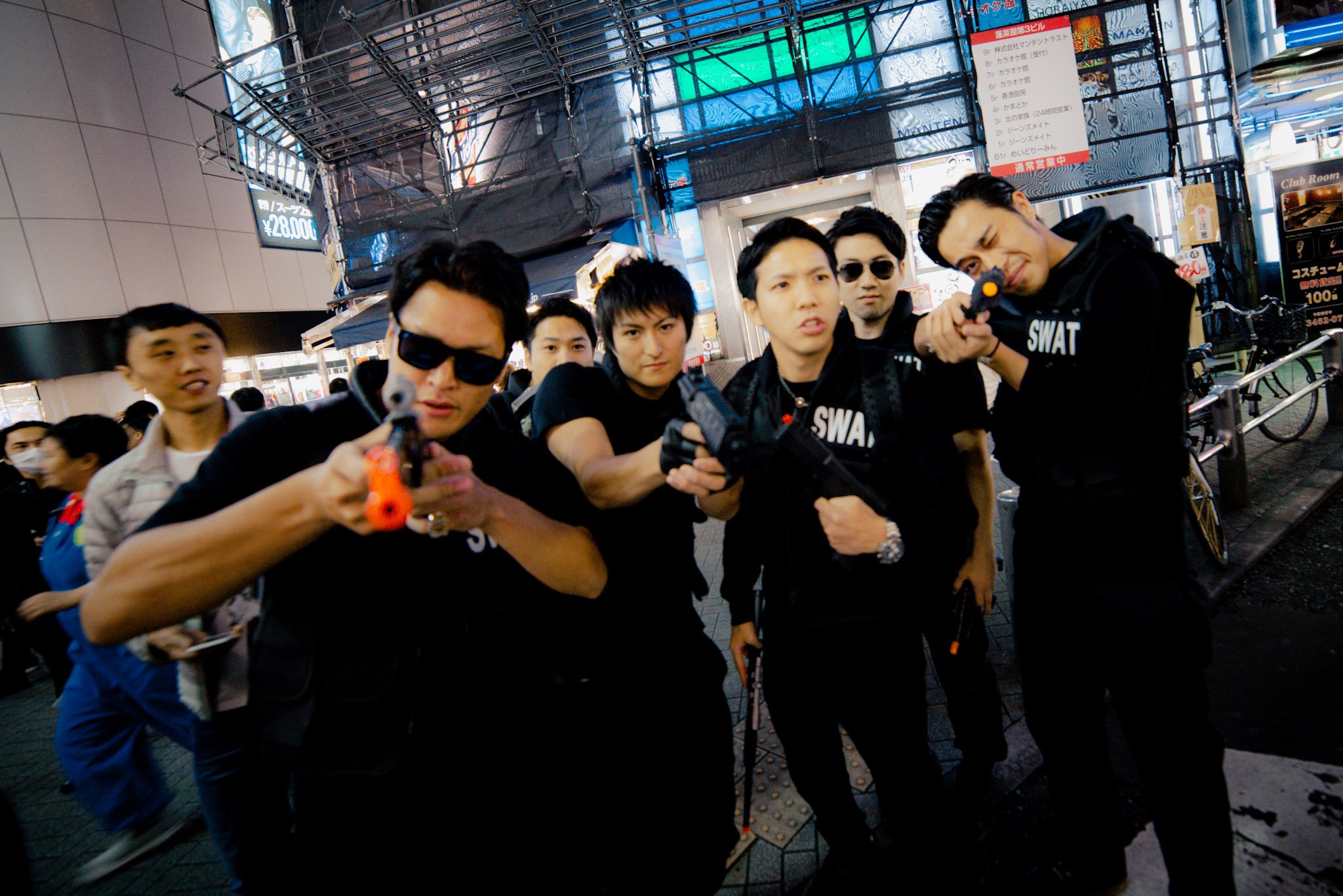
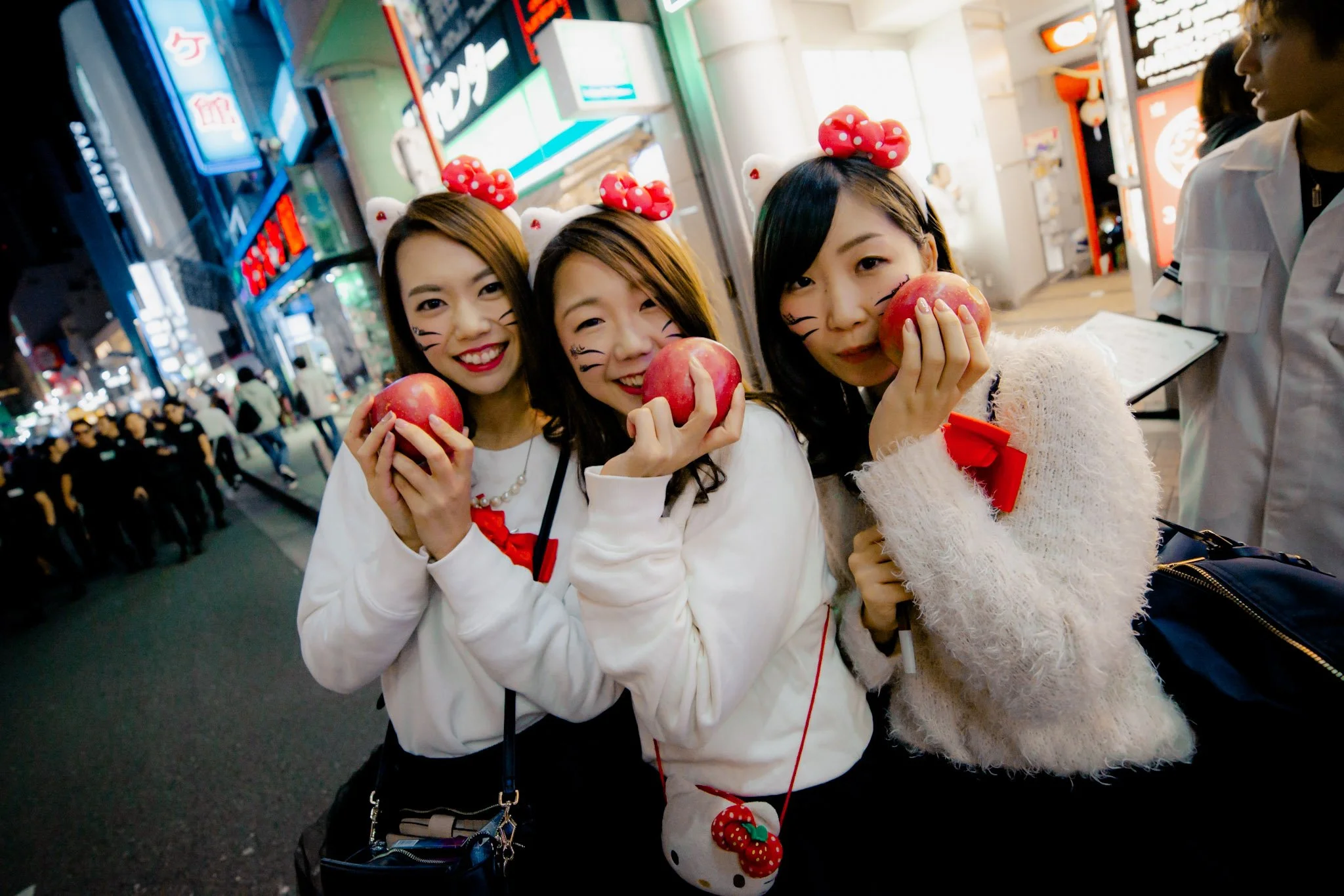
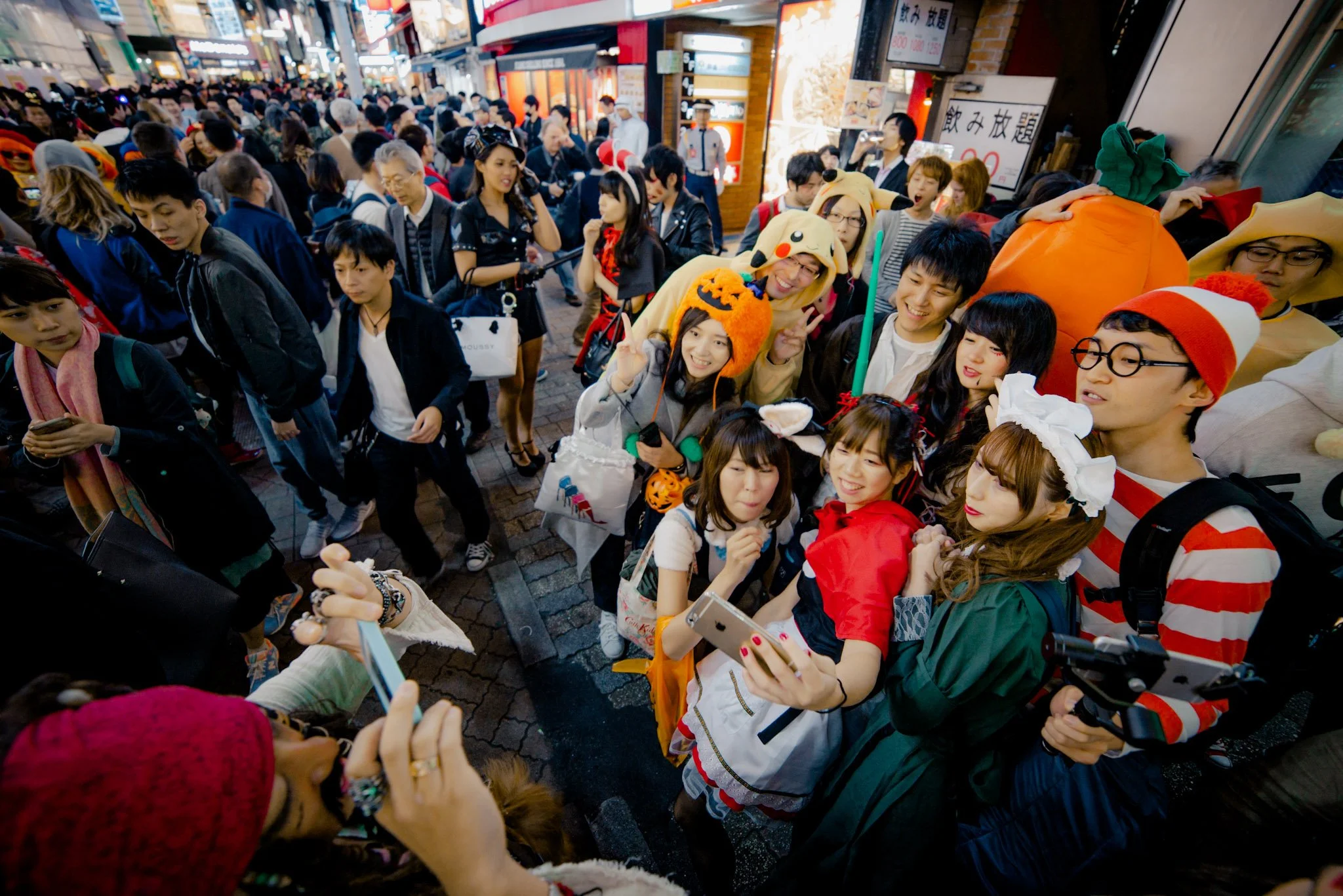
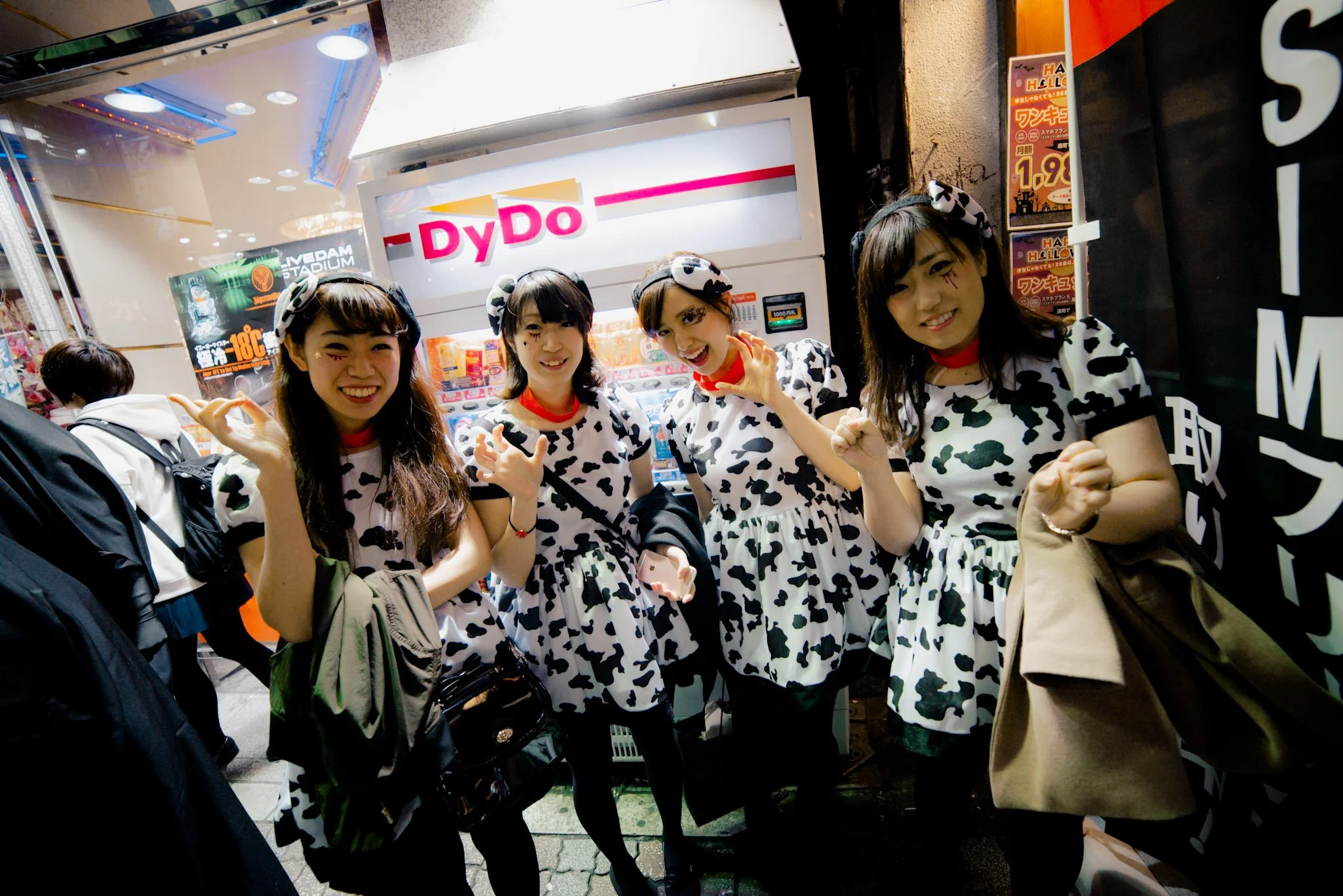
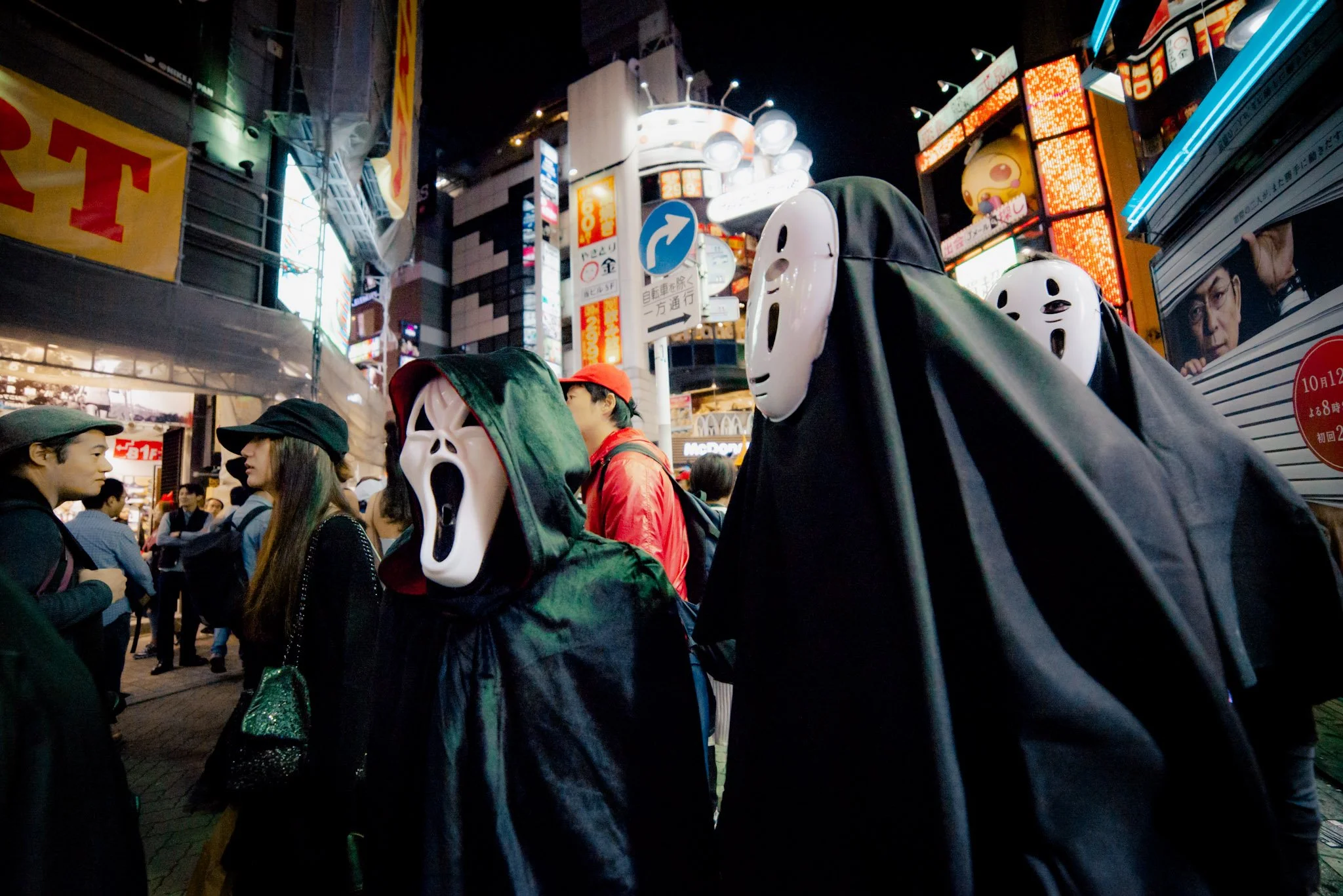
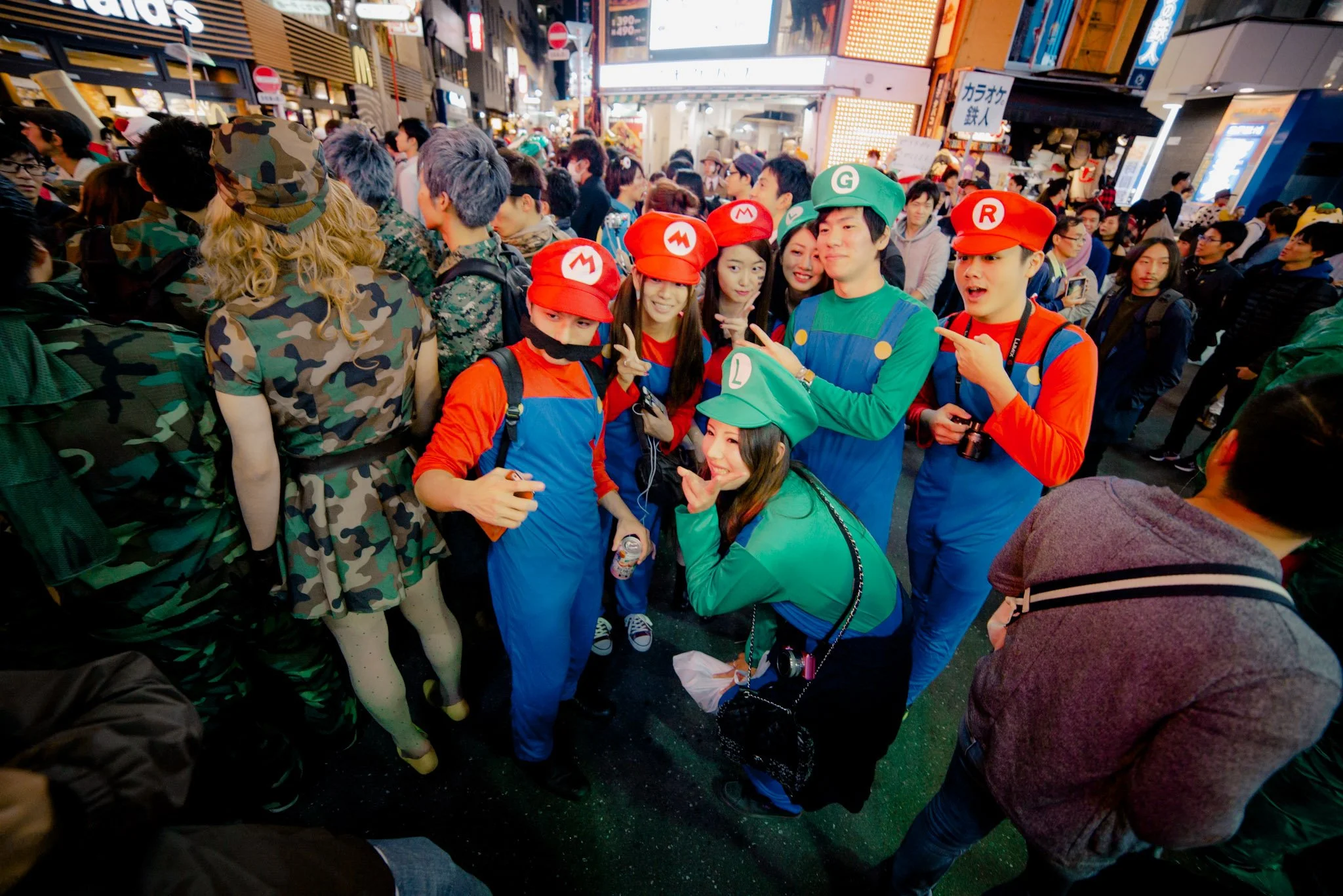
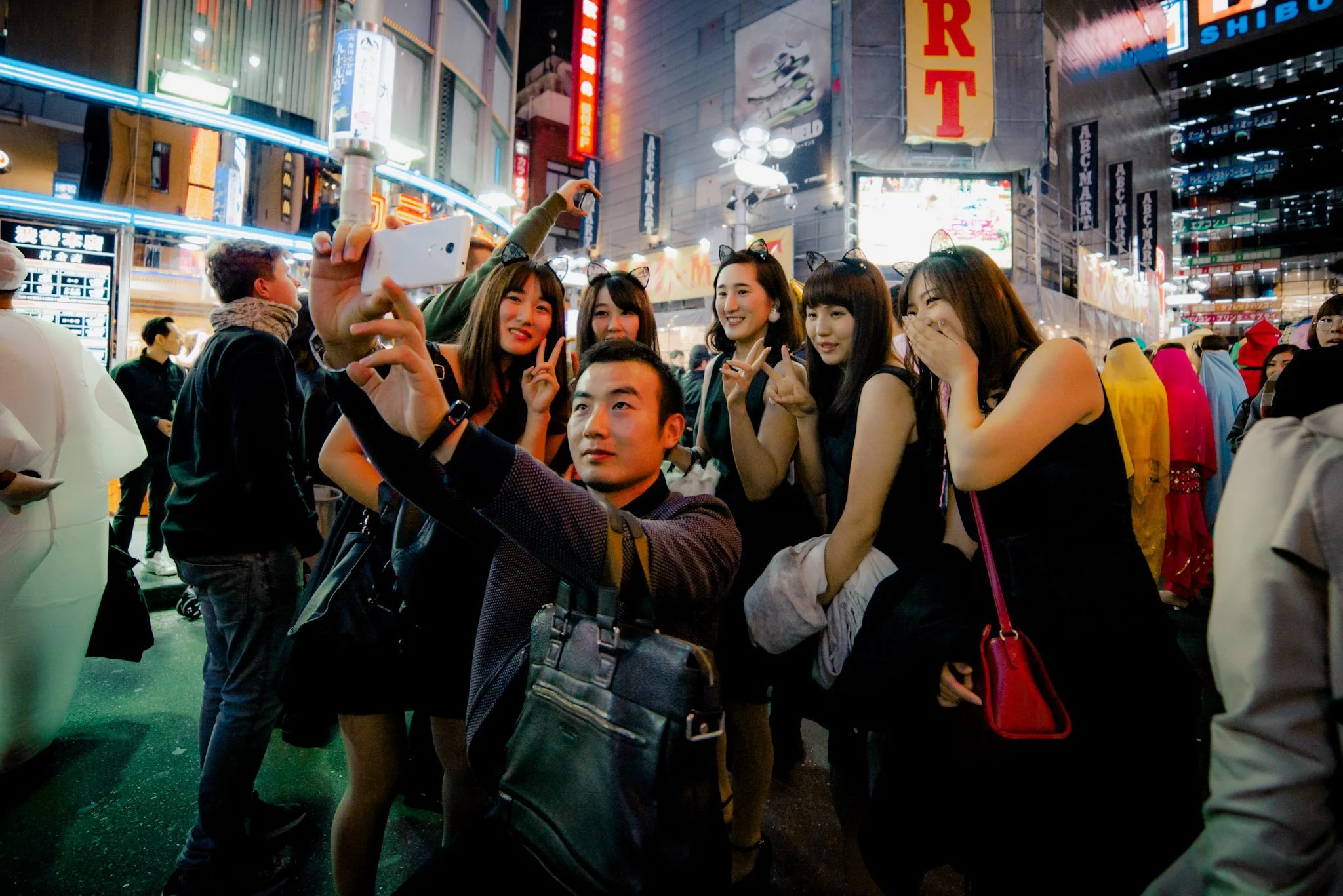
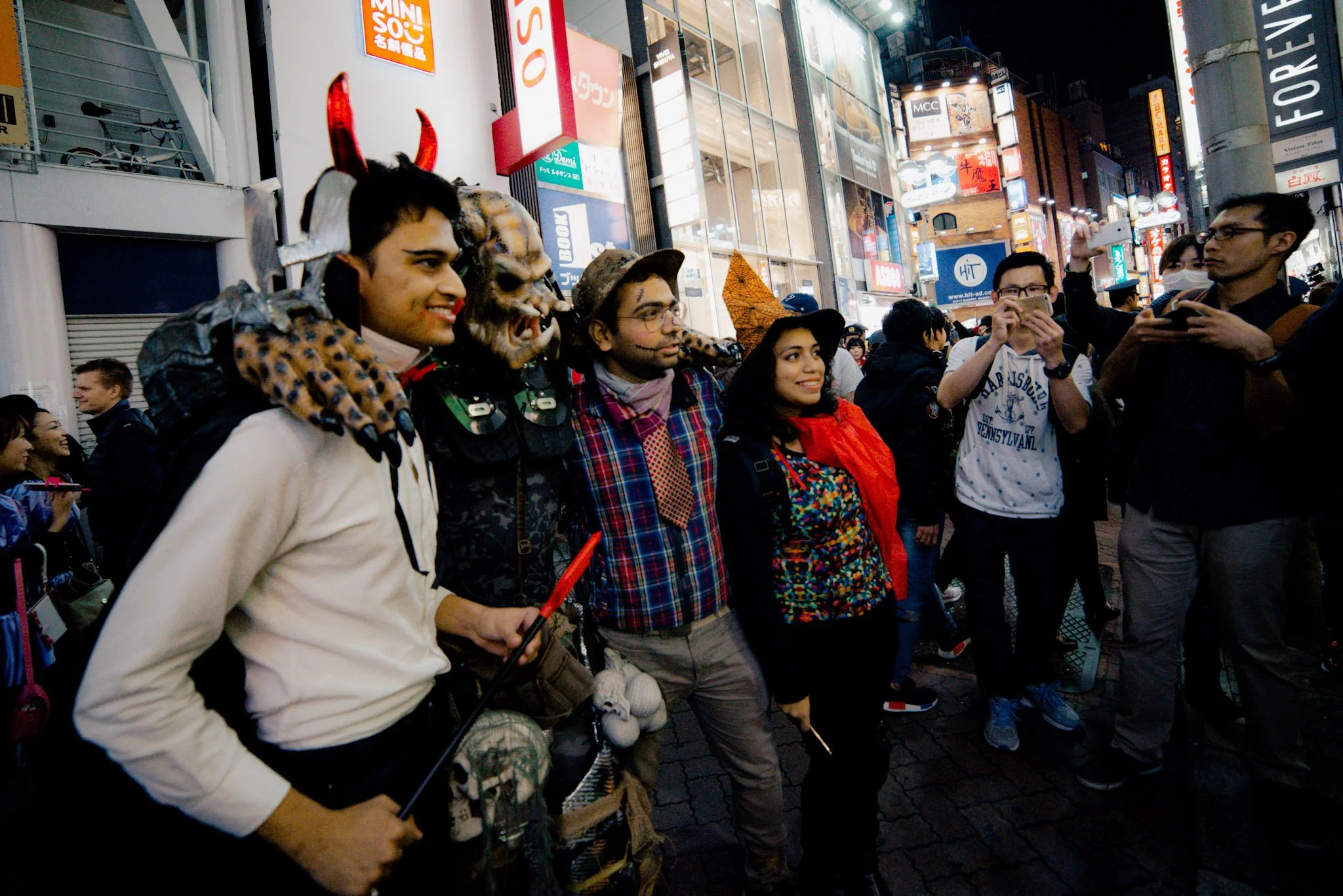
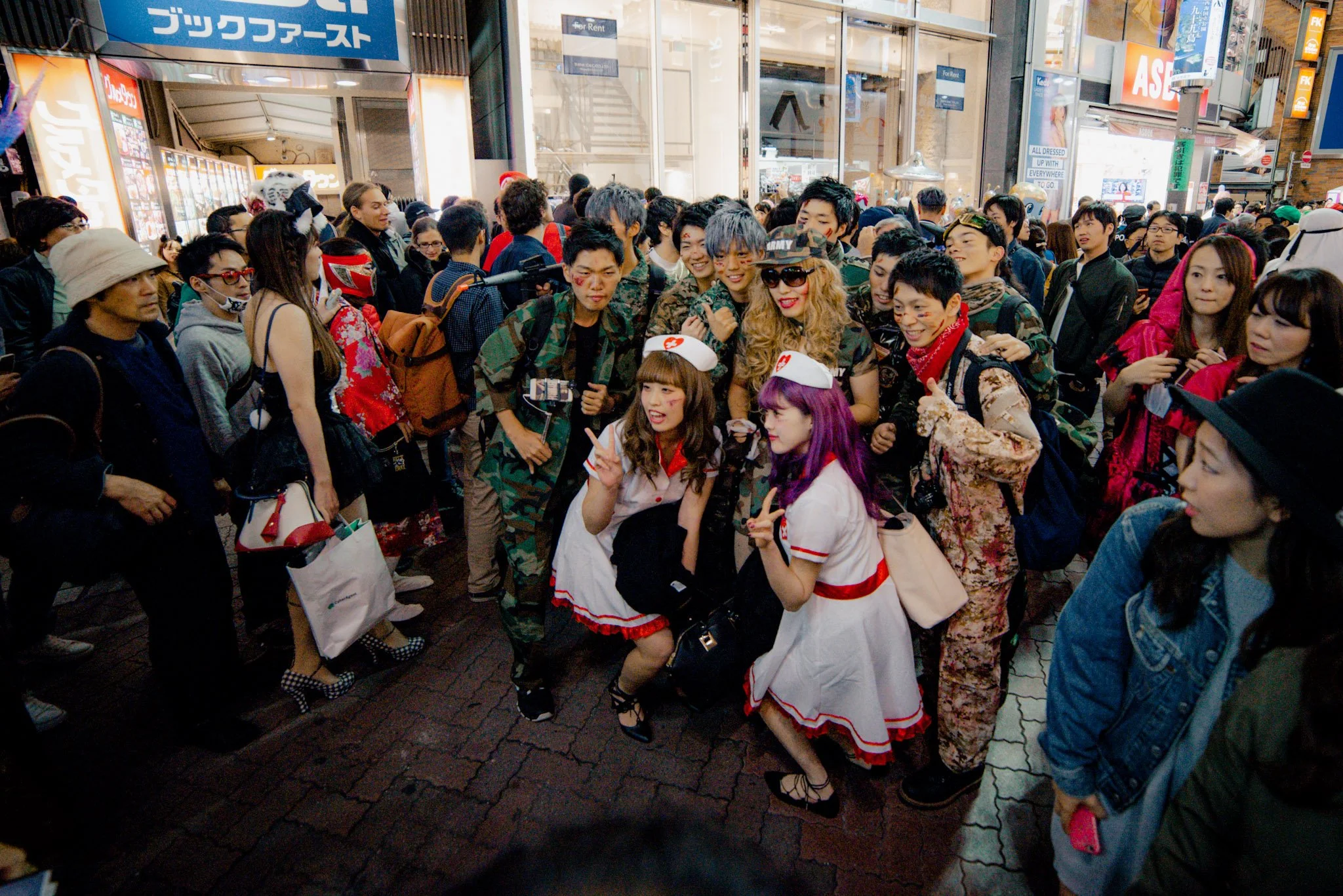
Crossing into Shibuya at that moment felt electric, and any tension I may have felt quickly turned into pure joy. Everywhere you looked, people were smiling, taking photos, showing off costumes — everything from cheap store-bought outfits to elaborate cosplay-level creations. As someone who gets fired up about photography and exploration, it was a dream to attend.
A Photographer’s Perspective
My friend and I weren’t in costume, of course, but that didn’t matter. The fun was simply in being there — walking through the crowd, taking photos, and soaking in the energy.
What really stood out to me was how open and friendly everyone was about being photographed. I tend to be a bit hesitant about approaching people for a photo, but at Shibuya Halloween, that hesitation disappeared. I feel like most people understand that being seen and documented is part of the experience of being in costume, and so events like this make it easier for me to approach people and ask for a photo.
Honestly, the number of awesome costumes makes it hard for me not to ask. I’m a huge fan of pop culture, so naturally, cosplay is something that strikes a cord with me. Being able to capture an IRL character (especially when executed well) is worth the little bit of discomfort or social awkwardness that comes with the exchange.
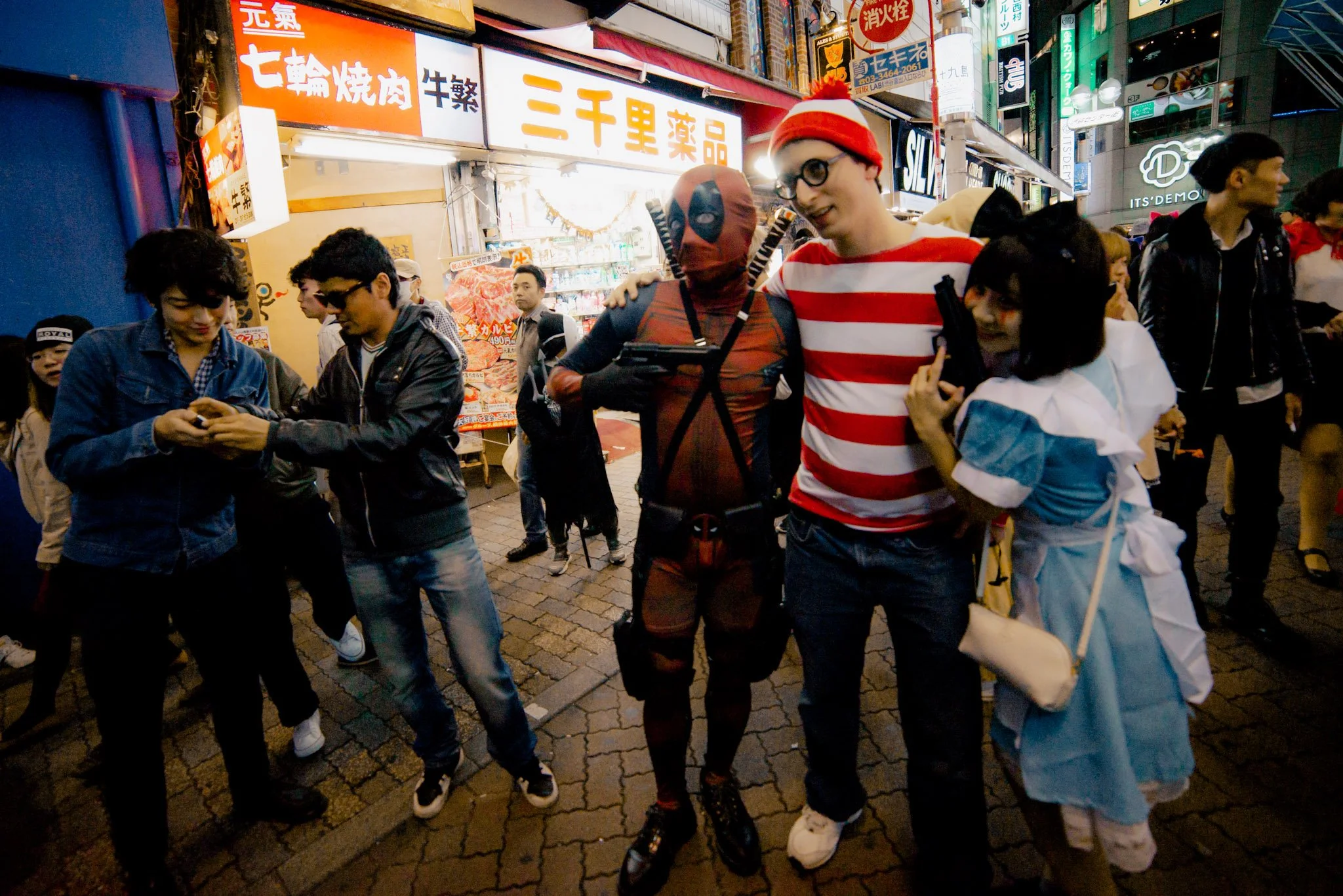
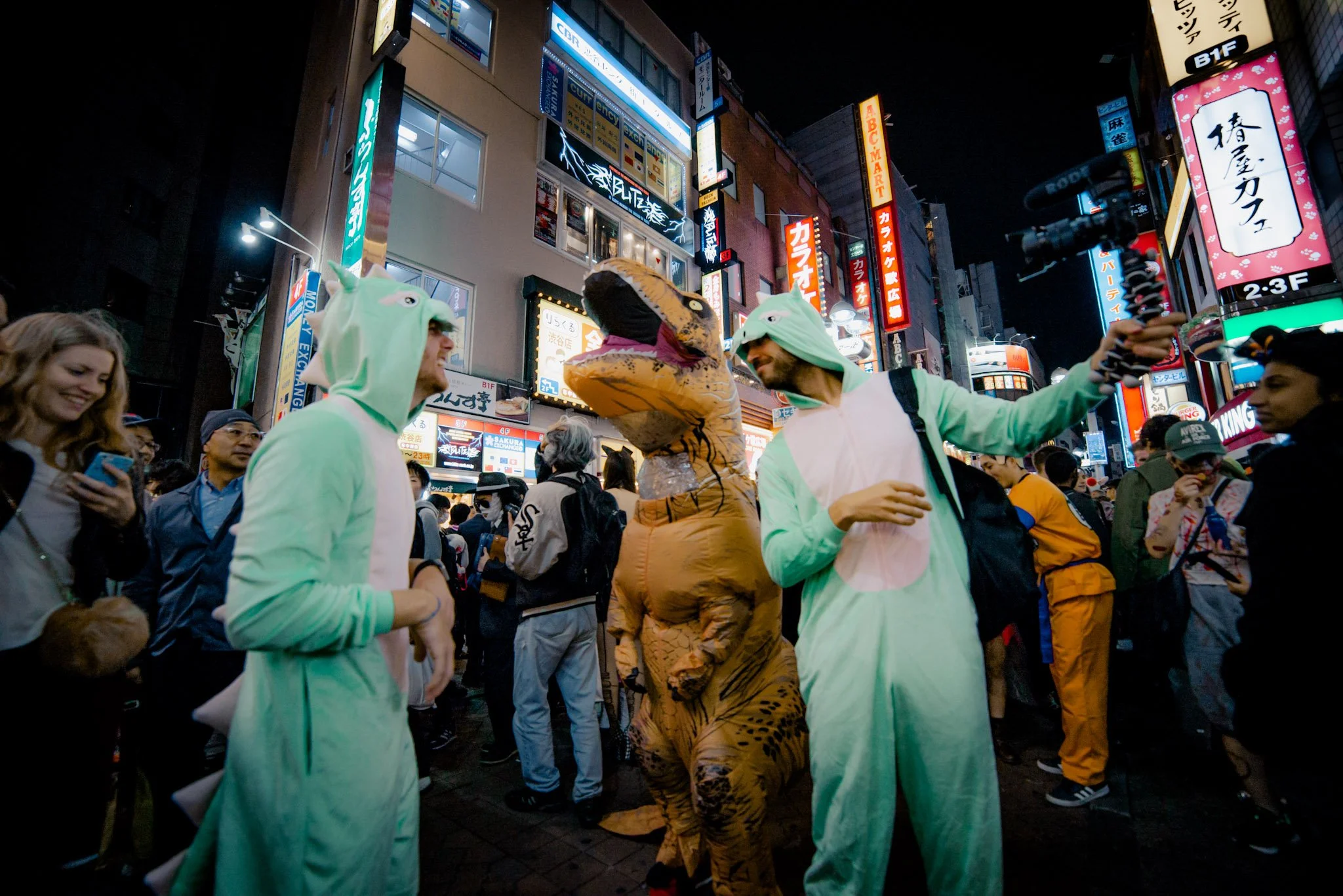
There’s something incredibly fun about a bunch of Friezas and Pikachus hanging out together in Tokyo.
From a photography standpoint, it was incredible — a wealth of amazing subjects and lighting conditions that didn’t fight me. As far as subjects go, every corner offered a new scene: costumed characters posing under city lights, friends laughing in front of local businesses, spontaneous mashup circles forming in the middle of the crowd. I feel like I got something great no matter where I pointed my camera, and since there was a ton of light, I didn’t have to worry too much about settings- just point and shoot.
Reflections on the Event’s End
It’s strange to think that this same event is now essentially gone. Again, it appears people are still attending, but there’s no doubt that the local government is trying to kill it. It’s sad, because looking back, nothing about that night felt unsafe or unruly. The police presence kept things running smoothly, and the crowd — while massive — was positive and cooperative.
I completely understand the need for public safety and organization, but I can’t help but feel nostalgic for what Shibuya Halloween represented — a spontaneous, creative expression of Tokyo’s holiday culture. It was a little chaotic, yes, but in the best possible way.
Haunted Little Tokyo: A Local Alternative
These days, I’m at a different stage in life — family, responsibilities, and a little one at home mean late-night adventures like that are on hold for now. But I still find myself craving that same festive energy.
Here in Los Angeles, there’s an event called Haunted Little Tokyo, which I’ve always wanted to check out. It’s a much smaller Halloween celebration centered around LA’s Little Tokyo district, but from the photos I’ve seen, it gives off a similar vibe — costumes, street energy, and that mix of Japanese culture and community celebration. I won’t be able to check it out any time soon, and so I can’t say if it would scratch the same itch. But I at least did want to mention it as something local to consider if you’re interested.
Closing Thoughts
Looking back, that night in Shibuya remains one of my favorite travel memories — a time when Tokyo’s creativity and humanity were on full display. I hope that, one day, the event will return in its full glory — and that I’ll be fortunate enough to attend again.
Until then, I’ll keep revisiting my photos and remembering what it felt like to be part of that incredible night. Please take a look at the rest of the shots from that night below!
If you’ve experienced Shibuya Halloween yourself, drop a comment or share your photos — I’d love to see them. You can find me on Instagram and Threads.
Happy Halloween — and here’s to the nights that remind us how creative and connected we can be.


Tokyo’s D1 Grand Prix: The Auto Event that Ruined Auto Events for Me
In 2016, I stumbled upon the D1 Grand Prix in Tokyo. It was my introduction to Japanese automotive culture (you know, outside of games and anime), and I loved nearly everything about it.
A few years back, I wrote a semi-critical account of my visit to Nissfest, a Nissan enthusiast event in Irwindale. Normally, I try to keep things positive, but that day I couldn’t shake my disappointment. Don’t get me wrong- I did have some fun at this event. But at the same time, my enjoyment was dwarfed by constant little annoyances and disappointments. It was baffling, because I’ve always loved going to car shows, and I spent my fair share of time at street races in my youth. Yet, something was different now, and looking back, I think my expectations were unfairly colored by my first Japanese auto event: the 2016 D1 Grand Prix in Tokyo.
D1 was my introduction to Japanese automotive culture (you know, outside of games and anime), and I loved nearly everything about it. Naturally, I thought I’d feel the same way at Nissfest, as the two events share a lot in common. Unfortunately, my experiences couldn’t have been more different, and this mismatch is making me wonder if I’m no longer suited to American tuner culture at all.
What Is the D1 Grand Prix?
If you’re reading this because “D1 Grand Prix” caught your eye, you probably know more than I do. My limited knowledge comes straight from Wikipedia: “The D1 Grand Prix (D1グランプリ), abbreviated as D1GP and subtitled Professional Drift, is a production car drifting series from Japan.”
The rest of the wiki article is a bit lengthy, but in short, D1 is one of Japan’s most prestigious and popular drifting competitions, with events that have even expanded outside Japan.
But here’s the twist: I didn’t go to D1 because I was a fan of drifting. In fact, I had absolutely no business being there. I stumbled into it completely by accident.
How I Ended Up at the D1 Grand Prix
My friend and I were in the Odaiba’s DiverCity shopping mall to pick up Tokyo Disneyland tickets from the Disney Store. Upon leaving, we went over to see the massive life-size RX-78 Gundam statue (back then it wasn’t the Unicorn Gundam yet) located just outside the mall. While I was busy taking photos, I noticed a line of people forming nearby.
The line got really long, fairly quick…
Most people would’ve shrugged and moved on. But I was in an adventurous mood and dragged my friend over to see what it was all about. Looking back, I’m actually kind of surprised got in line. My friend and I didn’t speak Japanese (at least not fluently) and the entrance sign was a little ambiguous, so there was no way to know what was in store for us.
That random decision paid off, however, as it turned into one of my favorite memories of that Tokyo trip.
Experiencing D1 Firsthand
The D1 Grand Prix was unlike any car event I’d experienced before. From the moment I walked in, I was hooked. Drift demonstrations, vendor booths, and rows of incredible cars—it had everything. One display even featured the (then new) 2nd-Gen Honda NSX (a real treat, as a fan of the first gen model). Best of all, it didn’t feel too crowded (which is unusual for anything in Tokyo, but I didn’t question it).
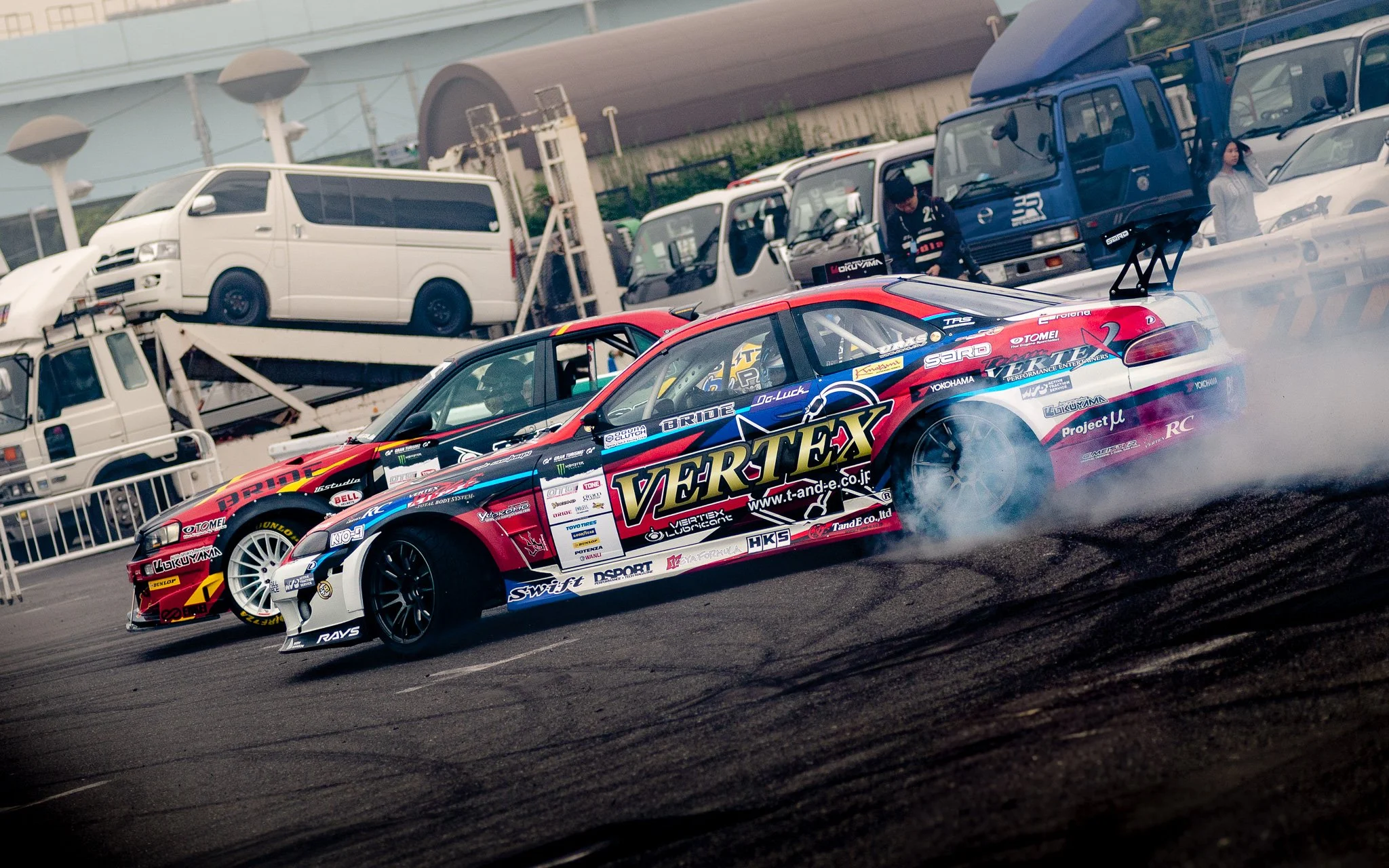
The drift demos were a big highlight. Cars would drift side-by-side in a small area adjacent to the vendor booths and event stage. Not just that- fans could even sign up to ride in the cars during the demonstrations, though unfortunately I couldn’t join because the forms were all in Japanese. Still, I had a blast just spectating and taking photos. The viewing area sat right up against the action, which worked out perfectly since was limited by the three prime lenses I brought for this trip: a 14mm ultra-wide, a 50mm, and a 90mm macro. You can read more about my mistaken rationale regarding these lenses in an earlier post, but suffice to say, it made some scenarios a challenge to shoot. Thankfully, that wasn’t the case with this event.
How D1 Differed From Events in the U.S.
What struck me most wasn’t the cars—it was the atmosphere. Compared to the tuner-ish events I’d attended here at home, D1 was so much more laid back. It was incredibly refreshing.
The crowd was also diverse: kids, teens, young adults, and even old guys. Everyone seemed equally excited to be there, and the vibe was energetic without being obnoxious. Unlike many of the car shows I’ve attended in the U.S., there were no burnouts, no shouting matches, no blaring sound systems competing for attention, and absolutely no “let’s see whose exhaust is loudest” contests. Just cameras snapping, music from booths, and plenty of chatter and laughter.
That absence of noise and chaos made the whole event a joy to experience. After attending D1, it’s no wonder that Nissfest left me feeling so sour.
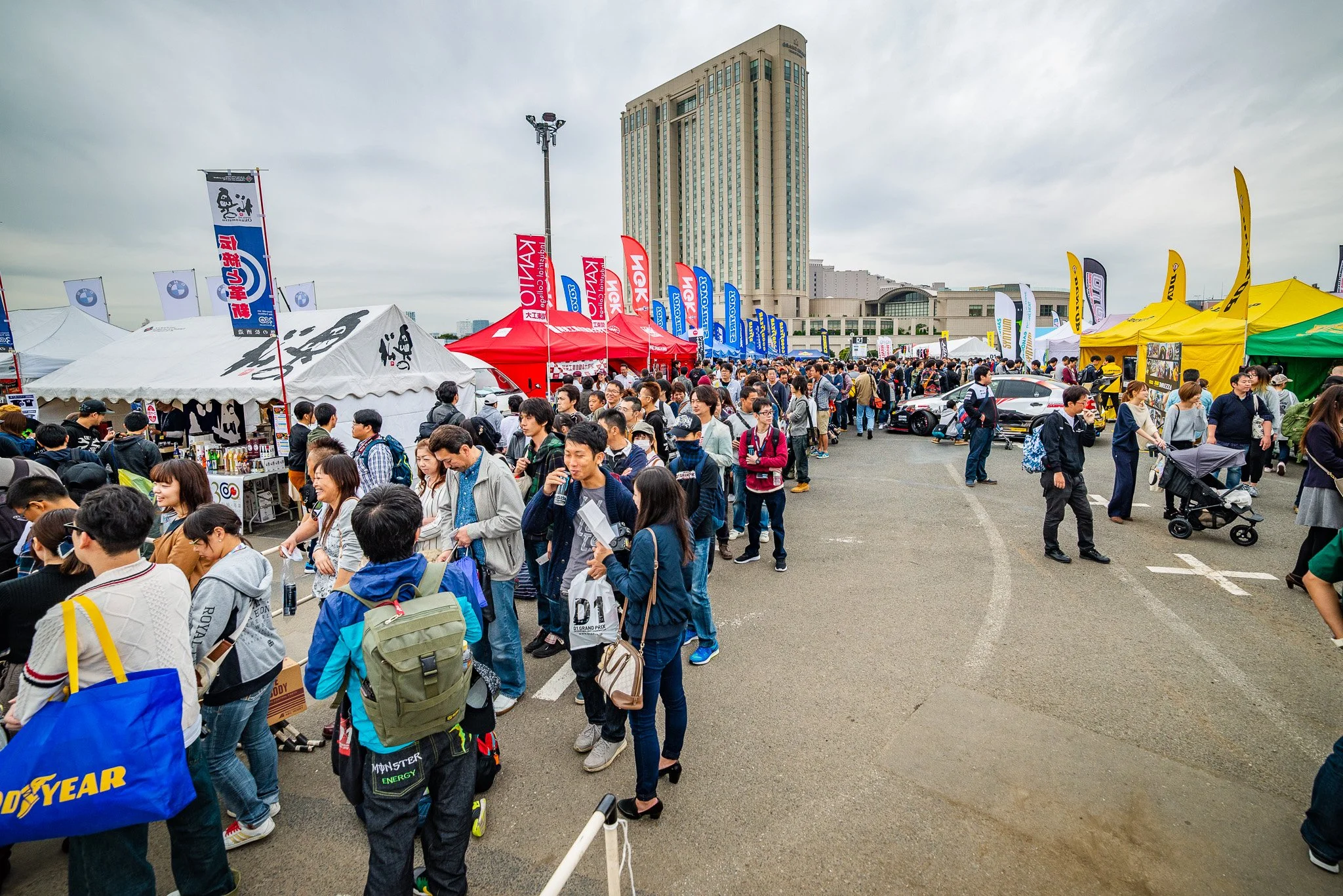
The crowd at D1. Orderly lines and a calm atmosphere.
Meanwhile, here is a crowd shot at the last Nissfest I attended. I’m pretty sure this was an impromptu revving contest.
The Not-So-Perfect Side
Of course, not everything was flawless. The main “Grand Prix” racing portion required separate tickets, and thanks to the language barrier, I never figured out where to buy them. I also wished the event itself had been larger, since the booths and displays were so much fun to explore.
And then there were the camera guys. Yeah, I get that booth models are part of the auto scene, but some of these dudes straight up hound the ladies for photos. And its not just one or two guys. At one point there was a model showcase on the stage, and a sea of cameras arise whenever they posed for the crowd.
Them’s a looooot of cameras…
Truthfully though, I’m still undecided on how I feel about it. It’s why they’re there, after all (both the models and photographers), and the disrespectful photographers were more the exception than the norm. But it still felt off to me, and even a little cringe. Nonetheless, I’m an outsider to both D1, and the Japanese auto scene as a whole. So its possible that all this is completely normal and expected here.
This is a fairly calm-looking shot, but there was actually a random photographer to the right barking commands at them.
Final Thoughts: Why D1 Still Stands Out
D1 set a new bar for me. It had everything I enjoyed most from car events, but with almost none of what I dislike. And once you have an experience like that, its kind of hard to go back.
These days, I stick to itasha displays and classic car shows. These kinds of events have more of the kind of energy that I vibe with now. They tend to be calmer, slower-paced, and they have more opportunities to really take in what they have to offer- cars, art, and great community.
And too be fair, not all American tuner events are bad. The truth is that I’m probably just aging out of the scene. I’m not in my twenties anymore, and I have to accept the fact that my tolerance for loud noises, rubber smoke, and an overall lack of consideration has faded. But 20 years ago? I would have been all over an event like Nissfest and loving every bit of it.
Thankfully, D1 showed me that there are still events out there for me- I just gotta go looking for them. By following my curiosity, I stumbled into one of my favorite Tokyo memories. Even now, years later, it remains a high point for me, and an experience that I hope to capture again some day.
Remembering Robot Restaurant: Tokyo’s Most Bizarre and Unforgettable Dinner Experience
Picture the craziest mix of robots, lasers, and Japanese pop culture all thrown into one show. That was Robot Restaurant - a mind-blowing entertainment spot in Tokyo that had everyone talking about it. And while it only lasted for about a decade, this is one of those places whose memory will always live on in those who were lucky enough to experience it.
Picture the craziest mix of robots, lasers, and Japanese pop culture all thrown into one show. That was Robot Restaurant - a mind-blowing entertainment spot in Tokyo that had everyone talking about it. And while it only lasted for about a decade, this is one of those places whose memory will always live on in those who were lucky enough to experience it.
What Was This Place?
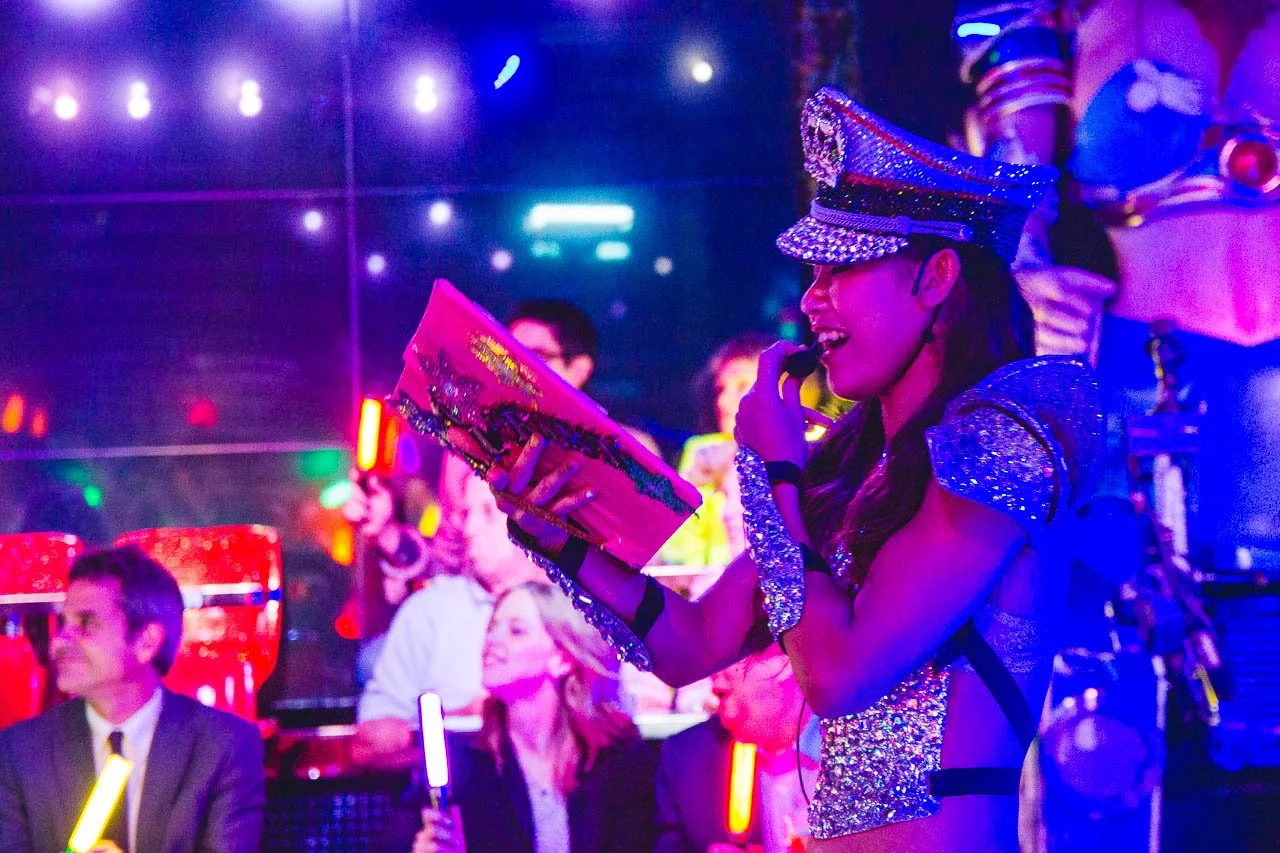
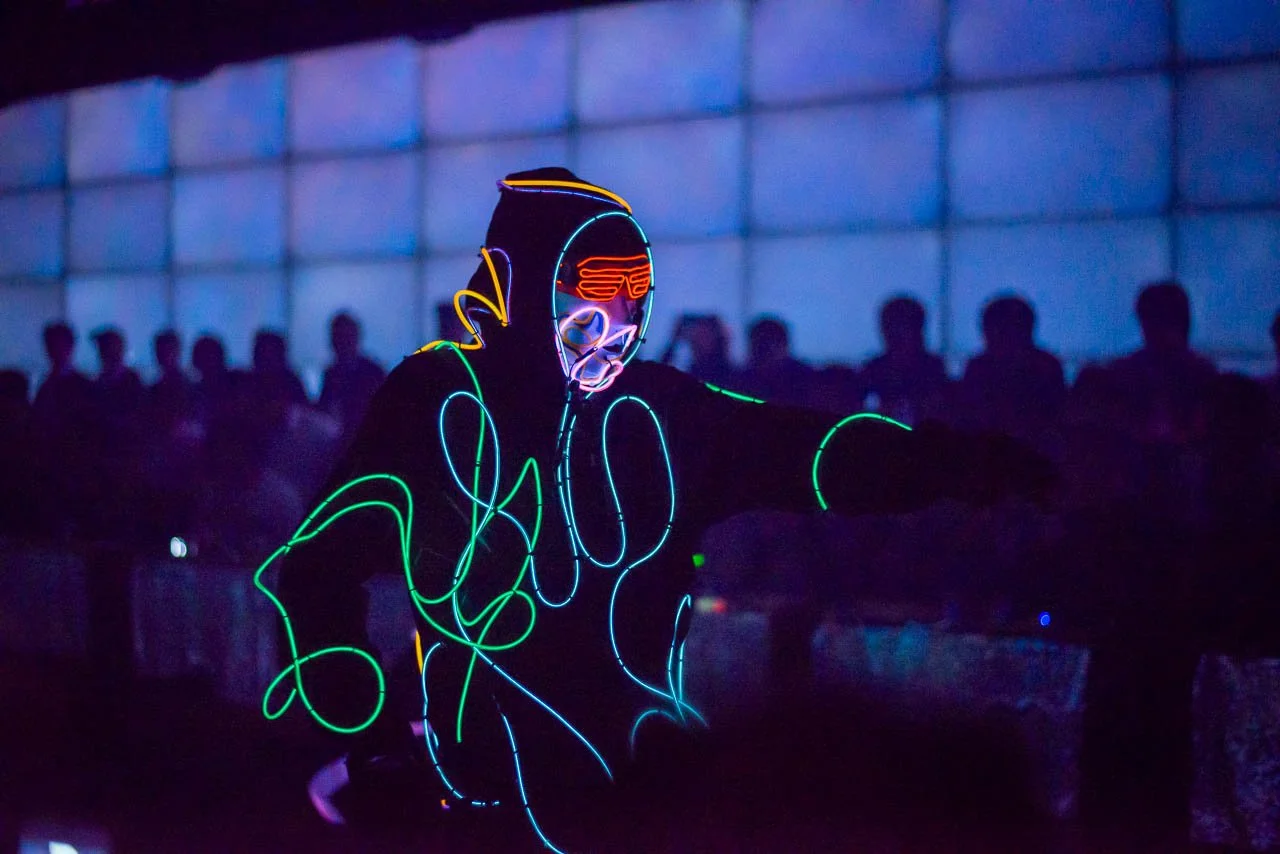
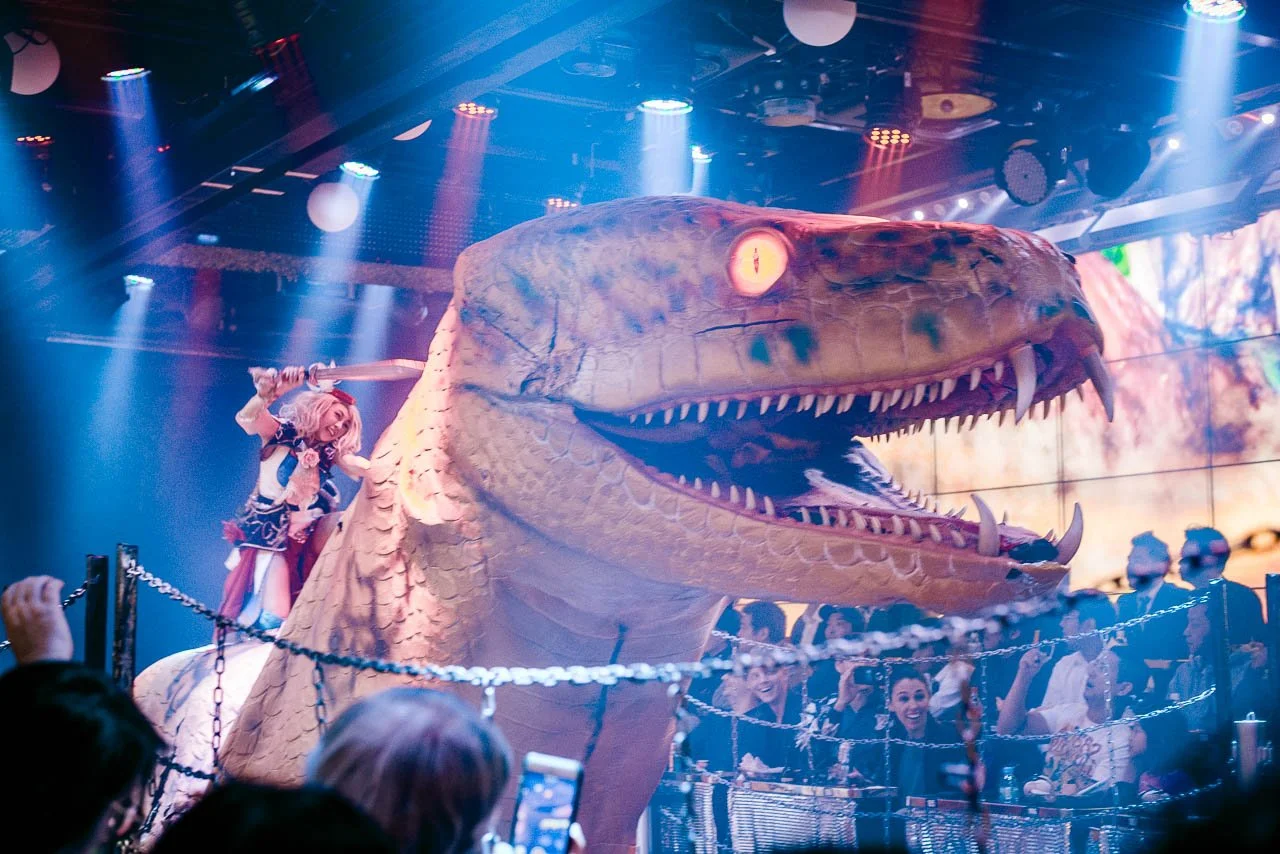
Robot Restaurant opened in 2012 in Tokyo's busy Shinjuku district. Don't let the name fool you - it wasn't really a restaurant (although food was available for purchase, if you wanted). Instead, this place was all about spectacle- giant fighting robots, traditional Japanese drummers and dancers, futuristic costumes, and glowing ninjas. While some people thought it was weird, many tourists couldn't get enough of it, myself included. I found it to be incredibly fun and a great way to start an evening in Tokyo.
I first saw Robot Restaurant on TV when Anthony Bourdain visited the venue on his show "Parts Unknown." He called it "the greatest show in the history of entertainment", and honestly, it wasn’t entirely hyperbole due to its “sensory overload” nature. The episode also alluded to the possibility that the restaurant was funded by the yakuza. I never saw any evidence of that personally, but it added to the allure of the place. An allure that made this crazy robot show stick with me, despite thinking that I would never get to see it myself.
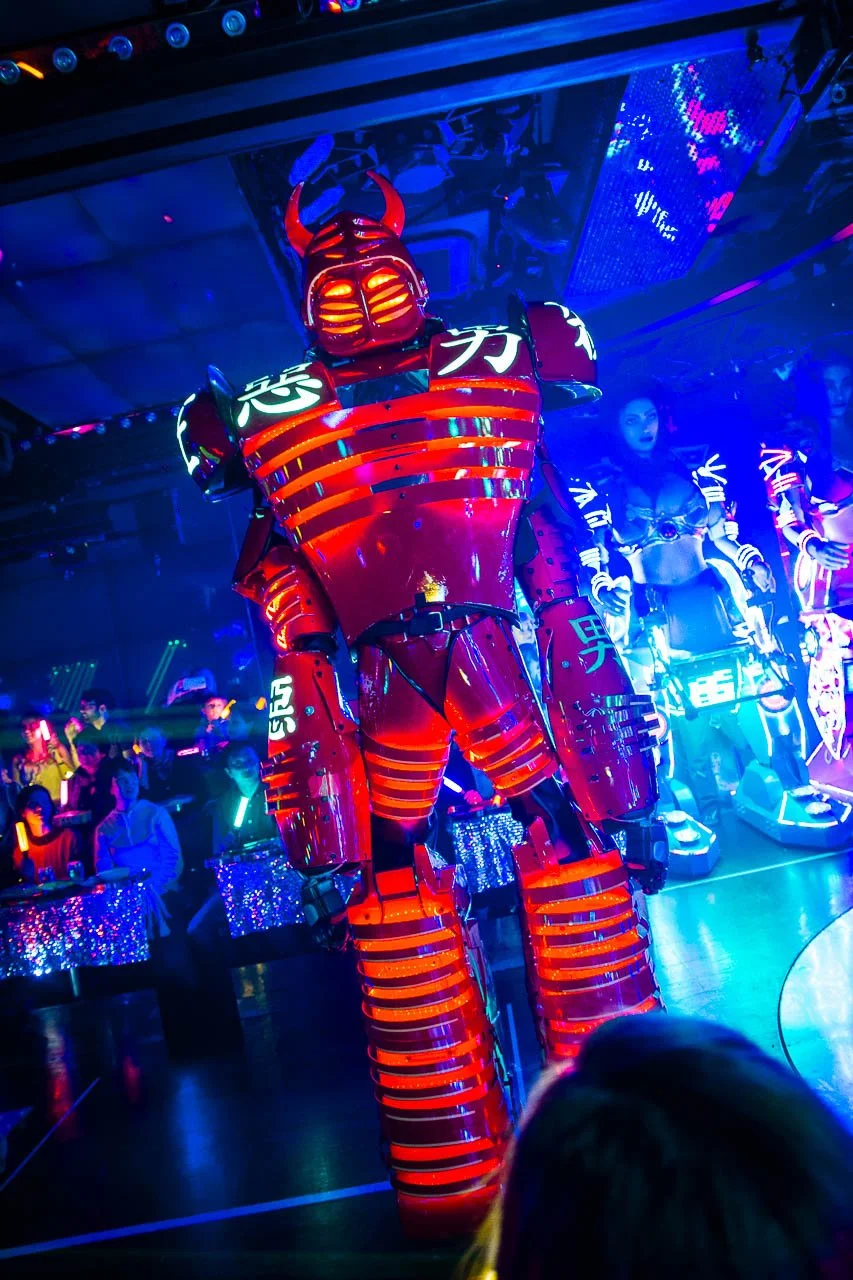
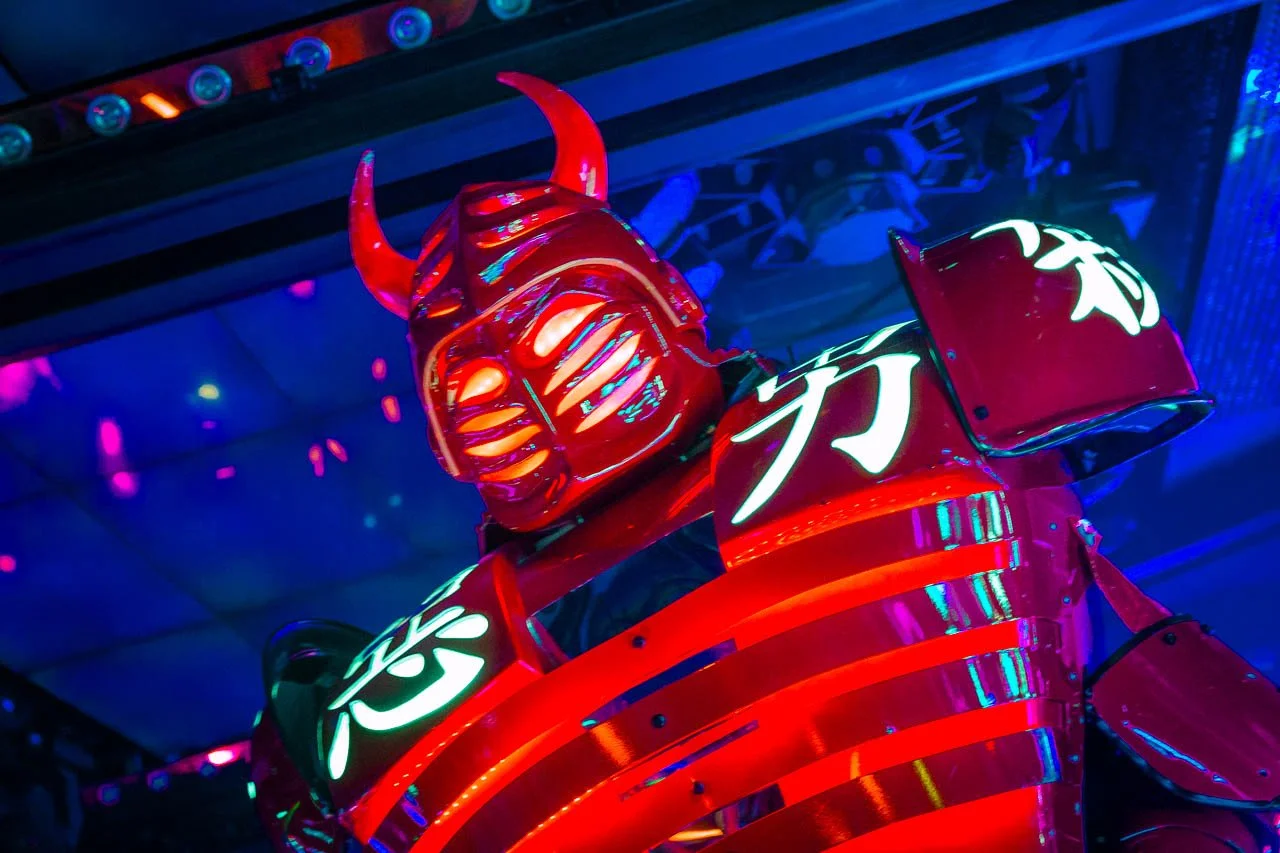
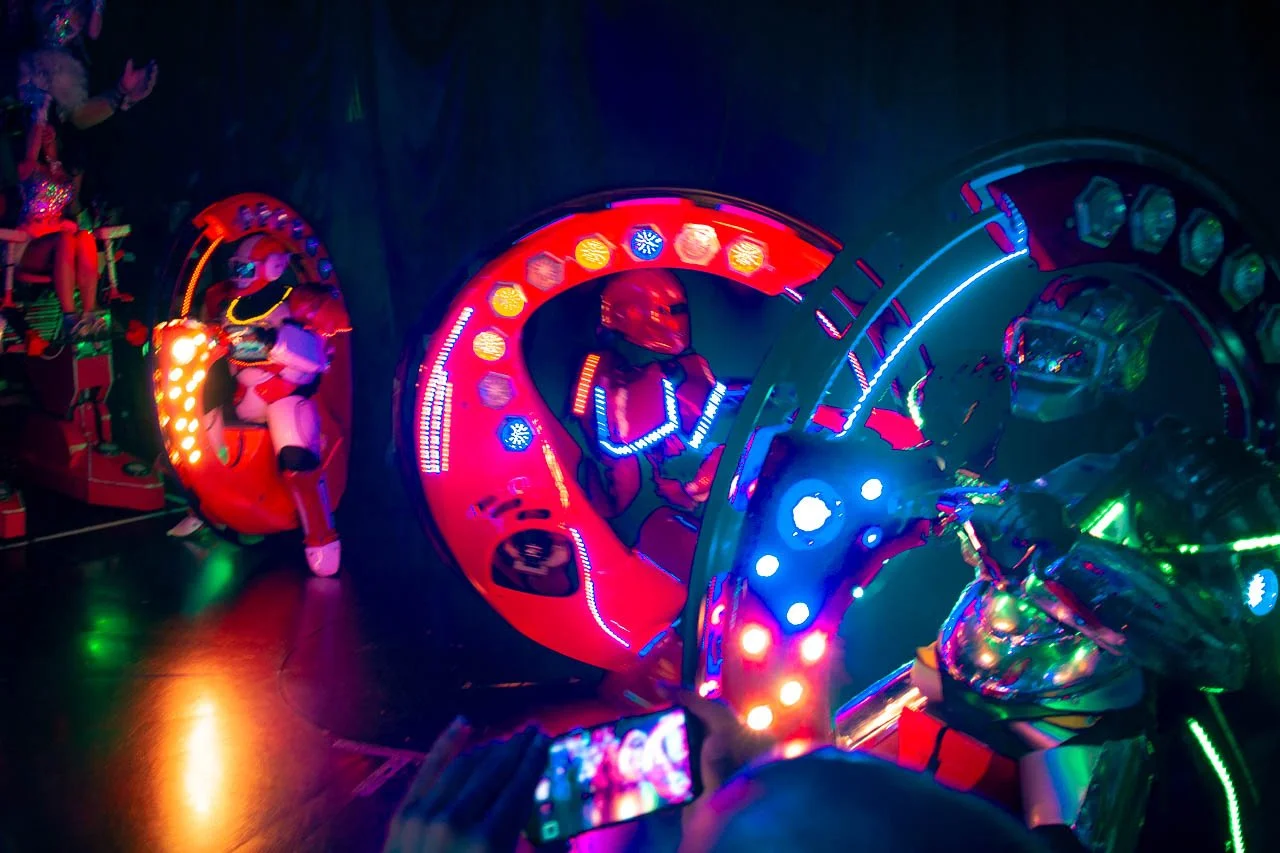
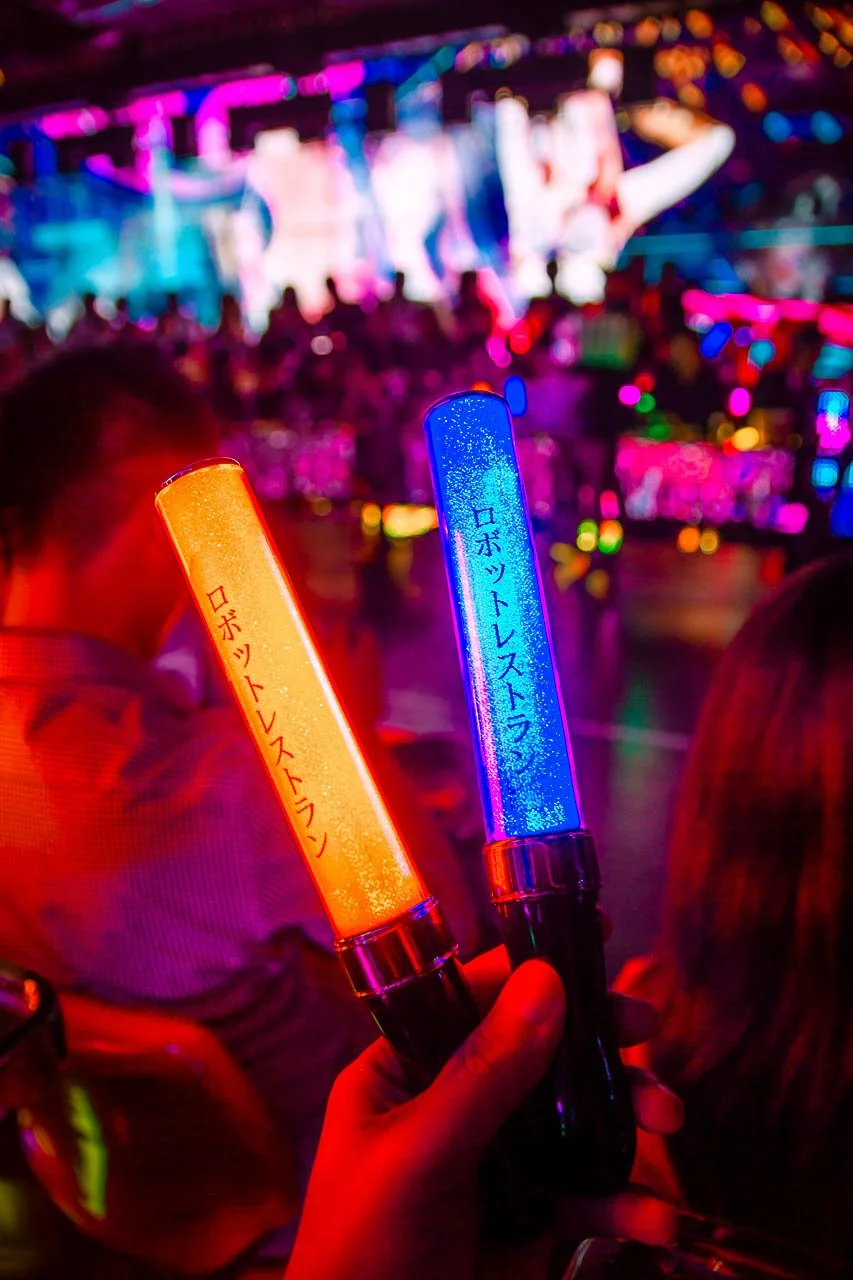
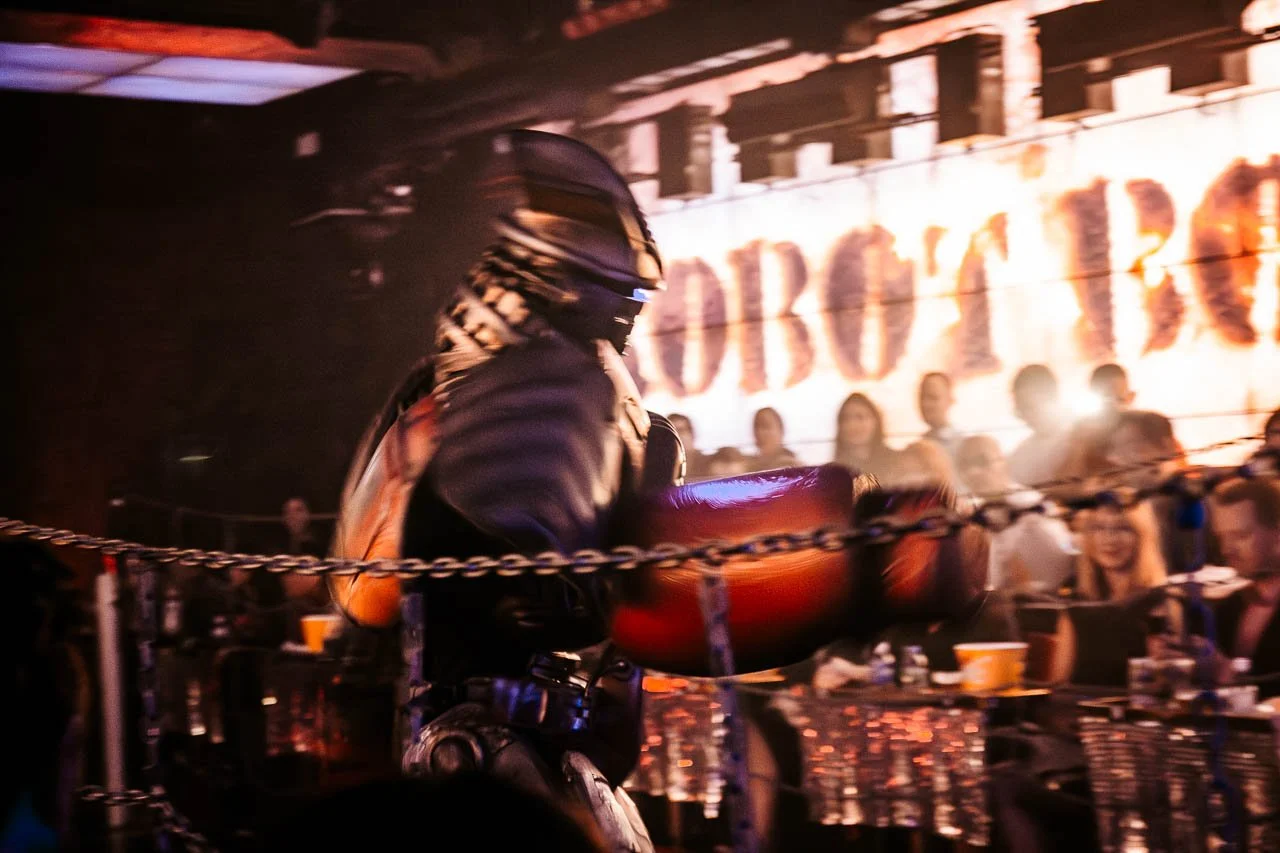
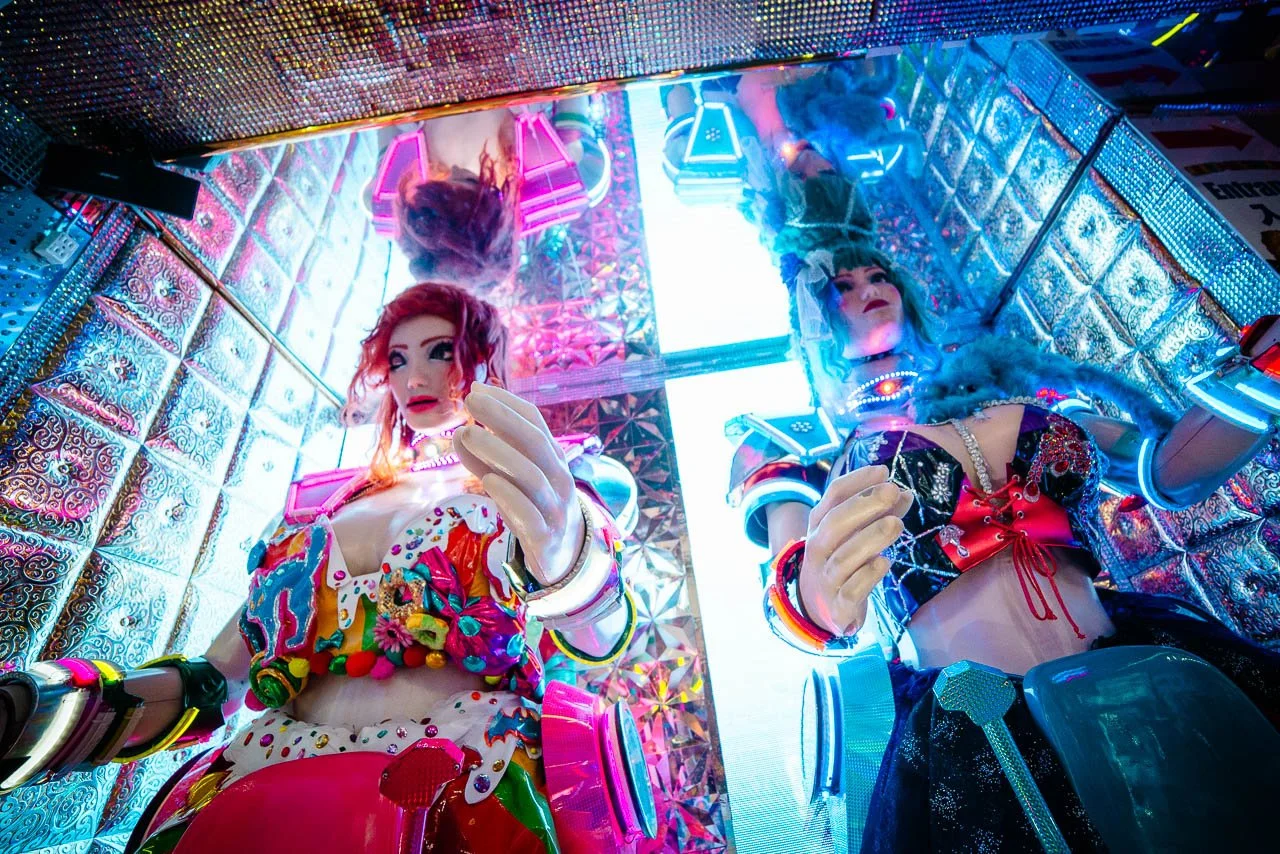
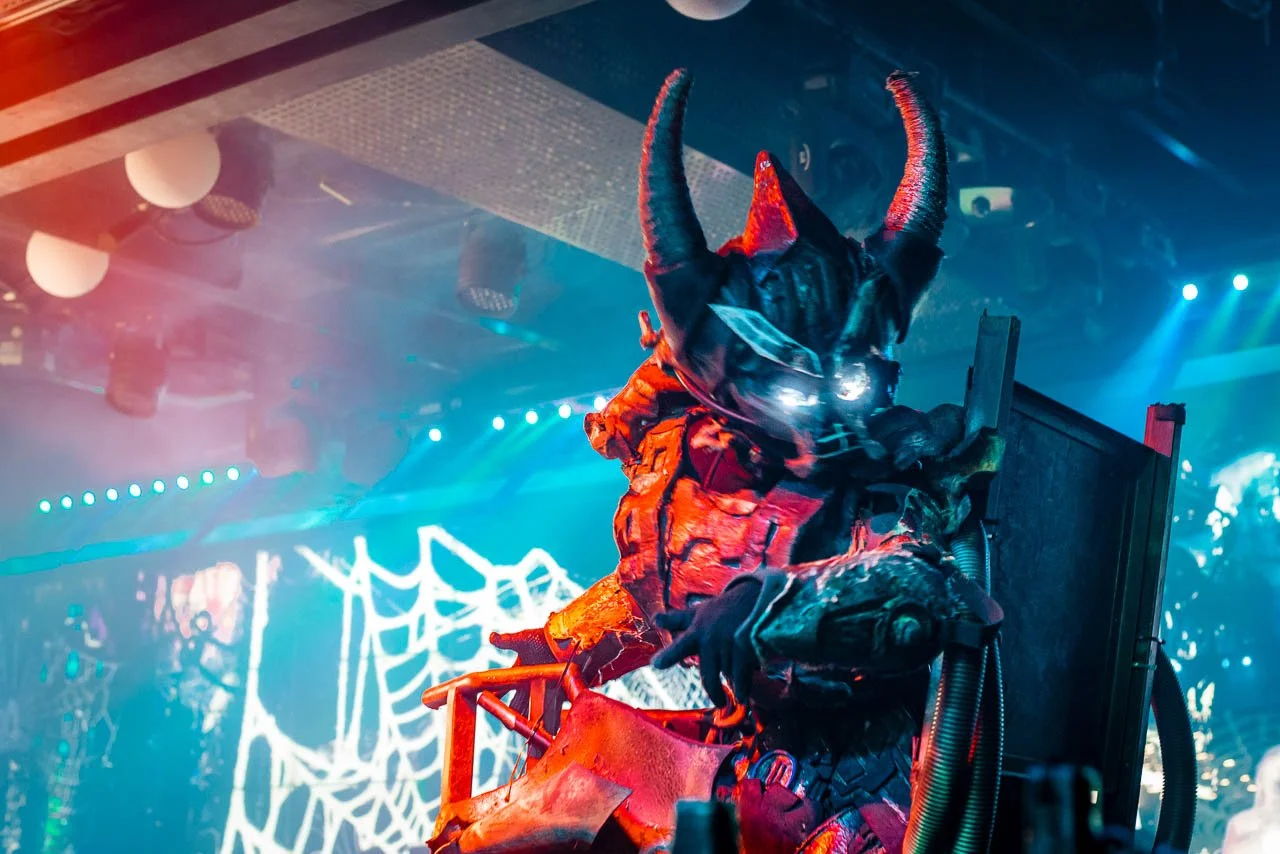
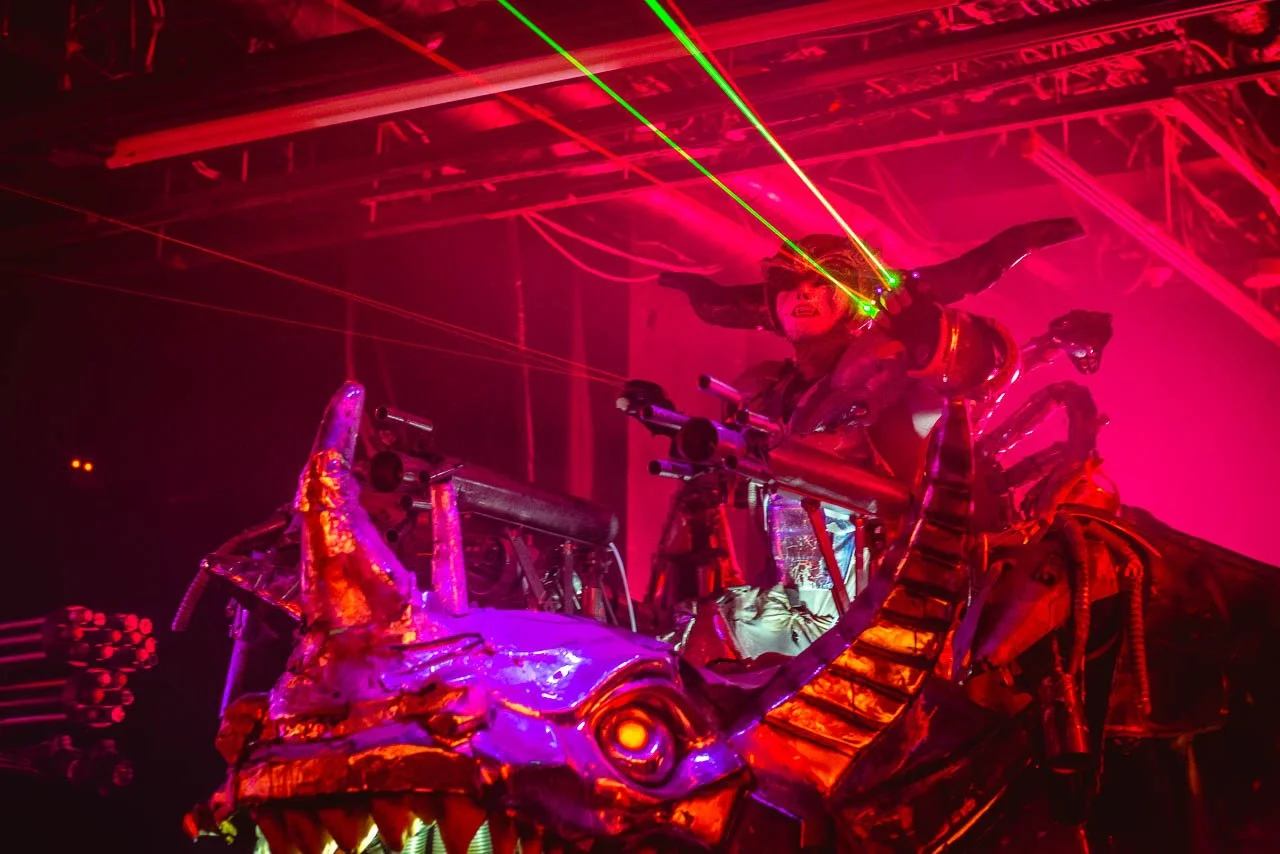
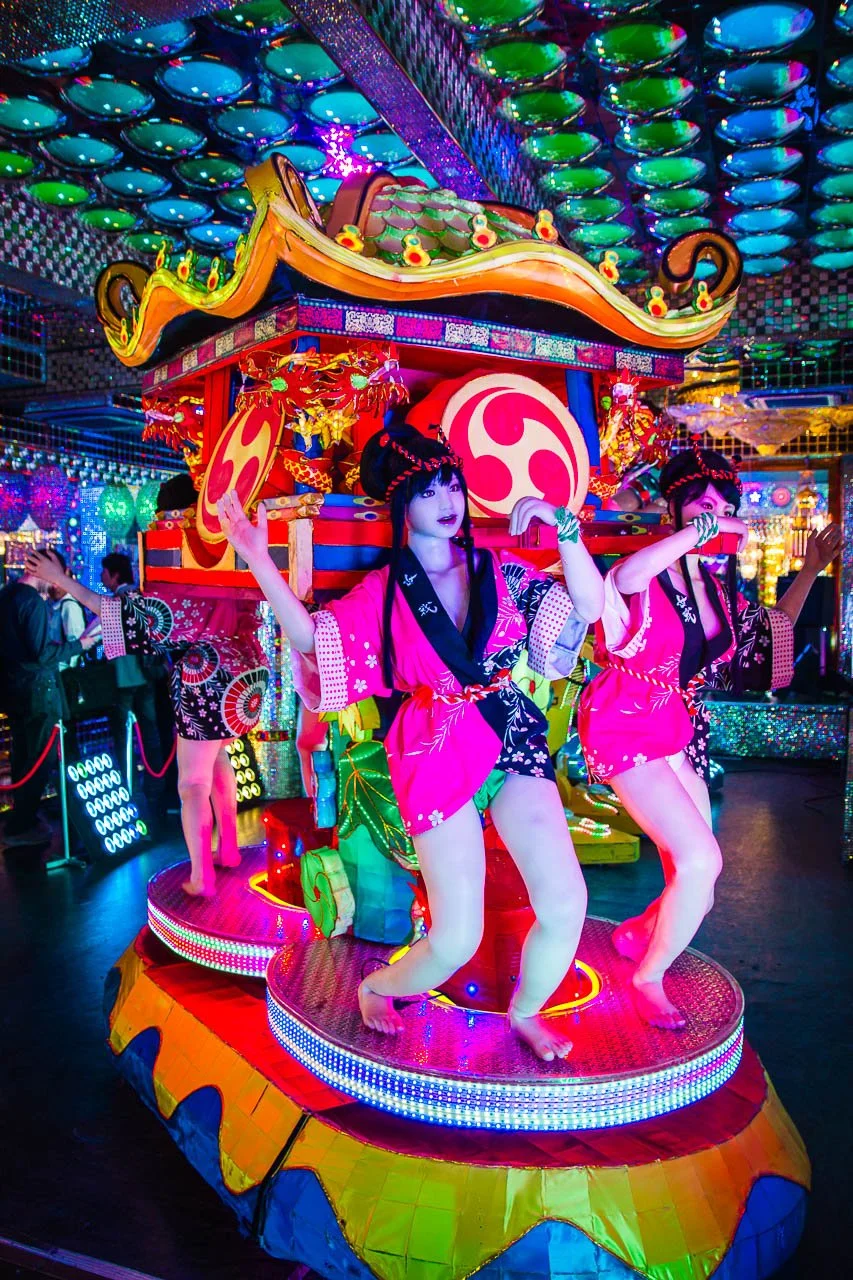
The place gets its name from the robot costumes and props that are sprinkled throughout the show and the venue.
Visiting for the First Time
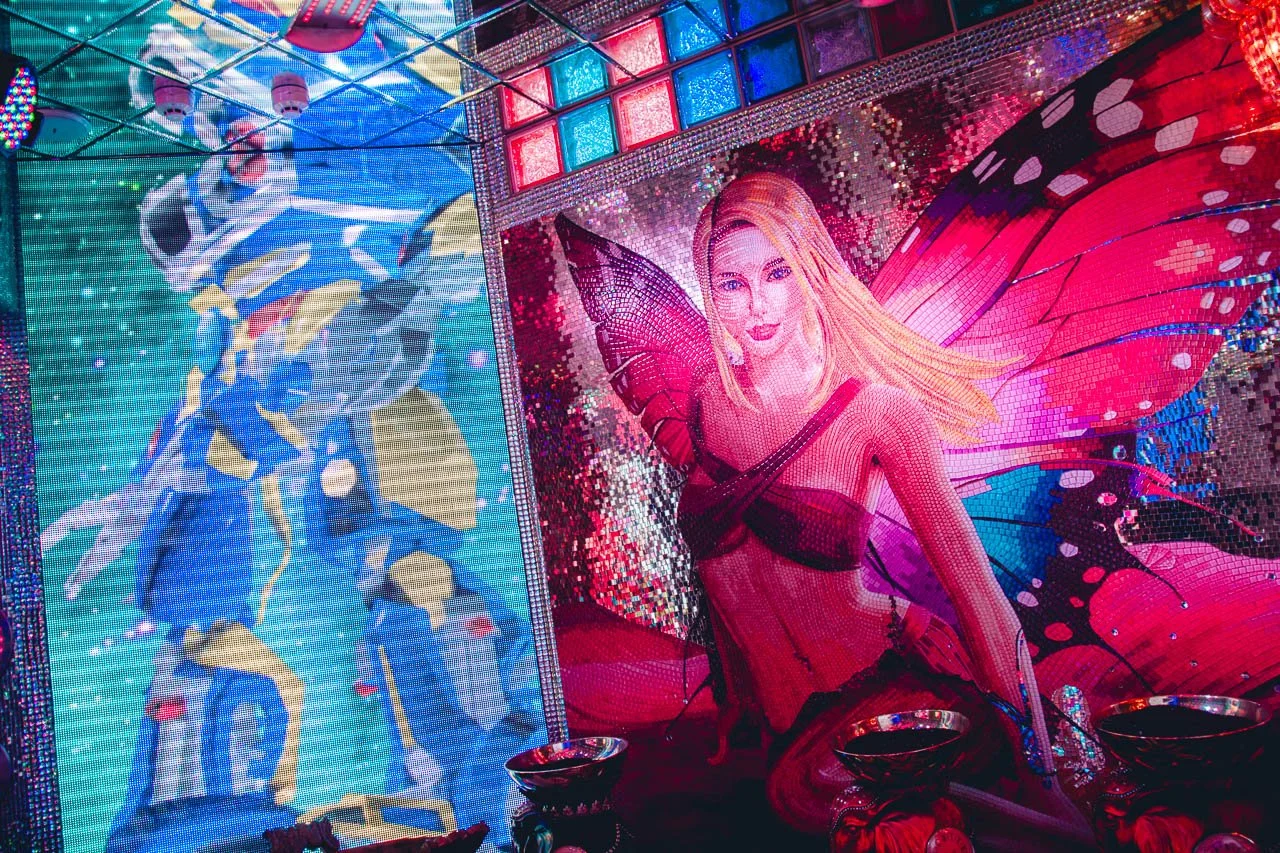
Some time later, I decided to treat myself to a trip to Tokyo, as a way of celebrating my recent college graduation. I didn't have many plans, but I knew one thing - I had to see that crazy restaurant I saw on Parts Unknown. So a couple of days into my trip, I found myself in Shinjuku, right in front of Robot Restaurant. The building itself was wild, covered in flashing lights and displays of giant robot women. It looked like a futuristic carnival from an old anime and I was here for it.
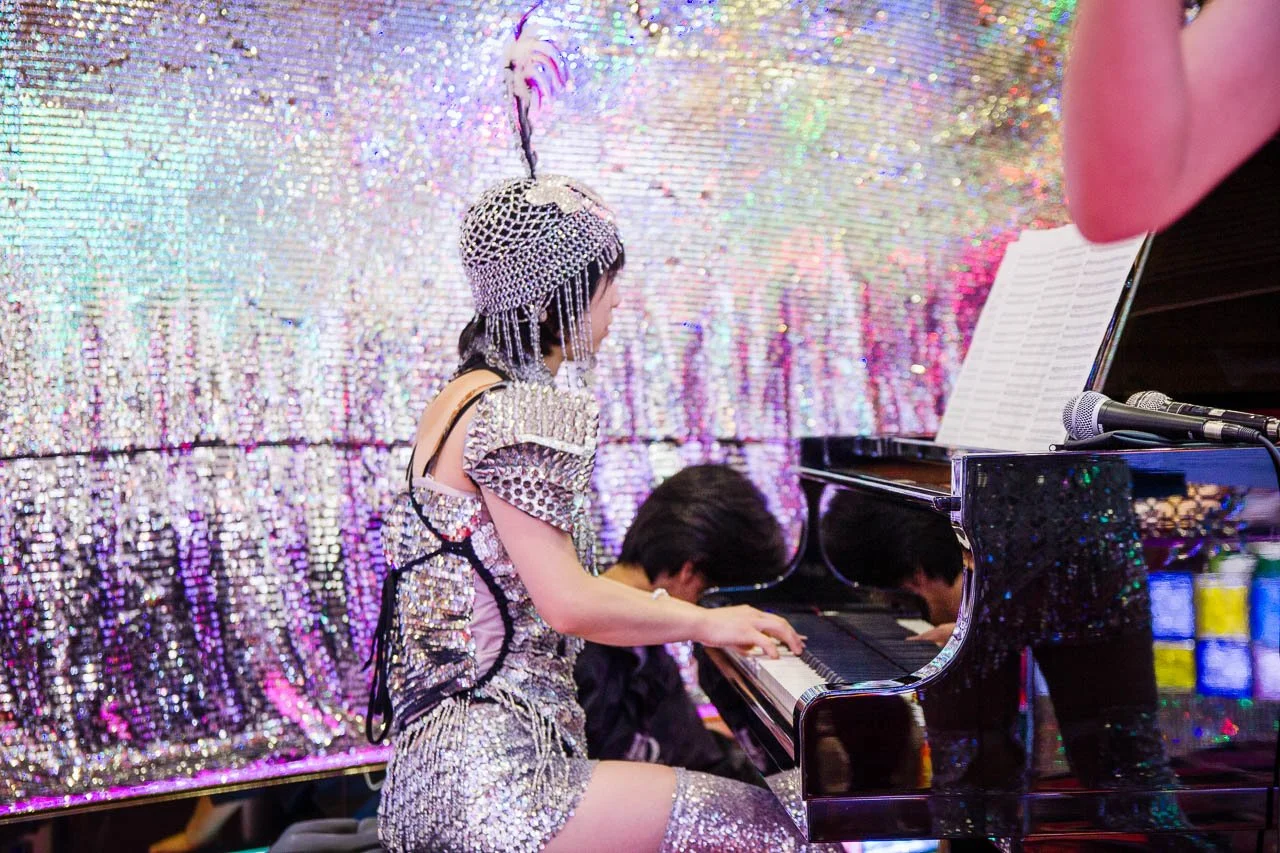
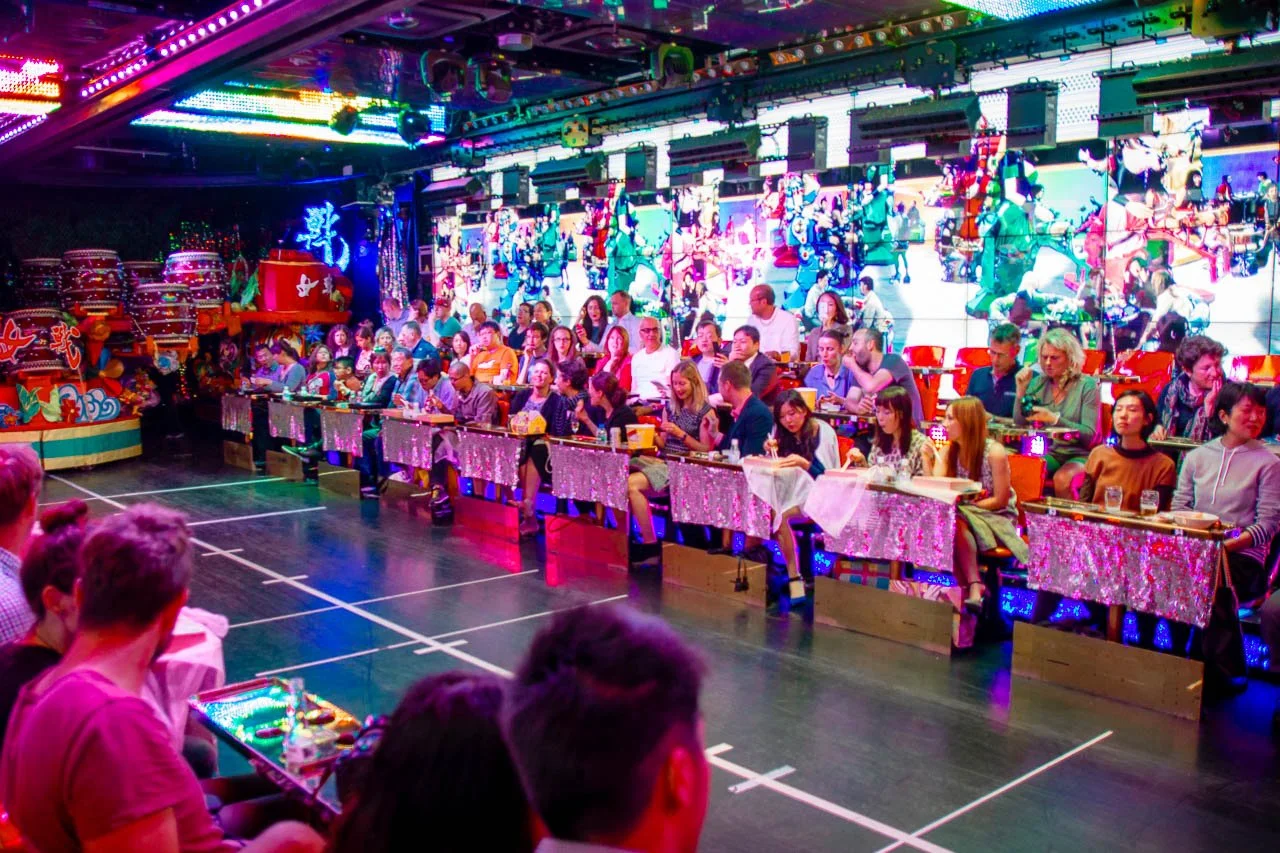
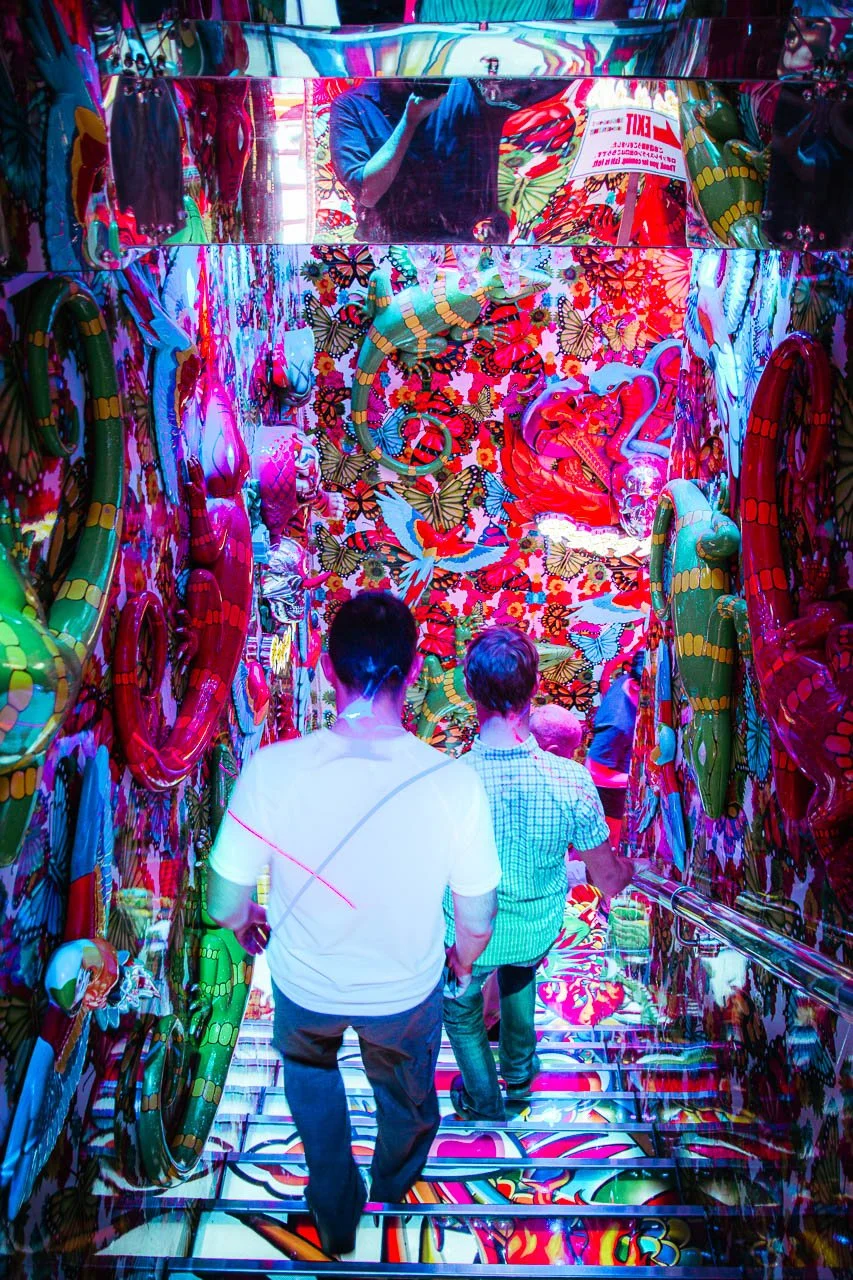
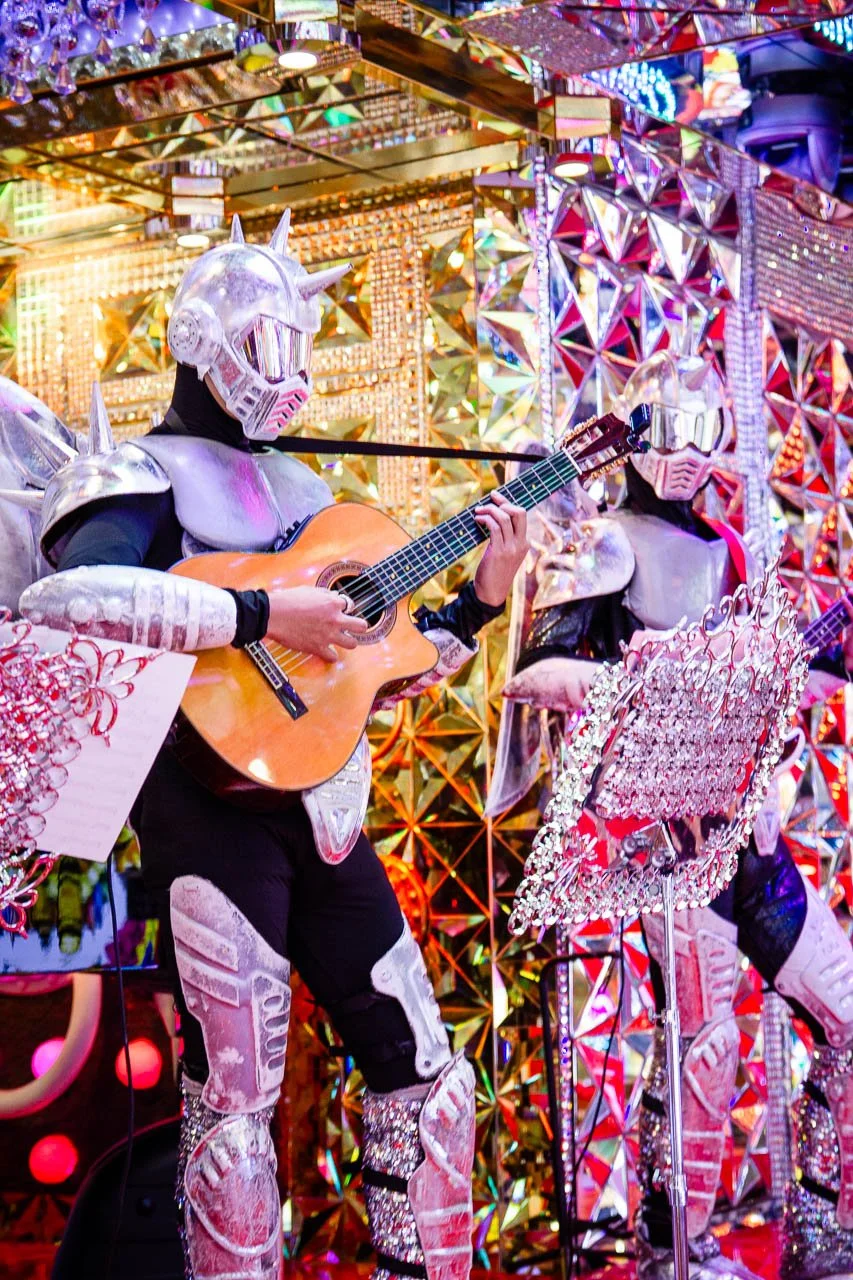
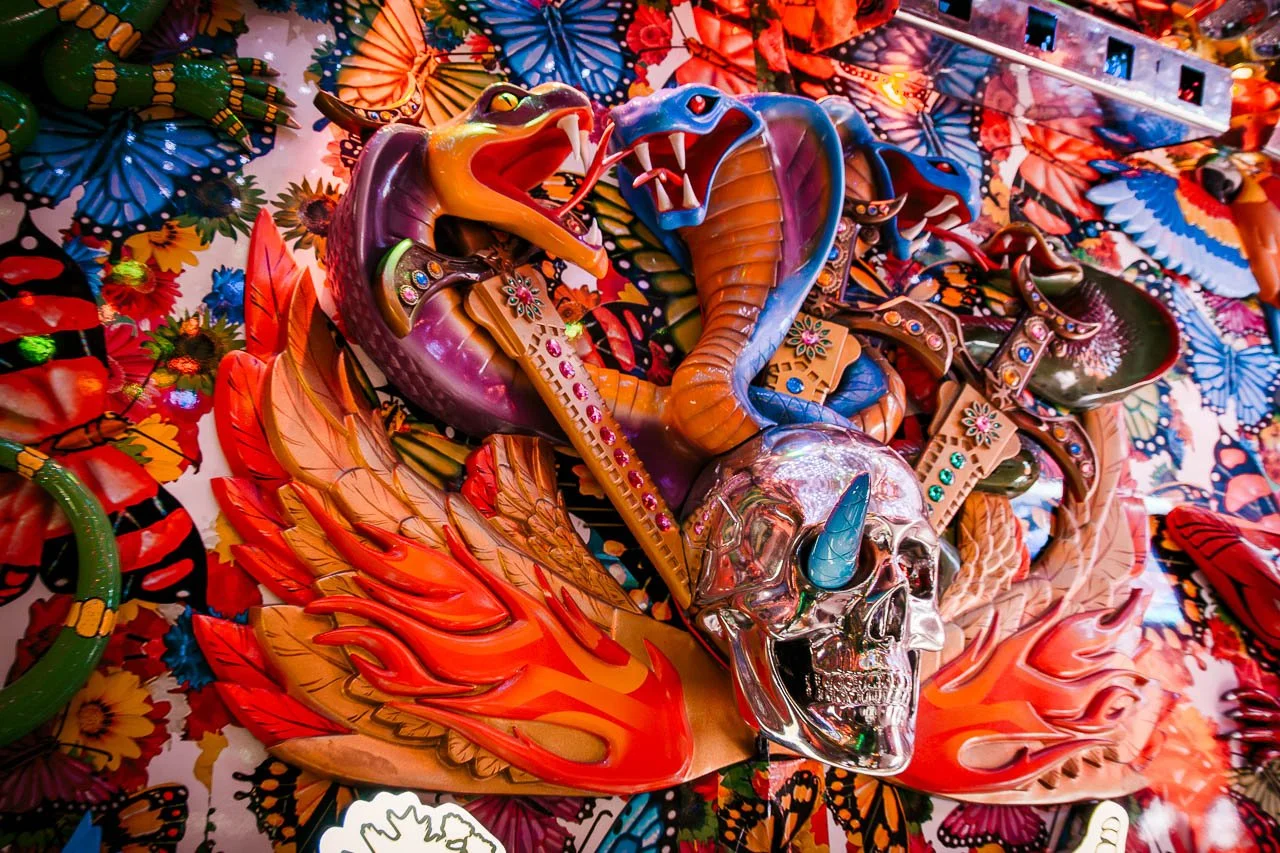
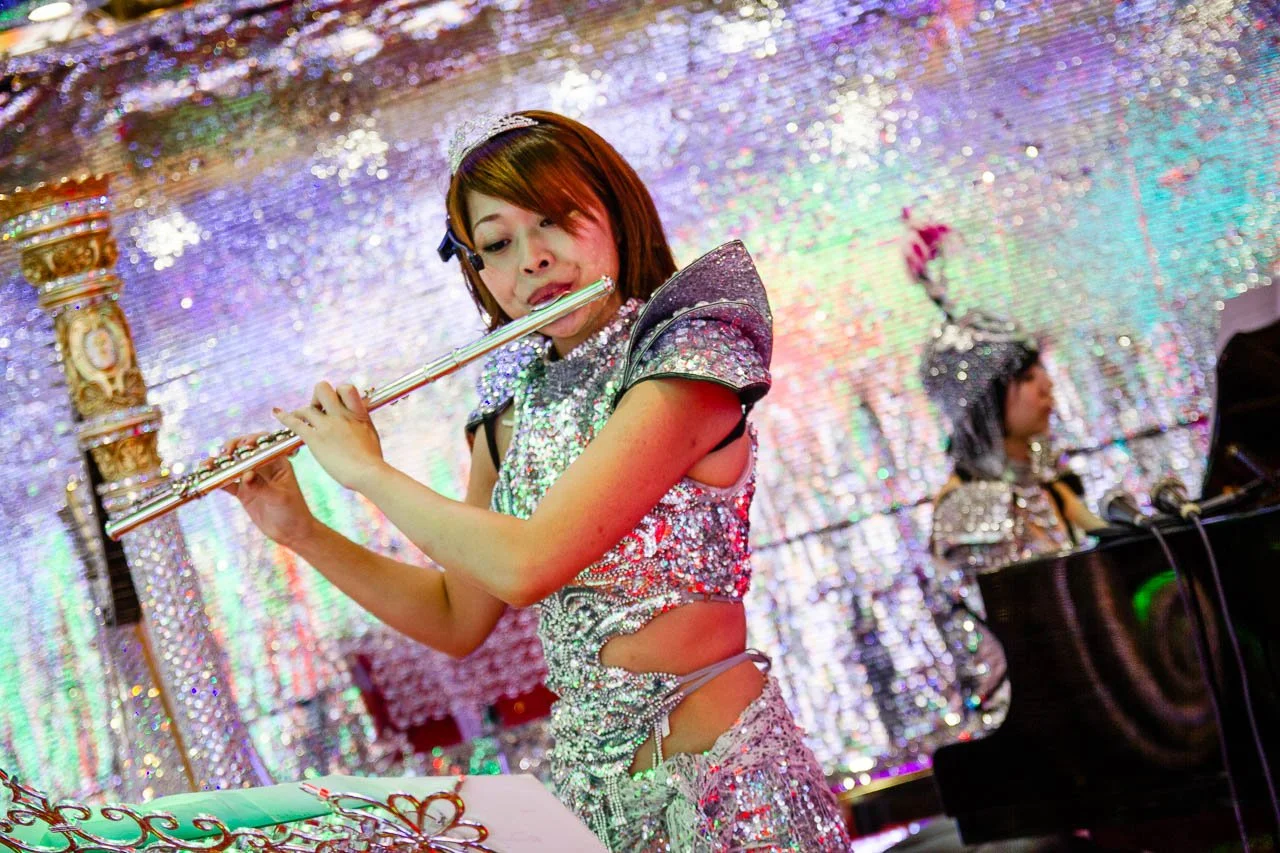
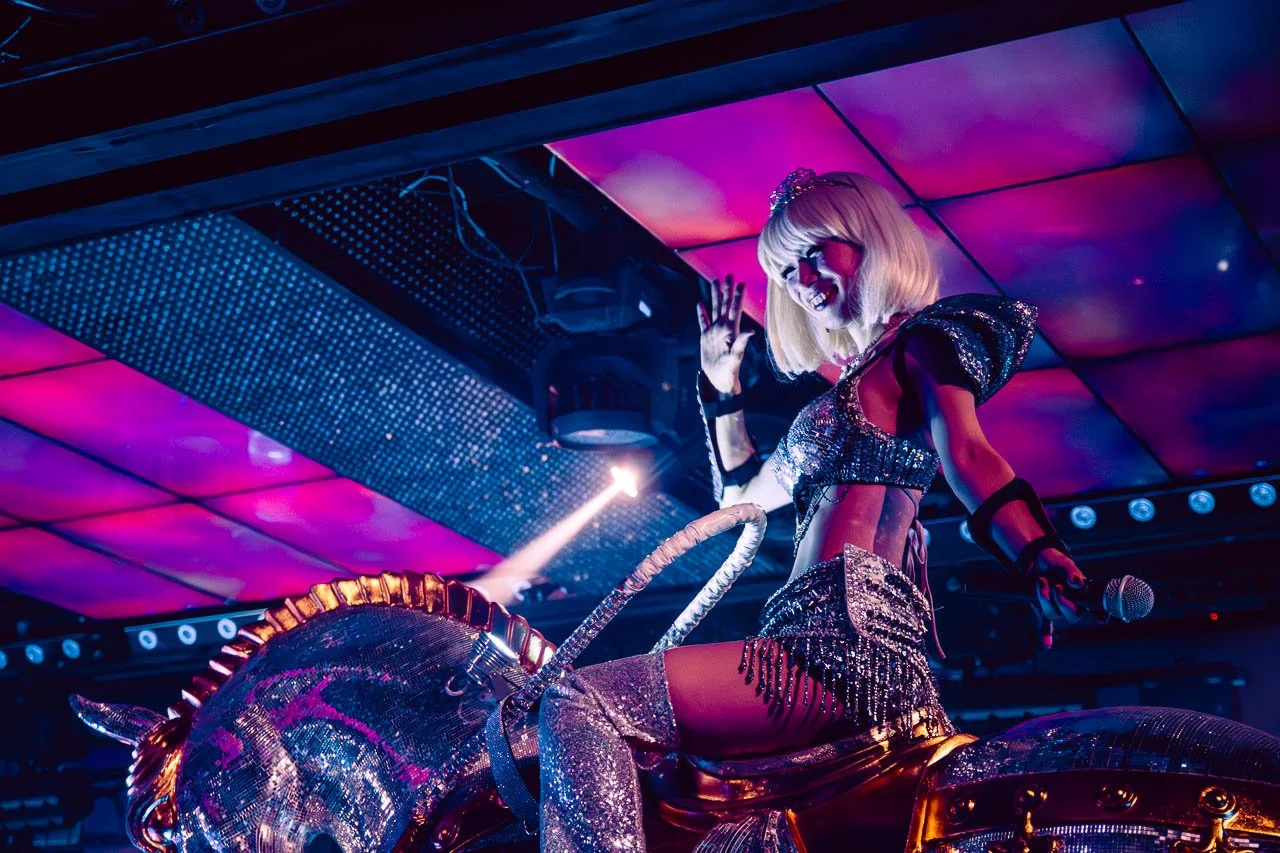
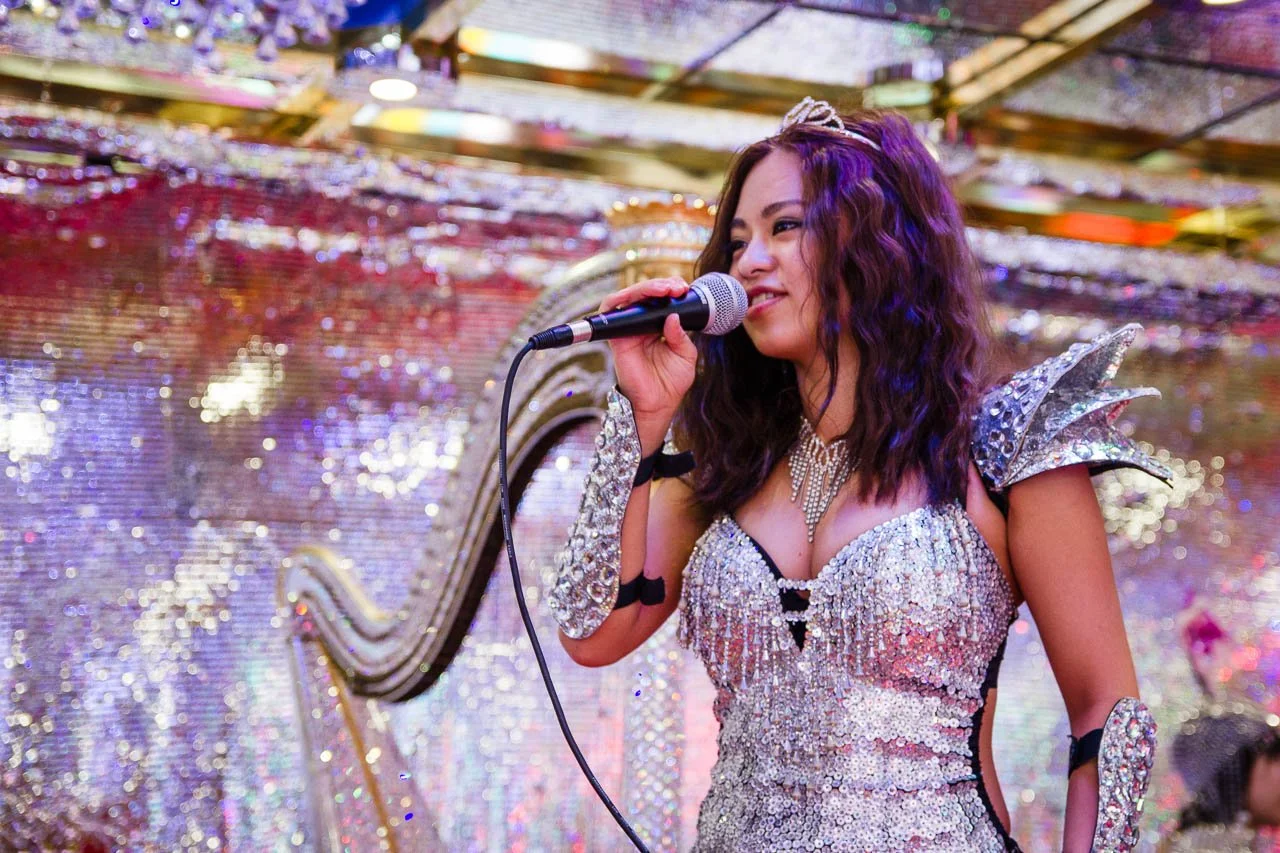
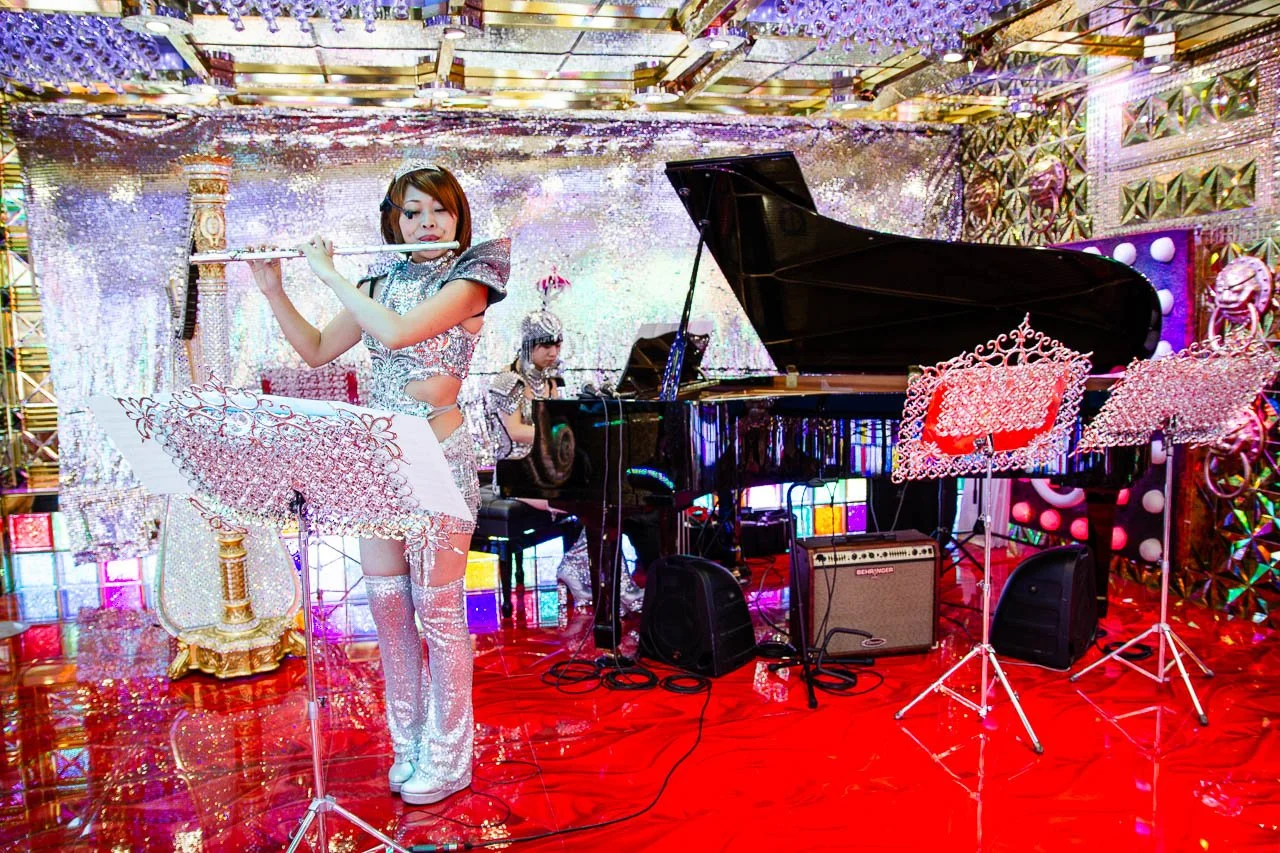
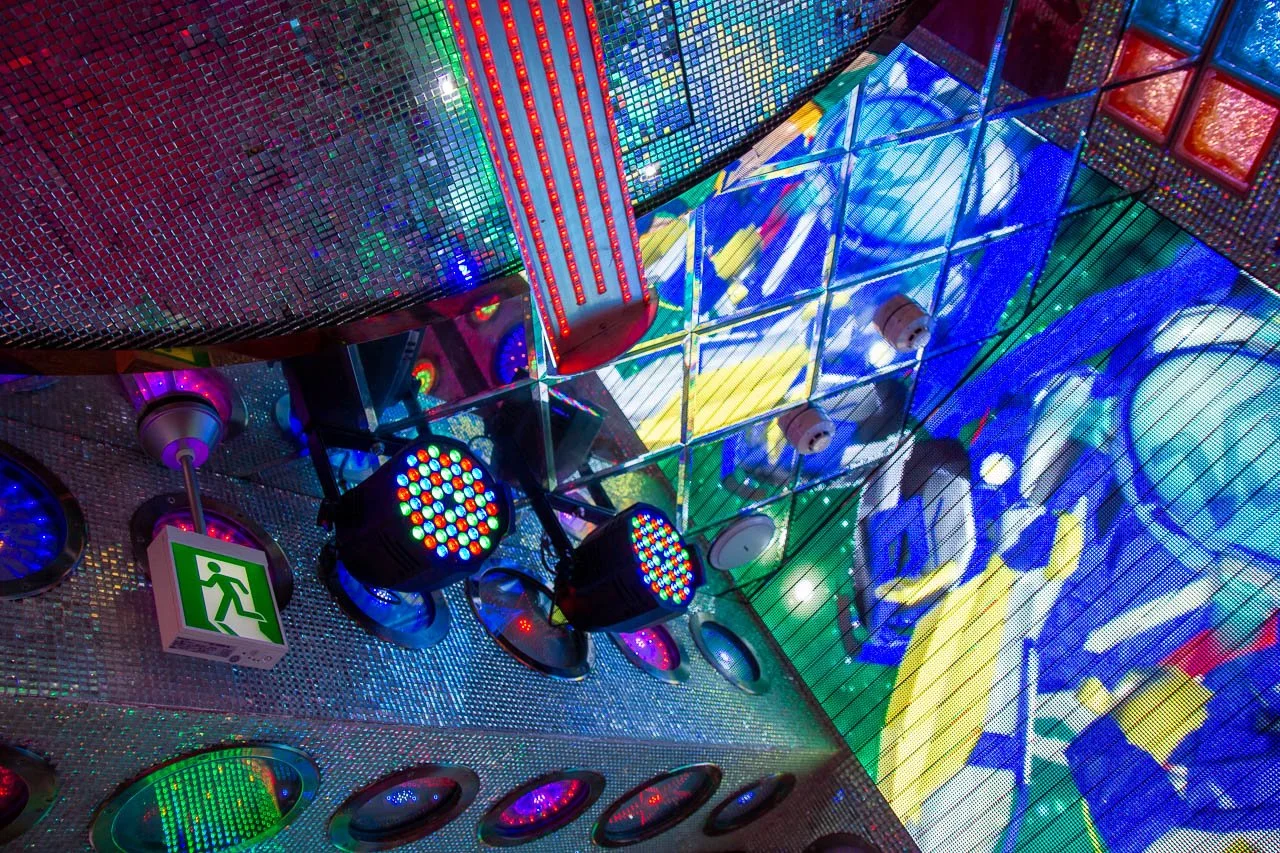
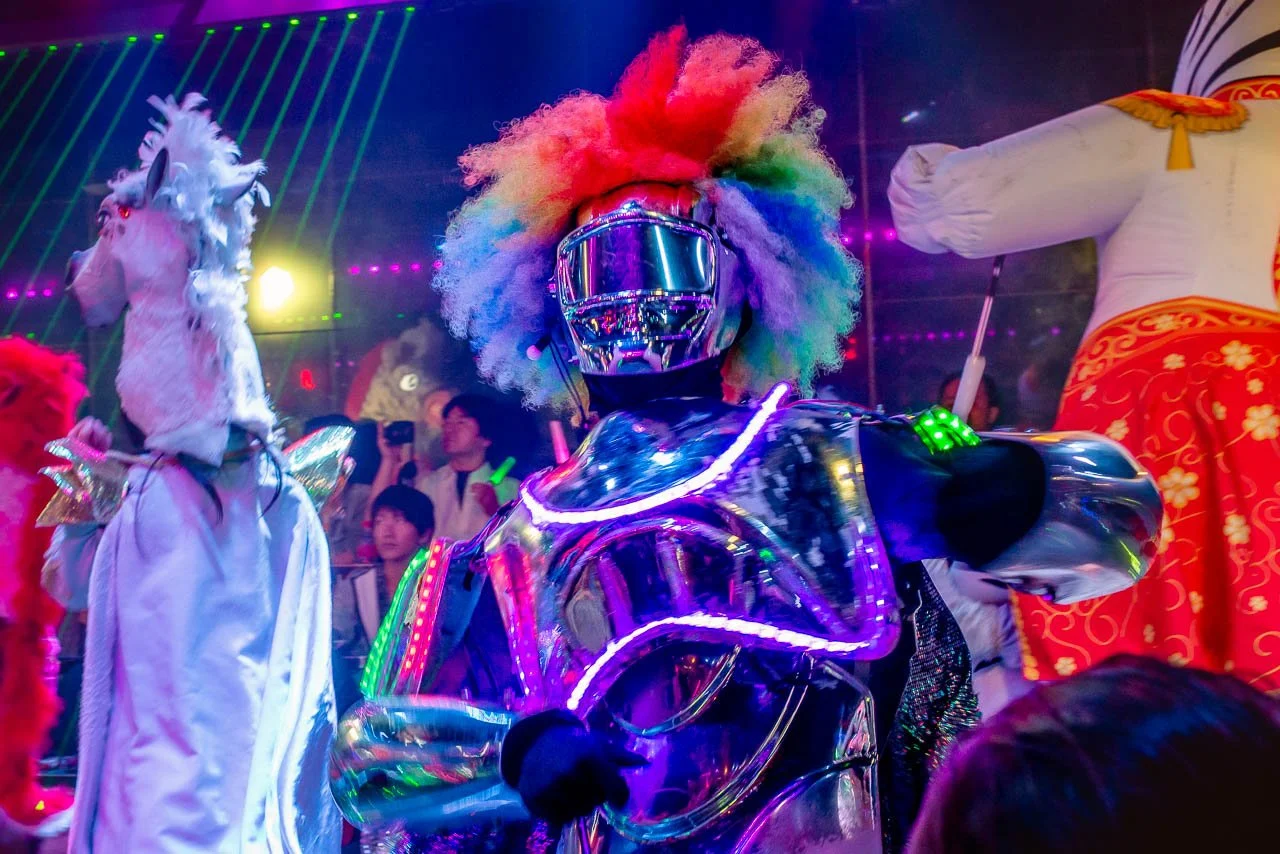
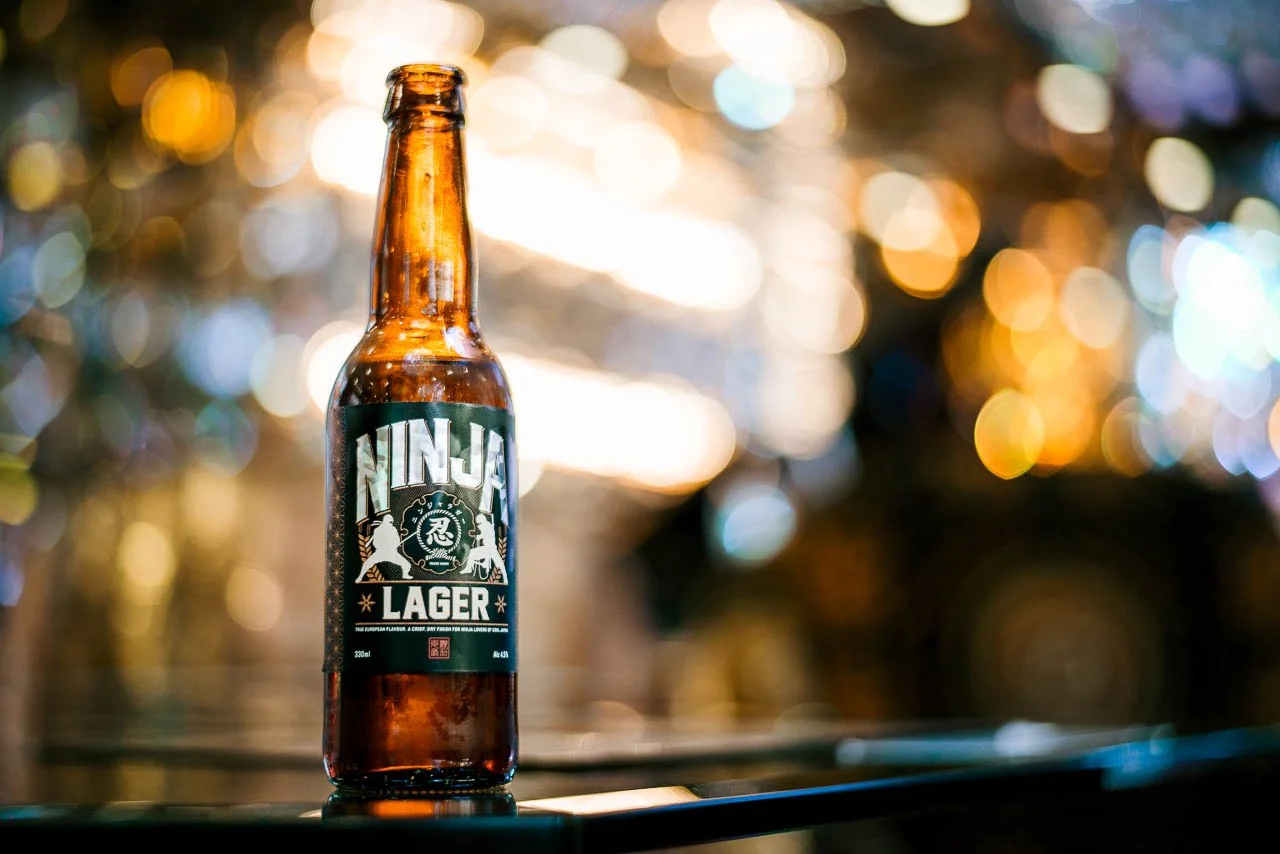
Walking in was equally surreal. Everything sparkled with neon lights and mirrored surfaces, and there wasn't a single boring spot on any wall or surface. Before the main show, I hung out in a lounge drinking "Ninja Beer" while a band in sci-fi costumes played surprisingly good jazz music. Shortly after, they announced the show would soon start, and we all made our way downstairs to find our seats.
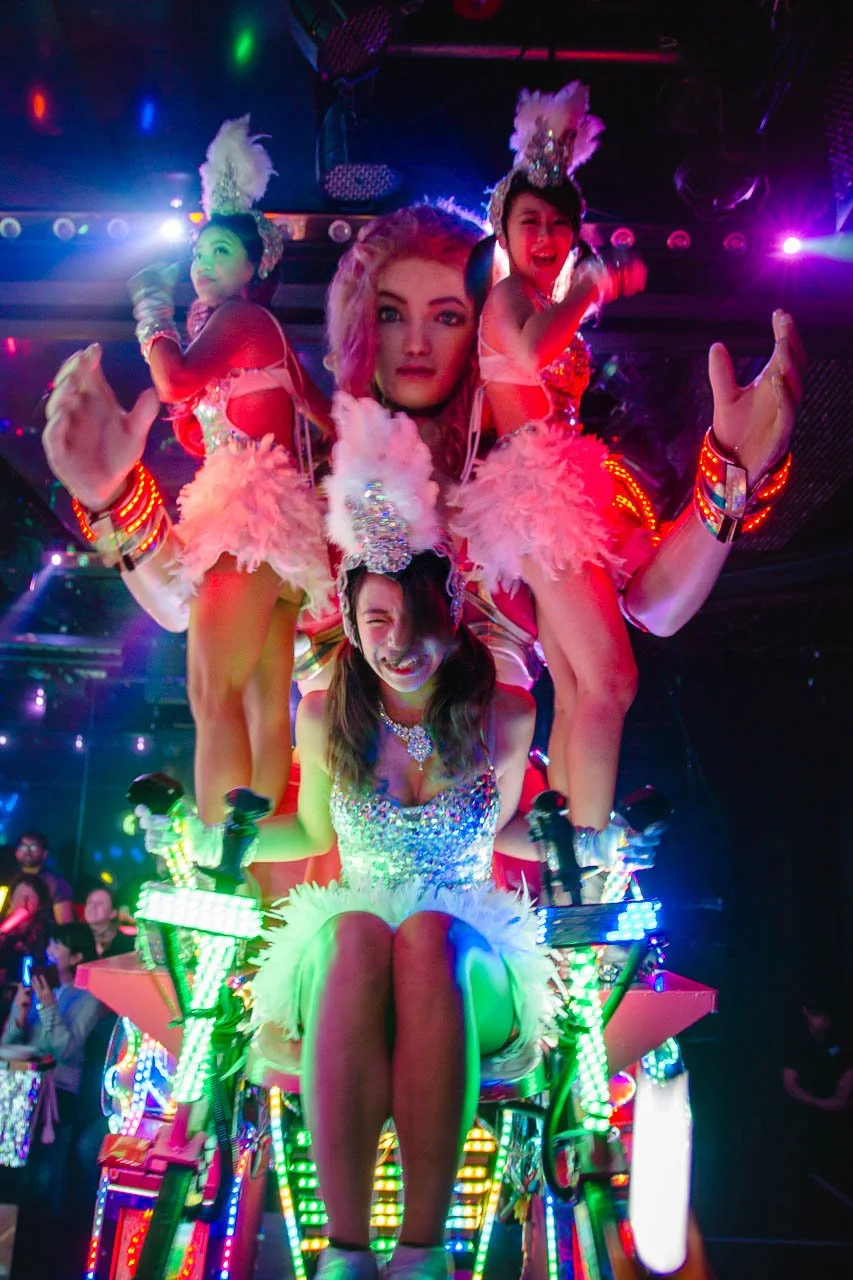
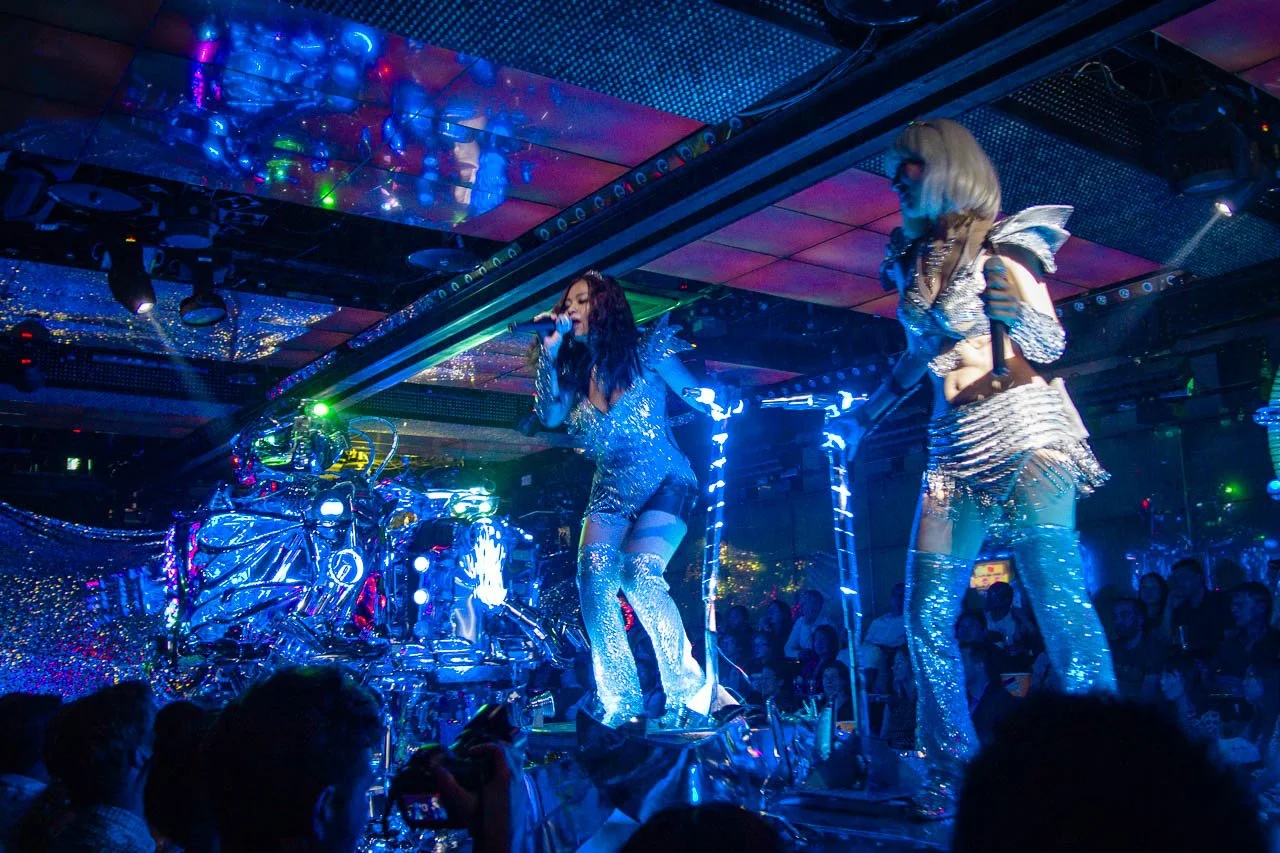
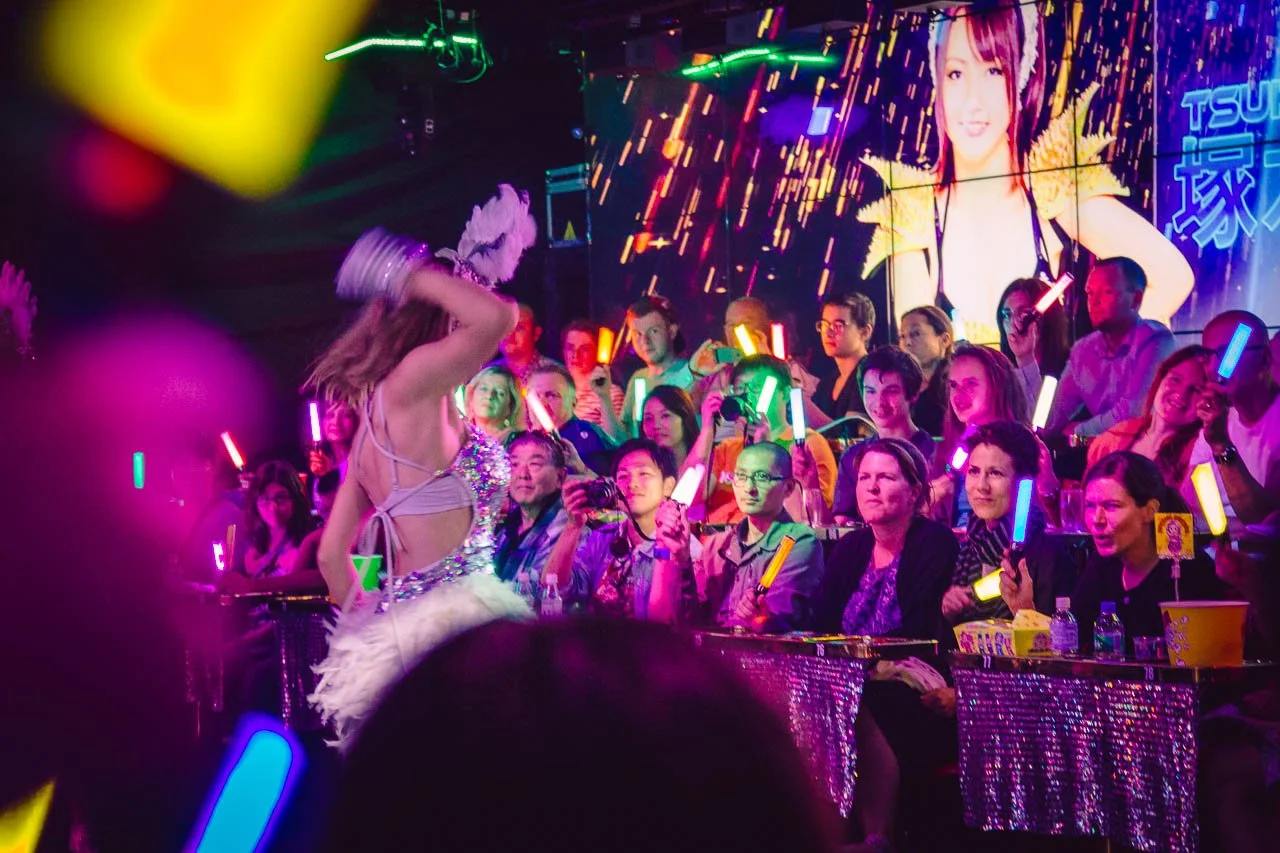
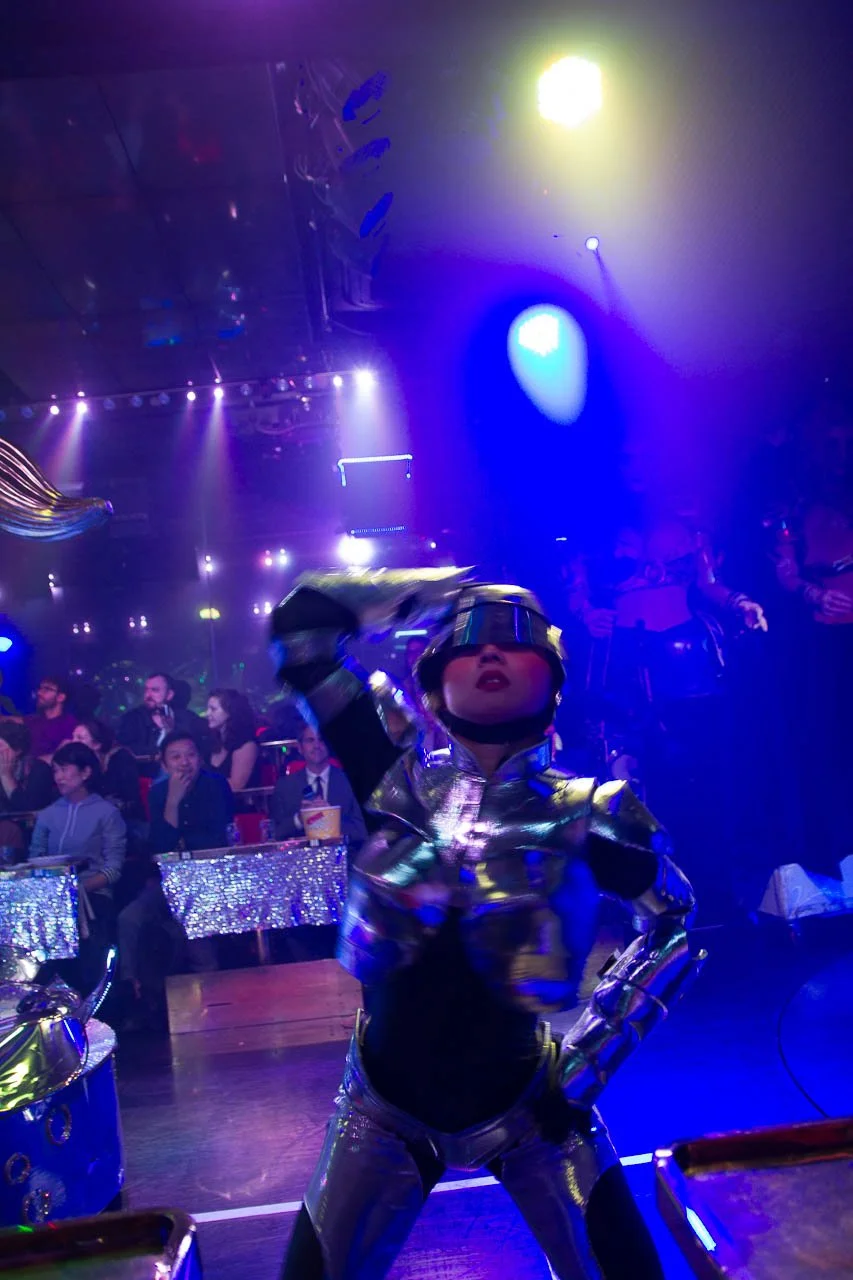
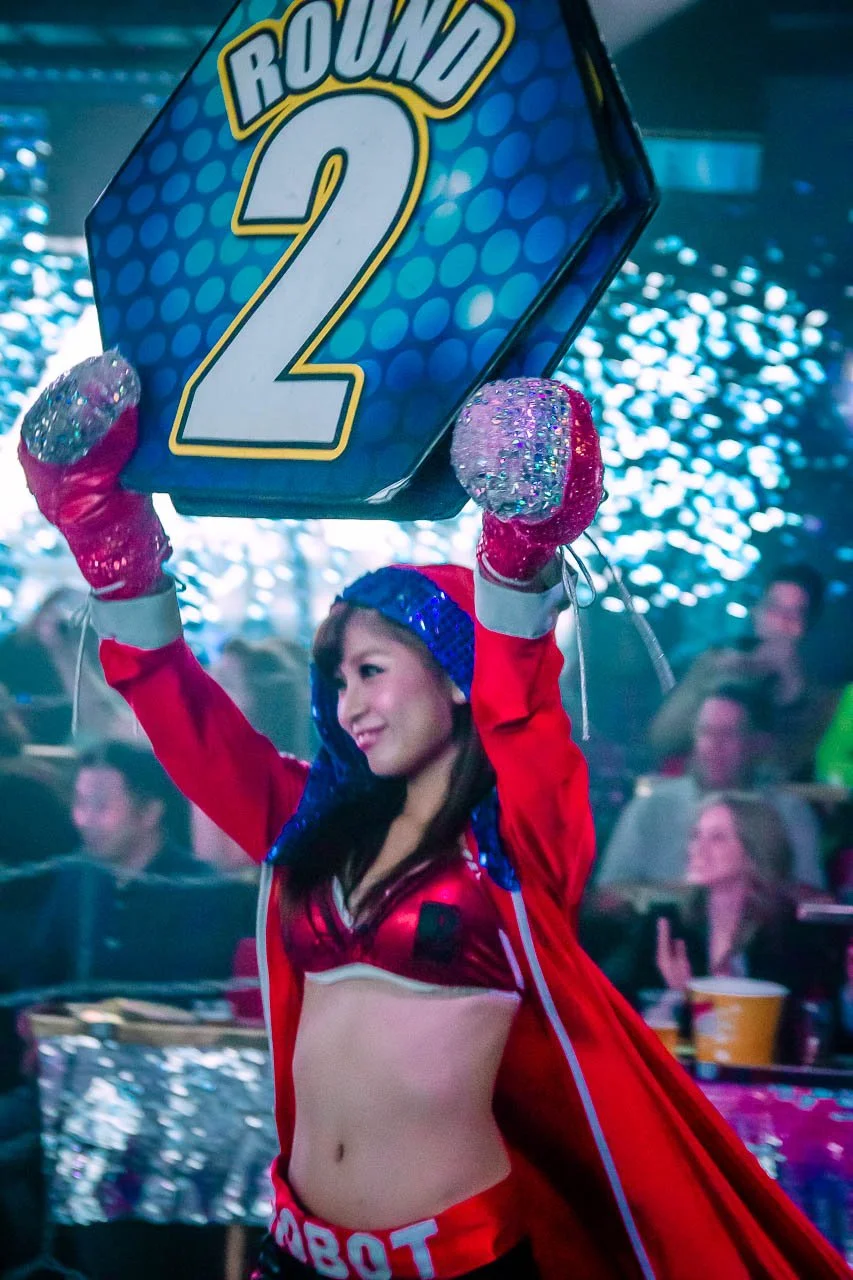
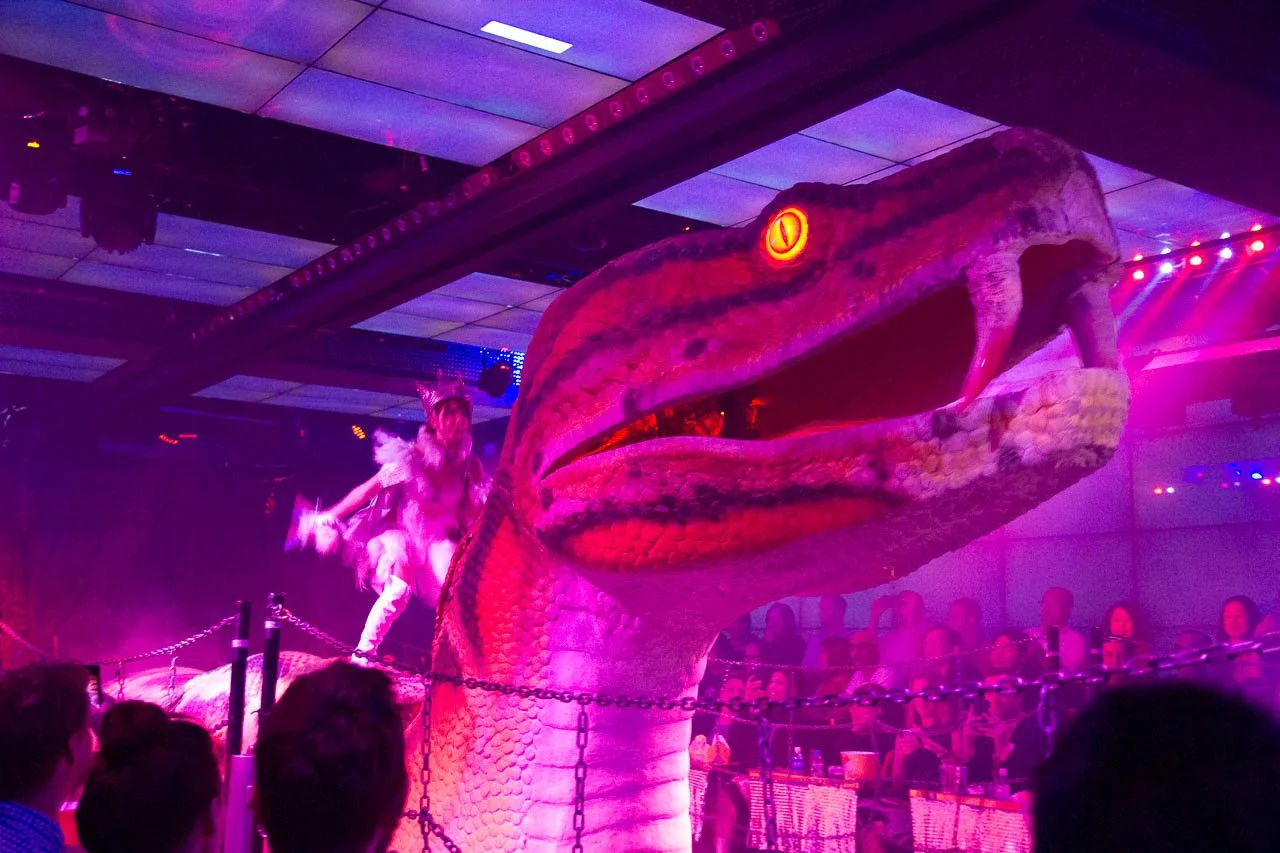
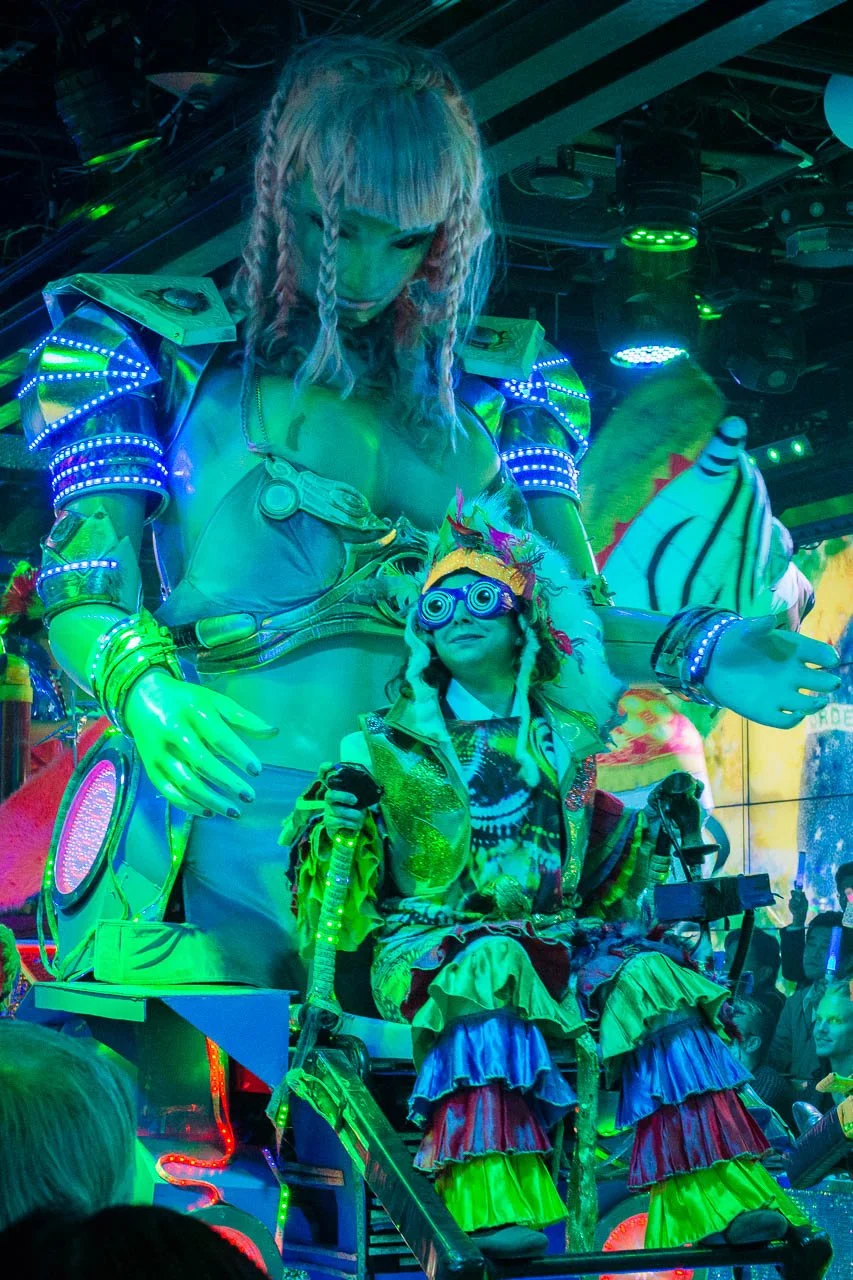
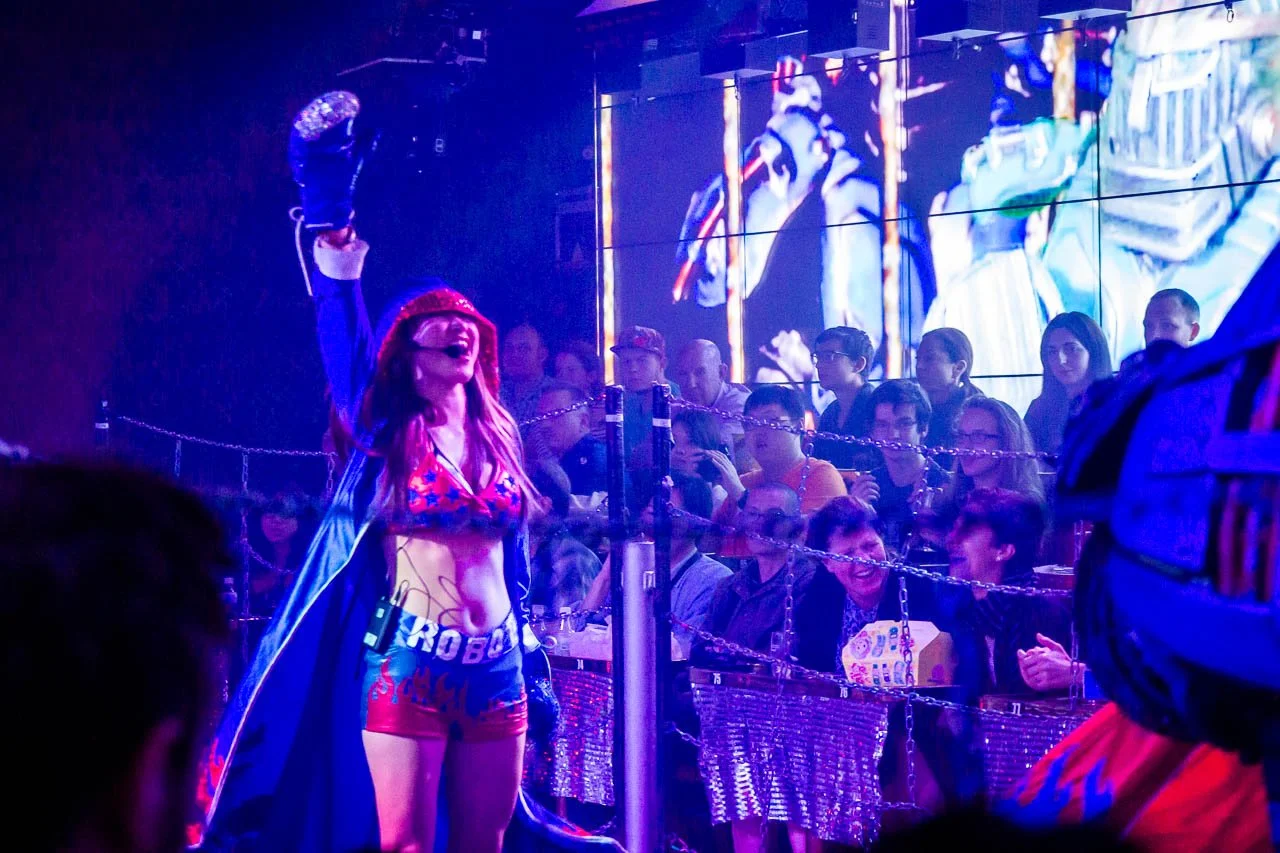
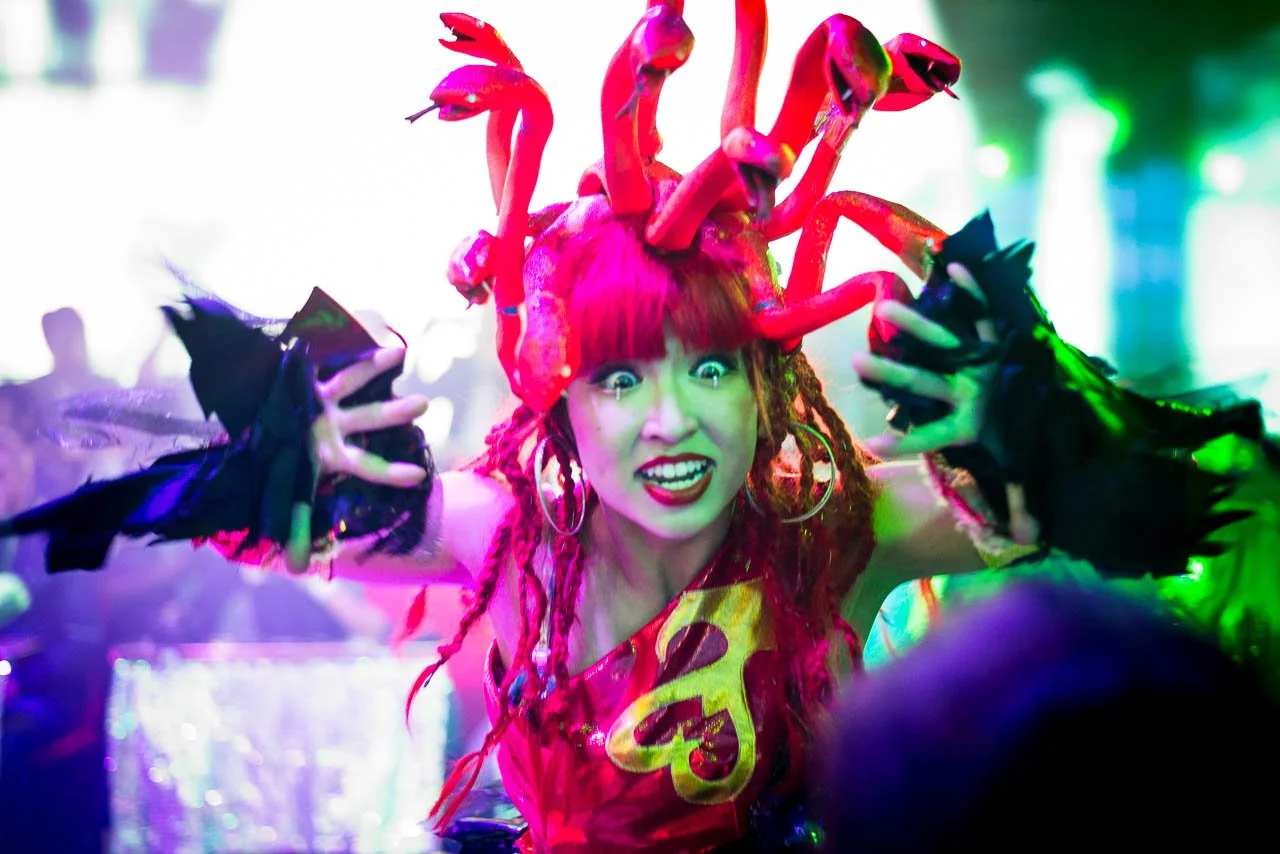
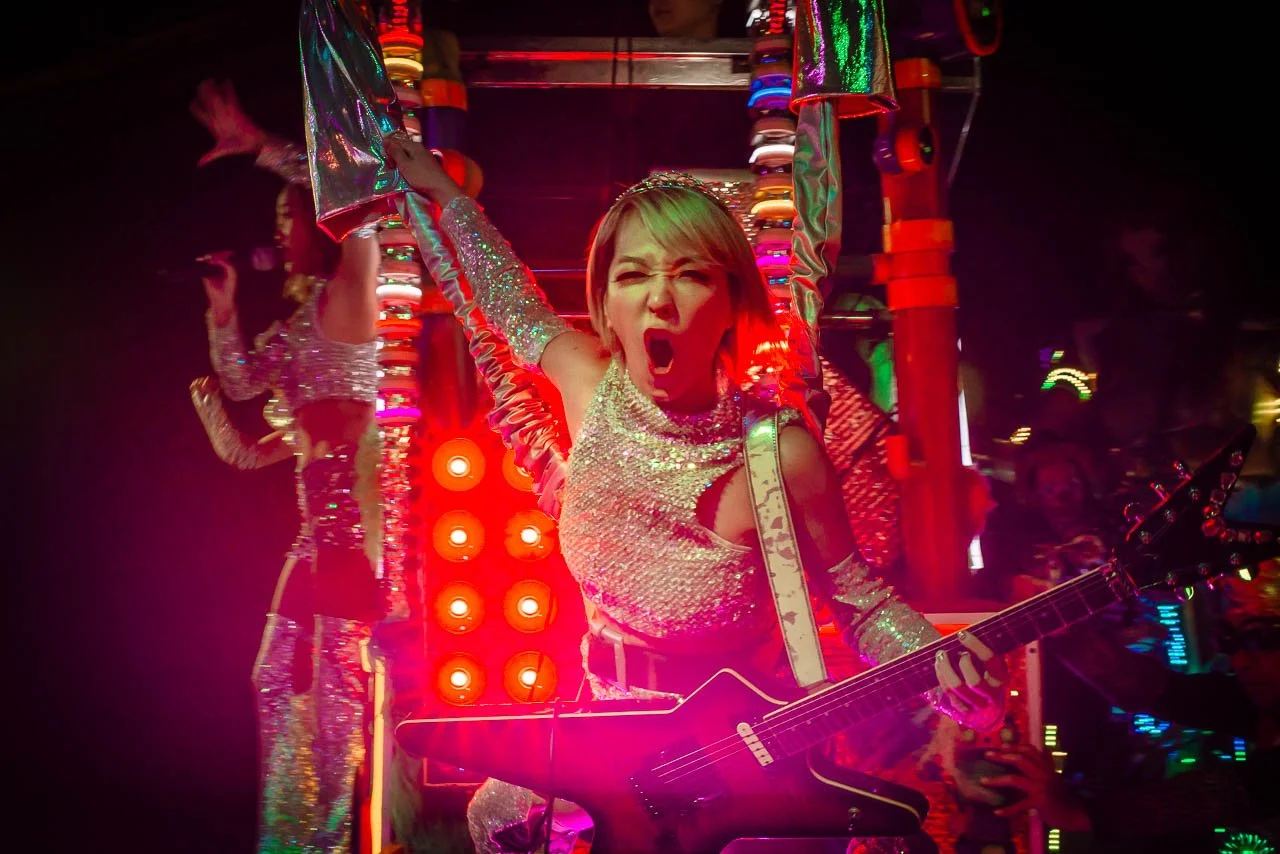
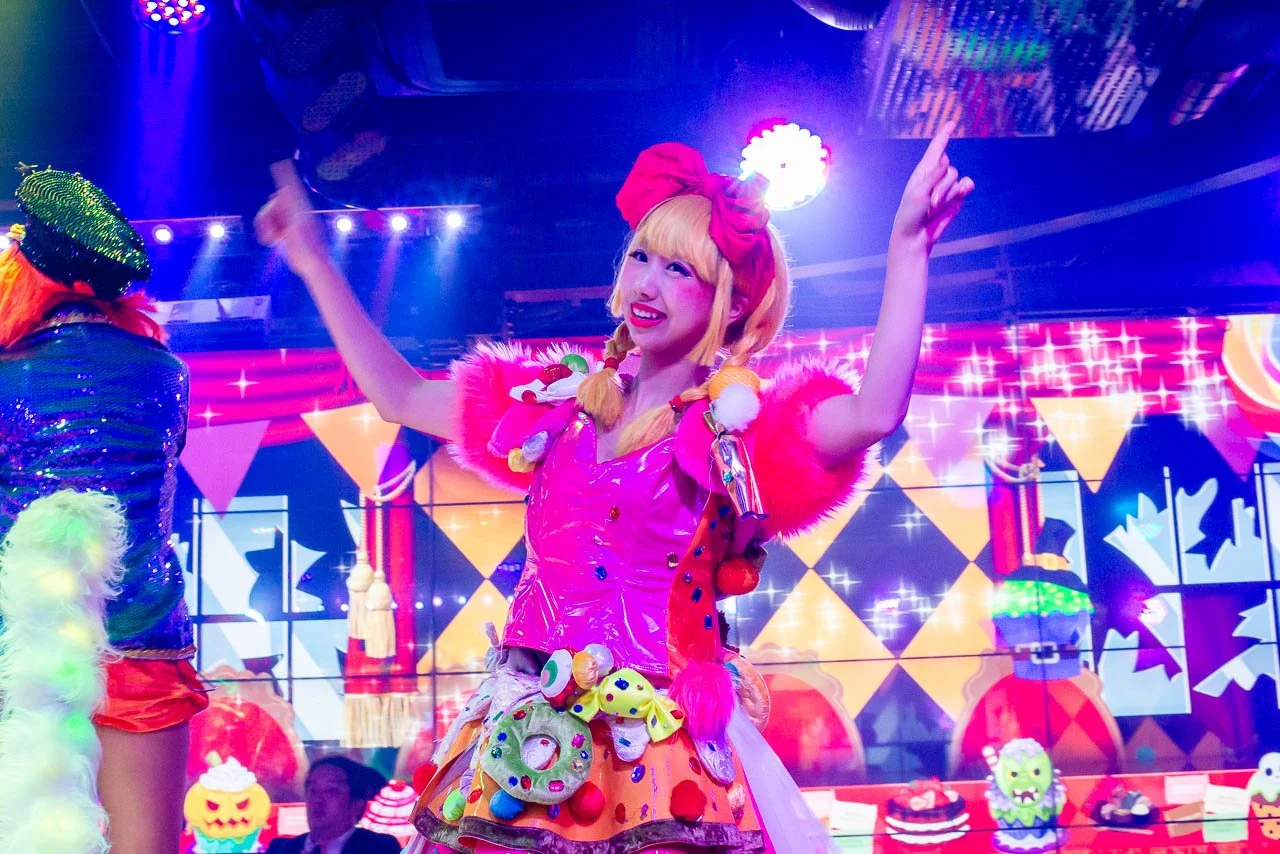
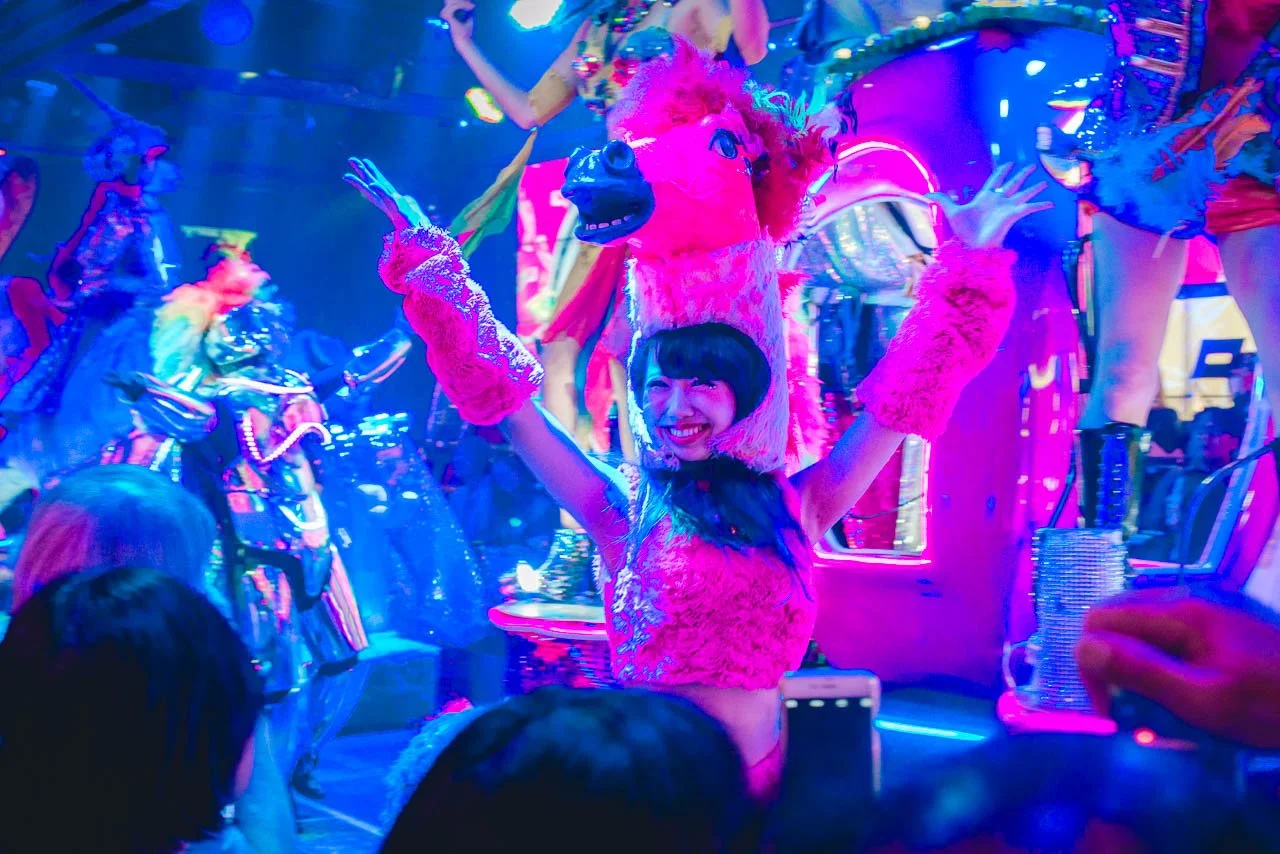
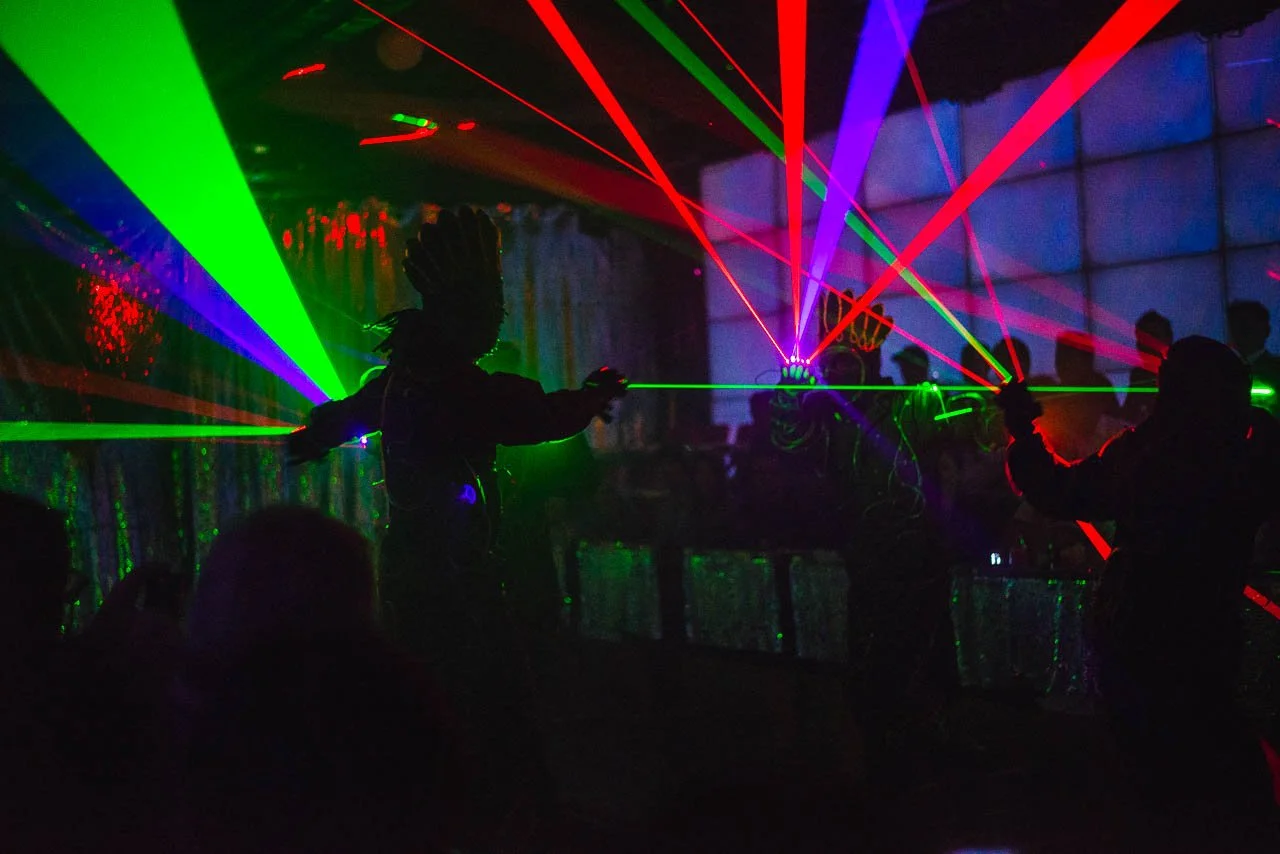
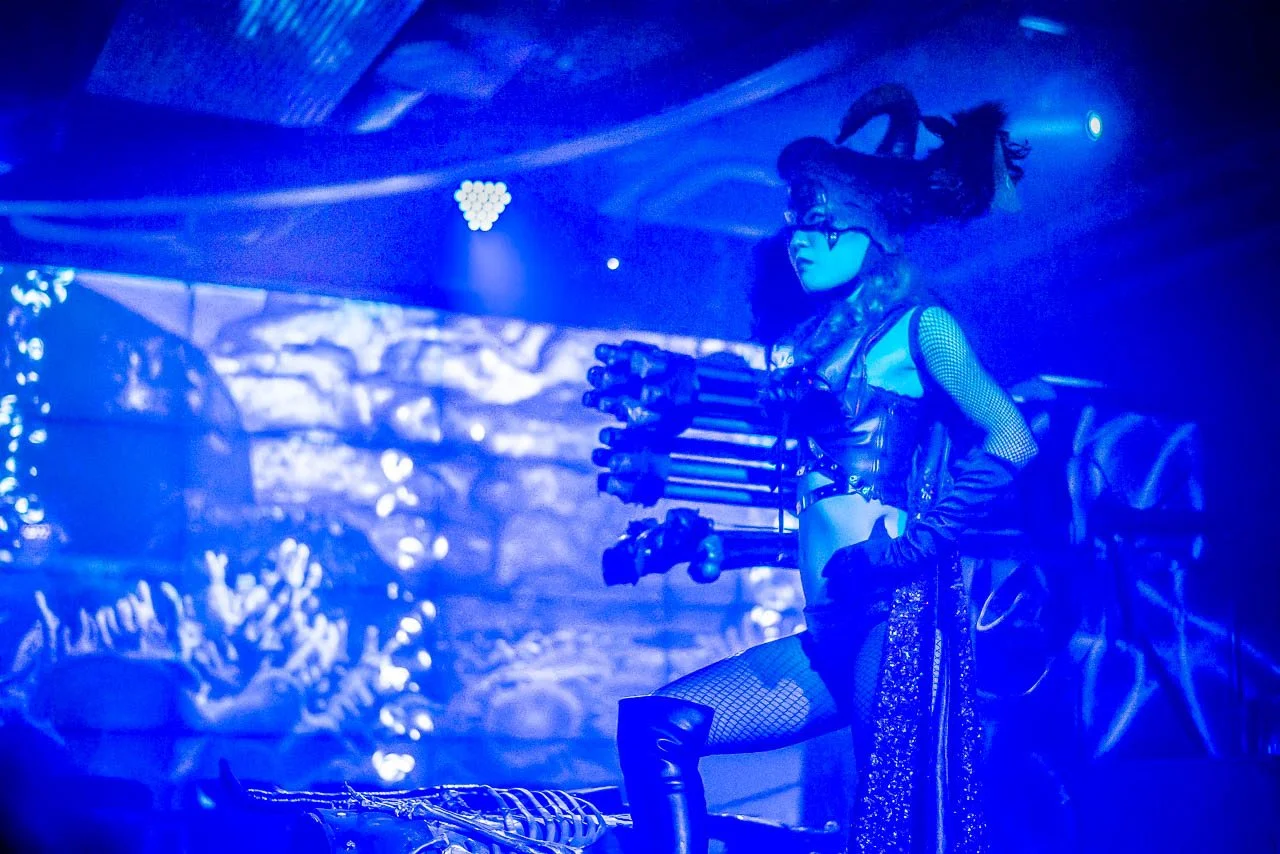
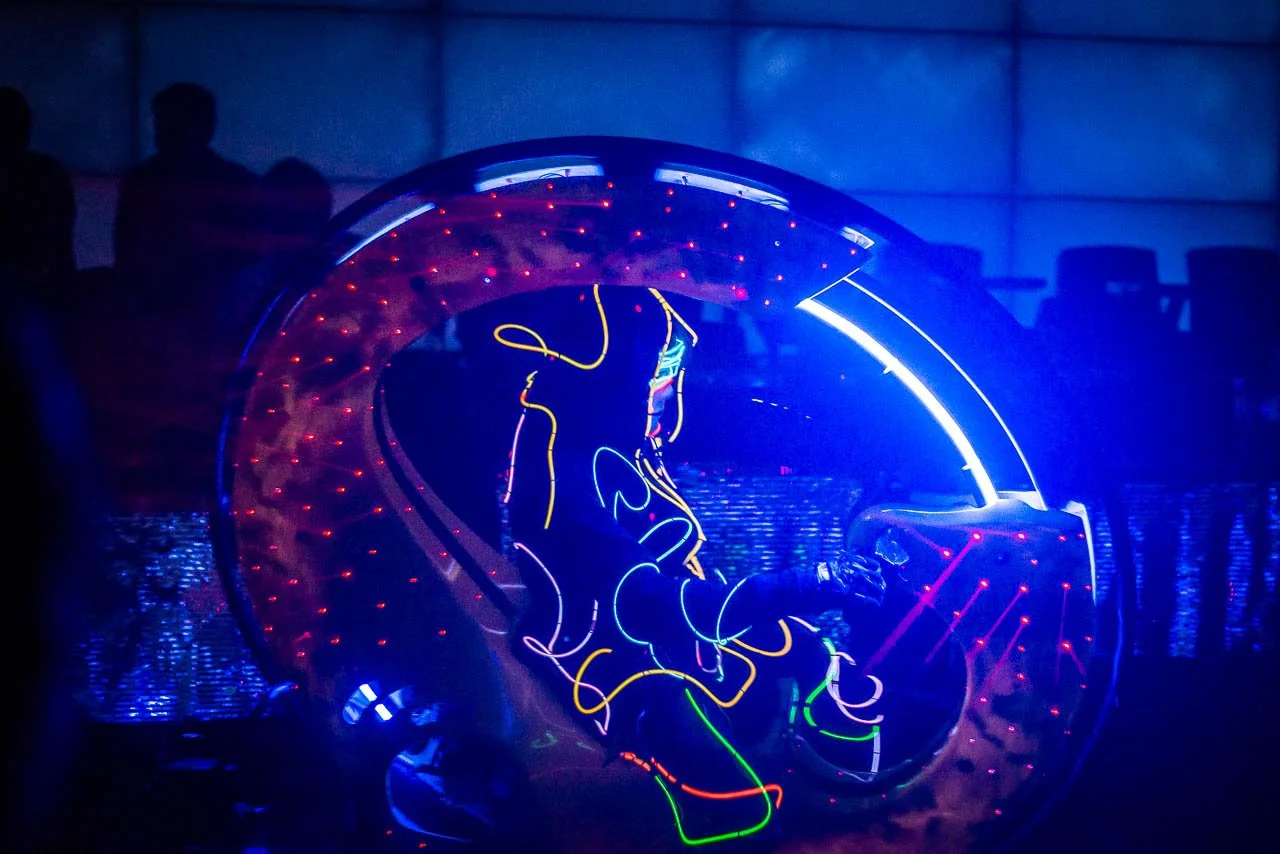
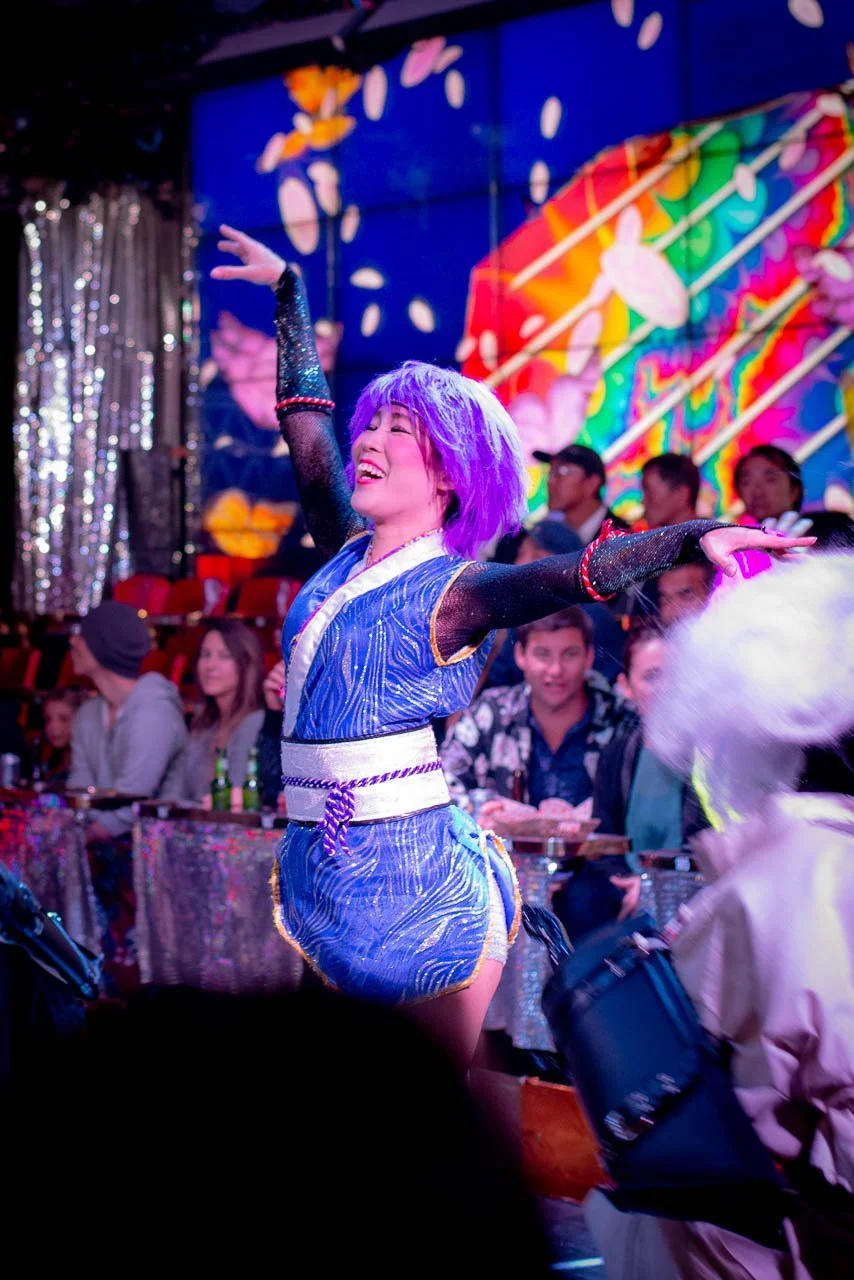
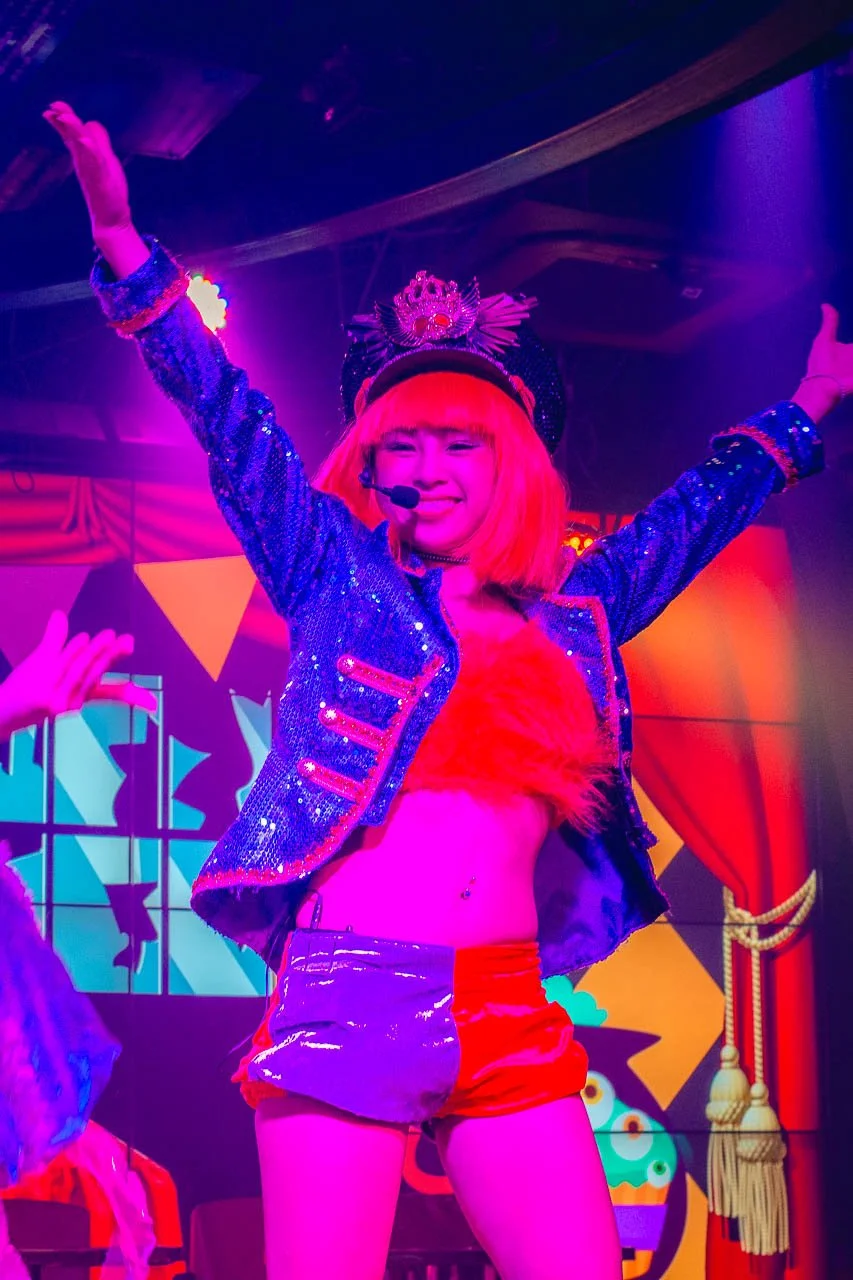
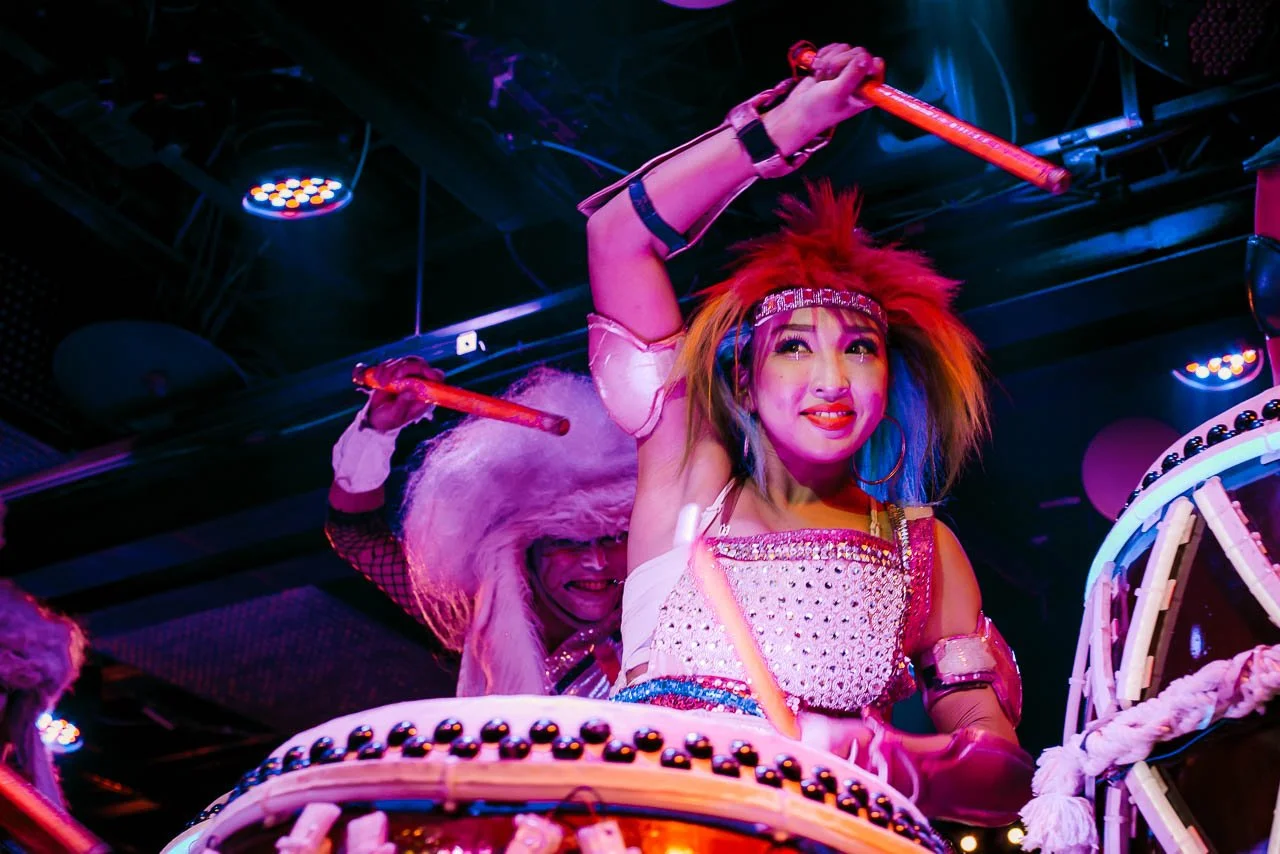
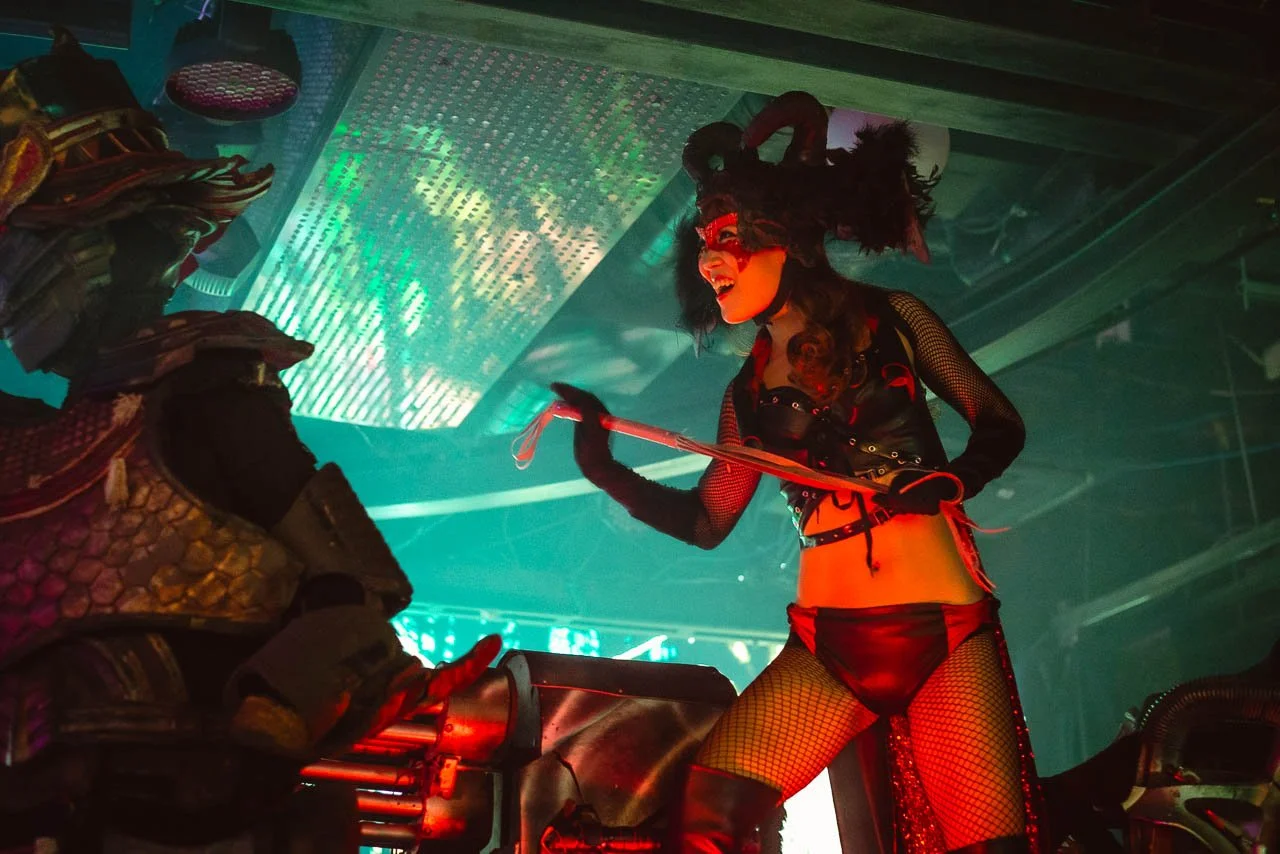
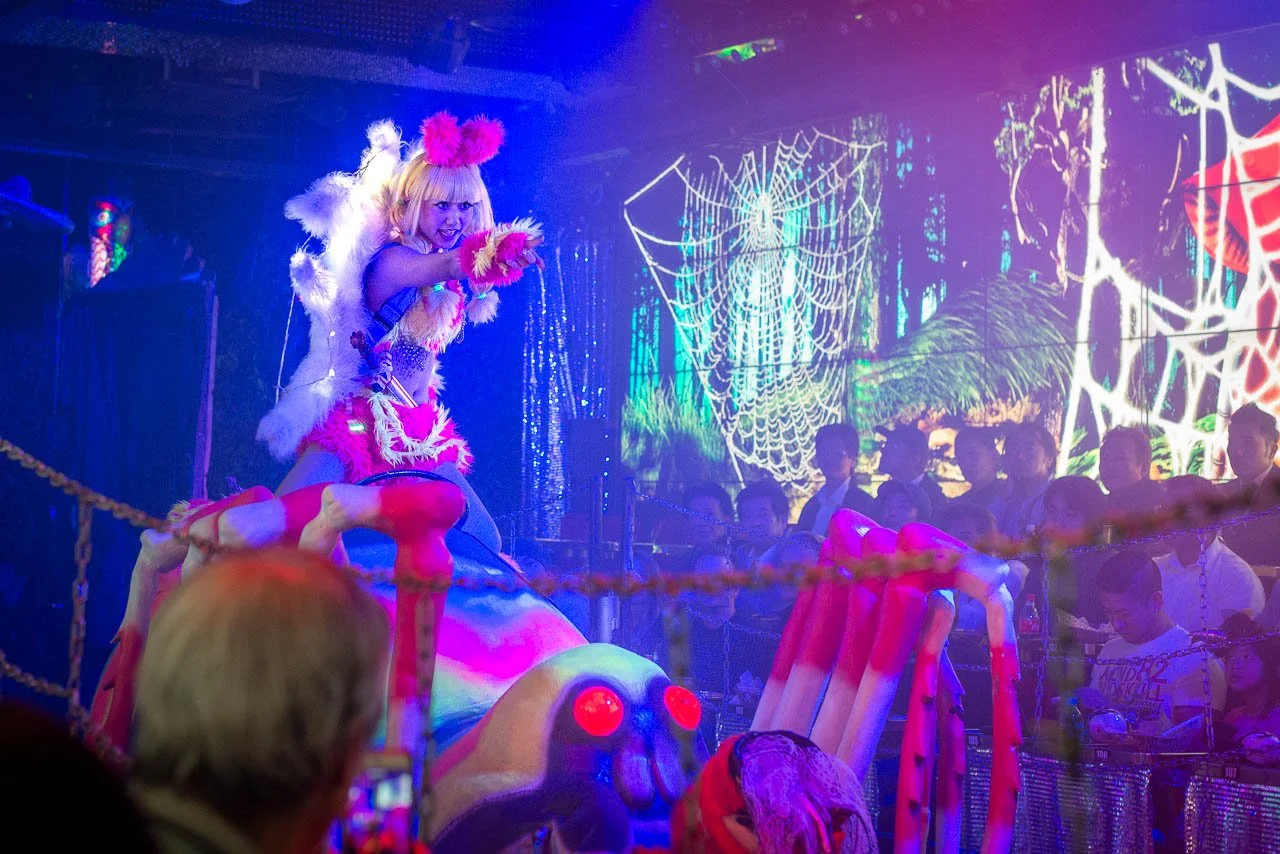
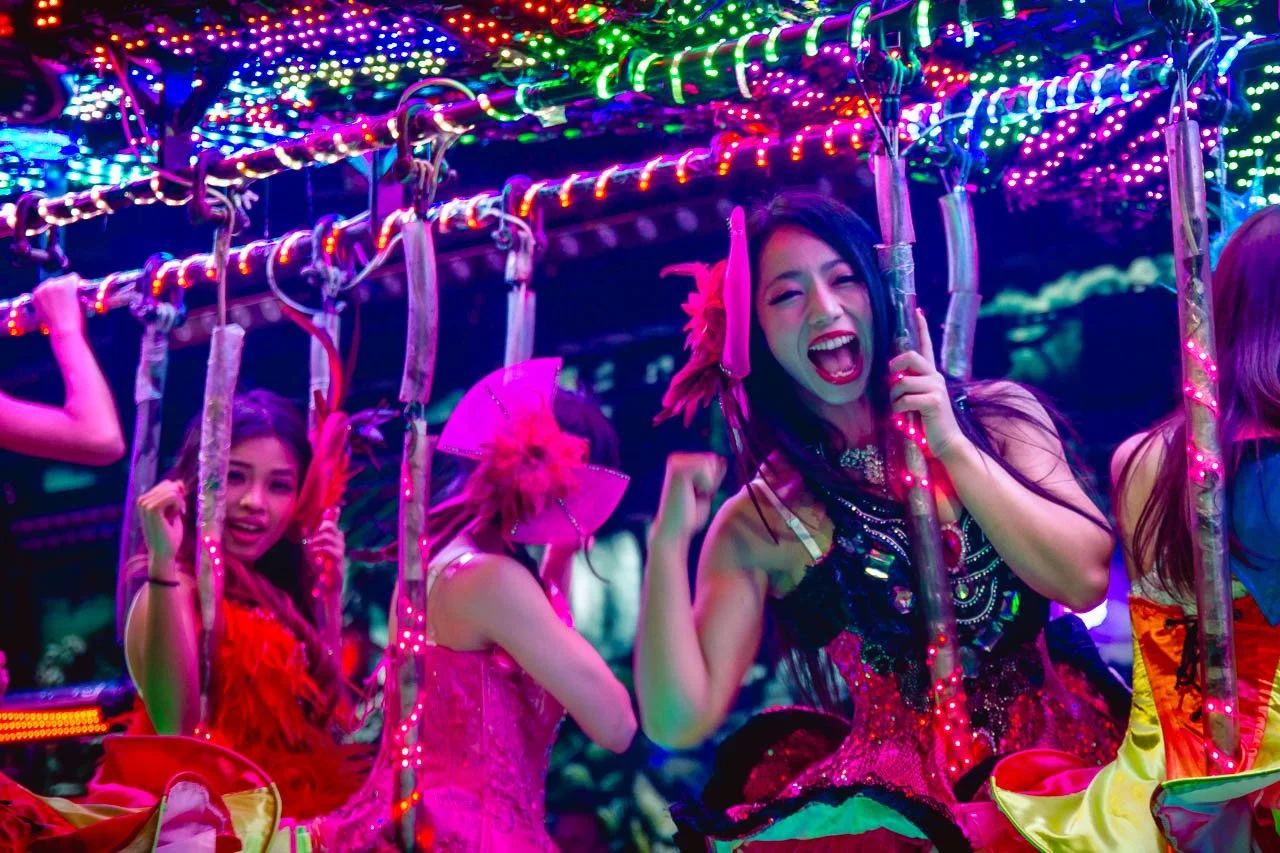
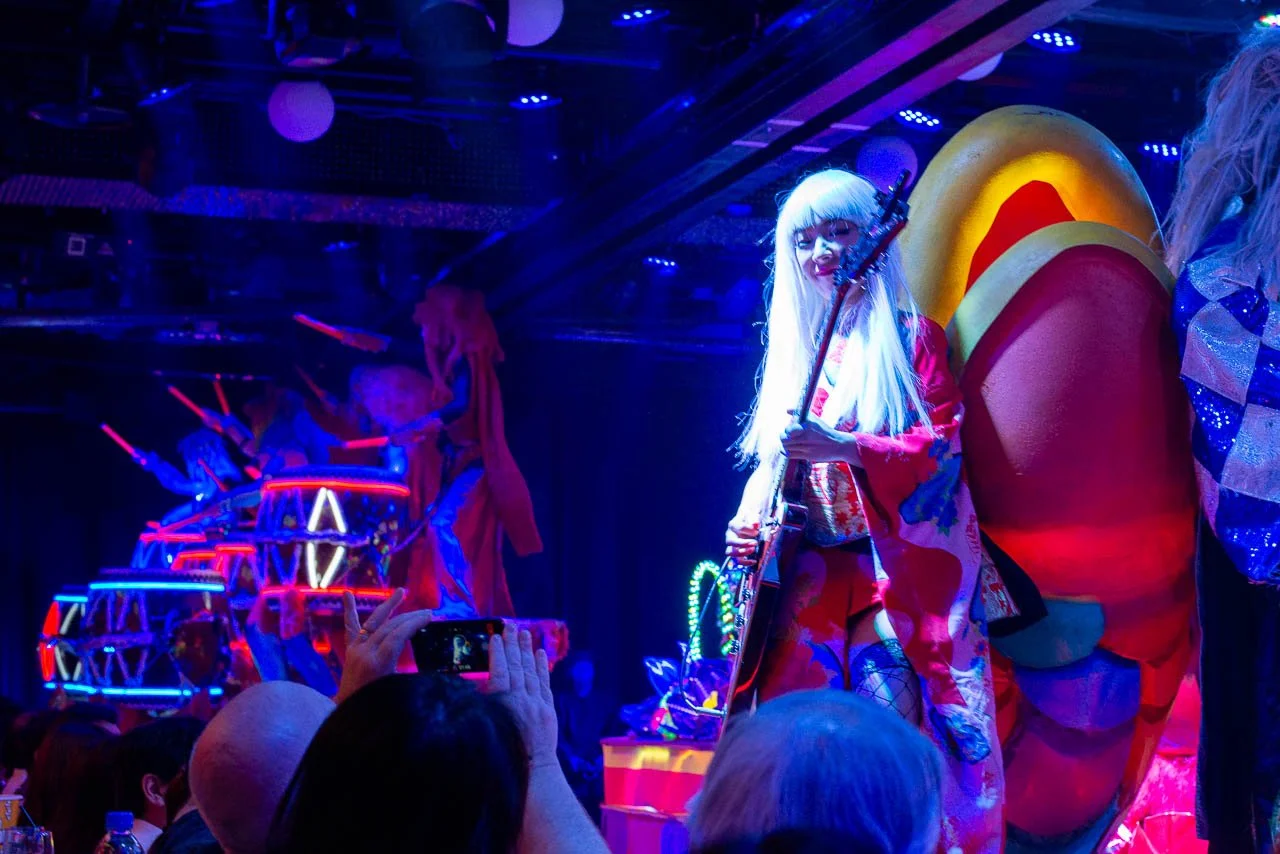
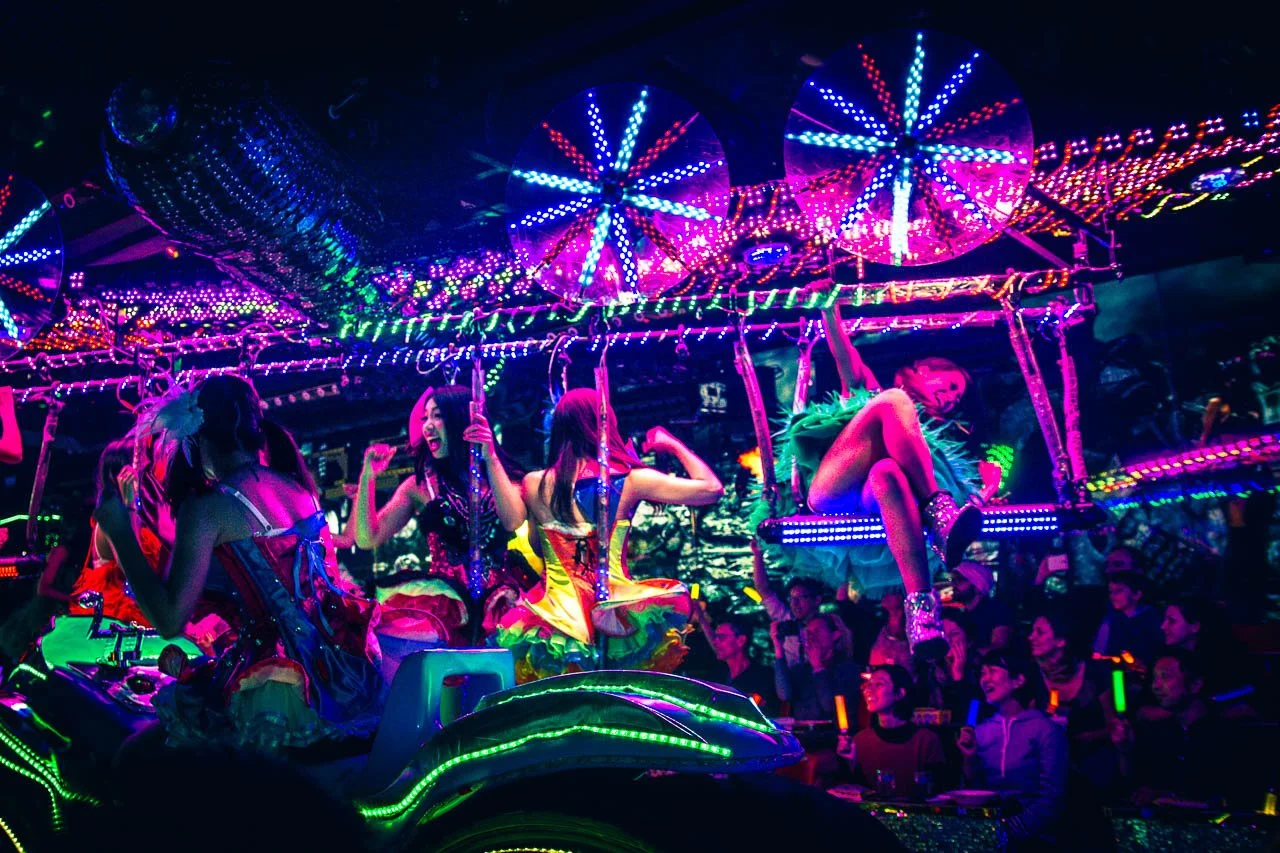
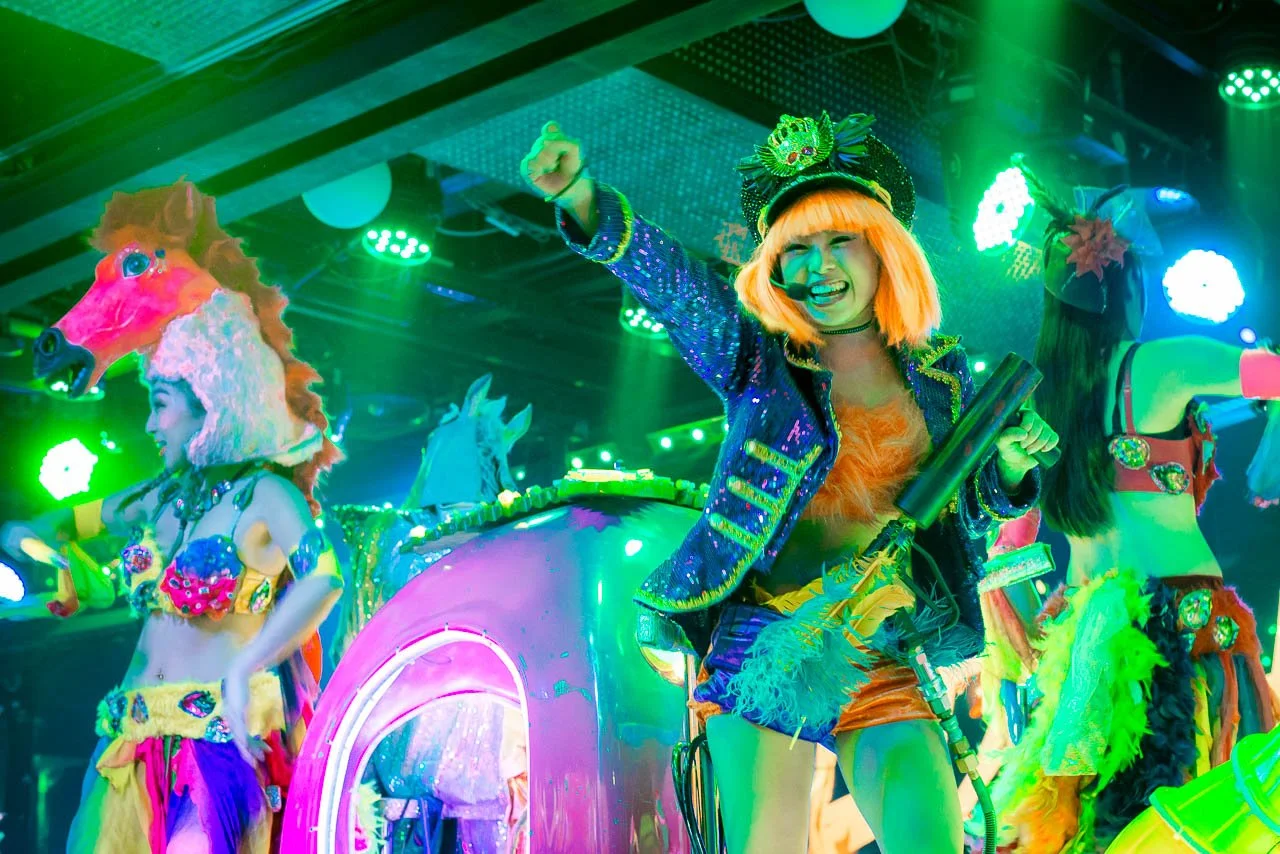
The show itself? Imagine mixing Medieval Times with Japanese theater, then adding lots of women, neon, weird costumes, and robots. There were mech battles, techno dancers, taiko drumming, and even a fight between Kung Fu Panda and an evil witch! It didn't make any sense, but that's what made it all so fun! The whole thing lasted for about an hour, but sadly, it felt like minutes, and left me wanting so much more.
Changes Through the Years
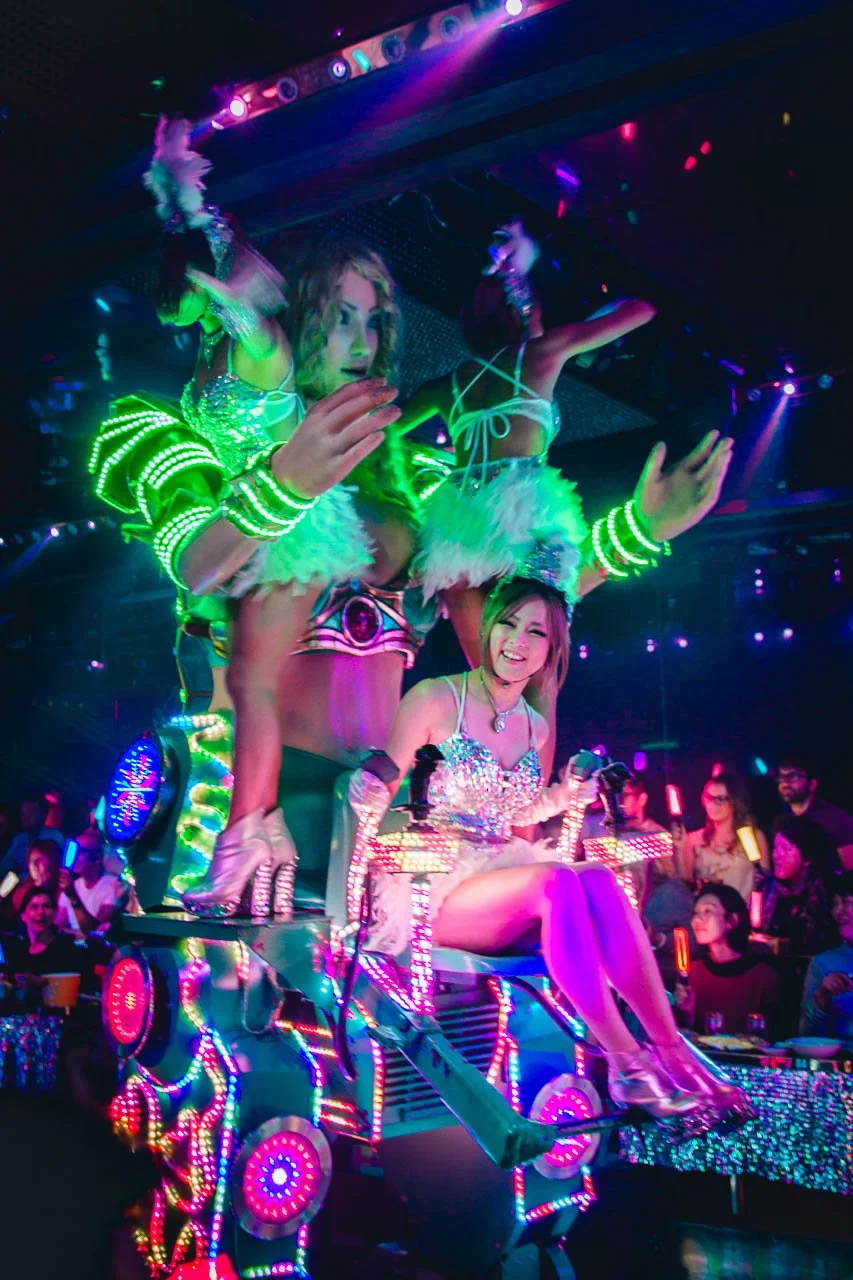
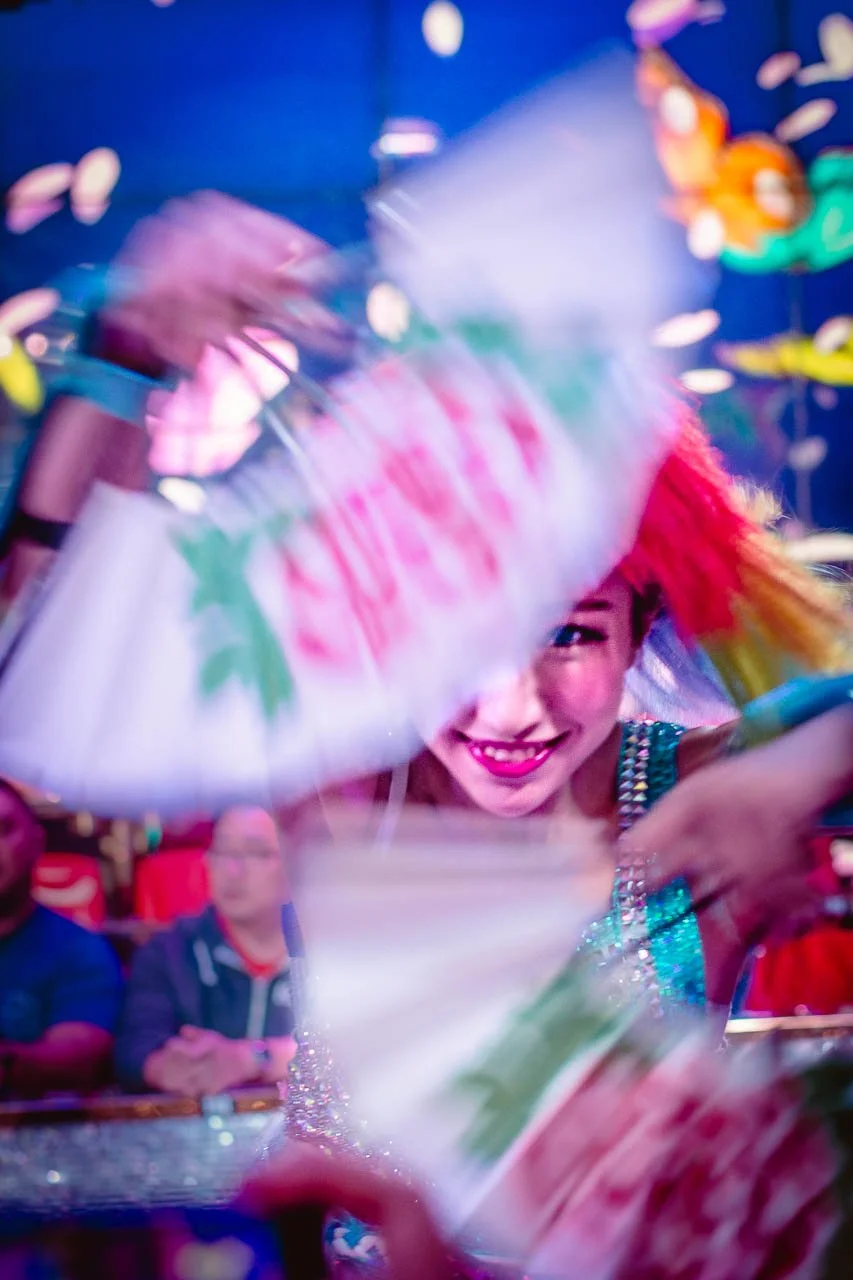
I didn’t notice at the time, but I recently read that the show had gotten tamer as its popularity grew, and I’m starting to think that I agree. I only saw the show twice - once in 2014 and again in 2016, and I do remember a clear distinction between the two. The first show felt a bit more risque, with more of an emphasis on the scantily clad dancers. The second time, it was clearly less sexualized, with less revealing costumes and more mainstream appeal. Some commenters online blamed tourism and reviews added that the admission price had doubled as a result. But despite that, I still feel the show was worth visiting. Had it continued to operate, I would have no problem continuing to recommend it.
The vibe at Robot Restaurant in 2014…
…was a bit different from the vibe in 2016.
The End of Robot Restaurant
Sadly, Robot Restaurant closed in 2020 because of the COVID-19 pandemic. It’s understandable, as so many businesses around the world were unable to deal with the unique challenges that came with lockdowns and restrictions. But despite that, this particular closure felt especially heavy for me. Robot Restaurant was one of those special places that could only exist in Tokyo - a city at the epicenter of pop culture, tech, and creative entertainment.
Looking back, Robot Restaurant is a standout example of what makes Tokyo so cool - just one of the many strange, exciting, and totally unforgettable places that dot the city’s landscape. There wasn’t, and still isn’t, anything else like it anywhere in the world.
If you’re curious to know more, here is a collection of images I took from both of my visits to the show. I hope you enjoy!